KUCHING: As Gawai Dayak approaches, many Dayaks look forward to returning to their longhouses and villages, where generations of family members gather to celebrate the harvest festival together. For many, the longhouse remains the heart of Gawai celebrations, a place where traditions, culture, and family ties come alive through food, music, laughter, and reunions.
However, not everyone is able to ‘pulai menua’ this year.
For Agnes Frederick Radin, in her 50s, Gawai is most meaningful when celebrated where her roots began.
“I agree Gawai should be celebrated in the longhouse because that’s where we come from. We reunite with family members whom we seldom get to see. The roots where we come from make our Gawai more meaningful,” she said.
While Agnes does not have a longhouse of her own, her family usually returns to their village in Saratok to celebrate with relatives.
“Our parents live in the city. So, we normally go back to our ‘kampung’ in Saratok. We gather with our parents, sisters, nieces, nephews, and grandchildren,” she said.
This year, however, circumstances are different.
“I won’t be going back to the kampung because some of us already have our own plans. So I will stay in the city with my parents to celebrate Gawai,” she added.
She also shared that family members living abroad and recent family circumstances have affected this year’s gathering.
“My daughter who is studying in Louisiana, USA, won’t be able to come home this year because the airfare is too expensive. My other daughter, in Miri, her father-in-law also passed away recently,” said Agnes.
Meanwhile, Christian Isaac Ningkan, a 23-year-old final-year student in a university in Kuala Lumpur, believes there is no single right way to celebrate Gawai.
“Personally, I didn’t really ‘pulai menua’ a lot for Gawai because we always had our open houses in Kuching. So, I’ve always gravitated towards that,” he said.
Although he acknowledges the unique atmosphere of celebrating in a longhouse, he says home has always been defined by family.
“The vibes are definitely different between a rumah panjai and the city, but I don’t think there is a right or wrong answer. Home has always meant family to me, and my family and friends are mostly in Kuching. That’s why I personally enjoy celebrating in the city,” he added.
Still, he admits he would love to experience a traditional longhouse Gawai.
This year, soaring airfares have made travelling home difficult.
“I won’t be back this year because flight tickets are crazy expensive. One-way tickets can be RM1,000 or more. As a student, I don’t always have the money to buy tickets early. Usually flights to Kuching are around RM300 to RM400 return, but this time it shot up to almost RM2,000,” he said.
He joked that travelling overseas seemed cheaper than flying home.
“Flying to Jakarta and Bangkok is actually cheaper,” he laughed.
While missing Gawai celebrations at home may bring a sense of missing out, Christian said the Sarawak spirit remains strong wherever Sarawakians are.
“I feel a bit of FOMO (fear of missing out), but thankfully I still have family and friends here in Kuala Lumpur. We’ve had our own celebrations too. During the Borneo Native Festival 2026 (BNF26) held in Kuala Lumpur recently, it truly felt like I was transported back home,” he shared
For him, distance does not diminish cultural identity.
“You can take Sarawakians away from Sarawak, but you’ll never take away the Sarawakian spirit,” he said.
As more Sarawakians pursue studies, careers and opportunities beyond their hometowns, many continue finding ways to celebrate Gawai wherever they are.
While the longhouse remains the traditional centre of the celebration, the festival’s true essence lies in family, community, gratitude, and cultural pride.
For 66-year-old retiree, Esther Anding, Gawai should be celebrated in one’s longhouse or village whenever possible.
“I agree that Gawai should be celebrated in the longhouse or ‘kampung’, if you still have a longhouse or ‘kampung’ to return to. It’s the only time when you get to meet your closest relatives and family members. After Gawai, everyone goes back to wherever they earn a living,” she said.
However, she acknowledged that not everyone is fortunate enough to have a village or longhouse to call home.
She explained that both his grandfather and grandmother had left their ancestral homeland many decades ago to work in Kuching.
His grandfather later became a schoolteacher and, after retiring in the 1950s, chose not to return to their original village.
“Why do I say, ‘if you still have a kampung‘? Because people like me no longer have one. My grandparents originally from Banting, Sri Aman, had moved to Kuching in the early days, because they are educators. Thus, living in the city is more viable, and they end up building a house in Siol Kandis. Until to this day, we live here,” she said.
“Both my grandfather and grandmother were only children and had no siblings. After they settled in Kuching, our connection to the village gradually faded.”
Although she knows her family originated from Banting, they have never celebrated Gawai there.
This year, instead of returning to a kampung, Esther and her siblings plan to spend Gawai visiting their aunt in Simunjan.
“Since we no longer have a village to go back to, my siblings and I will be visiting our aunt in Simunjan for Gawai,” she said.
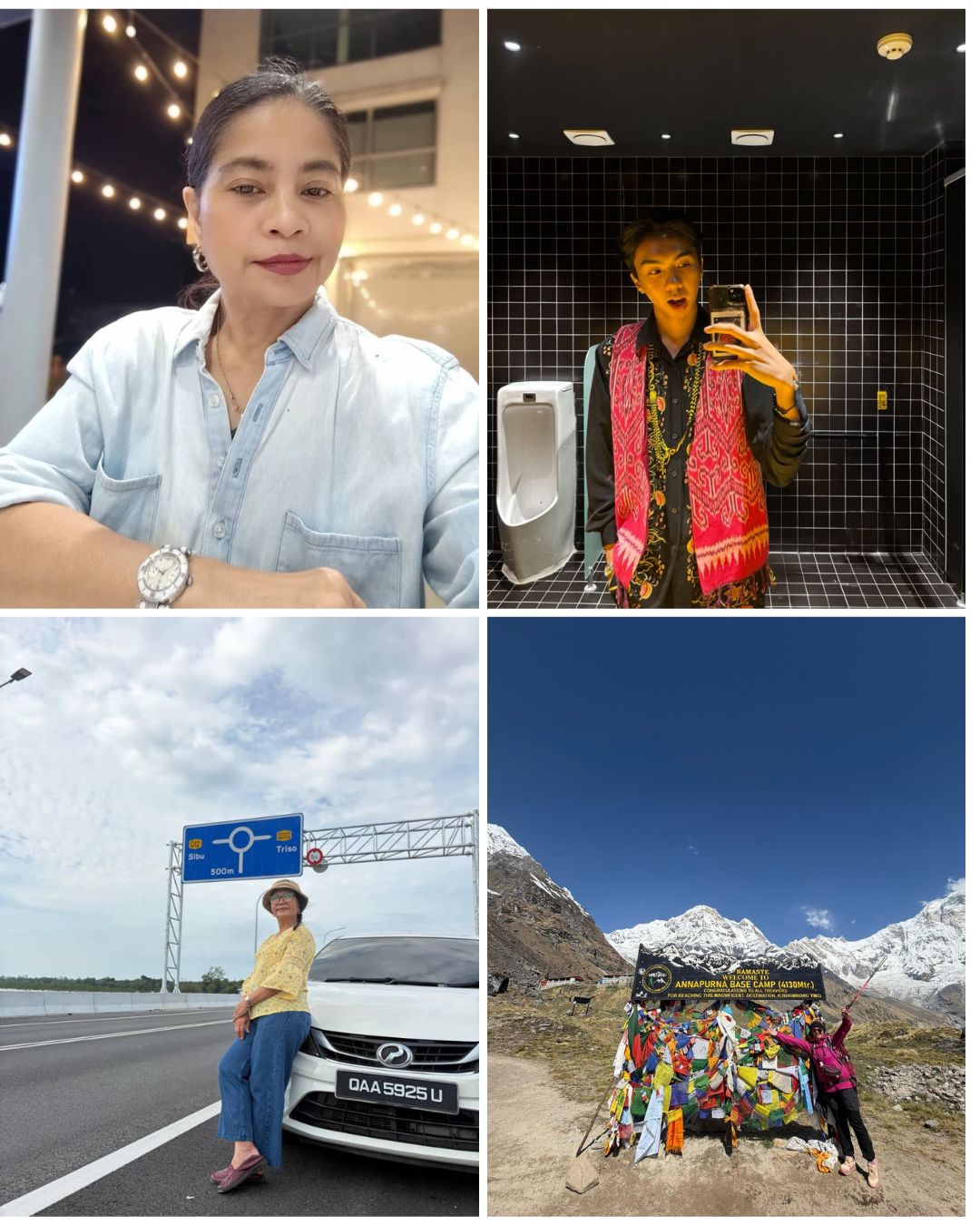
For Connie Simon, 34, a nutritionist of Iban and Kadazan heritage, Gawai has always been about family, community, and staying connected to one’s cultural roots.
“Gawai feels more authentic and meaningful in the longhouse or ‘kampung’, where family and the community can celebrate together while preserving our traditions and culture,” said Connie.
This year, however, Connie will be celebrating Gawai far from home. Instead of returning to Bintulu or Sri Aman, she spent the festive period in Nepal after successfully completing a long-awaited trek to Annapurna Base Camp (ABC).
“I won’t be home for Gawai this year because I am in Nepal conquering Annapurna Base Camp, a journey that I had planned and worked towards for a long time,” she said.
While proud of her achievement, she admits that being away from home during Gawai is bittersweet.
“Although I am excited and grateful for this achievement, I will definitely miss celebrating Gawai with my family and friends back home,” she added.
Connie says she will particularly miss the festive atmosphere that makes Gawai such a special occasion each year.
“Gawai is a special occasion that brings everyone together. So, I will miss the festive atmosphere, the traditional food, and the opportunity to spend quality time with my loved ones.”
Despite the distance, she remains connected to the celebration in spirit.
“Even though I cannot be there in person, I will be celebrating in spirit and sharing my Gawai wishes from afar,” she said
Adding an extra layer of meaning to this year’s celebration, Connie also marked a personal milestone during her adventure.
“I’m celebrating both Gawai and my birthday at Annapurna Base Camp this year!,” she said.
Whether in a longhouse deep in the interior, a village gathering, or a small celebration in the city, the spirit of Gawai continues to unite Dayaks across borders and distances.
Gayu Guru, Gerai Nyamai. May the spirit of Gawai remain strong wherever home may be.