While older generations remember Teochew opera as part of their cultural upbringing, younger musicians are finding their own reasons to embrace it. The final instalment of this three-part series explores their role in carrying the tradition forward.
The new generation of Teochew musical heritage
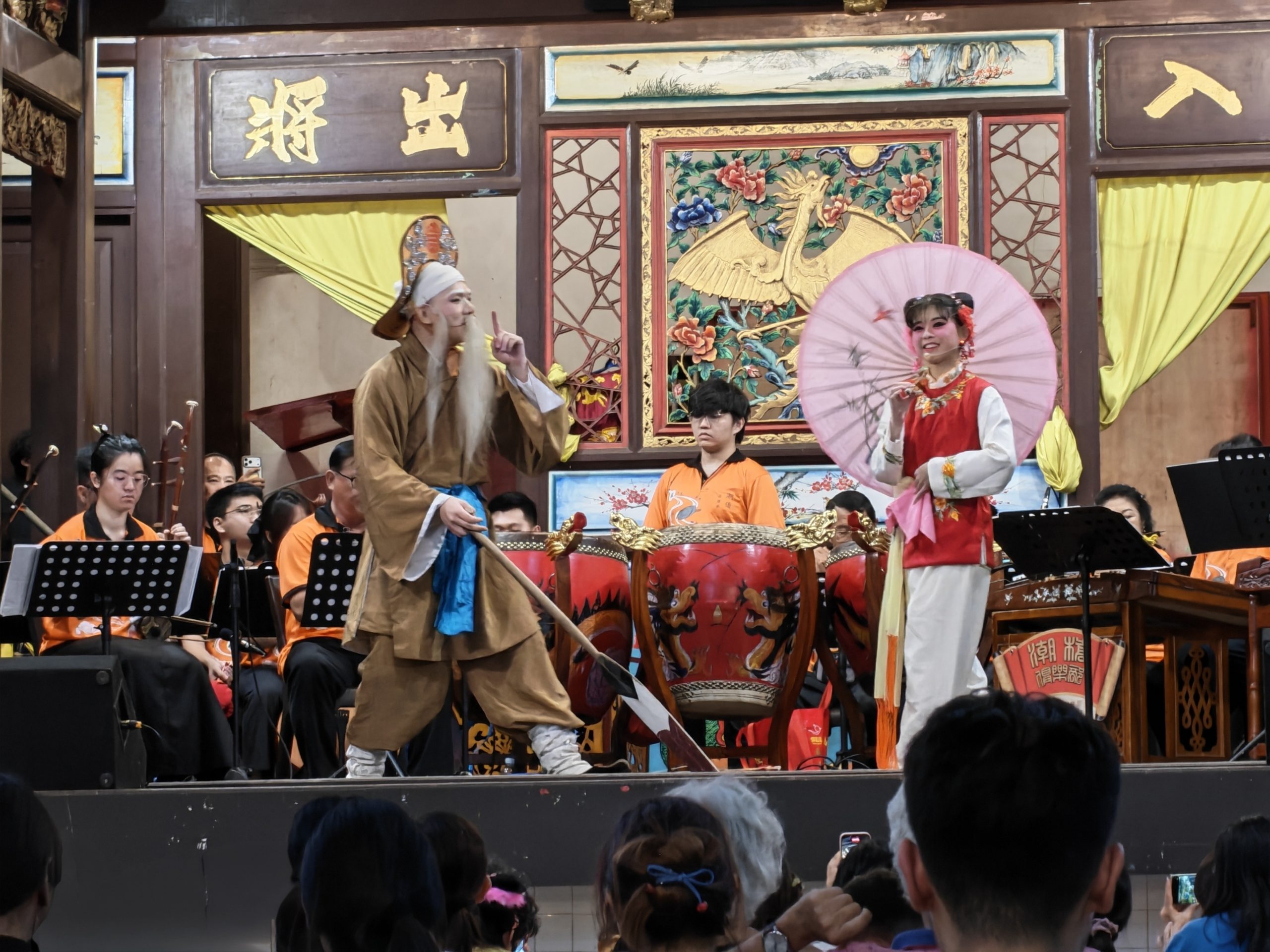
The sound of drums reverberating through the room, accompanied by the high-pitched melodies of traditional string instruments, evokes the charm of a bygone era.
At the Kuching Teochew (Teo Khiaw) Association, the sounds of Teochew opera continue to fill the practice space, where generations of musicians come together to keep an age-old art form alive.
As the singers begin their verses, the musicians follow with their instruments, each contributing to melodies that have travelled across generations and seas.
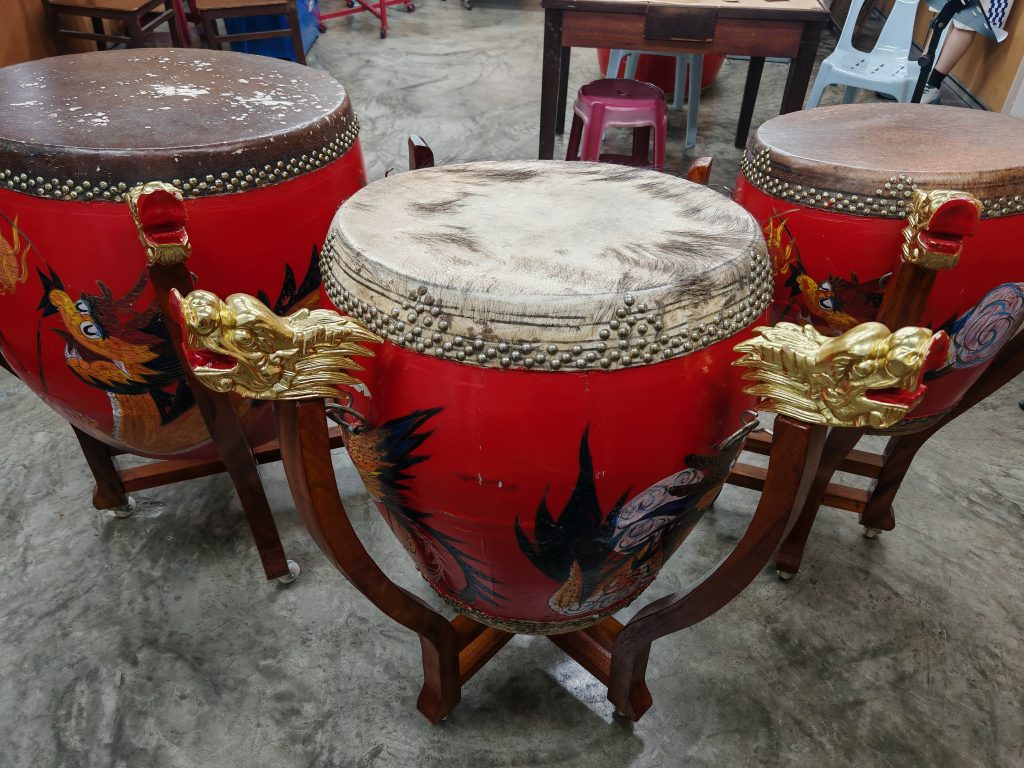
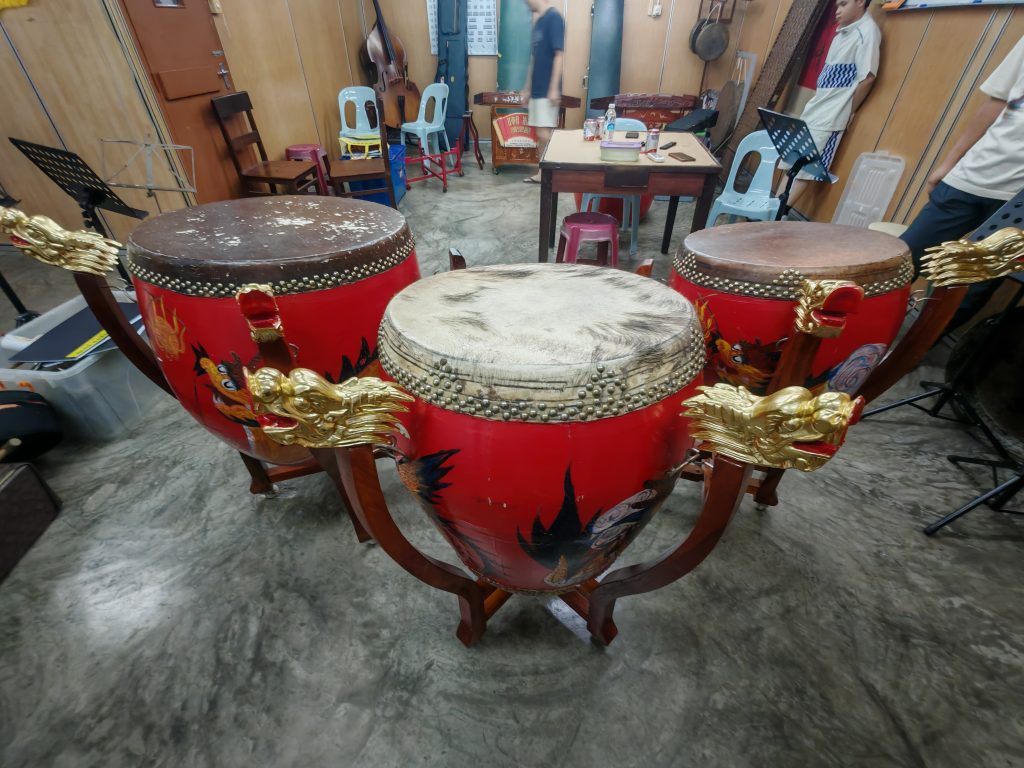
During practice sessions and performances, the musicians are carefully positioned within the ensemble, with each traditional instrument having its place. Among them, the da luo go (large drum) stands out, proudly positioned behind the line-up. Made from cowhide, some of the drums still have visible strands of cow hair attached to their surfaces.
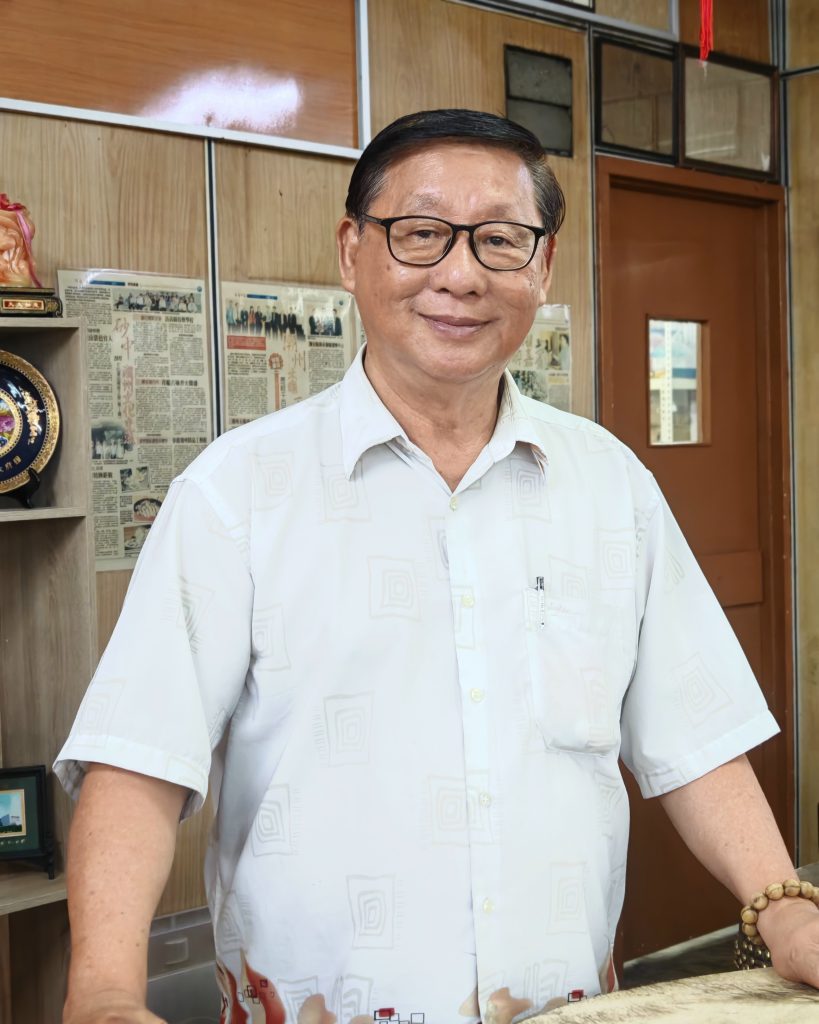
According to the association’s vice-president, Sim Han Tong, the hair is deliberately left on the drum to avoid removing too much of the cowhide.
“These are real hair and real cow’s skin,” he said, pointing to the instrument as he demonstrated how it was made.
“The thickness of the skin is important to ensure that a strong yet bouncy sound can be produced when the drum is struck,” he added.
Teochew opera instructor Yang Li Feng further explained that the drum was part of the community’s longstanding musical heritage, with its craftsmanship and use passed down through generations.
“The da luo go is often described as the soul of Teochew opera and culture. Thus, it is an important part of our musical heritage and plays an important role in bringing a performance to life,” Yang said.
At the front of the ensemble are the string instrument players, among whom the erxian stands out.
Although variations exist among China’s different dialect groups, the Teochew erxian features a bamboo neck and a resonating body covered in snakeskin. Producing a distinctive sound that complements the opera’s vocal melodies, the instrument is said by some players to have a singing quality.
While the opera ensemble is not limited to three instruments and also incorporates other traditional Chinese instruments, each contributes to the distinctive identity of Teochew opera, alongside the singers who perform in the Teochew dialect.
A new era begins
Once, the melodies of Teochew opera were part of the everyday sounds of Kuching’s Teochew community. Today, however, they must be deliberately taught, rehearsed and passed on to younger musicians, many of whom had little exposure to the art form while growing up.
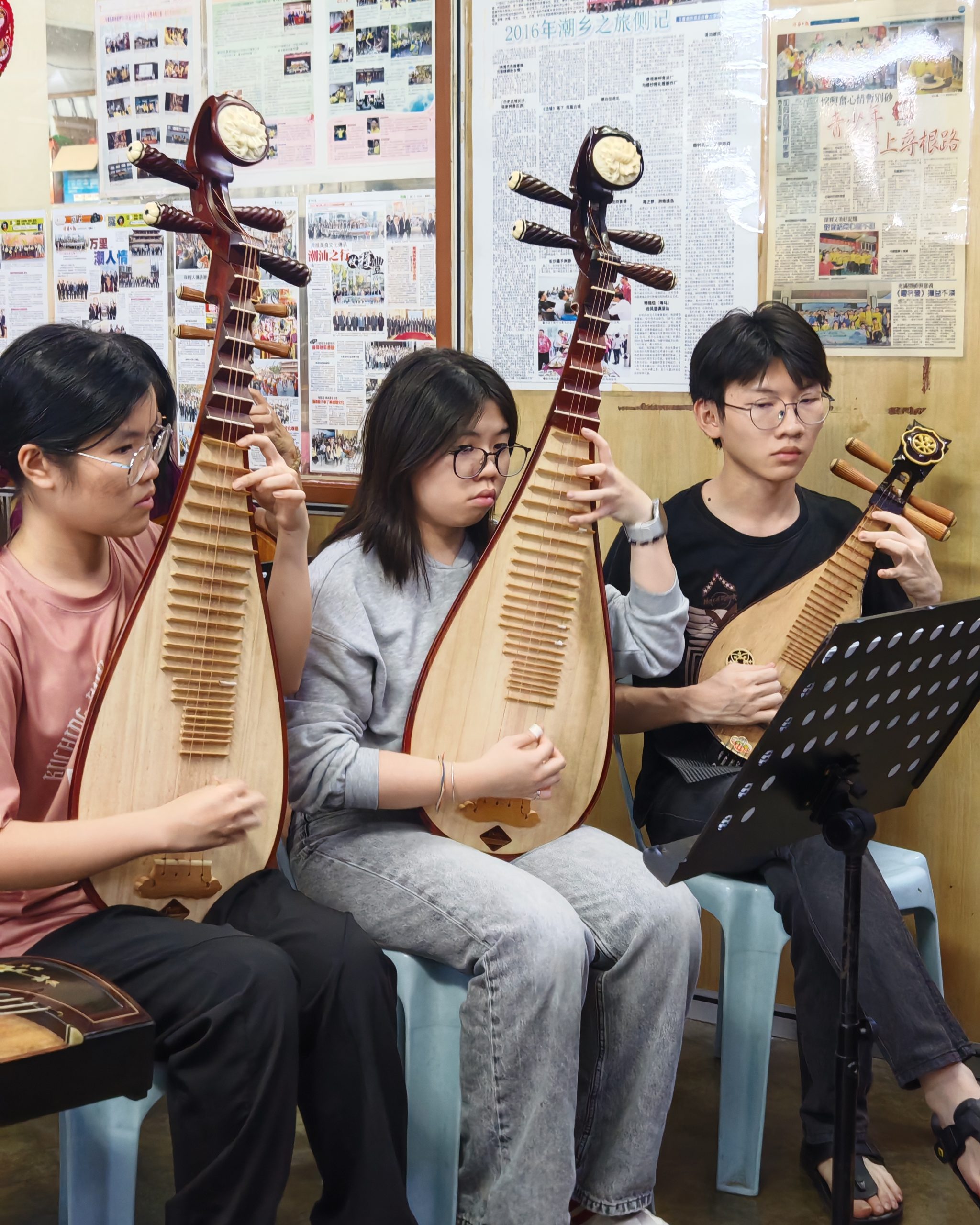
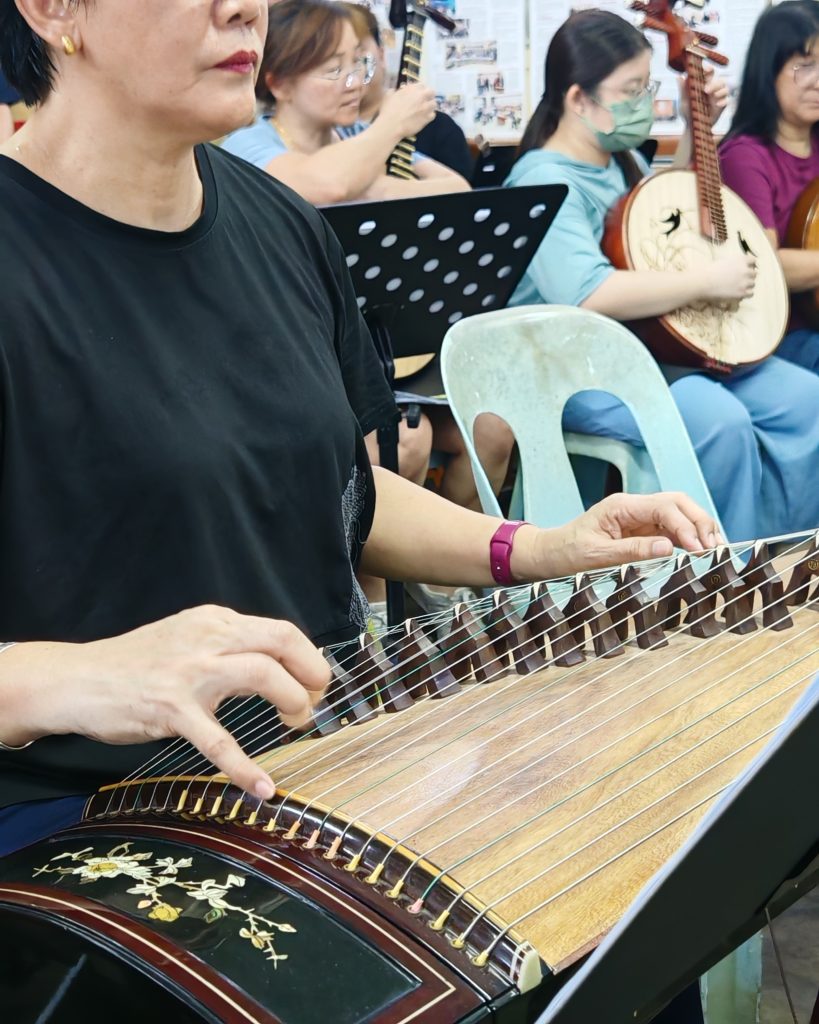
Among the musicians sat Then Jun Chong, holding his string instrument, the liuqin. Having been involved in the opera troupe since he was 14, the 17-year-old, despite having no formal musical background, had developed an interest in becoming part of the group.
At school, he is a member of the Chinese Orchestra Club and was drawn to the liuqin because of its soothing sound when plucked.
“However, I wouldn’t say that it is always calming because of its high-pitched sound. It can be calming depending on how one plays it,” he said.
Then explained that his interest in Teochew opera did not stem from his family background but rather from his own curiosity and desire to explore the art form.
Growing up in the 21st century, his attraction to the liuqin opened the door to a traditional art form that had largely been unfamiliar to him.
On the right side of the ensemble sat Clara Ng, holding her pipa. Like Then, Ng grew up amid modern influences but eventually found herself drawn to a traditional instrument.
Also well-versed in the violin, Ng said her interest in traditional instruments was partly driven by a desire to understand Chinese culture through music. Beyond learning a different instrument, she was also intrigued by how traditional musical notation differed from the scores she was accustomed to reading.
Although the 18-year-old attended a Chinese school, she said not many of her peers were interested in traditional music. Nevertheless, she believes it is important to pass the tradition on to the next generation.
“The music is unique, and being able to play it in an ensemble gives me a sense of pride as I immerse myself in the music of my ancestors,” Ng said.
Playing alongside her was 17-year-old Siaw Xin Yun, who held her pipa with concentration. Her deeper appreciation of music drew her towards traditional melodies and eventually prompted her to join the troupe.
For Siaw, however, learning the instrument carries a meaning beyond musical appreciation. Having played it since the age of 13, she sees it as a way of maintaining a connection with the generations that came before her.
“Being able to play a traditional musical instrument makes me feel that I am passing on the culture left behind by our ancestors. If I don’t pass it down, I fear that our future generations might not even know such a thing exists,” she said.
Although her parents are not traditional instrumentalists themselves, their support has allowed her to pursue an interest that she believes carries a greater responsibility.
For someone still in her teens, the thought of a cultural tradition disappearing may seem like a distant concern. Yet, through the music she plays, Siaw has found her own way of contributing to its survival.
Although none of the students grew up listening to Teochew opera, their journeys began with curiosity. What started as an interest in music gradually developed into a desire to understand their cultural roots, drawing them closer to an art form that might otherwise have remained unfamiliar to them.
For the older generation, the melodies of Teochew opera carry memories of a time when the art form was part of everyday life. For the younger performers, however, these same melodies are discoveries, opening a window into a culture and heritage they might not otherwise have known.
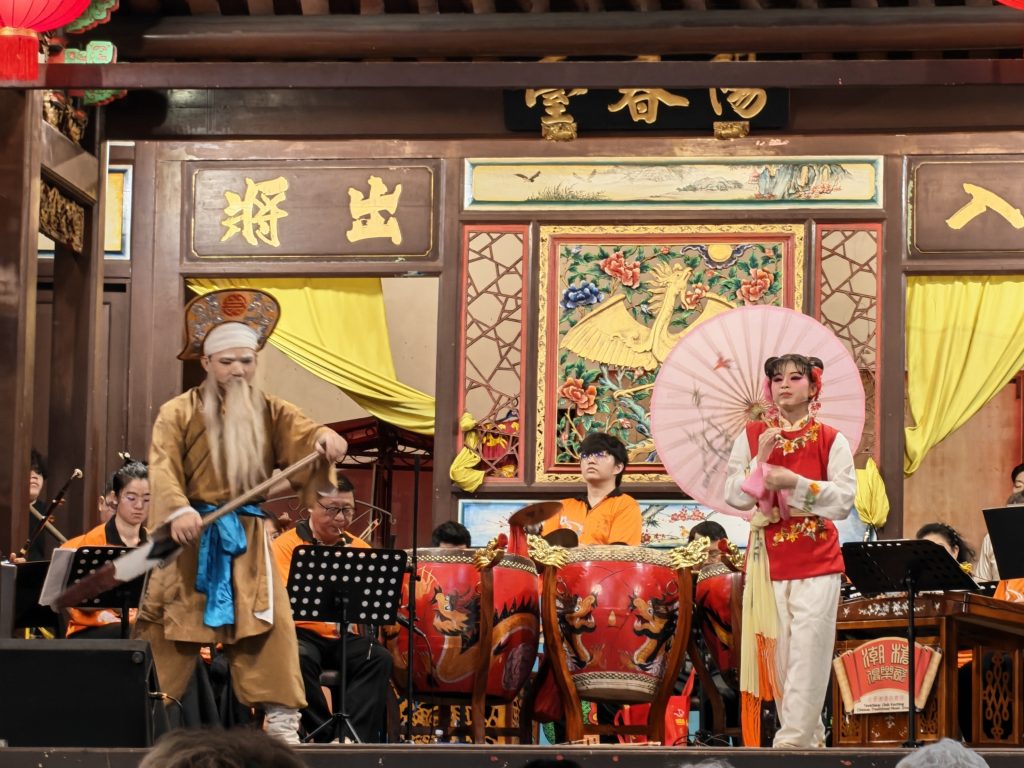
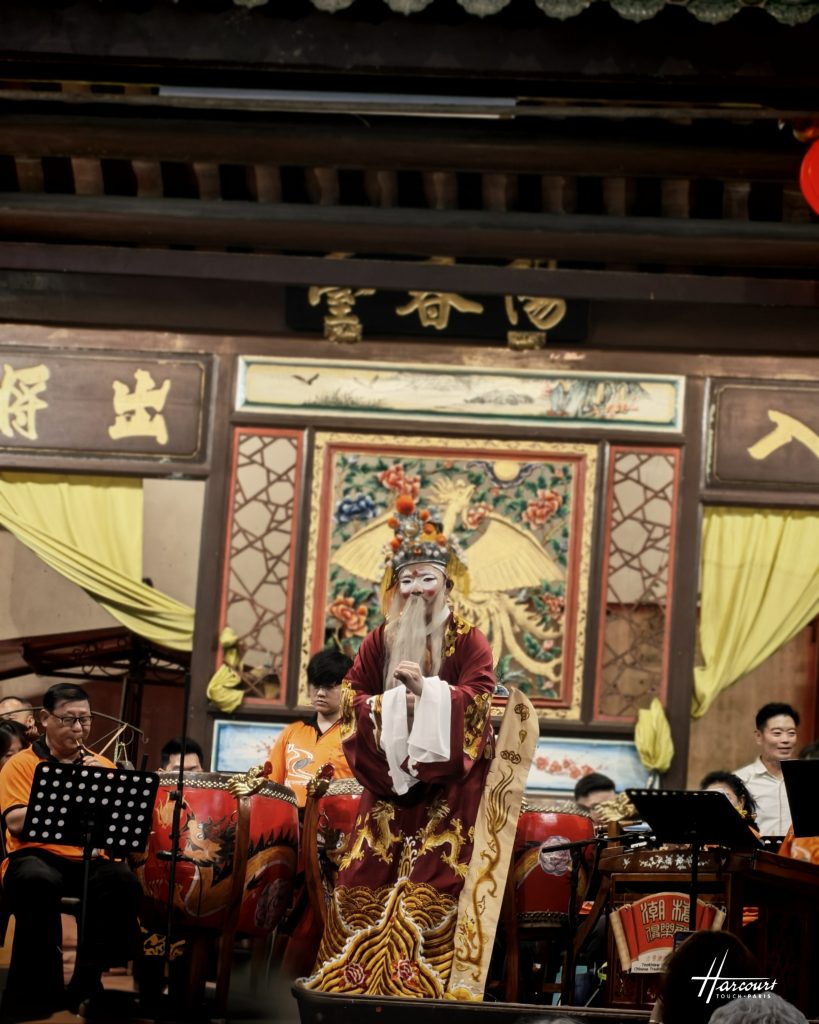
Their reasons for learning may differ, ranging from a simple interest in music to a deeper appreciation of their ancestral roots. Yet, each time they pick up their instruments and join the ensemble, they become part of a tradition that has endured through generations.
The sounds may have originated centuries ago in a distant homeland, but today, they continue to find their voice in Kuching.
Perhaps the future of Teochew opera does not rest solely on those who remember its past, but also on those young enough to give it a future.