Deep integration leaves growth model more vulnerable to disruptions
KUCHING: Malaysia’s trade-driven economy is facing a tougher test of resilience as global shocks become faster and less predictable.
Universiti Teknologi PETRONAS (UTP) adjunct lecturer and Global Asia Consulting senior consultant Samirul Ariff Othman said Malaysia remains a classic high-beta economy — one that amplifies both the gains and risks of globalisation.
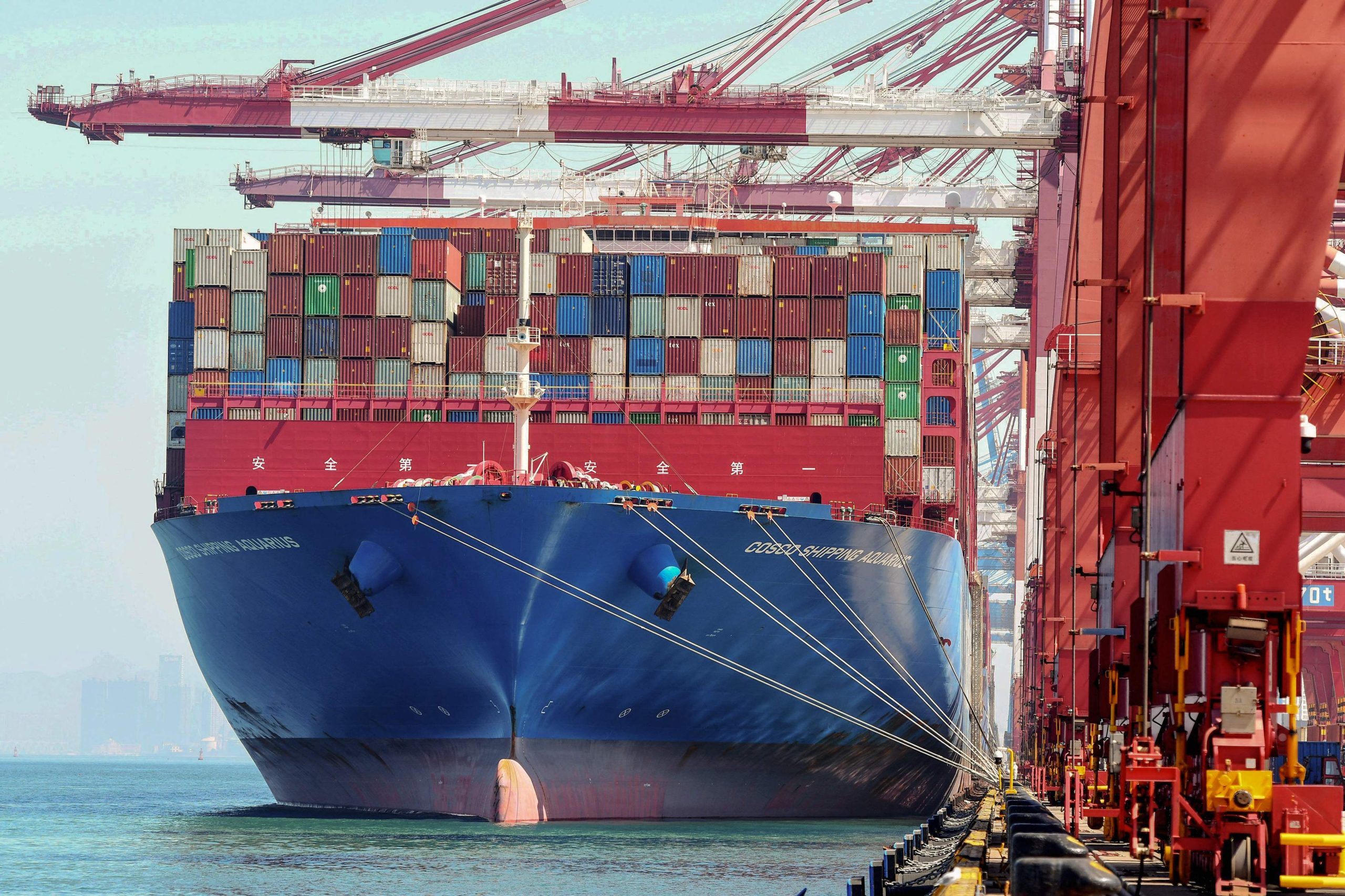
With exports accounting for more than 60 per cent of GDP, he said Malaysia is among the most externally oriented economies in the world.
“This deep global integration has long been a source of strength, but it now comes with greater structural sensitivity, as external shocks can move through the economy in unexpected ways,” he said.
Samirul noted that Malaysia’s position was built on decades of successful participation in global supply chains, particularly in the electrical and electronics sector, which helped anchor growth and drive industrial upgrading.
However, he said the global environment has shifted.
He explained that risks were previously understood through the VUCA framework — volatility, uncertainty, complexity and ambiguity — where shocks were disruptive but largely cyclical and somewhat predictable.
“Today’s reality is better described as BANI — brittle, anxious, nonlinear and at times incomprehensible,” he said.
Recent disruptions, including supply chain breakdowns and geopolitical tensions along key trade and energy routes, show that the global system is no longer just volatile.
“It is increasingly fragile and nonlinear. Small disruptions can trigger outsized consequences, while localised tensions can cascade into global dislocations,” he added.
For Malaysia, this creates a compounding effect, with shocks arriving faster, transmission channels becoming less predictable and impacts often disproportionate.
“In a BANI system, Malaysia risks becoming an amplifier of systemic fragility unless this is carefully managed,” he said.
Rather than retreating from openness, Samirul stressed the need to future-proof it through what he termed “strategic openness”.
“This means staying globally connected while reducing risks from overconcentration, single-point dependencies and external demand shocks,” he said.
He outlined several key shifts needed to strengthen resilience.
Malaysia must diversify export markets and supply chain partners, while moving up the value chain to capture greater economic value, particularly in high-technology sectors.
At the same time, domestic buffers need to be strengthened by expanding internal demand, services and economic linkages to absorb external shocks.
“In a BANI world, some redundancy in supply chains, logistics and energy security should be seen not as inefficiency, but as insurance,” he said.
Samirul added that strong institutions remain critical, with sound macroeconomic management, credible fiscal frameworks and agile policymaking forming the backbone of resilience.
“In an environment where shocks are nonlinear and sometimes incomprehensible, policy agility becomes as important as discipline,” he said.
He emphasised that Malaysia’s high-beta status is not a weakness, but a reflection of its deep engagement with the global economy.
“That strategy has delivered growth and opportunity, but the terms of engagement are changing,” he said.
“The challenge now is not just how to grow, but how to manage exposure in a system where risks are interconnected and harder to predict.”
Future-proofing, he said, is about managing the amplitude of shocks — capturing the upside while building buffers against the downside.
“A high-beta economy in a VUCA world could succeed through adaptation. In a BANI world, it must succeed through anticipation,” he said.