KUCHING: Sarawak’s listed plantation companies are riding a fresh wave of investor optimism as rising crude palm oil (CPO) prices lift earnings expectations, with several counters climbing to 52-week highs.
Miri-based Sarawak Oil Palms Bhd (SOP) and Sarawak Plantation Bhd led Monday’s gains, touching one-year highs of RM5.15 and RM4.08 respectively after adding five sen and nine sen.
SOP has rebounded from a 52-week low of RM3.74, while Sarawak Plantation has recovered from RM2.49.
Ta Ann Holdings Bhd also traded near its annual peak, closing two sen higher at RM5.73, just below its 52-week high of RM5.80.
WTK Holdings Bhd gained 1.5 sen to 82.5 sen, with the stock trading between 39 sen and 87.5 sen over the past year.
The rally comes as benchmark CPO prices strengthen on expectations of tighter global supply, supported by higher crude oil prices, Indonesia’s B50 biodiesel mandate and the prospect of weather-related disruptions later this year.
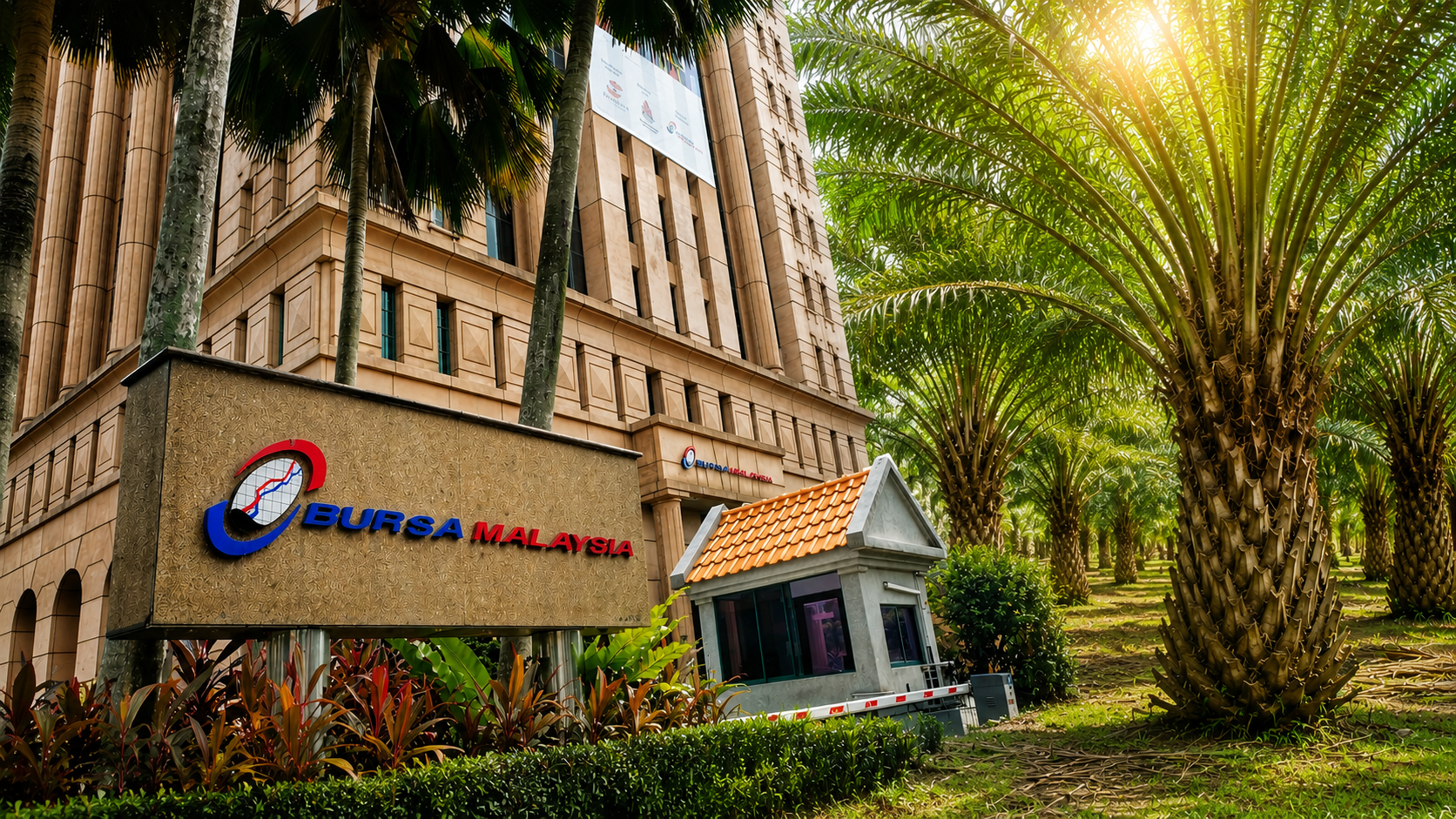
The benchmark September CPO futures contract on Bursa Malaysia Derivatives settled RM14 higher at RM4,527 per tonne on July 13.
Although prices have eased from recent highs, they remain about 12 per cent higher year to date, aided by biodiesel policies in Indonesia and Malaysia that require higher blends of palm oil methyl ester.
Analysts believe the sector’s earnings outlook remains favourable despite expectations of stronger production in the coming months.
In its latest report, TA Securities said strengthening El Niño conditions are unlikely to affect palm oil production immediately, with any meaningful impact expected only later in the production cycle.
Latest climate forecasts indicate an 81 per cent probability of a very strong El Niño between October and December, with a 97 per cent chance that conditions will persist into early 2027.
The hot and dry weather associated with El Niño could eventually curb palm oil output and tighten supply.
Public Investment Bank said the weather outlook presents an upside risk to CPO prices at a time when production remains strong.
“This may be a boon for upstream planters in Malaysia.
We do not rule out earnings surprises in the coming quarters,” the research house said, maintaining an “overweight” call on the plantation sector.
In the near term, however, analysts expect rising inventories to keep prices from climbing too quickly.
Latest data from the Malaysian Palm Oil Board (MPOB) showed Malaysia’s palm oil stockpiles rose 4.78 per cent in June to 2.54 million tonnes, the highest level in four months.
Seasonally stronger harvesting in the coming months is expected to further lift production and inventories, easing immediate supply concerns.
Both TA Securities and Public Investment said export demand would need to improve before CPO prices can sustain another leg higher.
Against this backdrop, several Sarawak plantation companies have already reported stronger operational performance for the April-June 2026 quarter, positioning them to benefit if elevated CPO prices persist. SOP reported the strongest quarter-on-quarter increase in CPO production among the major Sarawak planters.
Its CPO output rose by 12,013 tonnes, or 12.97 per cent, to 104,658 tonnes in the second quarter from 92,644 tonnes in the preceding quarter.
Palm kernel (PK) production increased by 9.7 per cent to 23,256 tonnes from 21,200 tonnes, while fresh fruit bunches (FFB) output edged up 2.72 per cent to 302,898 tonnes from 294,876 tonnes.
Compared with the same period last year, SOP recorded doubledigit growth in both CPO and PK production despite a slight decline in FFB output.
CPO production increased 15.18 per cent to 104,658 tonnes from 90,864 tonnes, while PK output rose 15.59 per cent to 23,256 tonnes from 20,120 tonnes. FFB production slipped 0.6 per cent to 302,898 tonnes from 304,722 tonnes.
For the first half of 2026, SOP produced 197,303 tonnes of CPO, up 12.52 per cent from 175,348 tonnes a year earlier.
PK production grew 15.24 per cent to 44,456 tonnes from 38,578 tonnes, while FFB output was broadly unchanged at 597,774 tonnes compared with 595,998 tonnes previously.
In June alone, SOP produced 31,794 tonnes of CPO, 6,833 tonnes of PK and 99,707 tonnes of FFB.
Ta Ann also posted stronger quarterly production, with CPO output rising 15 per cent to 75,530 tonnes from 65,434 tonnes in the first quarter.
PK production increased 12 per cent to 16,338 tonnes from 14,648 tonnes, while FFB production climbed 9 per cent to 158,451 tonnes from 145,898 tonnes.
On a year-on-year basis, Ta Ann recorded growth of 6 per cent in CPO production, 5 per cent in PK output and 8 per cent in FFB production during the second quarter.
For the first six months of 2026, the group produced 140,964 tonnes of CPO, up 7 per cent from a year earlier, while PK output increased 6 per cent to 30,986 tonnes and FFB production rose 7 per cent to 304,349 tonnes.
Ta Ann’s logging division also recorded a stronger performance, with log production increasing 28 per cent year-on-year to 105,303 cubic metres during the first half of 2026 from 82,072 cubic metres previously.
Jaya Tiasa Holdings also benefited from seasonal recovery, with second-quarter CPO production rising 14 per cent quarter-on-quarter to 48,537 tonnes from 42,401 tonnes.
PK output increased 7 per cent to 10,423 tonnes, while FFB production edged 3 per cent higher to 195,240 tonnes.
However, compared with a year earlier, the group reported weaker plantation output. CPO production slipped 1 per cent, PK output fell 4 per cent, while FFB production declined 10 per cent.
For the first half of 2026, Jaya Tiasa’s CPO production was largely unchanged at 90,938 tonnes compared with 90,809 tonnes a year earlier.
PK production eased 1 per cent to 20,119 tonnes, while FFB output fell 10 per cent to 384,188 tonnes.
The group’s logging operations produced 23,447 cubic metres of logs in the second quarter, down 24 per cent from the preceding quarter.
Despite the weaker quarterly performance, first-half log production rose 26 per cent year-on-year to 54,176 cubic metres from 43,112 cubic metres.
Jaya Tiasa owns 414,362 hectares of forest concessions under three Forest Management Units and also manages a forest plantation programme with more than 50,600 hectares planted.