‘One minute on stage requires ten years of practice off stage.’

Where tradition finds its voice
For 16 years, Teochew opera instructor Yang Li Feng has travelled from China to Kuching to pass down the traditional art form to younger generations. In the first of a three-part series, discover her lifelong dedication to keeping the melodies and cultural heritage of Teochew opera alive.
By Priscilla Tawie
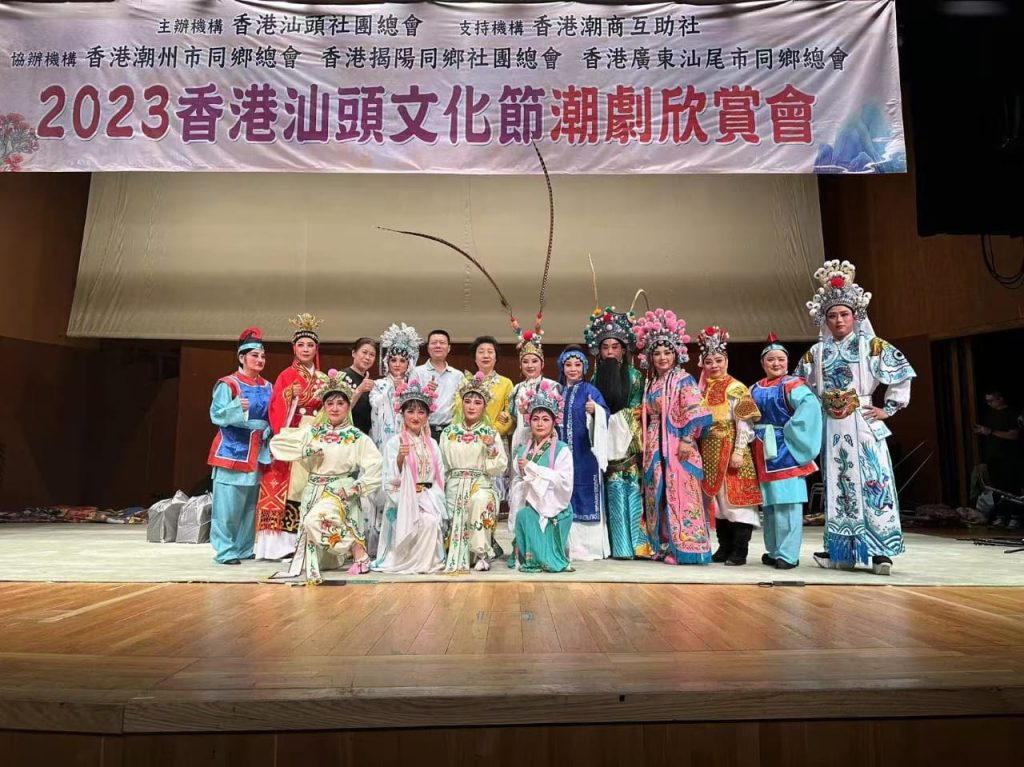
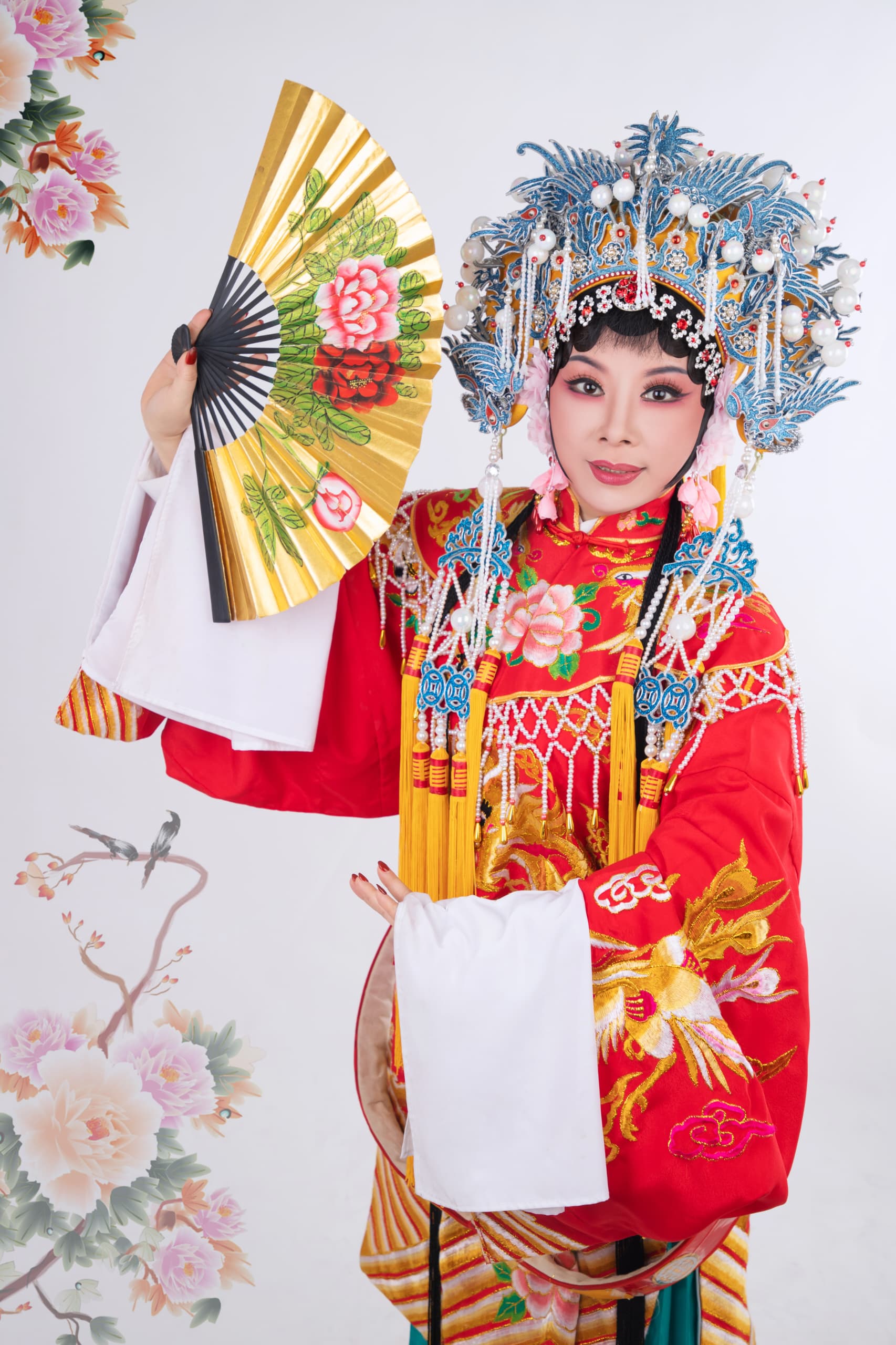
An intricate performing art, Teochew opera is much more than an hour of entertainment. Beyond its elaborate costumes, make-up and stylised movements, the traditional art form, also known as ‘Chao Ju’, reflects a rich cultural heritage passed down through generations.
One of the traditional folk arts originating from the Chaoshan (Teochew) region of China, Teochew opera dates back centuries. Its history can be traced to 1432, when some of its oldest manuscripts were found. By the late Qing dynasty (1644–1911), more than 200 performing troupes were active in the Teochew region.
Today, the Teochew community remains committed to keeping its heritage alive, believing that passing it down to younger generations will ensure the art form and other traditions continue to thrive.
In Kuching, the local Teochew (Teo Khiaw) Association works to ensure that the community’s cultural roots are not lost, despite being far from their ancestors’ homeland. As generations of Teochew migrants settled and assimilated into local society, preserving their heritage became an important part of maintaining their cultural identity.
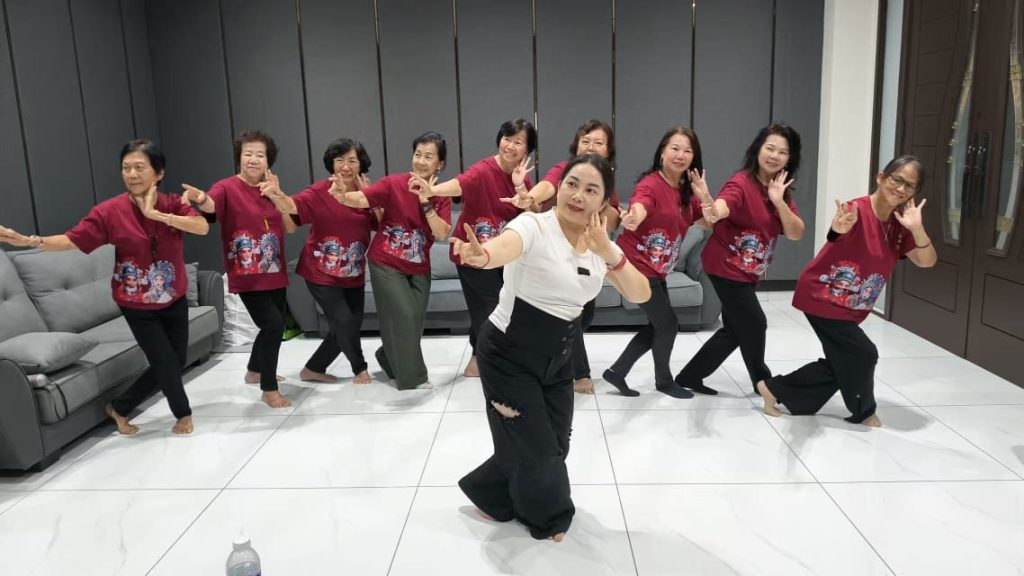
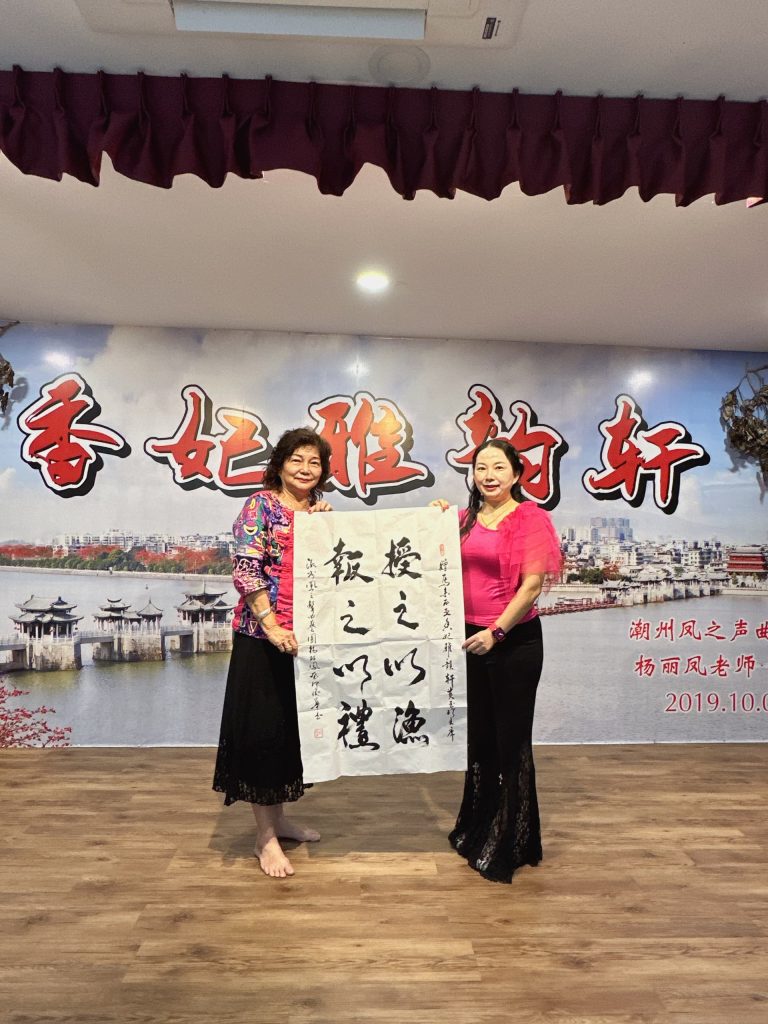
More than a century after its establishment, the association continues to play a significant role in preserving the traditional art form while maintaining strong ties with its ancestral homeland, Chaoshan.
Helping to keep this tradition alive is Teochew opera instructor Yang Li Feng, who regularly travels to Kuching, Sarawak, to teach students the art form.
“I first stumbled upon the opera when I was seven years old. Back then, in a small village in Chaozhou, Chaoshan, there wasn’t much to do nor was there much entertainment for us. The troupes’ performances left a significant emotional impact on me. From their singing to their performances and make-up, I thought everything was beautiful, from beginning to end,” the 51-year-old instructor recalled.
Determined to join a troupe one day, she enrolled in her school’s theatre training class at the age of 13. Her passion for Teochew opera eventually led her to the Chaozhou Opera School, where she trained in fundamental skills and vocal techniques.
This marked the beginning of her journey in the art form, strengthening her abilities, shaping her artistic identity and nurturing a lifelong dedication to Teochew opera.
Strength in versatility
Watching Teochew opera performers on stage, audiences are often left in awe. While the performances may appear effortless, they are the result of years, sometimes decades, of practice and dedication.
Sharing a Chinese proverb, “台上一分钟,台下十年功” (Tái shàng yī fēnzhōng, tái xià shí nián gōng), which translates as ‘One minute on stage requires ten years of practice off stage’, Yang said her decades of hard work had brought her numerous achievements and opportunities to perform on prestigious stages.
In her hometown of Chaozhou, she was awarded the title of ‘The Most Beautiful Woman of Strength in the Village’. Despite achieving success both in China and Malaysia, Yang acknowledged that the challenges of practising and preserving the art form remain.
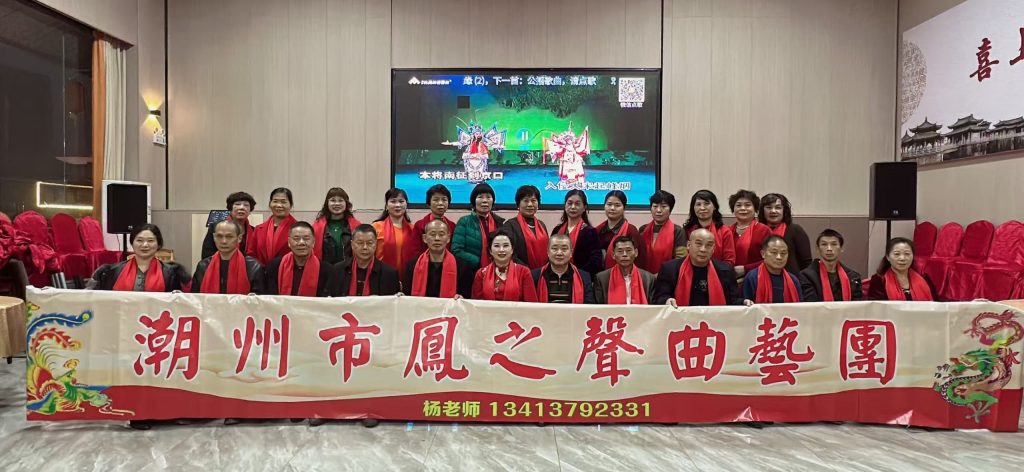
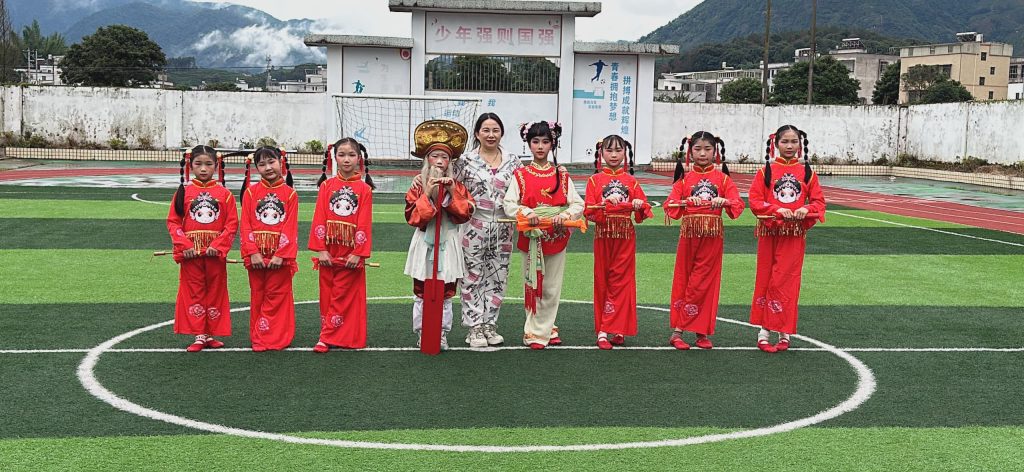
“Actually, with the opera, it looks entertaining and easy to watch. But behind the scenes, it can bring great challenges. From writing the scripts to performing them, each requires an enormous amount of effort and energy.”
Despite these challenges, her passion for the opera never wavered. Having initially been captivated by its beauty, she eventually became a practitioner and began teaching Teochew opera at the age of 29.
For Yang, passing on her knowledge and skills was essential, as she had been taught never to allow Teochew culture to disappear.
“That was what my teachers and predecessors taught me. We have a responsibility to pass our Teochew cultural heritage down to the next generation and ensure that it continues.”
She explained that younger generations, often drawn to modern trends and technology, may overlook traditional aspects of their culture. Nevertheless, she encourages them to remain connected to their roots and help preserve their heritage.
However, passing down this traditional musical theatre is no easy task. Yang revealed that training begins as early as 3.30am. This had been part of her routine since she started learning the art form, beginning with warm-up exercises before vocal training at 6.30am.
She added that Teochew opera involves several disciplines, requiring long practice sessions to master each aspect:
- Chang (唱) refers to singing and vocal techniques.
- Zuo (做) refers to acting and performance, including bringing the opera to life on stage.
- Nian (念) refers to speech and dialogue delivery.
- Da (打) refers to martial arts and combat movements.
“This was how we were trained, and this is a tradition that has continued through the generations. We usually finish our training at 9.30pm,” she said.
Even preparing for a performance takes hours before the troupe is ready to go on stage, as the costumes and make-up require careful attention. Every stroke and colour is applied painstakingly, step by step.
From China to Malaysia
Committed to sharing the Chaoshan culture and traditions, Yang has continued returning to Kuching to help local Teochew communities preserve their heritage, despite being far from their ancestral homeland.
With many members of the older generation having passed away or no longer able to perform, she hopes to nurture younger successors who can carry the art form forward.
Having returned annually for 16 years, Yang recalled that many of her students in Kuching initially had limited fluency in the Teochew dialect.
Teaching them to sing in the dialect was therefore one of the many challenges she took on.
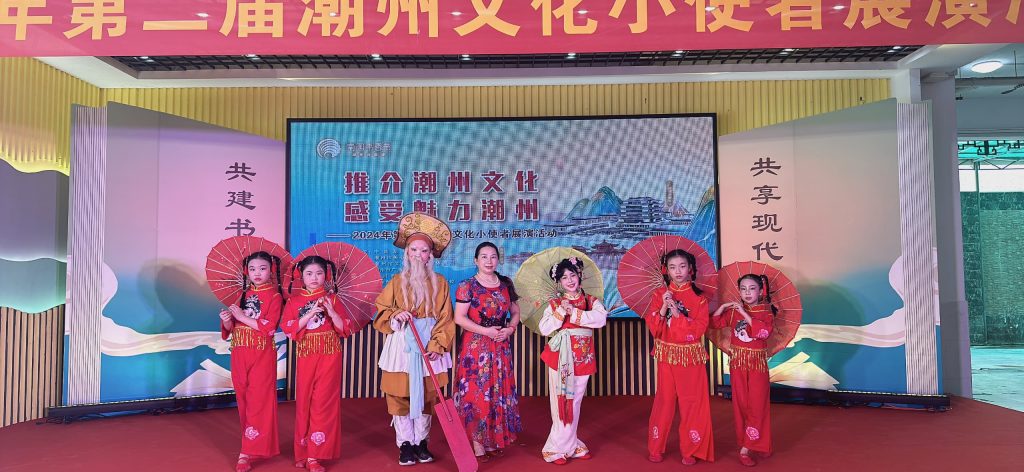
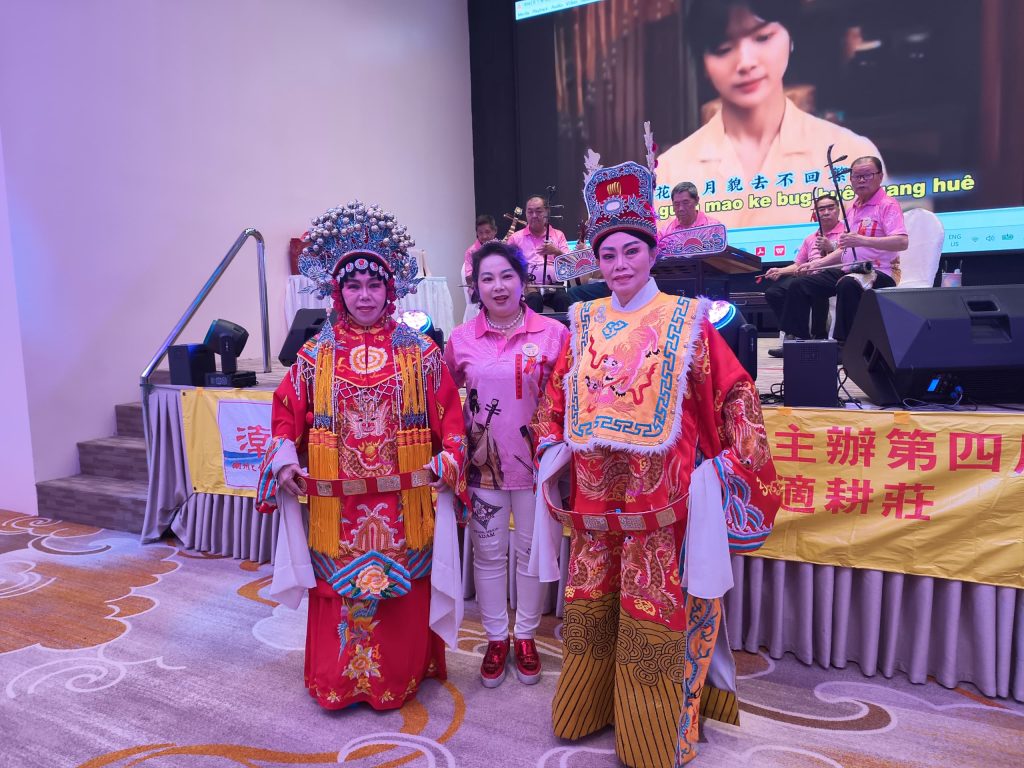
“In the beginning, it was difficult. Nevertheless, the students here were serious about learning the art, and today, I am happy and proud that they have succeeded.”
Although differences remain between her students in China and those in Sarawak, Yang said what mattered most was their willingness to perform on stage and introduce traditional Chaoshan culture to audiences.
Firm in her belief that nothing is impossible for a determined person, Yang hopes more young people will develop an interest in Teochew opera and take up the responsibility of carrying the tradition forward.
For her, the effort goes beyond teaching songs, movements and techniques; it is about ensuring that a part of their ancestral identity remains alive, even generations after their families have left their homeland.
After all, for Yang, the stage is more than a place for performance; it is where generations of Teochew heritage continue to find their voice.