KUCHING: Government departments and agencies must regard complaints and criticism from the public as opportunities to identify weaknesses and improve their service delivery systems.
Premier Datuk Patinggi Tan Sri Abang Johari Tun Openg said an administration with integrity was not one that never made mistakes, but one that was prepared to accept criticism, respond transparently and continuously introduce improvements.
“We must view feedback and criticism from the people as opportunities to improve our service delivery system.
“An administration with integrity is not an administration that never makes mistakes, but one that is willing to accept criticism, act transparently and make continuous improvements,” he said.
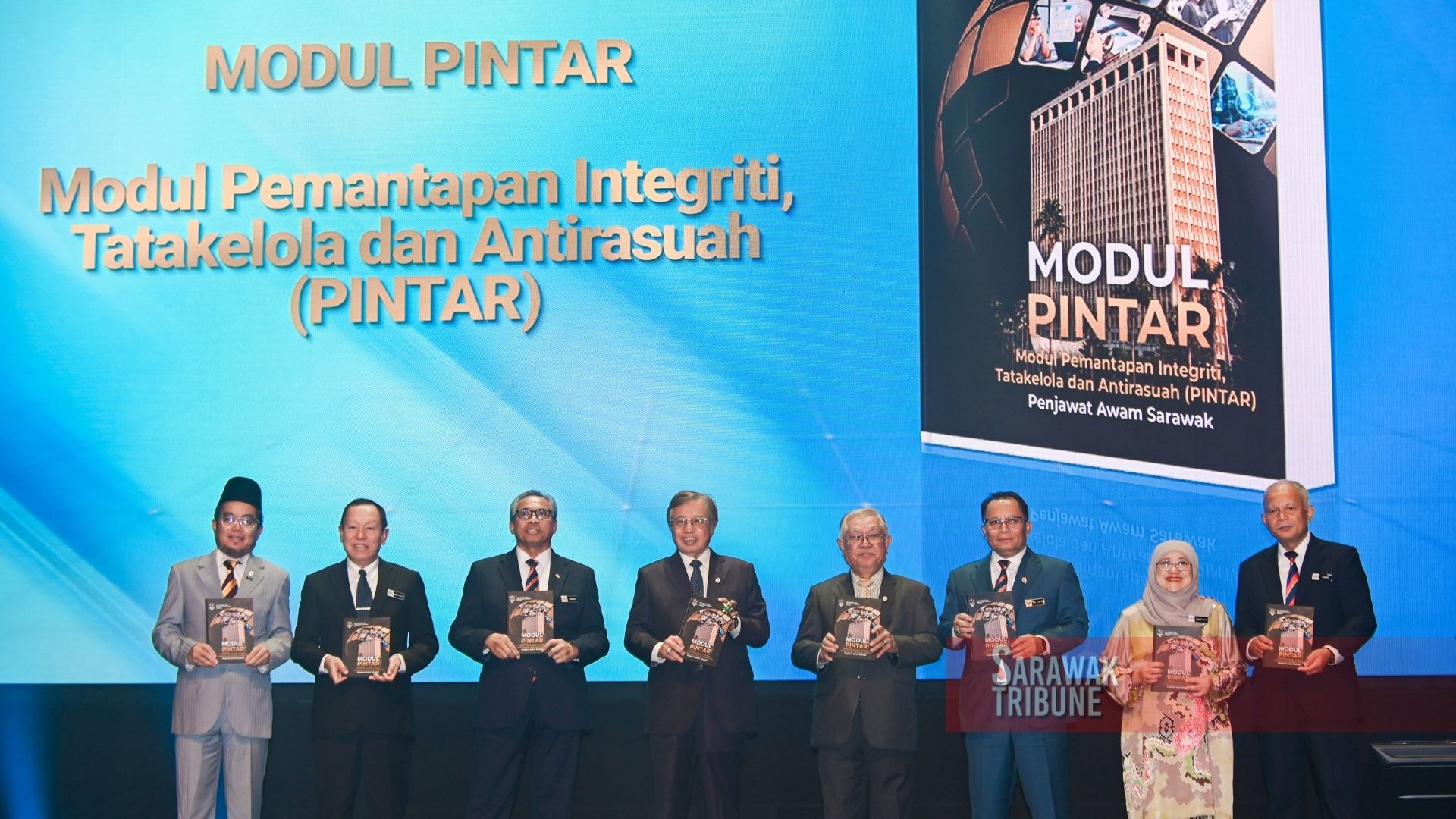
He said this when officiating at the Sarawak Integrity Day 2026 celebration at the Borneo Convention Centre Kuching (BCCK) here today.
Abang Johari said the establishment of the Sarawak Ombudsman was an important step towards ensuring that public grievances continue to be heard through an organised and independent channel.
He said the ombudsman’s role extended beyond receiving complaints to identifying systemic weaknesses, recommending improvements and strengthening accountability within the government administration.
“The ultimate measure of a successful government administration is not merely the number of policies or procedures introduced.
“Instead, it should be assessed through the experience of members of the public when accessing government services,” he said.
Abang Johari said the people should be able to receive services that were fast, fair, of good quality and dependable.
“When the people have confidence in the government’s service delivery, their trust in public institutions will continue to be strengthened,” he said.
At the same time, Abang Johari also highlighted the role of Certified Integrity Officers (CeIOs) in cultivating integrity within organisations.
He said CeIOs served as agents in promoting a culture of integrity and as facilitators in strengthening compliance, governance and risk management.
As such, he called on every head of department to provide the necessary support to CeIOs to enable them to carry out their responsibilities professionally and effectively.
“An ethical public service could only be established when every civil servant understood that the responsibilities entrusted to them were ultimately carried out for the people.
“At the leadership level, heads of departments must set the example through their decisions, use of authority and management of public trust.
“Any weaknesses identified must be addressed through effective corrective action and continuous monitoring to preserve public confidence in the civil service,” he said.
Abang Johari said integrity should not remain merely a slogan but must become a culture and way of life across the entire administrative ecosystem.
“Integrity is a shared responsibility involving the civil service, community leaders, the private sector, educational institutions, civil society organisations and the wider public,” he added.