KUCHING: Leadership continuity is vital to ensure Sarawak’s long-term development agenda is fully realised and rigid term limits for the Premier could be counterproductive at this stage.
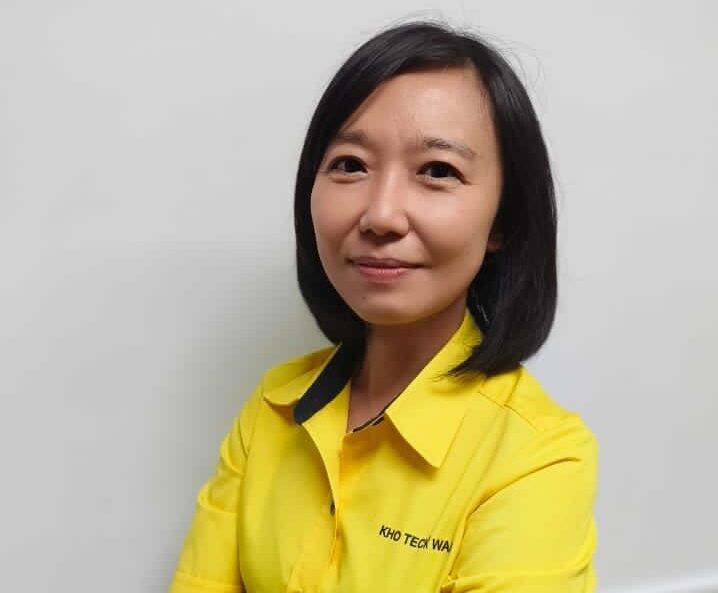
Sarawak United People’s Party (SUPP) Women chief Kho Teck Wan said the leadership of Premier Datuk Patinggi Tan Sri Abang Johari Tun Openg illustrated why major policy initiatives often require more than one political cycle to deliver meaningful outcomes.
She pointed out that the Premier’s priorities include reclaiming Sarawak’s constitutional rights under the Malaysia Agreement 1963 (MA63), particularly in gas distribution, education and healthcare, building long-term state-owned economic capacity through the hydrogen economy and renewable energy roadmaps, investing in human capital via free tertiary education and recognition of multiple education pathways, improving rural and urban connectivity through transport and digital infrastructure, strengthening social inclusivity programmes and advancing institutional reforms.
“All these agendas inherently require more than one political cycle. The continuity of leadership and political stability are necessary to see such policies bear fruit,” she told Sarawak Tribune.
Kho said most of the Premier’s development initiatives are still ongoing and need consistent leadership to ensure effective implementation.
While she acknowledged that strong policies should outlast any individual leader, she stressed the importance of smooth leadership transition and proper succession planning to minimise disruption to Sarawak’s development priorities.
On Sarawak’s rights under MA63, Kho is confident that the Gabungan Parti Sarawak (GPS) leadership is nurturing future leaders who would continue to assert and safeguard those rights, regardless of leadership changes.
“However, nation building and political stability require good leaders and good leaders should not be forced out by term limits,” she said.
Drawing lessons from international experience, Kho cited China’s former leader Deng Xiaoping, who led the country for almost two decades from 1978 to 1997 and oversaw its transformation from rigid socialism to “socialism with Chinese characteristics” through market reforms, special economic zones and opening up to foreign investment.
“China only became a manufacturing powerhouse after more than 15 years of his leadership, and hundreds of millions of Chinese were lifted out of poverty after more than 20 years of his leadership. The lesson we can learn from Deng’s leadership is that structural economic transformation cannot be achieved within one or two election cycles,” she explained.
Kho also pointed to Singapore’s founding prime minister Lee Kuan Yew, who led the republic for 31 years from 1959 to 1990 and transformed it from a poor and unstable port city into a global financial and logistics hub.
“Singapore only reached developed-country income status after nearly 20 years, and it took about 30 years to build strong and self-sustaining institutions such as the civil service, judiciary and anti-corruption system. Nation-building is a generational project rather than a short-term political contest,” she said.
While term limits were intended to prevent abuse of power, Kho said term limits are not a guarantee of good governance.
She also said Malaysia’s political system already empowered the people to change governments and leaders through democratic processes.
“Our political leaders should focus on building strong institutions that prevent abuse of power, instead of creating rigid policies that force out leaders while weak or ineffective institutions remain.
“Term limits are a tool, not a guarantee of good governance. The real safeguard against abuse is strong institutions, accountability and effective performance measurement,” she said.