KUCHING: Sabah is exploring several initiatives for its productive forests to unlock greater economic value by diversifying from traditional timber production.
These initiatives include carbon trading, agroforestry programmes integrating tree planting with oil palm cultivation, forest-based recreation and eco-tourism, and payment for ecosystem services.
Also being explored is renewable energy projects through hydroelectric power generation within forest reserves, according to Sabah Forestry Department’s deputy chief conservator of forests Indra Purwandita Herry Sunjoto.
He said these initiatives are intended to diversify sustainable forest revenue while ensuring that the forests continue to deliver environmental, climate and biodiversity benefits.
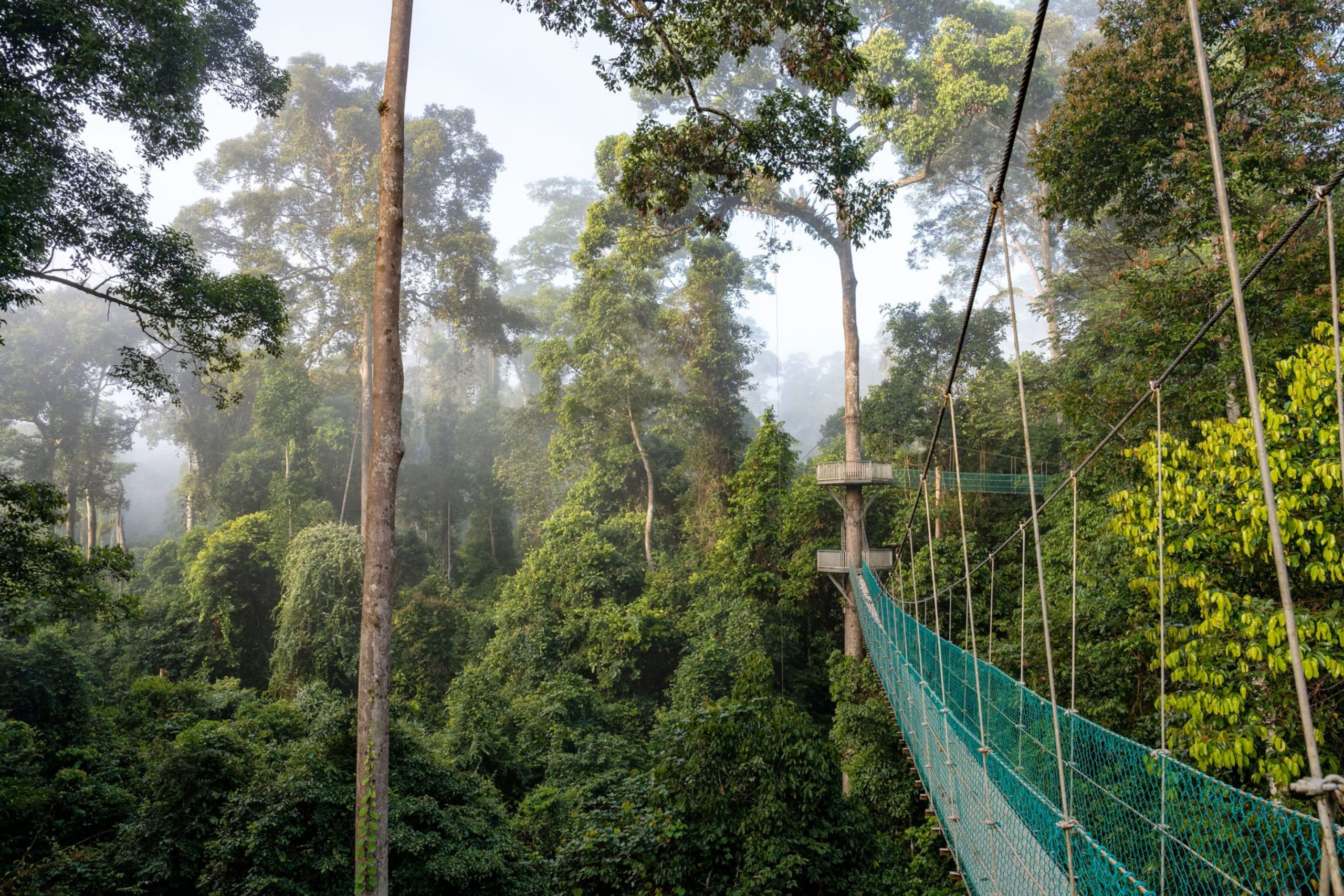
Indra said Sabah continues to maintain approximately 64 per cent forest and tree cover, equivalent to 4.6 million hectares of its total landmass, despite the state’s extensive forest resources, only about 25 per cent is categorised as productive forest.
He noted that Sabah has nearly 1.9 million hectares designated as productive forests and they contribute only about RM160 million annually to state revenue.
“Our challenge today is how to monetise our productive forest areas while continuing to conserve biodiversity and maintain sustainable landscapes,” he said during the Forestry and Nature-positive Food Economy session at the Sabah Asia Pacific Impact Investing for Sustainable Development Summit 2026 recently.
Productive forests comprise merely about 25 per cent of the State’s forest cover. Of the total forest cover, about 3.5 million hectares are within the permanent forest estate while another 700,000 hectares comprise state land forests.
“Production forests are not entirely designated for timber harvesting, with significant portions retained for conservation to safeguard biodiversity. The conservation network also extends to important ecological areas located on state land, alienated land and mangrove ecosystems,” said Indra in a report in International Tropical Timber Organisation (ITTO) Tropical Timber Market Report (July 16-31, 2026).
As such, he stressed that Sabah’s forest landscape is conservation-oriented rather than production-driven.
He said about 784,000 hectares state land forest and de-gazetted forest areas remain dynamic and may be developed for various land uses.
Using a conservative comparison, he said production forests currently generate only around RM110 per hectare annually whereas oil palm plantations can generate between RM7,000 and RM10,000 per hectare each year.
“This illustrates the enormous challenge of maintaining forests while foregoing more profitable land uses,” he added.
As the present economic productivity of Sabah forests remains relatively low, Indra said to address this, Sabah is introducing a Conservation Area Network (CAN) approach designed to support sustainable landscapes by integrating biodiversity conservation with economic development.
Under CAN, Sabah has identified 10 large landscapes as key biodiversity areas covering some 2.5 million hectares or about 33 per cent of the state’s total land.
These landscapes include legally protected conservation areas, such as forest reserves, Sabah park and wildlife sanctuaries as well as conservation zones within production forests.
He said Sabah possesses the largest mangrove forests in Malaysia, covering about 325,000 hectares or roughly 60 per cent of the country’s total mangrove forests.