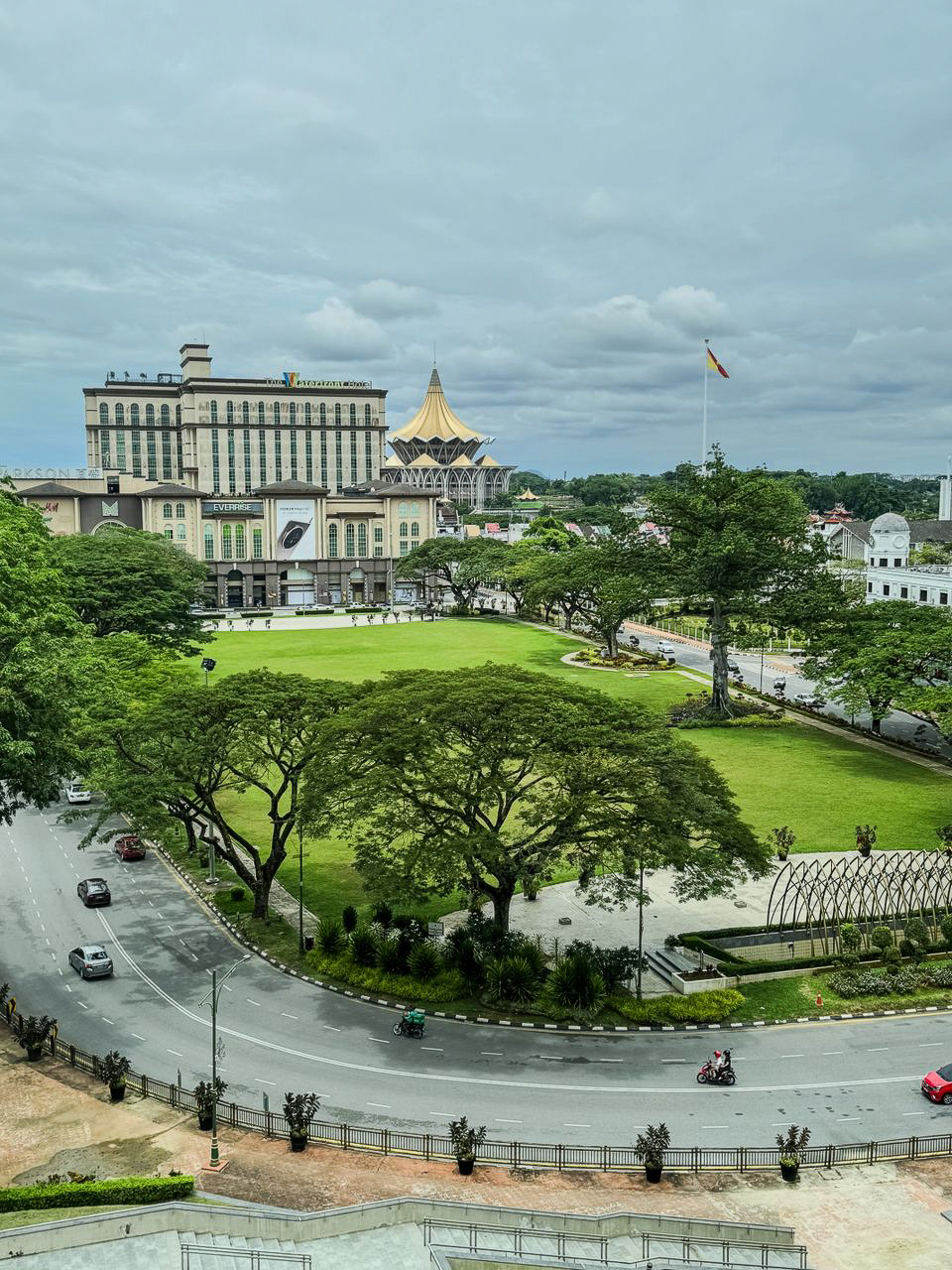
PADANG Merdeka, formerly known as Padang Sentral and earlier as the Esplanade Garden, stands as one of Kuching’s most iconic public spaces.
The field is located in the centre of Kuching’s heritage sector, just a short stroll from the Borneo Cultures Museum.
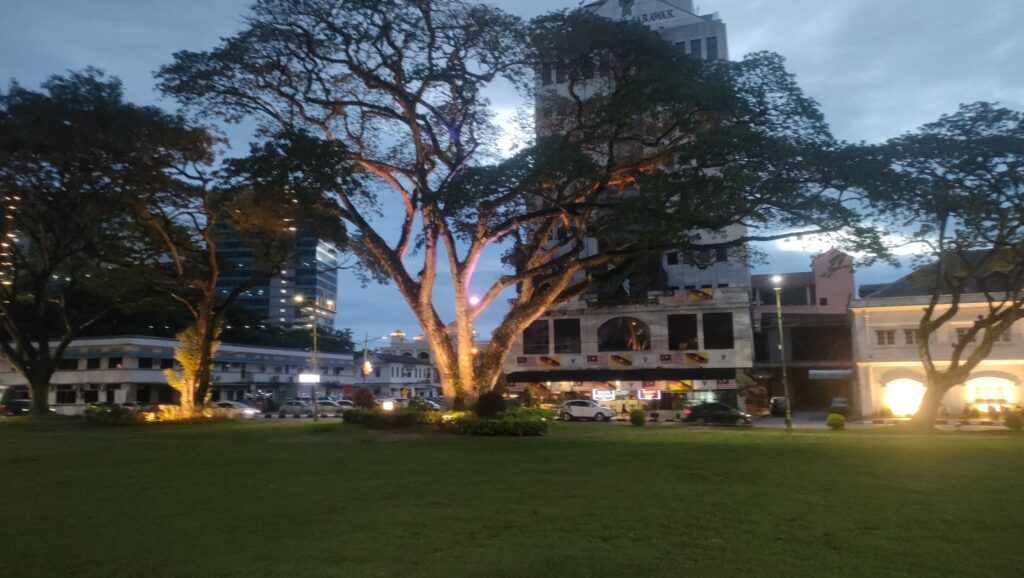
It is graced by the massive century-old kapok tree, which occasionally ‘snows’ in front of the Merdeka Palace Hotel, where the famous Aurora Hotel was once located, and is overlooked by the historic St Thomas’ Cathedral.
This historic field is more than an open green in the city centre.
For over a century, it has been a social stage, a political arena, and a cultural meeting point, shaping the collective memory of Sarawak’s people and anchoring their identity across generations.
These features bring together three rich perspectives: Dr Suffian Mansor, Dr Nur Auni Ugong, and Samsol Morshidi Bujang, each of whom offers personal memories and scholarly reflections on the enduring significance of Padang Merdeka (literally Independence Field).
Childhood memories woven into history
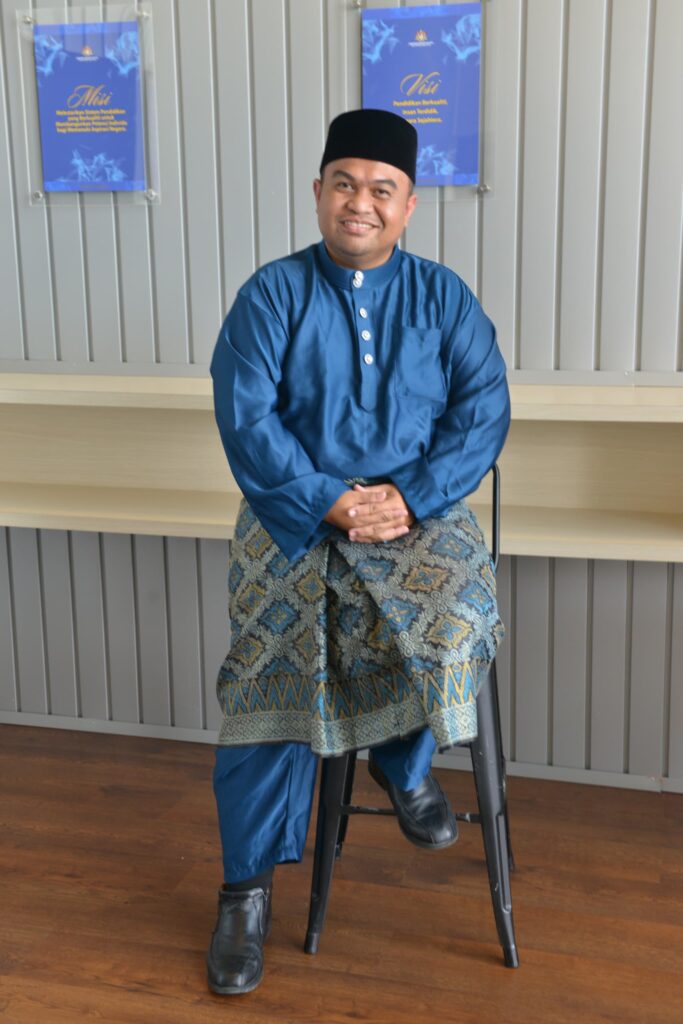
For Suffian, Head of the History Programme at the Centre for History, Politics and International Affairs under the Faculty of Social Sciences and Humanities at Universiti Kebangsaan Malaysia (UKM), Padang Merdeka is inseparable from his own family history.
“Padang Merdeka, or previously known as Padang Sentral, is a place of immense historical significance. It was here that the formation of Malaysia was proclaimed for Sarawak,” he recalled.
He remembers when his mother used to take the family to watch decorated float parades that brought dazzling colour to the city’s heart in the 1970s and 1980s.
“My mother often took us to watch the colourful parades. There were schoolchildren carrying bright lanterns and hawkers selling snacks, and I still remember the roasted chickpeas my mother loved to buy.
“As a child, it was magical to see such beauty and excitement in one place,” he said.

Meanwhile, Samsol, a history researcher born and raised in Kuching, has equally vivid recollections.
“Since Kuching became a city in 1988, I’ve seen Padang Sentral as the centre of Sarawak’s arts and culture.
“As a boy, I watched Sarawak’s cultural festivals showcasing traditional sports like tibaw and the Bisaya buffalo races from Limbang. I even saw a go-kart race here in 1988,” he said.
However, two memories stand out the most for him.
“In 1993, I marched with my school contingent in the state-level Maulidur Rasul procession,” he shared.
“That same year, I heard ‘Negaraku’ played with a marching band for the first time during Malaysia’s National Day celebration. Those moments are unforgettable.”

For Auni, the Deputy Dean (Student Affairs and Alumni) for the Faculty of Social Sciences and Humanities at Universiti Malaysia Sarawak (UNIMAS), Padang Merdeka’s memories stretch across centuries of history.
“This field, which was formerly known as Padang Sentral, or Esplanade Garden before that, has always been a social and political arena. Under the Brooke administration, it was the recreational ground where music and games were held.
“By the early 20th century, with the police headquarters nearby, it became the Police Ground for drills and community sports.
“Later, under British colonial rule, it was renamed Padang Sentral and hosted major ceremonies, from Queen Elizabeth’s birthday to the 1955 Procession of Solemn Witness, which drew thousands of Christians from across Borneo.
“Then, in 1963, came the loudest cheer of all, the proclamation of Malaysia,” she said from a historical point of view.
Public square that builds unity
They agree on one central truth: Padang Merdeka has long been a place where Kuching’s diverse communities meet as equals.
“Any programme or event held here always involved everyone, regardless of race or religion.
“This field has been where people greet one another, strengthen friendships and nurture goodwill. The sense of unity it nurtured continues to this day,” Dr Suffian said.
Auni described Padang Merdeka as a multi-layered public space whose meaning evolves with time.
“From colonial leisure ground to today’s national square, every era has left its mark. After 1963, it became a site for Malaysia Day and Sarawak Day celebrations, embedding a sense of shared national identity,” she said.
For Samsol, the inter-ethnic interaction is the field’s lifeblood.
“Here is where Sarawakians of many cultures come together to celebrate the arts. Memories of these events don’t just live on in photographs or digital archives; they stay alive in our hearts.
“Sarawak is known as a symbol of unity, and Padang Merdeka proves it every time people gather here,” he added.
Furthermore, major state occasions, including National Day, Malaysia Day, Sarawak Day, and large religious celebrations like Maulidur Rasul, have further deepened that identity.
“Such celebrations are not just symbolic rituals. They are powerful acts of collective remembrance, reinforcing that we share one homeland despite different languages, customs and faiths,” Auni added.
Guarding against the risk of forgetting
But as Kuching modernises, there is concern that Padang Merdeka’s historical role could slowly fade.
As new landmarks rise and old ones disappear, it threatens to turn the field into a passive park rather than a living monument of the city.
“We must preserve Padang Merdeka forever, not only as a field rich with Kuching’s history, but as a site that tells the larger story of Sarawak,” Suffian urged.
He proposed that the state government gazette Padang Merdeka as a Sarawak Heritage Site and create a historical monument or interpretive installation to narrate its past.
“By formally recognising it as a heritage landmark, we ensure the field remains alive for generations,” he explained.
Auni suggests modern methods of historical interpretation, including digital storytelling and QR codes to guide visitors through its layered history.
“Preserve the century-old trees, maintain its landscape, and even consider UNESCO recognition under the Historic Urban Landscape framework. Above all, it must remain a ‘living space’ through ongoing cultural events and festivals,” she said.
Samsol strongly supports the inclusion of the field in Old Kuching Heritage initiatives.
“The present generation must understand the role that Padang Merdeka has played in fostering unity. Its long, illustrious service as a silent witness to Sarawak’s growth deserves to be remembered and protected,” he emphasised.
Living heritage for generations
Located at the heart of the city, Padang Merdeka remains more than a field. It is a living monument, a keeper of memories, and a shared inheritance that binds Sarawak’s past, present and future.
Padang Merdeka’s story is one of transformation and continuity. It began as a colonial-era recreational ground, became a stage for anti-colonial hopes and independence, witnessed the birth of Malaysia, and today serves as the city’s premier civic space.
“Through this platform, our artists, leaders and communities are recognised not only at home but on the world stage. Every parade and gathering here deepens our collective memory, and strengthens our shared identity,” Auni reflected.
After all is said, all three voices converge on a single call: to protect and enliven the iconic Padang Merdeka.