WELLINGTON, New Zealand: Sarawak aims to strengthen collaboration with New Zealand in developing the state’s cattle industry through knowledge exchange, modern breeding systems, and improved feedlot and traceability practices.
Minister for Food Industry, Commodity and Regional Development, Datuk Seri Dr Stephen Rundi Utom, said the state plans to send veterinary officers for professional training and technical attachments in New Zealand as part of a structured knowledge-transfer initiative to enhance technical expertise and field experience.
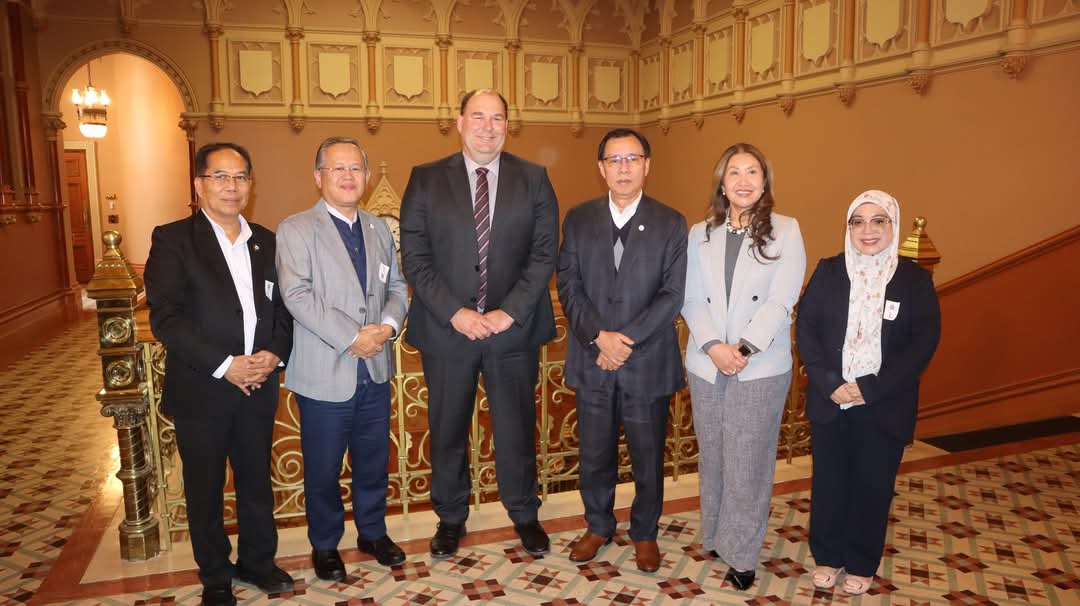
He said this during a courtesy call on New Zealand’s Minister for Biosecurity and Food Safety, Associate Minister of Agriculture (Animal Welfare and Skills) and Associate Minister for the Environment, Andrew Hoggard, in Wellington.
Dr Rundi also expressed Sarawak’s interest in exploring business partnerships in the dairy sector through technology sharing and potential joint ventures with New Zealand producers.
“As New Zealand currently restricts live-cattle exports, we are considering the importation of bovine semen from New Zealand to improve local breeding quality and accelerate herd expansion,” he said.
He added that Sarawak is keen to study New Zealand’s biosecurity framework, particularly its border control systems, disease-surveillance networks and emergency-response mechanisms, which have earned the country its global reputation as a “disease-free” producer.
“New Zealand’s success lies in its comprehensive, science-based model that unites policy, research and on-ground implementation,” he said.
“Sarawak aims to adapt these best practices to build a resilient and globally competitive livestock sector.”
Following the meeting, the Sarawak delegation attended a series of technical briefings at the Ministry for Primary Industries (MPI), where senior officials, including Jim Sim, Dr Jed Johnson, Dr Lia Missena and Glen Webber, presented on ‘Verification Services’, ‘The Halal Assurance System’ and ‘The Animal Health Surveillance Programme’.
These sessions provided Sarawak with deeper insights into New Zealand’s integrated food-safety regulation, halal certification, and animal-health governance.
Dr Rundi said the engagements marked a significant step towards establishing long-term cooperation in livestock research, veterinary capacity-building, dairy investment and biosecurity management.
“We are committed to aligning Sarawak’s food and commodity sectors with international best practices,” he stressed.
“This partnership will accelerate our journey towards becoming a clean, competitive food-producing state by 2030.”