Recognising July 22 pays tribute to Sarawak’s unique pre-Malaysian history and political journey.
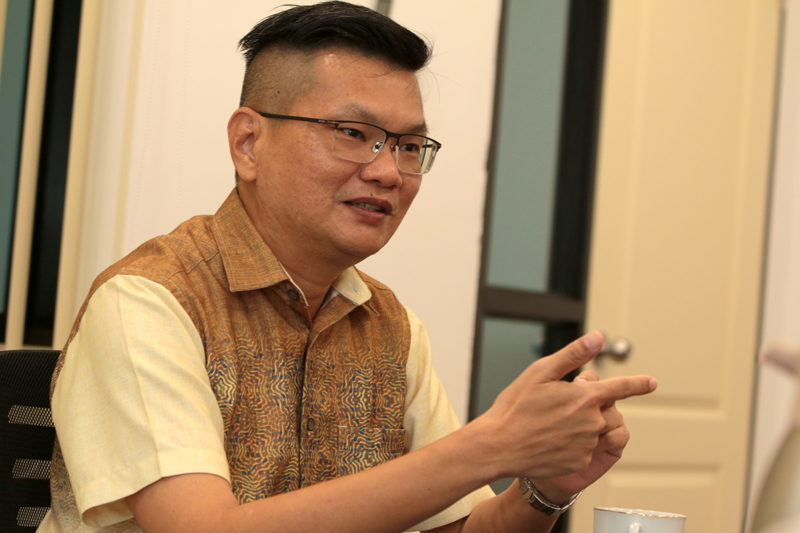
“Sarawak Day has evolved from an important historical event into a strong cultural and political symbol — Sarawak First,” said Universiti Malaysia Sabah (UMS) Associate Professor Datuk Dr Lee Kuok Tiung.
He noted that Sarawak is known for its remarkable social identity of unity, with more than 30 ethnic groups living in harmony without the intense polarisation often seen elsewhere.
Moreover, Sarawak Day has become a historical reminder of Sarawak’s role in the formation of Malaysia through the Malaysia Agreement 1963 (MA63).
“This reminds us of greater autonomy rights over local resources, education, healthcare and legislative powers,” he added.
Lee said Sarawak Day is about the story of origins, passed down to Sarawakians from generation to generation, reminding them of the culture and values that have been inculcated among the people.
“The different dates represent distinct milestones in the nation’s formation.
“July 22 isn’t just a collection of dusty dates or a specialised academic subject meant only for textbooks; it is a living, breathing narrative of who we are.
“July 22 was not officially declared a public holiday until 2016 under the leadership of the late Chief Minister Pehin Sri Adenan Satem (Tok Nan), who sought to restore the state’s pride and historical awareness.
“Sarawak Day marks Sarawak’s granting of self-government by the British Empire.
“On this day, the last British Governor of Sarawak, Sir Alexander Waddell, left the Astana (Governor’s Palace) and handed over executive power to the people of Sarawak. On July 22, 1963, the first local cabinet was formed and Tan Sri Datuk Amar Stephen Kalong Ningkan was appointed as the first Chief Minister of Sarawak,” he said.
The Sarawak leaders then negotiated to form the Federation of Malaysia on Sept 16 the same year.
Lee emphasised the importance of distinguishing between Sarawak Day, Independence Day and Malaysia Day in the nation-building process.
“These three historical dates should be carefully explained in the History textbooks used in national schools, both primary and secondary, to produce Malaysians who value integration and cultural empathy over assimilation, so that racial and regional diversity remains a fertile and unique strength.
“At the same time, this historical mould forms citizens who recognise their allies (Tanah Melayu, Sabah and Sarawak) as equal pillars while firmly respecting the social contract and the Federal Constitution,” he said.
He opined that this awareness instils a deep sense of belonging in every citizen, thereby encouraging them to always value and defend the homeland’s peace and sovereignty.
For many years, the national narrative has placed great emphasis on Aug 31, 1957, as “Independence Day”, even though, in terms of historical fact, Sarawak (and Sabah) was not part of Malaya in 1957.
He recalled the content of history textbooks for the majority of Sabahans and Sarawakians who lived through the 1970s until the early 2000s, saying that one could feel that the national historical narrative was very “Malaya-centric”.
“Sarawak did not join the existing country, Malaysia, but instead worked together as a common entity to create a new country on Sept 16, 1963.
“Thus, July 22 pays tribute to Sarawak’s history and political journey, a legacy that should be remembered for generations to come.”