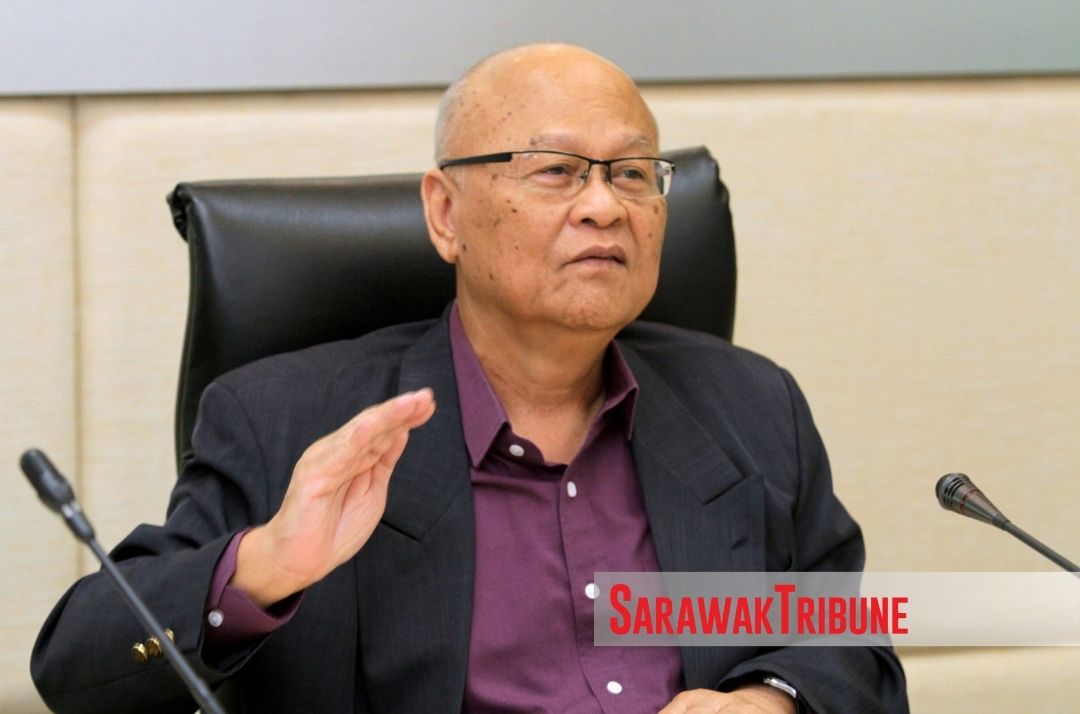
KUCHING: Sarawak is poised to emerge as Malaysia’s most economically advanced state by 2030 if current policies, investments and development momentum are sustained, according to economic analyst, Datuk Peter Minos.
Looking five years ahead, Minos believes Sarawak’s economic trajectory is firmly upward, driven by strong political stability, strategic infrastructure investments, prudent financial management, and a growing emphasis on human capital development.
“In 2030, Sarawak will be pretty advanced and progressive. By the way Sarawak is now being run and the many things done and achieved thus far, I am certain of that,” he said.
Minos attributed much of the state’s positive outlook to political stability under the leadership of Premier Datuk Patinggi Tan Sri Abang Johari Tun Openg and the continued strength of Gabungan Parti Sarawak (GPS).
He noted that greater political unity would allow the state government to focus more effectively on economic and social development.
“Unity builds and disunity destroys. More and more people are gravitating towards GPS because of the way the Premier has led both the coalition and Sarawak,” he said.
While acknowledging that certain groups may attempt to challenge Sarawak’s political cohesion, Minos said such efforts are unlikely to derail progress as long as the majority of Sarawakians continue to support the state’s development agenda.
Economically, he described Sarawak as being on “solid ground”, pointing to a series of strategic assets and mega-projects that have laid the foundation for long-term growth.
Among these are the Coastal Highway Network, major bridges along the Pan Borneo Highway, the acquisition of Bintulu Port, the establishment of AirBorneo, the state’s significant stake in Affin Bank, the role of PETROS, the Development Bank of Sarawak (DBOS), Bakun Dam, as well as plans for a new deep-sea port and international airport at Tanjong Embang in Asajaya.
“These projects have created a solid foundation for a really steady economic take-off,” he said.
Minos also highlighted Sarawak’s annual budget, which now stands at about RM12 billion, as evidence of the state’s strong fiscal position.
According to him, the large development allocation has enabled the implementation of numerous projects across urban and rural areas, bringing tangible benefits to the people.
“More funds mean more development projects, and we can see these projects throughout Sarawak, both large and small,” he said.
One of the most transformative initiatives, he added, is the state government’s commitment to providing free tertiary education.
Minos described the policy as a long-term investment that will produce a skilled and knowledgeable workforce capable of driving Sarawak’s future economy.
“Good education, skills and expertise matter more than natural resources in determining a country’s progress. This initiative will help build the talents Sarawak needs to become fully developed,” he said.
Under the best-case scenario, Minos foresees Sarawak becoming a developed and high-income state by 2030, with both urban and rural communities enjoying improved living standards.
He believes the state could outperform all other Malaysian states in terms of economic development if current plans are successfully implemented and future leaders continue the policies that have driven Sarawak’s progress.
“Hopefully, the next generation of leaders will be as good as, or even better than, the present ones in sustaining Sarawak’s development. Only time will tell,” he said.