The first instalment examines the growing threat of financial fraud in Sarawak, exploring how increasingly sophisticated scams, AI-powered tactics and psychological manipulation are driving rising losses and victimisation.
Financial scams are becoming increasingly sophisticated, with scammers leveraging artificial intelligence (AI), social engineering and digital platforms to target victims and cause millions of ringgit in losses nationwide.
Sarawakians are not spared from the growing threat, with recent cases highlighting how victims can be deceived through seemingly legitimate offers, investment opportunities and online interactions.
In Kuching, a woman recently lost RM145,247 after falling for a bogus offer to secure subcontracting work for a purported project in Sabah.
In Miri, a 69-year-old man lost RM367,300 after falling victim to a non-existent investment scheme promoted through social media while another individual lost RM287,000 after being lured into a fake online stock investment scheme promising lucrative returns.
The cases are part of a wider trend that has seen commercial crime surge in Sarawak.
Sarawak Police Commissioner Datuk Mohamad Zainal Abdullah said during a recent monthly assembly that the Commercial Crime Investigation Department (CCID) recorded 2,134 cases between Jan 1 and May 31 this year, compared with 1,505 cases during the same period last year.
This represented an increase of 629 cases, or 41.79 per cent, with victims losing more than RM71 million.
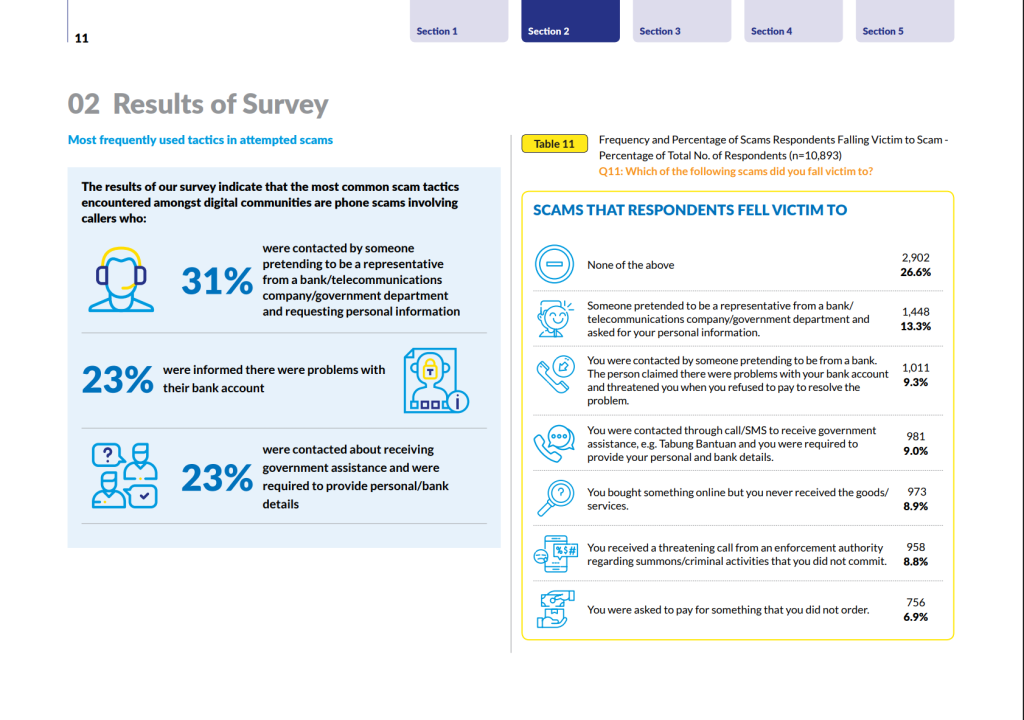
He said online scams remained the biggest contributor, with syndicates using various tactics to manipulate victims, including e-commerce scams, bogus investment schemes, non-existent loan offers, fake job opportunities and phone scams.
“Syndicates are employing a wide range of tactics to deceive victims, including manipulating emotions, promising lucrative returns within a short period and impersonating authorities or legitimate companies,” he was quoted as saying.
The situation is reflected nationally, with Bank Negara Malaysia (BNM) reporting that Malaysians lost RM2.8 billion to financial scams last year, up sharply from RM1.57 billion in 2024.
But beyond the growing financial losses, experts say the nature of scams is also changing rapidly as criminals adopt technologies that allow them to operate at greater scale and with greater precision.
AI accelerates scam operations
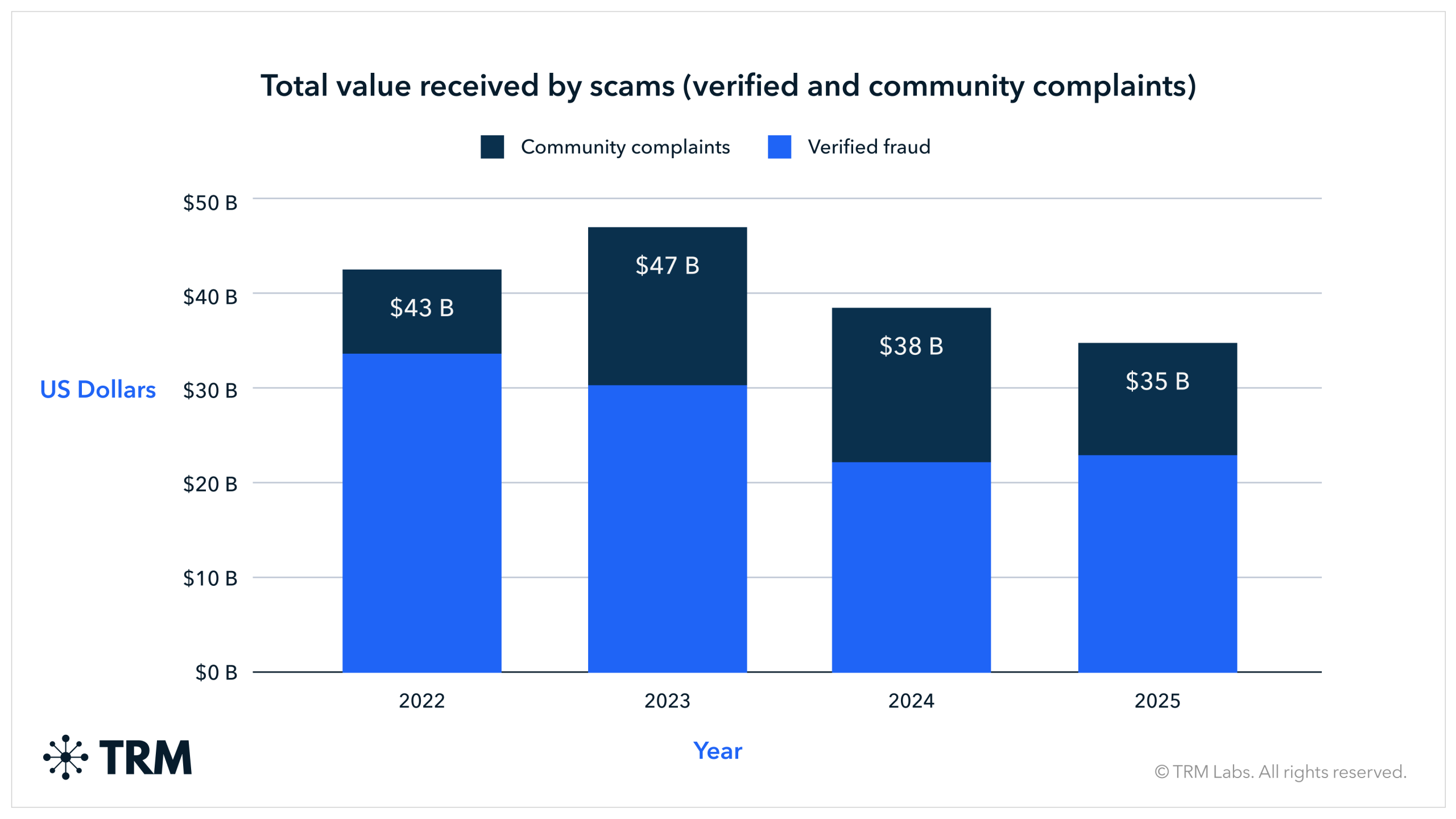
TRM Labs head of Deployment Strategy, APAC, Jonno Newman said scam losses are expected to continue rising in both value and the number of reported cases, with Malaysia recorded RM830 million in losses in just the first five months of this year.
Online scam cases also more than doubled, from 35,470 in 2024 to 74,744 in 2025, he said.
“What’s really driving this is AI. Businesses use AI to scale operations and improve efficiency, and we’re seeing illicit actors do exactly the same thing,” Newman told Sarawak Tribune in a recent written response.
He said scammers are using AI to reach more victims, expand their operations and operate chatbots capable of communicating in victims’ native languages.
“These chatbots also store the context of earlier conversations and are trained to foster relationships. Previously, a scammer had to remember every detail of a conversation and reread old messages to keep the scam going.
“Now AI remembers all of that for them and handles responses.”
Citing TRM Labs’ 2026 Crypto Crime Report, Newman said AI-enabled scam activity had increased by roughly 500 per cent over the past year as fraud networks increasingly used generative AI to scale outreach and persuasion.
He said the trend is not unique to Malaysia, with similar scam patterns emerging globally and anti-scam centres operating across the Asia-Pacific and other regions to combat the growing threat.
“What makes Malaysia’s situation distinctive is geography and proximity to the epicentre of organised scam infrastructure.”
Newman said much of the fraud is engineered and staffed in Southeast Asia, with scam compounds across the region serving as operational hubs and often relying on trafficked labour.
He said the networks could extend beyond the region, with logistics and money laundering coordinated through parts of East Asia, the Middle East and Africa, while victims were spread globally.
“Malaysia sits close to major compound clusters in Myanmar, Cambodia and Laos, and shares payment rails, messaging platforms and language links with the networks running these operations.
“This likely explains both the scale of exposure and why enforcement requires close regional coordination, not just domestic policy.”
One of the most concerning developments, he said, was the use of deepfake technology.
He said scammers could now conduct real-time face and voice swaps, making it increasingly difficult for victims — and even their families — to identify whether they are interacting with a genuine person.
Scams spread across digital channels
From the telecommunications perspective, CelcomDigi Berhad head of Sustainability, Philip Ling said scams are no longer confined to a single channel or sector.
Citing a GSMA report, he said scammers were exploiting communication networks, digital platforms and financial systems, ranging from calls and SMS to messaging applications, social media and digital payment platforms.
He said AI and other emerging technologies were further accelerating the evolution of scam tactics.
“Scammers use highly convincing phishing messages, impersonation that includes synthetic voices and social engineering to gain trust and pressure people into revealing information or making a transaction.”
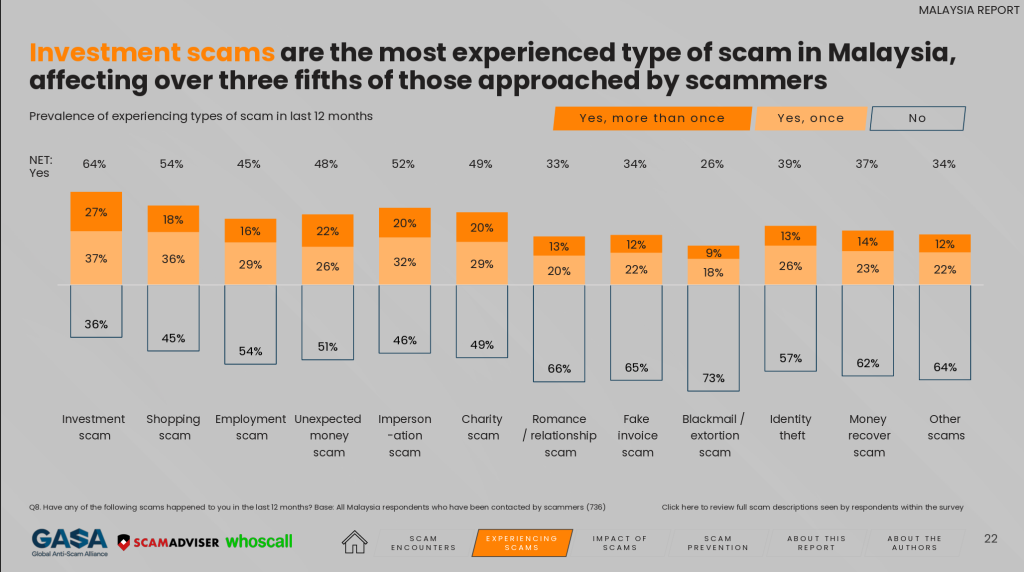
Citing the State of Scams in Malaysia Report 2025, Ling said investment scams remained the most common type, followed by online shopping and job scams.
He also highlighted the growing use of major events, such as concert tours, to lure victims through fake ticket sales.
From financial crime to systemic risk
The threat is not limited to individual consumers. Rachael Johnson, global head of Risk Management and Corporate Governance for Policy & Insights at ACCA, said almost everyone is becoming a potential target.
She said consumers were targeted through online scams, phishing and fake investments, while finance professionals, procurement teams, human resources departments and senior executives were increasingly being targeted as well.
“Criminals are looking for the fastest route to money, data or influence, and AI is helping them identify and exploit those opportunities at a scale we have not seen before.”
Johnson said fraud had evolved from isolated incidents into a systemic organisational risk driven by digitalisation, AI and increasingly organised criminal networks.
“It is no longer simply a cybersecurity or compliance issue — organisations should embed fraud risk management into governance, enterprise risk management and day-to-day decision-making.”
Meanwhile, TrustDecision Data & AI chief officer Dr Simon Liu said scammers could adopt new generative AI tools almost immediately, using cloned voices, deepfake video calls and personalised scripts in fluent Bahasa Malaysia at relatively low cost.
He highlighted another challenge: many online fraud cases involve victims themselves authorising transactions.
Liu said BNM’s 2025 Annual Report found that about 95 per cent of online fraud cases involved authorised transactions.
“In other words, the victims approved the transfers themselves. Nobody hacked the bank. The scammer talked, and someone pressed confirm.”
He said this had fundamentally changed the nature of fraud, as conventional security measures such as passwords, one-time passwords and encryption could not prevent a victim from willingly transferring money after being manipulated.
Why victims continue to fall for scams
Newman said the psychological tactics used by scammers were a major reason scams remained effective.
In romance scams, for example, perpetrators gradually build trust and isolate victims from friends and family who might otherwise recognise warning signs.
“I often say, ‘you can’t see red flags when you are wearing rose-coloured glasses’.”
He said scammers often worked from established scripts and were trained to counter doubts raised by victims.
Manufactured urgency was another common tactic, he said, with scammers creating emergencies or pressure points that made victims feel compelled to act immediately.
While public awareness remained important, Newman said prevention could not rely on education alone.
Johnson similarly called for a shift from simply teaching people to recognise scams towards building stronger verification habits.
“Before making an investment or transferring money, pause and ask: how can I independently verify this information? Can I confirm it through another source? Can I slow the decision down?”
She said fraud resilience required a combination of technology, governance, education and a culture that encouraged people to question information that appeared credible.
Meanwhile, Ling said digital safety had become the first line of defence as scammers increasingly exploited platforms people used daily.
He urged the public to be cautious about disclosing personal information, OTPs, PINs and passwords, clicking unfamiliar links or opening APK files from unverified sources.
● The second instalment of this series will examine the challenges facing financial institutions and how AI is changing the way they approach fraud prevention.