KUCHING: Competing for B40 consumers comes down to a simple proposition: keep prices within reach without asking households to compromise too much on quality.
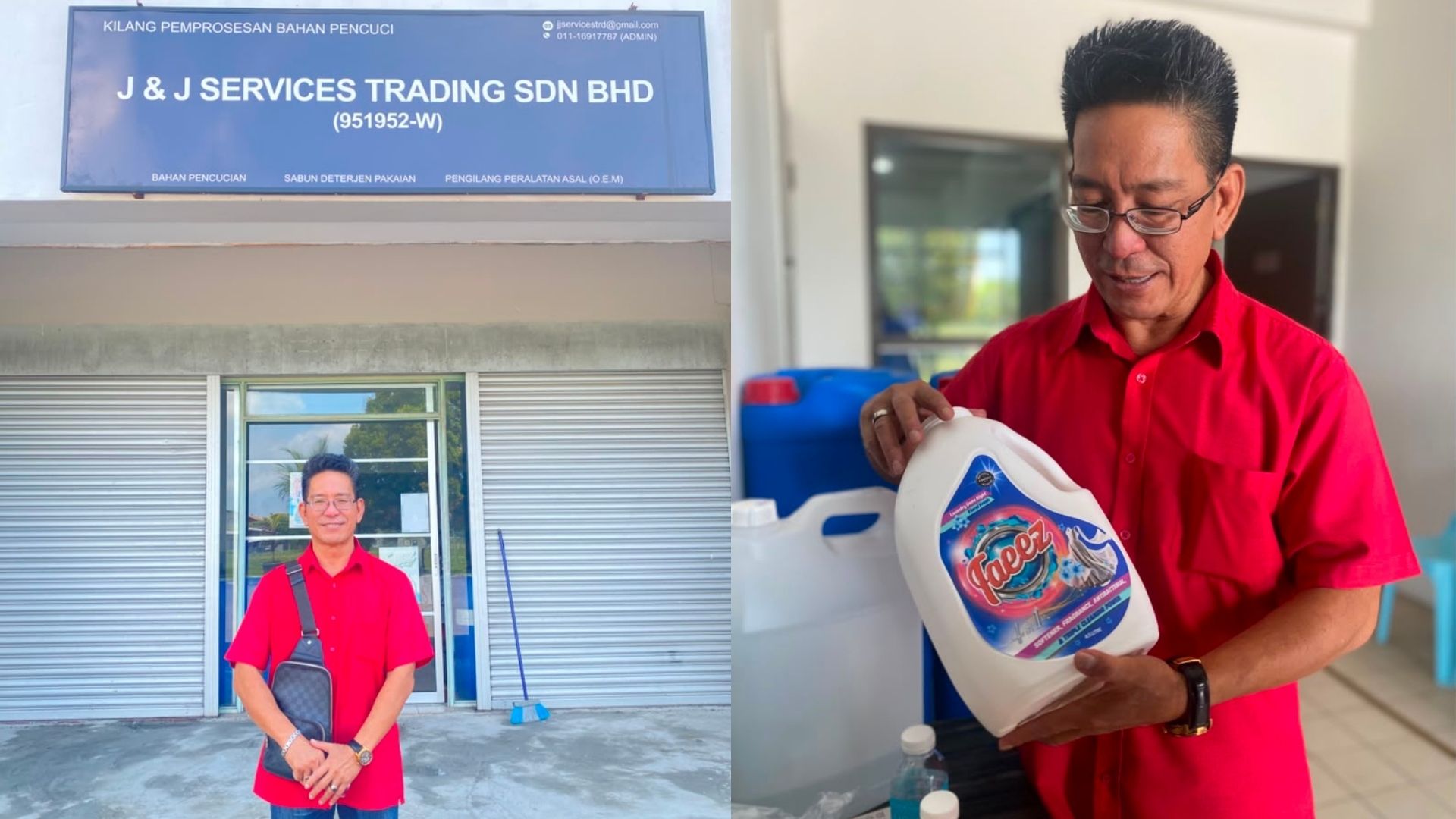
Founder of FAEEZ Detergent Addruce Mijim Abdullah said the company deliberately chose to focus on lower-income households because they make up a sizeable consumer market.
“We focus on the B40 group because they represent a significant portion of the population.
“We cannot sell premium products at premium prices to this segment. Therefore, we must understand the market and identify what matters most to consumers, including price, quality and user experience,” he told Sarawak Tribune.
That understanding is built through data collected on purchasing patterns, household spending and consumer profiles.
Addruce said the information helps FAEEZ identify potential customers before deciding how to market its products and, just as importantly, what consumers are willing to pay for them.
The challenge is then to deliver cleaning performance at that price.
“Our product quality is nearly on par with Dynamo.
“The main difference lies in the fragrance profile, as certain premium brands utilise essential oils (EO), which carry higher costs compared to concentrated fragrance oils (FO),” he said.
Rather than matching every feature offered by premium brands, FAEEZ adjusts its formulations to keep production costs under control while maintaining performance.
Its dishwashing liquid, for example, is being refined to make it gentler on the hands, with the company exploring the use of moisturising agents.
The improvement could add slightly to manufacturing costs, but Addruce believes a better user experience could translate into repeat purchases.
“Our profit margin per unit may be smaller, but we focus on volume.
“If consumers appreciate using our product, we secure repeat purchases and achieve larger overall sales turnover,” he said.
Achieving consistent quality presents its own challenges.
FAEEZ carries out shelf-life testing to assess stability and storage endurance, while preservative levels are kept within regulatory limits. The company also collects household usage data to estimate demand.
Raw water quality was another hurdle during product development because variations in mineral content can affect formulation stability.
Although distilled water and Reverse Osmosis (RO) systems can produce better results, Addruce said their cost can be difficult for smaller manufacturers to absorb.
“As a result, we identified alternative filtration methods to reduce heavy mineral content in raw water, ensuring a more consistent chemical formulation,” he said.
The standards will become even more important as FAEEZ develops products such as baby wash, where gentler formulations, laboratory testing and certification are required before they can be sold.
Getting onto supermarket shelves has been another part of the learning process.
After initially encountering resistance from retailers unfamiliar with the local brand, FAEEZ secured a partnership with Everwin Supermarket, giving it an opportunity to test consumer response in an established retail environment.
The company now plans to expand into more supermarket chains across Central and Northern Sarawak, with a focus on outlets that attract strong customer traffic.
Addruce said the next stage of growth will continue to depend on market data, production readiness and consumer feedback, while maintaining credibility and ensuring product claims remain accurate.