SIBU: A bowl of soup, a piece of traditional Teochew kuih and a plate of familiar hometown delights may not appear out of the ordinary, but for the Teochew community, they carry generations of memories, identity and cultural heritage.
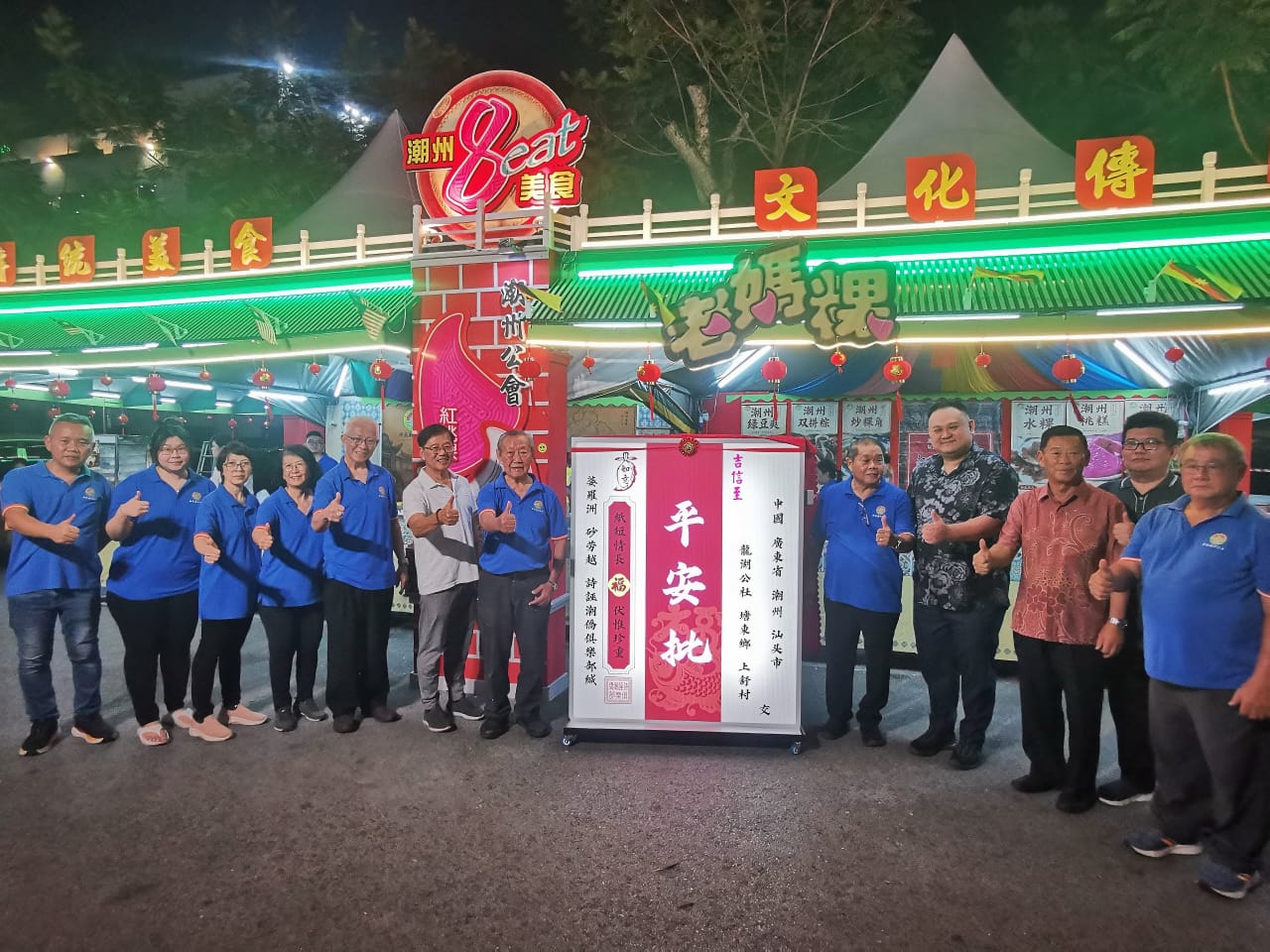
That was the message behind the “Teochew EIGHT EAT Eight Districts Food Stall”, launched on Sunday evening (Sept 6) by the Sibu Teochew Association (STA)as part of the Borneo Cultural Festival (BCF)2026, turning traditional cuisine into a platform for cultural preservation and inter-community understanding.
The BCF held at Dataran Tun Tuanku Bujang here, covering Phase 1 and Tradex at Phase 2 will run from Sept 5 to 14.
At the launching, STA chairman Kapitan Su Ngio Kee said food was one of the most accessible ways to introduce culture to the wider community, particularly to younger generations who might otherwise become increasingly disconnected from their ancestral roots.
“Food is the most approachable language of culture. It needs no translation — with just one bite, people can experience the warmth of home,” he said in his address at the opening ceremony.
The event was attended by community leaders, representatives of various associations, members of the Teochew community and members of the public.
Su said the Teochew cuisine showcased at the festival represented far more than taste and culinary tradition.
Behind every traditional dish was a story of migration, family and perseverance — reflecting the journey of Teochew forefathers who travelled from their homeland in Chaoshan and eventually established their lives in Borneo.
He said the food heritage preserved in Sibu today was the product of generations of cultural transmission, with traditions passed from grandparents to parents and subsequently to the younger generation.
“This is not merely about letting people taste Teochew food. Through food, we hope people from different backgrounds can understand our way of life, customs, traditions and sense of community,” he said.
Su said the EIGHT EAT initiative also demonstrated that cultural preservation should not remain confined to association premises, classrooms or history books.
Instead, heritage needed to be brought into public spaces and integrated into everyday community life.
“This is particularly important in Borneo, where different cultures have lived alongside one another for generations. We must cherish our own traditions while appreciating those of others,” he said.
He stressed that the continued presence of Teochew culture in Sibu was not the achievement of a single generation, but the result of a long process of cultural continuity.
“Our ancestors left us a cultural light, our parents carried it forward, and today it is in our hands to pass it to the next generation,” he said.
For Su, the significance of the evening therefore extended beyond the food stalls.
“We are not simply eating tonight. We are tasting our sense of belonging, witnessing cultural continuity and protecting our cultural roots,” he said.
He also expressed hope that the younger volunteers working at the food stalls would eventually become the next generation of custodians and ambassadors of Teochew culture.
He thanked the Sibu Municipal Council (SMC) and Sibu United Chinese Associations (UCA) for providing the platform through the BCF, as well as the guests and members of the public for their support.
He expressed hope that Teochew culture would continue to thrive in Borneo through successive generations, with its traditions, flavours and community spirit remaining firmly rooted in Sibu.