ANCIENT vows, symbolic offerings and sacred promises once defined the Bisingai customary marriage long before modern weddings arrived in Singai.
The sight stopped me in my tracks.
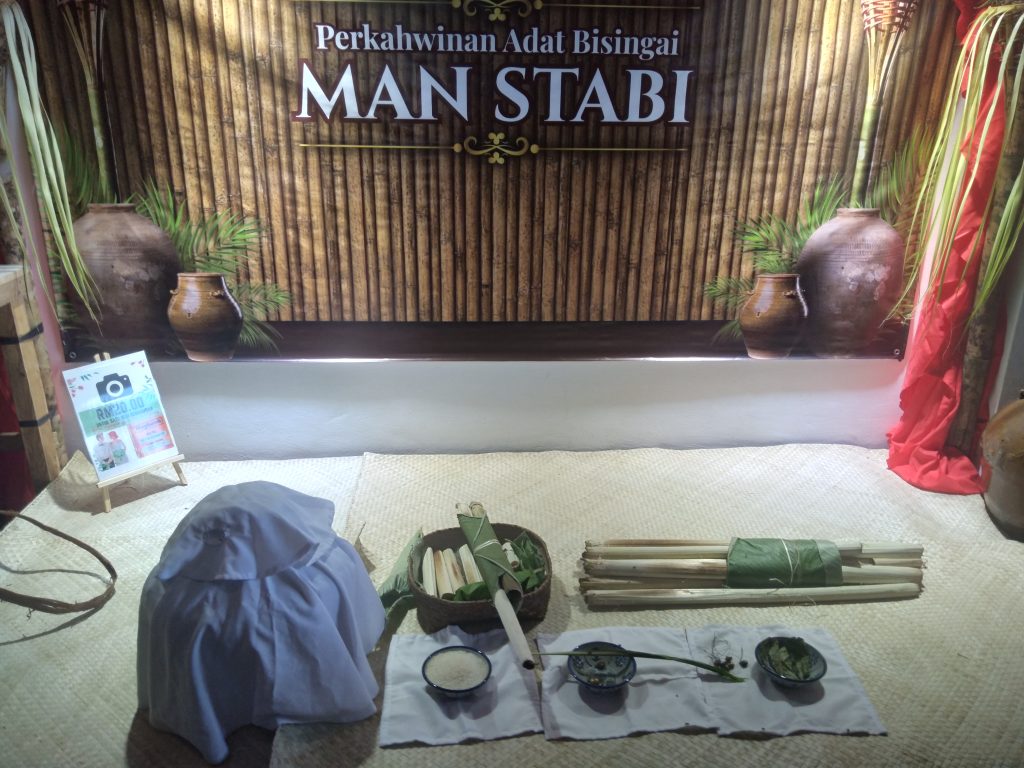
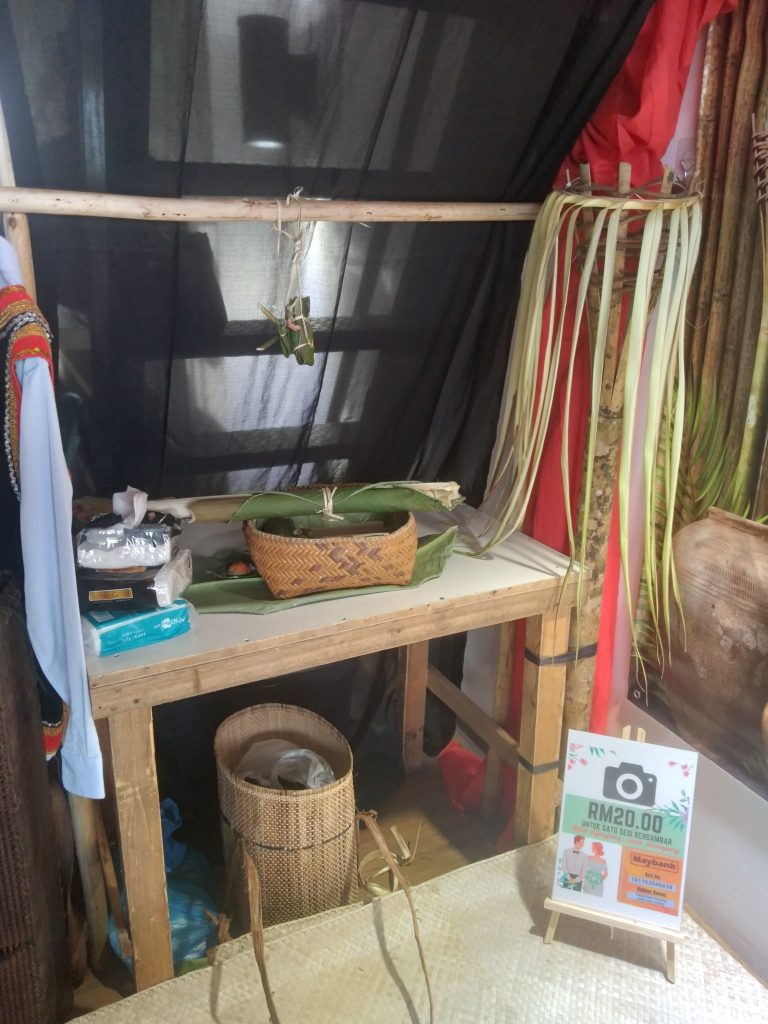
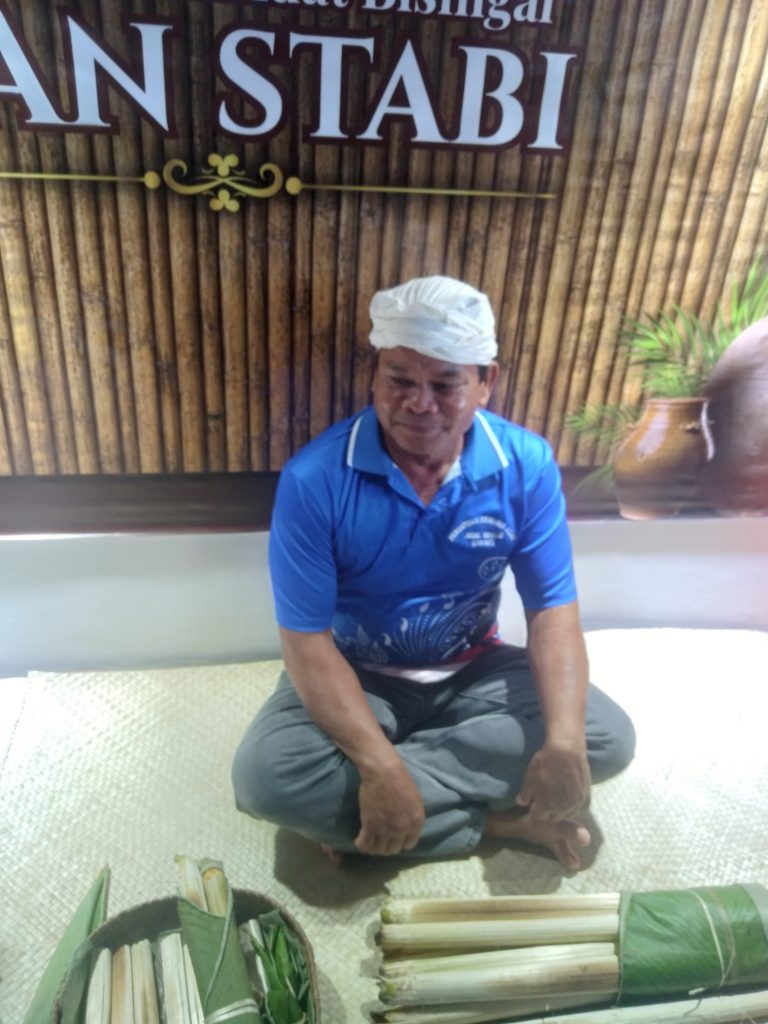
Inside one of the homestay room at the REDEEMS Centre in Jalan Apar, Singai during the Bau Cultural and Tourism Festival, a carefully decorated wall stood beside a table and floor filled with offerings.
There were jars, rice wrapped in leaves and in bamboo, bowls containing rice, water and betel leaves and sacrificial items arranged with quiet dignity.
In today’s modern world of hotel ballrooms, wedding planners and digital invitations, the display felt almost surreal.
Curious, I asked those around in the room who was in charge of the exhibition. They pointed to a soft-spoken man seated calmly among the displays.
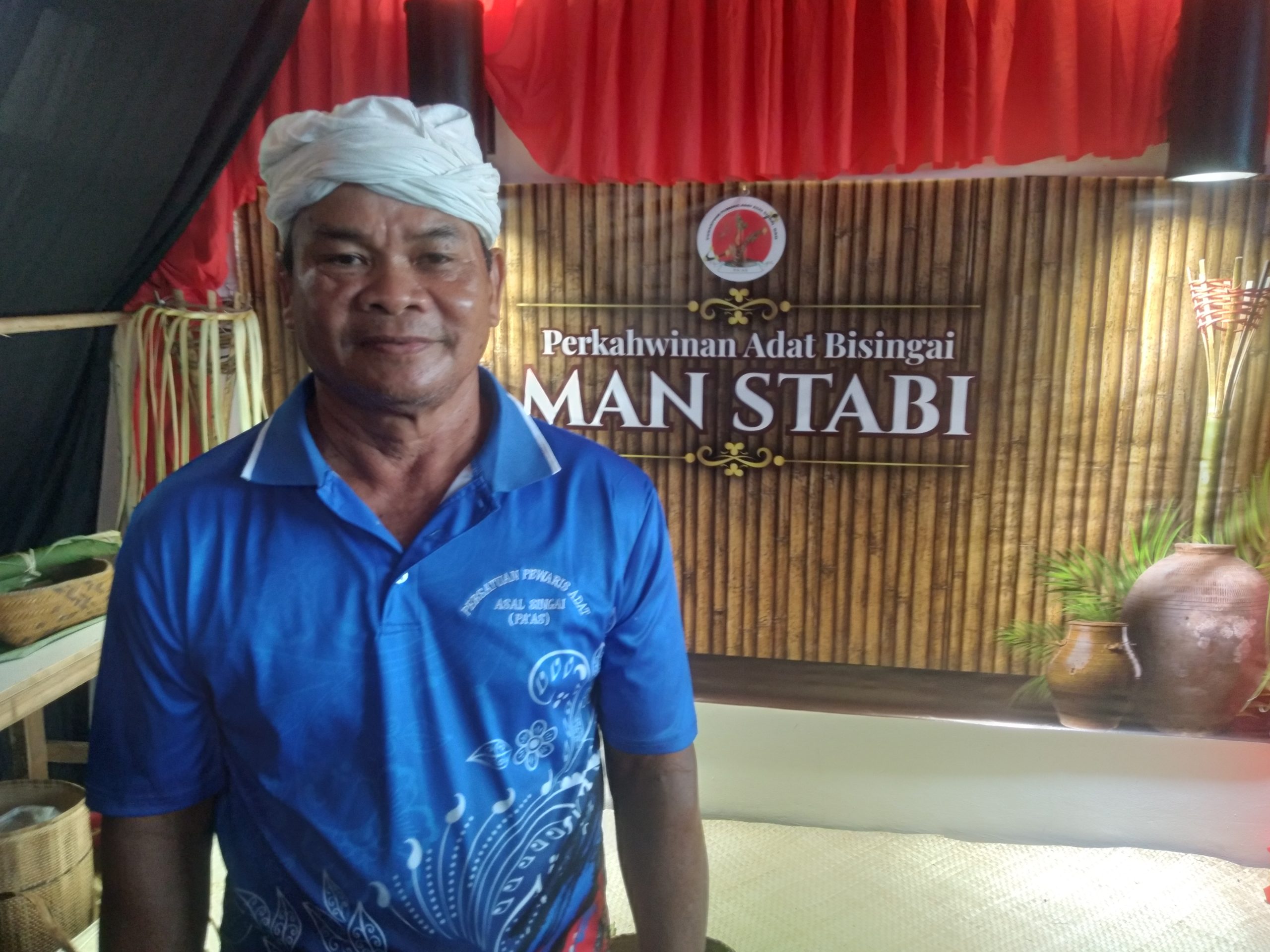
That man was Kampung Barieng, Singai customary chief or ‘ketua adat, Rayer Nogep.
As I approached and introduced myself, Rayer responded warmly. Before beginning his explanation, he wrapped a white cloth around his head, almost as though preparing himself to step back into another era.
What followed was not merely an interview.
It was an oral journey into a nearly forgotten world.
“This custom no longer exists.
“It has not been practised for decades because almost everyone is Christian now. Christians believe this custom is no longer used,” he said slowly, referring to the ancient Bisingai customary marriage reception known as ‘Man Stabi’ in Bidayuh Singai dialect.
Yet despite its disappearance, Rayer emphasised that the tradition once formed the foundation of marriage among the Bidayuh Singai community long before outside religions arrived.
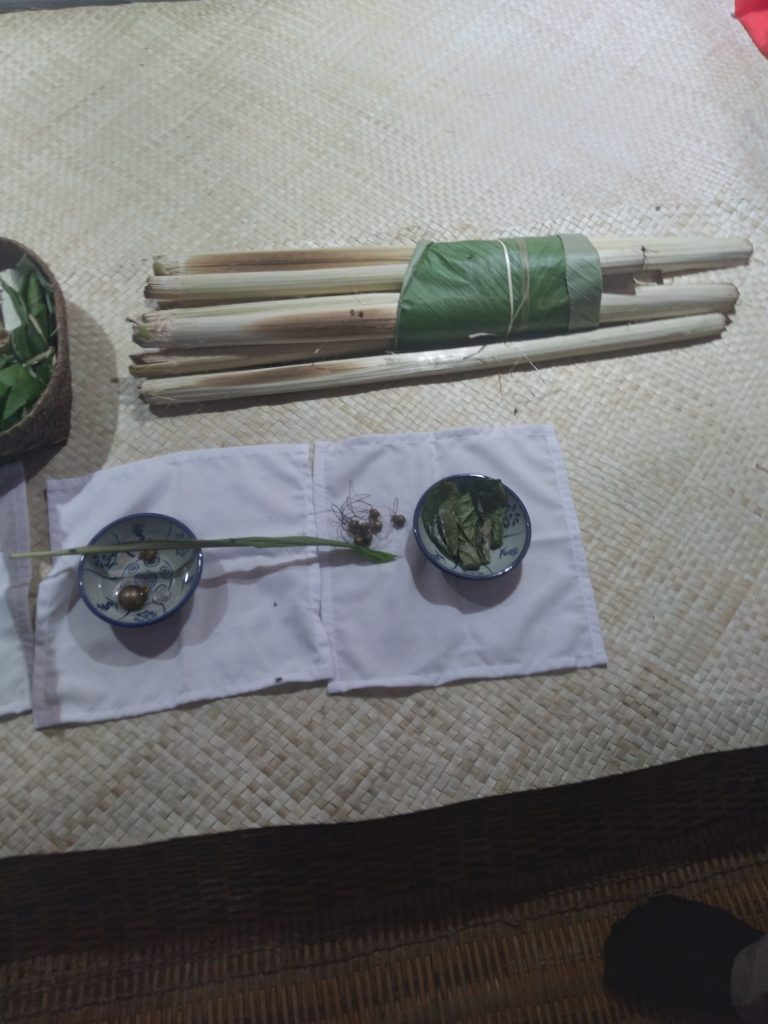
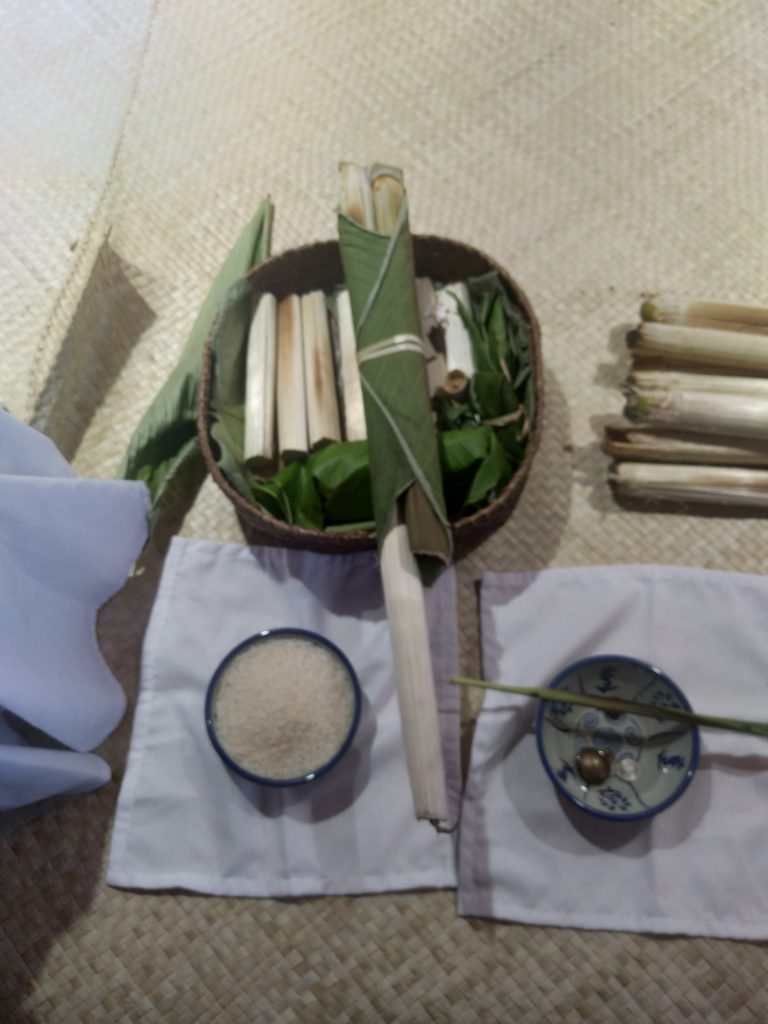
“Before Christianity, before Islam, this is what we used first,” he said.
The traditional marriage system consisted of three stages, each carrying deep social and spiritual meaning.
The first stage was engagement.
In the Bidayuh Singai language, engaged couples were known as ‘satuok’ and ‘s’bagai’.
“’Satuok’ refers to the man while ‘s’bagai’ refers to the woman.
“When they are called ‘satuok’ and ‘s’bagai’, they are considered engaged,” explained Rayer.
Unlike modern engagements marked by rings and elaborate photoshoots, the old Bisingai engagement was more about communal recognition and mutual agreement between families.
Once the couple agreed to marry, their parents would meet the community leader, known in the past as the ‘orang kaya’, a figure similar to today’s penghulu.
The meeting was important because marriages were not merely private unions between two individuals. They were social agreements witnessed and legitimised by the community.
The ‘orang kaya’ would set a date to solemnise or ‘baas’ the marriage according to customary laws and village requirements.
During the ‘baas’ ceremony, the customary chief questioned the bride and groom separately.
To the groom, he would ask: if you leave your wife, what is the penalty?
The same question would then be posed to the bride.
The process highlighted accountability in marriage long before written legal contracts became common.
If disputes or divorce later occurred, they too had to be settled through the community leader.
“It was not something people simply decided on their own,” said Rayer.
Marriage carried communal responsibility.
Yet the most elaborate stage came after the solemnisation.
That stage was called ‘Man Stabi’ or the wedding reception.
According to Rayer, only families who could afford it would proceed with the grand traditional wedding reception.
“This is the highest ceremony. It is the grand celebration where relatives and friends are invited,” he said.
Central to the ceremony were two ritual offerings known as ‘sadis’.
One was called ‘sadis tujuh kerat’ or ‘bitang skora’, while the other was ‘sadis lapan kerat’ or ‘sigondot’.
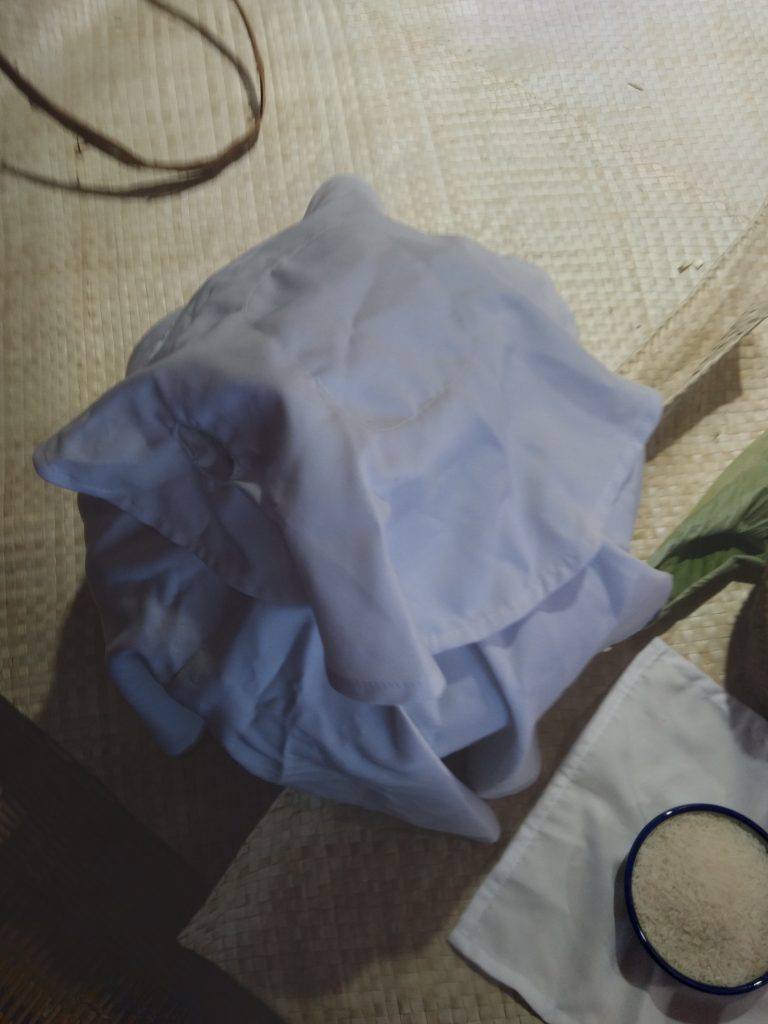
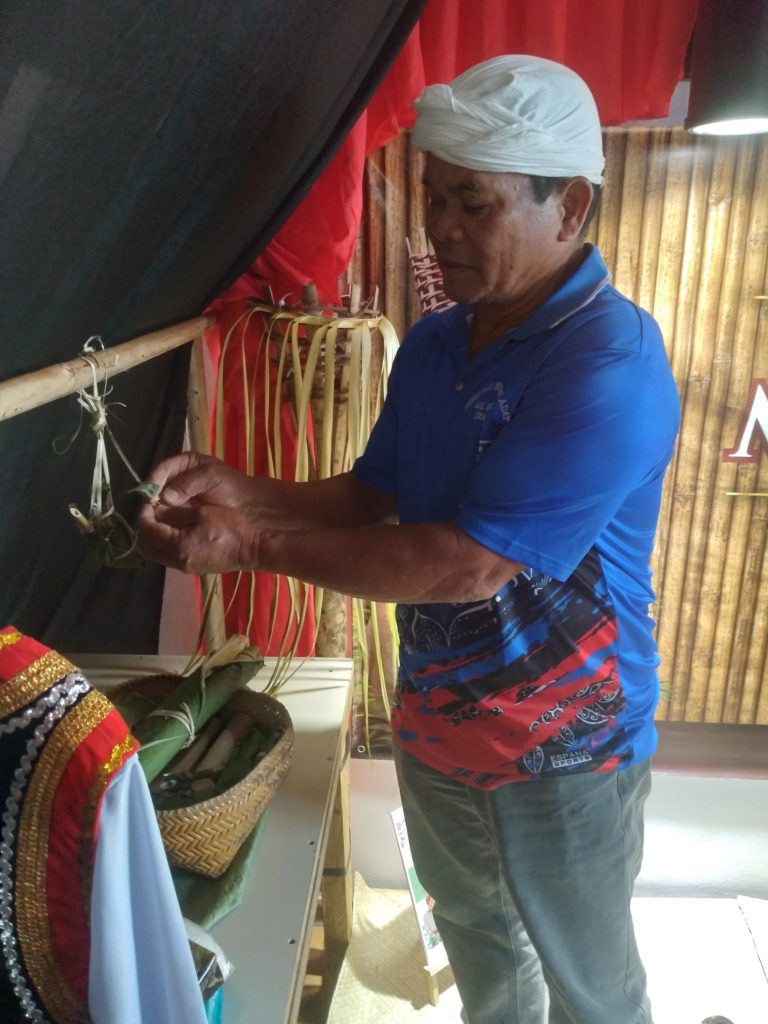
In Bidayuh culture, ‘sadis’ refers to ritual food offerings or sacrificial items placed on bamboo shrines or ceremonial platforms.
The offerings were not decorative objects.
They symbolised spiritual balance, blessings and the journey of love between husband and wife.
Rayer explained the symbolism through an old Bisingai belief.
“The ‘sigondot’, which represents the man, comes from below or the ground. He goes upward to the ‘bitang skora’, the place of the woman or the stars, to propose,” he said.
The imagery was poetic. A man climbing toward the stars to seek the hand of a woman reflected perseverance, worthiness and devotion.
“In other words, whoever can reach the ‘bitang skora’ gets the daughter,” he added with a smile.
The ‘Man Stabi’ ceremony itself began with a cleansing ritual known as ‘pisien’ in Bidayuh Singai.
This purification ceremony prepared the couple spiritually before they made their vows.
The customary chief would again question both bride and groom separately, asking whether they were truly prepared to remain together through all circumstances in life.
Once they affirmed their promises, a symbolic act followed.
Prepared betel leaves were given to them, who then would place them into a jar.
The witnesses would do the same.
To outsiders, the act may appear simple.
But to the Bisingai community of the past, it functioned as a binding signature.
“The jar is like a book. In the past, people were not yet good at writing. By putting the betel leaves into the jar, they were signing the book,” explained Rayer.
The jar therefore became a living record of vows made before the customary chief and the community.
The couple would later keep the jar as proof of their agreement and commitment.
Even the number and arrangement of jars carried meaning.
“If there are two jars and one is wrapped while the other is not, it means the man follows the wife. In Bidayuh Singai, it is called ‘matak sewan’,” Rayer said.
If only one jar appeared, it meant the woman followed her husband.
Such symbolism reflected how marriage arrangements varied according to family and living arrangements within the community.
After the vows and symbolic signing, the customary chief performed another blessing ritual with cleansing water called ‘piin brawan’ in Bidayuh Singai.
Water would be sprinkled onto the heads and hands of the bride and groom while they sat on the floor pelamin, a decorated wedding dais used for the ceremonial seating of the couple during the reception.
The blessing was intended to ensure abundance, sustenance and harmony throughout married life.
Rayer then pointed toward another important item displayed at the exhibition — rice.
“There must be rice in a ‘Man Stabi’ ceremony,” he stressed.
For the Bidayuh Singai, rice symbolised continuity of life itself.
“There must be rice for birth, and there must also be rice for death. Rice is what continues human life to see the sun and stars the next day,” he said.
In many indigenous cultures across Borneo, rice is more than food.
It represents survival, blessings, fertility and the sacred relationship between humans and nature.
The old Bisingai custom also contained fascinating symbolic exchanges between families.
According to tradition, when the woman and her entourage descended “from the stars” or from above to the man’s household, they would bring gifts.
These included betel leaves and areca nuts known as ‘binek binara’, bamboo drinking container called ‘sembang’, and rice wrapped in leaves known as ‘semak tubi tajur’.
The gifts were presented to the groom’s mother.
Every item carried meaning — respect, acceptance and the joining of two families.
Listening to Rayer’s narration felt like opening a hidden chapter of Sarawak’s cultural memory.
The customs were never formally documented. They survived only through oral storytelling, passed from one generation to another.
But oral traditions are fragile. Once the storytellers are gone, entire worlds can disappear with them.
Rayer himself admitted that the last known ‘Man Stabi’ ceremony likely took place sometime in the 1970s.
“It is no longer done anymore. People are Christians now,” he said.
Yet despite the disappearance of the practice, the exhibition at the festival served an important purpose.
It reminded younger generations that before churches, modern legal systems and contemporary wedding trends, indigenous communities already possessed their own sophisticated customs governing love, responsibility, family and social harmony.
The display was not about reviving pagan worship or rejecting modern beliefs. Instead, it was about preserving memory.
It was about recognising that customs such as ‘Man Stabi’ are part of Sarawak’s rich cultural tapestry.
As the interview ended, the ceremonial objects before me no longer appeared strange or mysterious.
The jars, offerings and bamboo platforms were no longer relics from a forgotten past.
They had become storytellers.
And through the voice of Rayer, the ancient Bisingai marriage tradition briefly lived again.