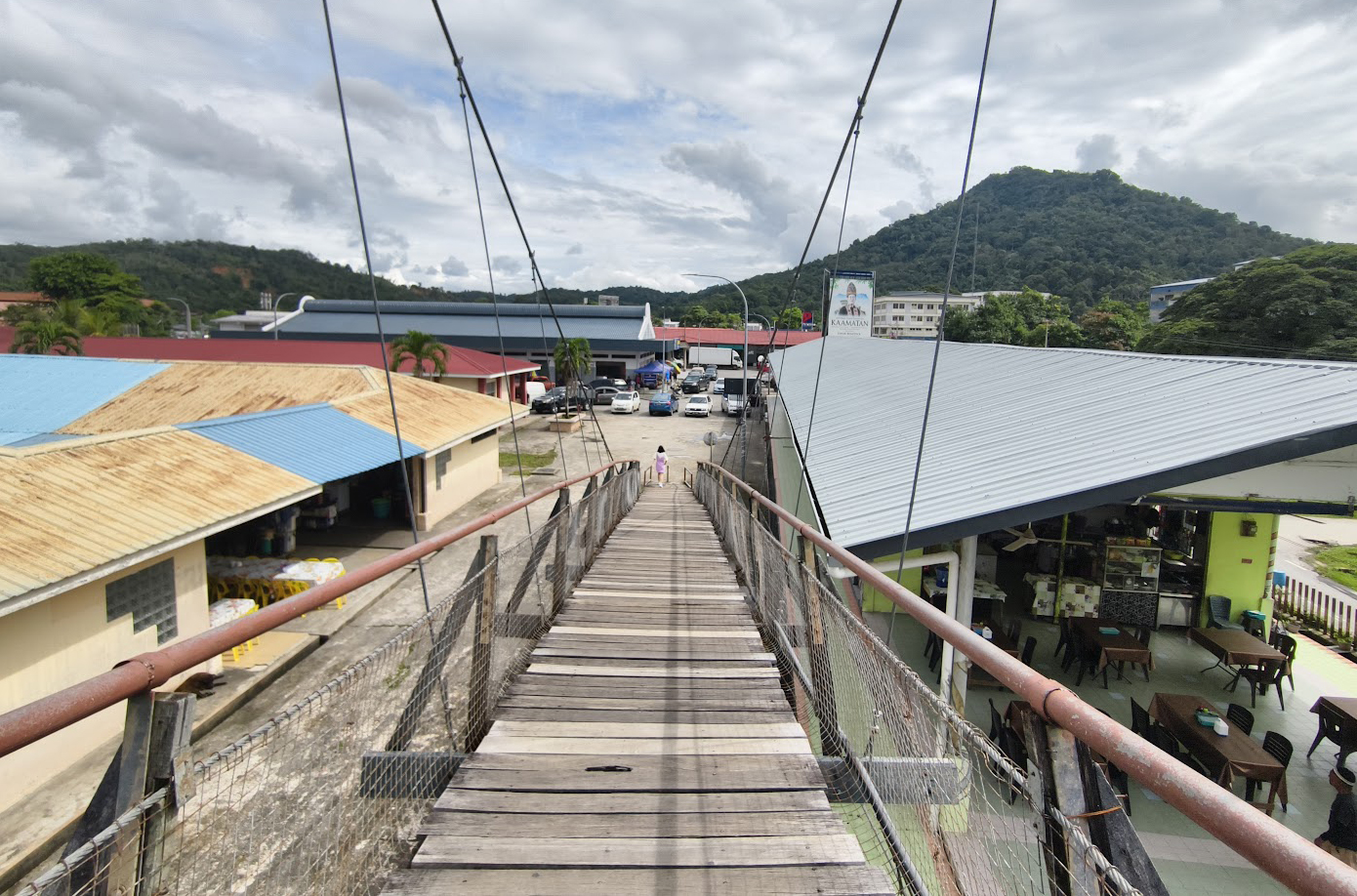
From folk songs and colonial engineering to river legends and living traditions, Tamparuli Suspension Bridge is more than a crossing – it is a cultural landmark that continues to shape the identity of a small town in Sabah.
A Bridge of Song, Story and Spirit
NESTLED in the Tuaran sub-district, about 38 kilometres northeast of Kota Kinabalu, Sabah, Tamparuli is a small town whose name is synonymous with one of Sabah’s most iconic landmarks – the Tamparuli Suspension Bridge.
Long before I set foot in the town, I first encountered the bridge through the well-known folk song ‘Jambatan Tamparuli’, popularised in 1997 by Sino-Dusun singer, Cozzi Chong.
Sung in both Kadazan Dusun and Mandarin, the song captured the imagination of listeners and elevated the bridge from a mere structure into a cultural symbol. The original version of the song was written by Justin Lusah in 1977.
That melody echoed in my mind as I finally crossed the 200-metre-long suspension bridge on foot. Swaying gently beneath my steps, the bridge offered not just a physical crossing but a sensory experience – one that blended history, culture and memory.
Originally built by the British administration in the 1930s, the pedestrian suspension bridge served as a vital link across the Kiulu River, connecting Tamparuli town to the main road and surrounding villages. It remains an important alternative route, especially during peak traffic congestion or when flooding affects the nearby single-lane Low Bridge.
In 1999, strong currents damaged the original structure during a major flood. The bridge was subsequently rebuilt later that year, funded by a federal government allocation of RM600,000 approved by the late Tun Abdullah Ahmad Badawi, Malaysia’s fifth Prime Minister, during his visit to Tamparuli.
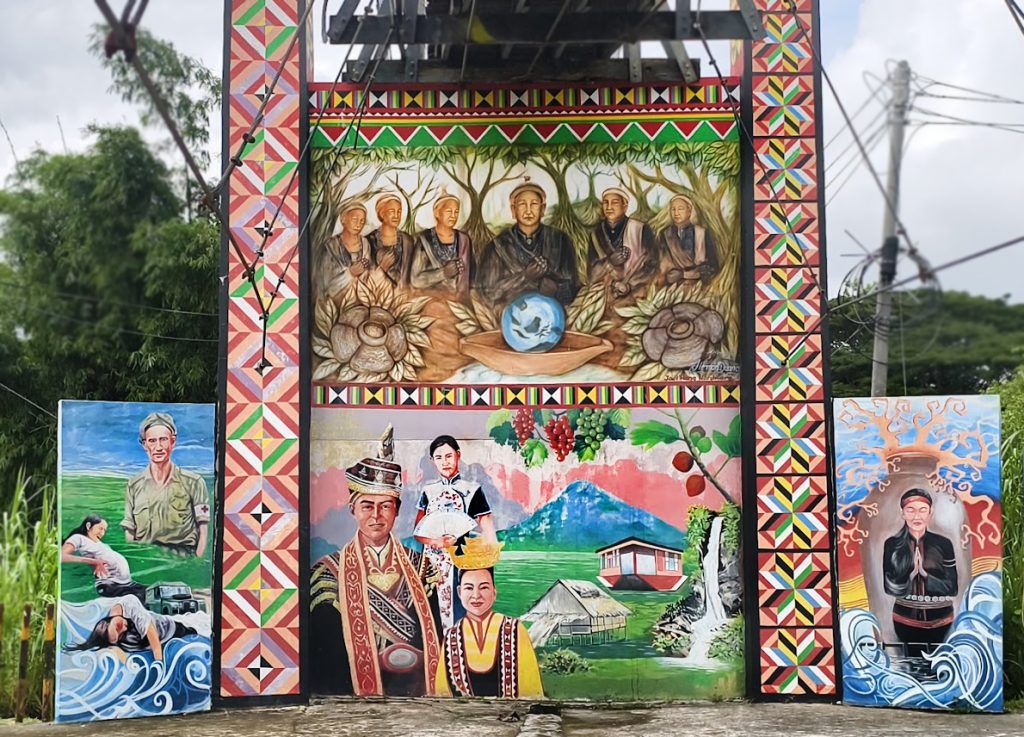
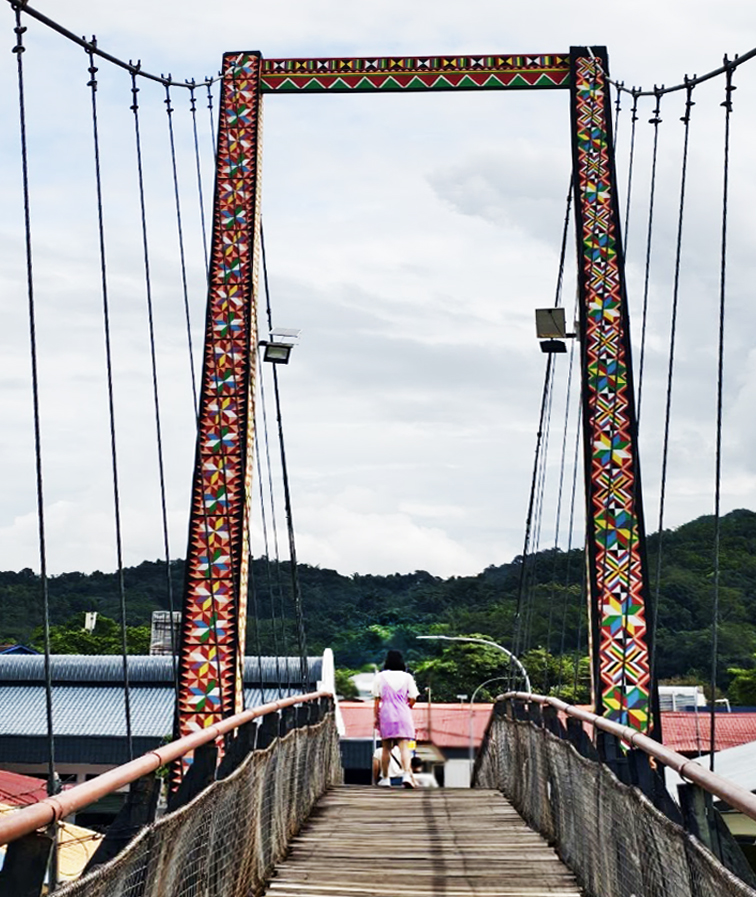
Further enhancing its appeal, a beautification project was carried out in 2021, featuring colourful murals on the bridge pillars that depict Sabah’s rich ethnic diversity. Today, the bridge is a favourite photo stop for both local and foreign visitors.
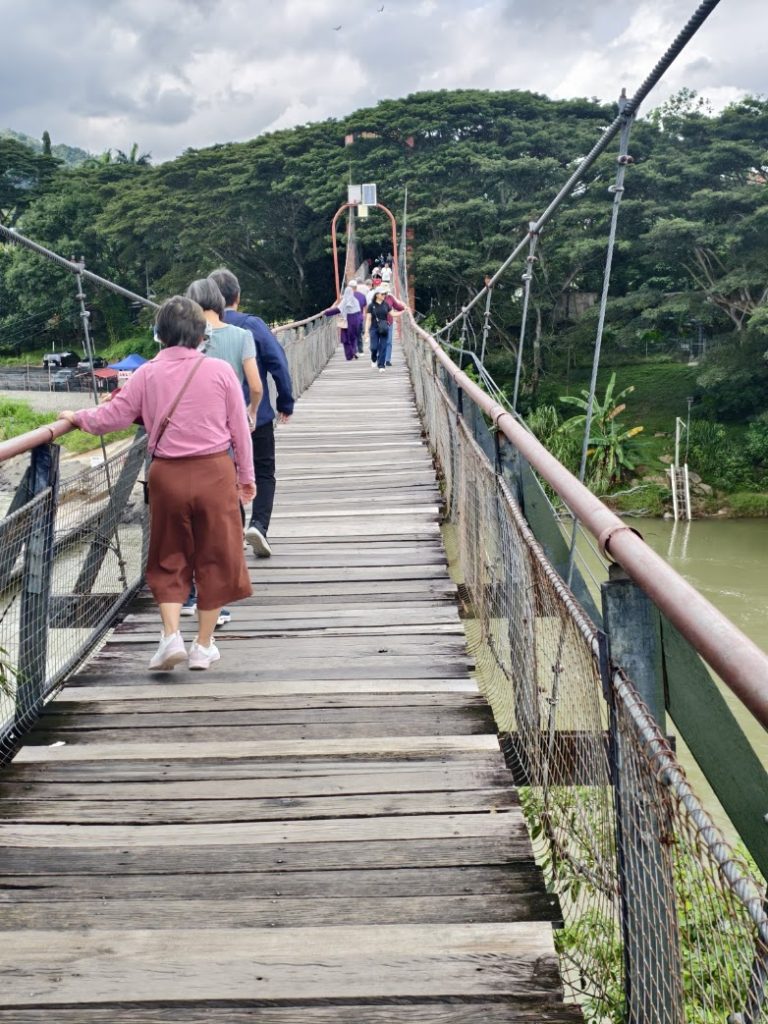
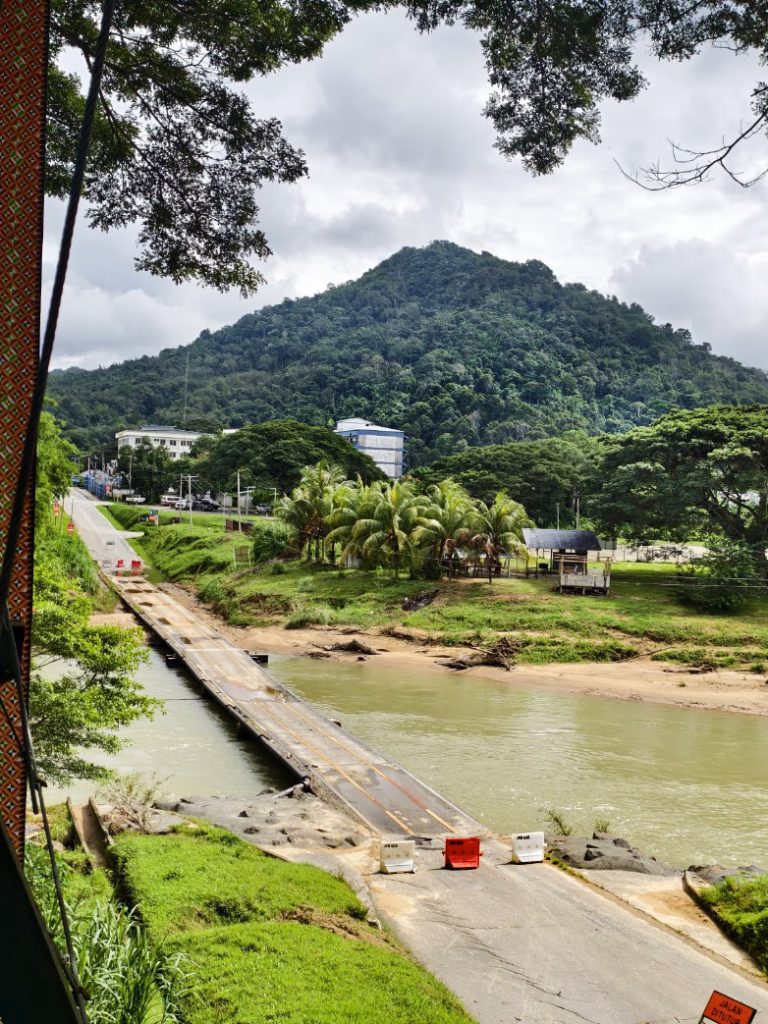
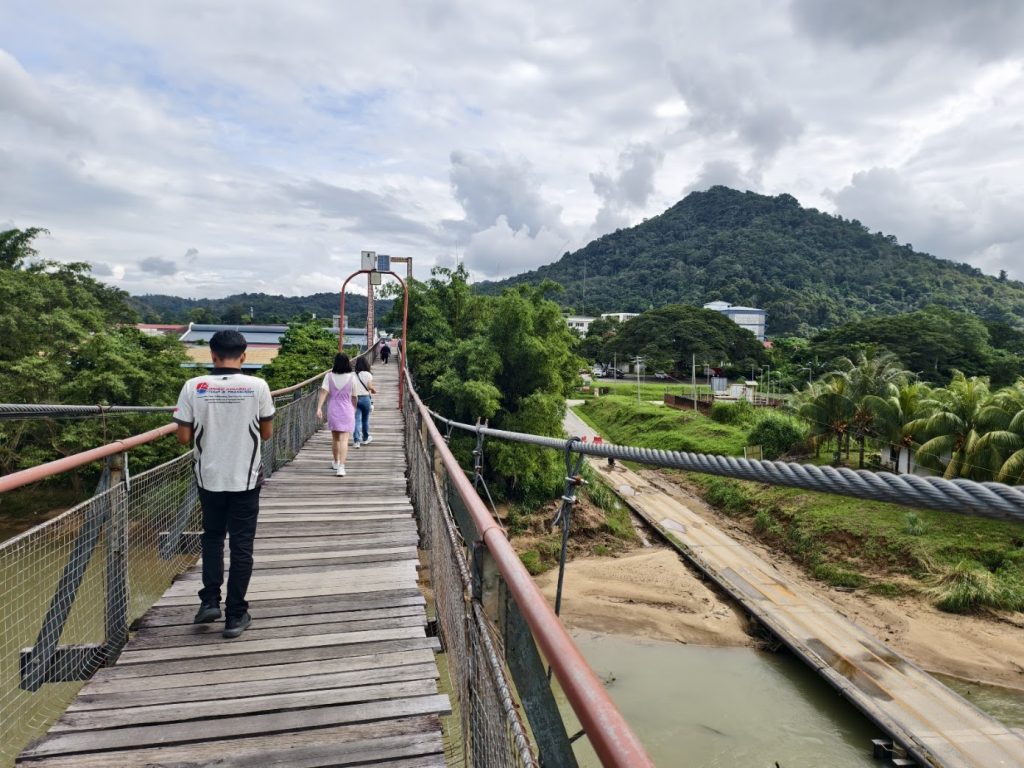
From its highest point, visitors are rewarded with a pleasant view of Tamparuli town, the flowing river below and Ruhiang Hill (Bukit Perahu). On a clear day, the majestic outline of Mount Kinabalu can be seen in the distance.
In the 1950s, British engineers constructed the adjacent Low Bridge to accommodate vehicular traffic. This bridge, too, is steeped in legend. According to local folklore, repeated attempts to build the bridge failed due to strong river currents and frequent flooding. Villagers eventually sought the help of a bomoh (traditional medium), who revealed that the site was sacred and guarded by a spirit known as Tombuakar, believed to dwell in the Kiulu River.
The spirit allegedly demanded a human sacrifice as compensation. Legend has it that a fair maiden named Solungkoi was placed in a jar and buried alive at the foundation of the first bridge pillar. Thereafter, the bridge stood firm and remains in use today, having withstood countless floods and even the earthquake that struck the area on June 5, 2015.
A solemn plaque near the bridge commemorates two British soldiers who lost their lives on May 18, 1960, while attempting to rescue a local woman during a flood. Tragically, all three drowned.
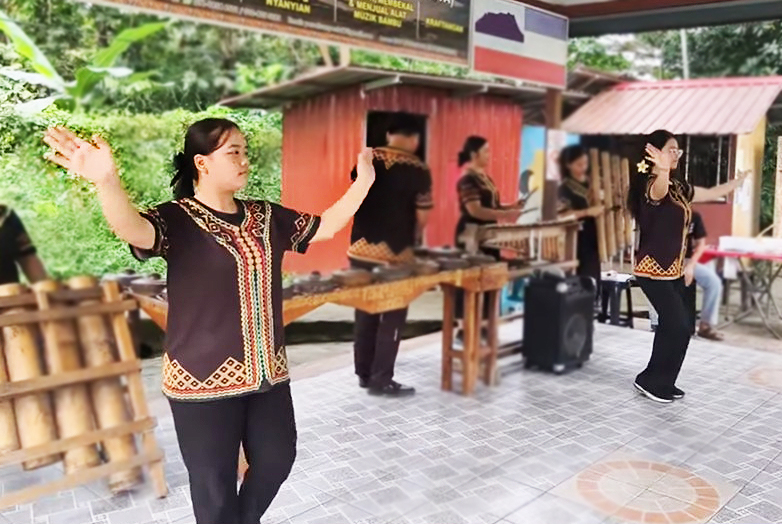
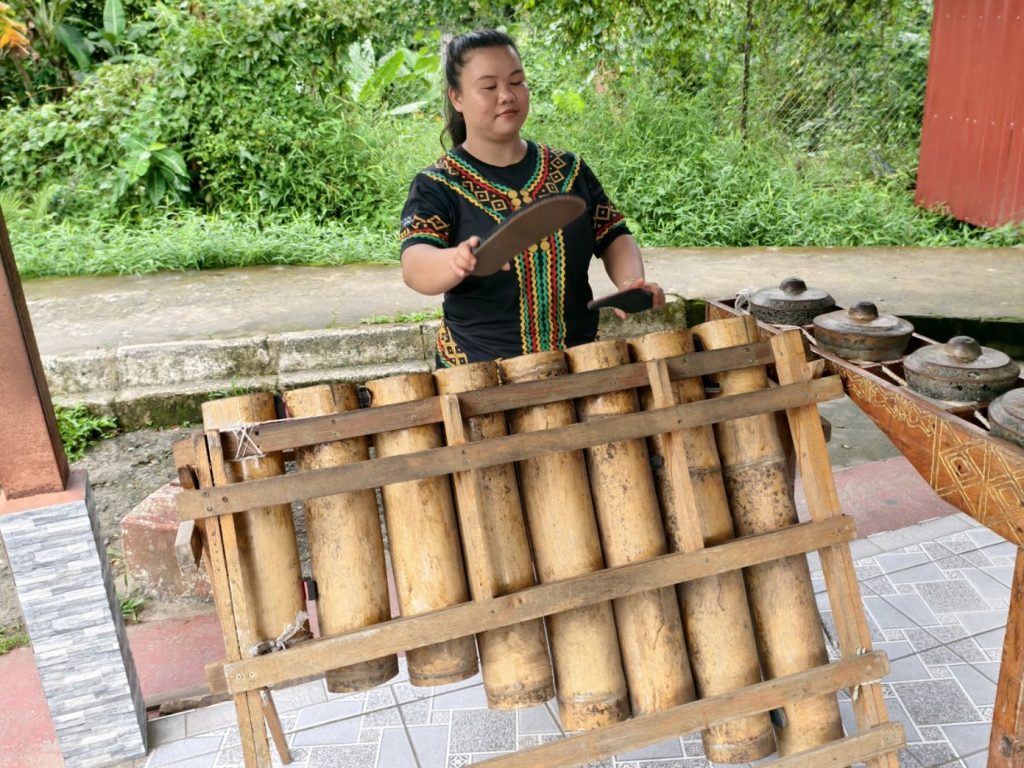
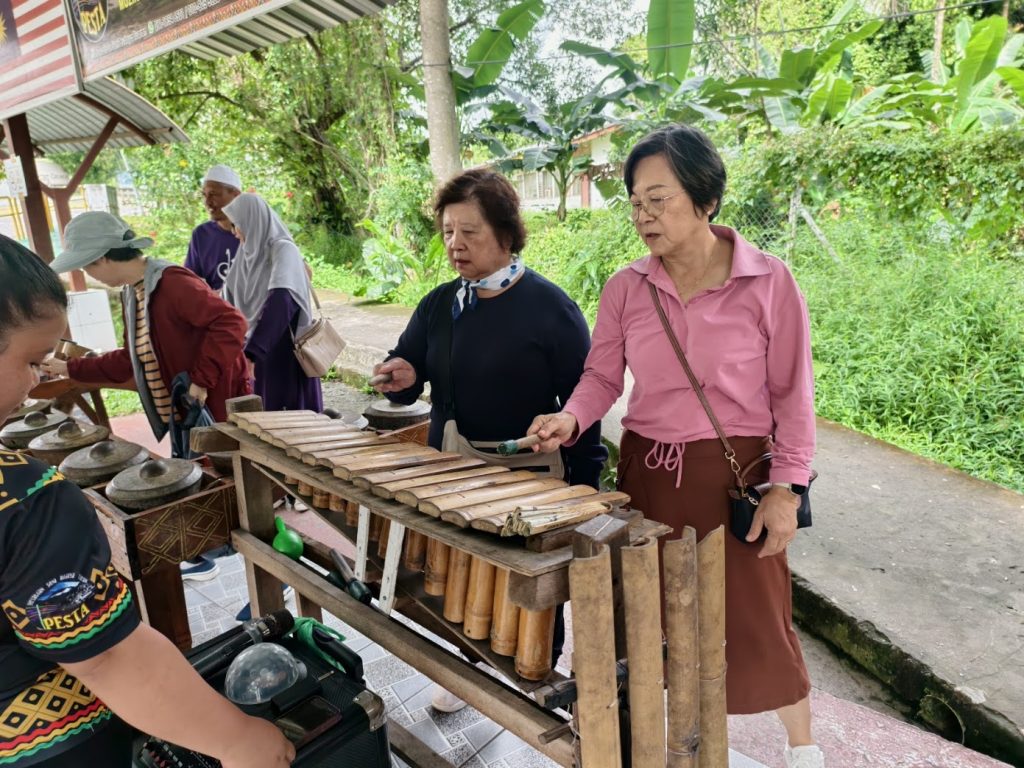
At the end of the suspension bridge, visitors are often treated to a short traditional dance performance by volunteers from Persatuan Seni Budaya Tuaran (PESTA). Tips are welcome as a gesture of appreciation for their efforts in preserving local culture.
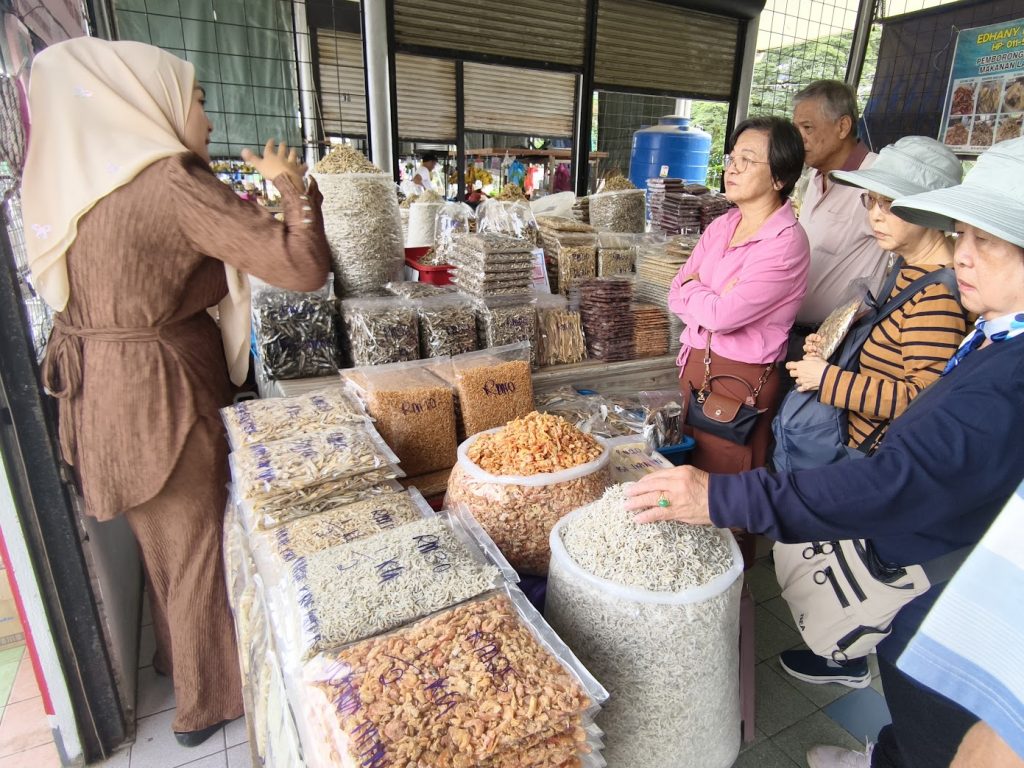
For travellers heading to Kundasang or Mount Kinabalu, Tamparuli is a popular stopover. Besides visiting the bridge, many enjoy shopping for local produce at the hawker centre or the weekly tamu (open market) held every Wednesday, as well as sampling local delicacies – most notably the famed Tuaran noodles.
More than just a crossing over a river, the Tamparuli Suspension Bridge stands as a living testament to Sabah’s history, legends and enduring cultural spirit.