After the Siren Ends: Part Four
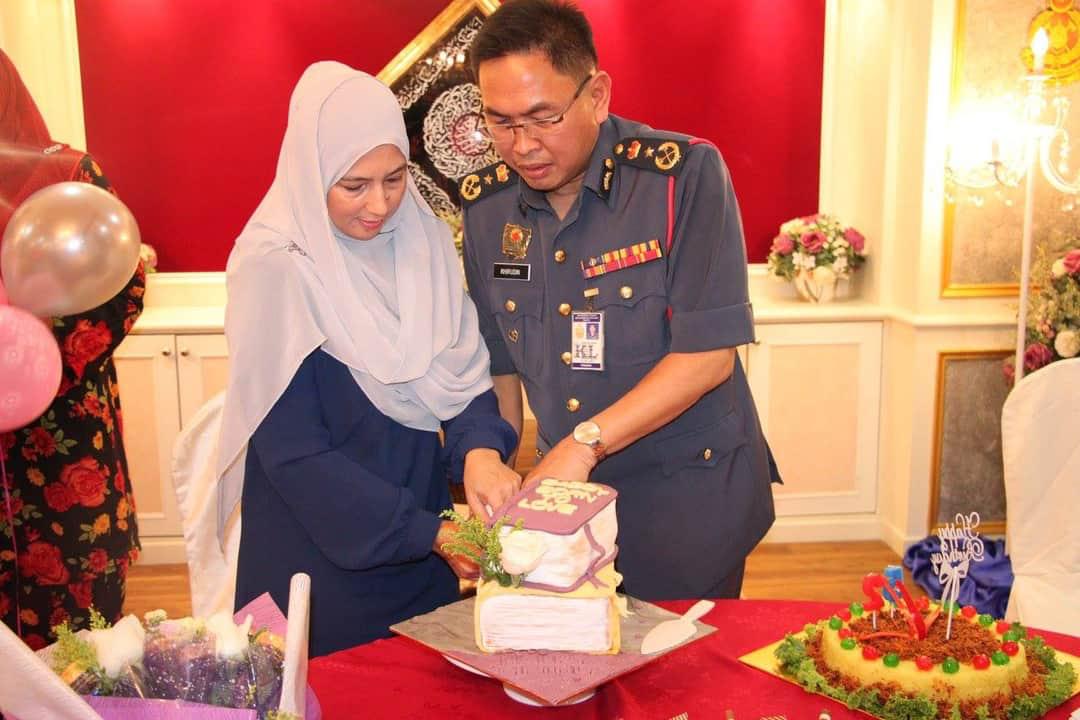
WHEN Datin Soryta Khan married Datuk Khirudin Drahman in February 1992, she knew she was marrying a firefighter.
What she did not yet realise was that she was also marrying a profession where uncertainty would become part of everyday life, where birthdays, family dinners and festive celebrations could be interrupted without warning, where the sound of a fire engine leaving the station often meant another family somewhere was experiencing one of the worst moments of their lives, and where the person she loved would repeatedly walk towards danger while she remained at home hoping he would return safely.
Long before mobile phones made it possible to exchange messages from an emergency scene, Soryta learned what it meant to wait.
There were days when Khirudin was deployed to major sawmill fires outside Sibu and remained away for several nights, leaving her alone at the officers’ quarters with three young children and no way of knowing whether the operation had ended, whether he was still inside a burning structure or when she would next hear his voice.
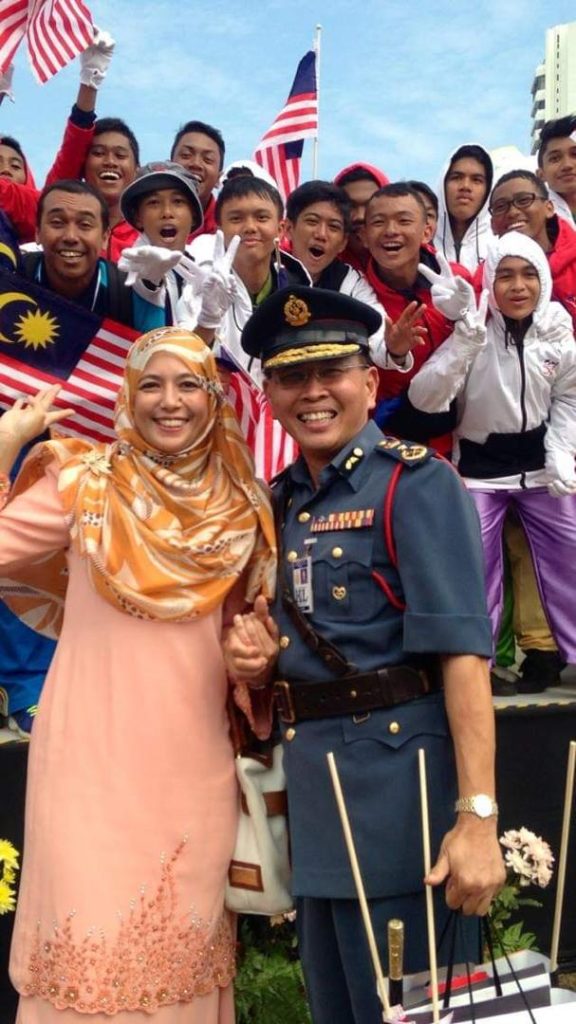
She continued preparing meals, putting the children to bed and carrying on with the routines of family life, but admitted that every hour of silence naturally invited thoughts no wife ever wanted to entertain.
“As a young mother, many worries crossed my mind whenever he was away, but
all I could do was pray that God would protect him and his team. There wasn’t much else I could do because, in those days, we couldn’t simply call or send a message to ask whether they were safe.”
Looking back after more than three decades of marriage, Soryta said those years gradually taught her that loving a firefighter also meant accepting that there would always be situations beyond her control.
Although separated by almost three generations, Soryta’s experience is one that Annie Juran and Farhana Mohd Kipli understand all too well.
Technology has changed dramatically since Soryta first became a firefighter’s wife, allowing families to exchange messages, make video calls and receive updates far more quickly than before.
Yet all three women agreed that while communication has become easier, the anxiety surrounding every emergency call has never truly disappeared.
For Annie, the journey began even before her husband, Kurung Suwen, officially became a firefighter.
She and Kurung grew up in the same village and had known each other since childhood before becoming closer as teenagers.
At the time, neither of them imagined that their marriage would eventually be shaped by one of the country’s most demanding professions.
Annie was working in housekeeping at the hotel while Kurung held an ordinary job before receiving an offer to join the Fire and Rescue Department (BOMBA).
“I was grateful because it was a government job. I thought it would provide a better future for our family.”
Almost immediately, however, that opportunity demanded its first sacrifice as Annie was pregnant when Kurung received his appointment letter.
“Soon afterwards he had to leave for six months of recruit training. At that time I was already about six months pregnant, so I had to go through the pregnancy and prepare for childbirth without him.
“Fortunately, both our families helped take care of me during that period.”
Looking back today, Annie described those six months as the first lesson in understanding what life alongside a firefighter would require.
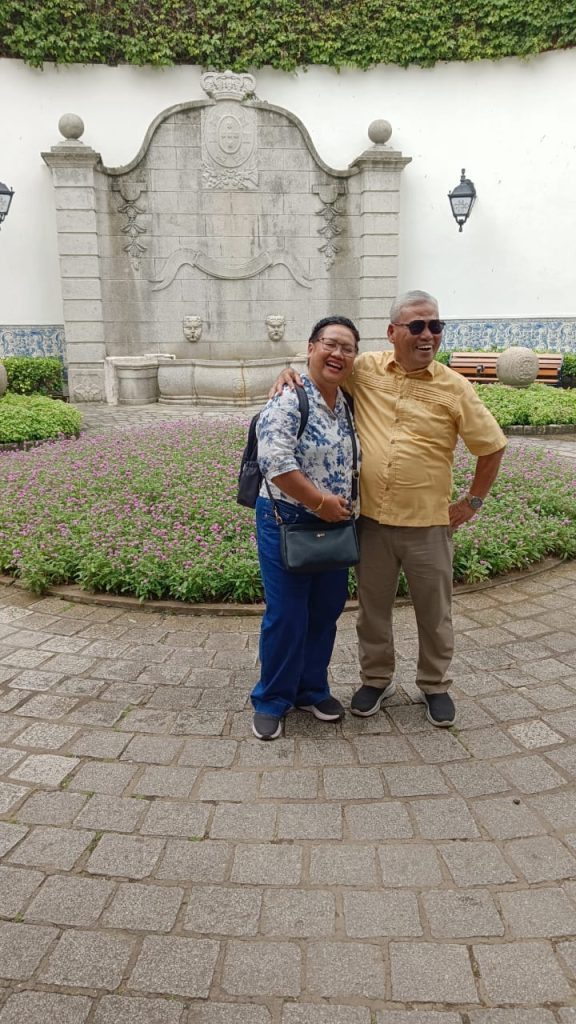
“It wasn’t easy, but we both understood that this was the beginning of his career, and we wanted to build a better future for our family.”
The separations did not end after recruit training.
As Kurung progressed and became part of the Special Malaysia Disaster Assistance and Rescue Team (SMART), operational responsibilities and postings repeatedly required him to serve away from home.
Annie said this left her to shoulder much of the responsibility for raising their children while also maintaining the household.
“Only in 2001 were we finally able to move and stay together in Kuala Lumpur because our children were already old enough to transfer schools. When our parents became old and unwell, I returned to Sarawak to care for them while he continued working in Kuala Lumpur.
“Living apart eventually became something we accepted because we understood that his work required it.”
If Soryta’s early years as a firefighter’s wife were marked by long periods of silence because communication was almost impossible, and Annie’s marriage was shaped by months and sometimes years of living in different states as her husband answered the demands of a career in emergency response, Farhana belongs to a generation where technology has made staying connected considerably easier.
However, she admitted that no amount of instant messaging or phone calls can truly remove the unease that settles in whenever her husband responds to a major emergency.
The wife of firefighter Muhammad Luqmanul Hakim said she has gradually come to understand that every emergency call represents a situation where the outcome is never entirely predictable, regardless of how experienced the responding officers may be.
“There are times when I know he has gone out on an operation, but I don’t know exactly what kind of incident he is attending. I understand that while he is working, he cannot keep checking his phone.
“His responsibility at that moment is towards the victims and his team, not towards updating me every few minutes.”
Rather than becoming frustrated by the lack of communication, Farhana said she has learned to distinguish between what can and cannot be controlled.
“I remind myself that if he doesn’t reply, it doesn’t mean something bad has happened.
It simply means he is doing his job.”
That quiet acceptance, all three women agreed, is something that develops only with time.
It is not something a new firefighter’s wife immediately understands, nor is it something that can be taught by family members or colleagues.
Instead, it grows gradually through years of missed celebrations, interrupted family plans, delayed dinners and countless occasions when a ringing telephone changes the course of an ordinary day.
For Soryta, it meant accepting that celebrations such as Hari Raya, birthdays and school functions could never be planned with complete certainty because emergencies do not recognise weekends or public holidays.
“There were occasions when we had prepared everything as a family, only for Khirudin to receive a call and leave immediately. Of course the children were disappointed because they wanted their father with them.
“As they grew older, they began to understand that if he had been called out, it meant another family urgently needed help.”

For Annie, uncertainty often came in a different form when Kurung began serving in SMART.
She said deployments could last for extended periods, and there were occasions when operational demands took Kurung far from home for days or weeks at a time, particularly when national disasters required specialist search and rescue personnel.
Yet she said her husband rarely brought the emotional burden of those operations back into the family home.
“There were days when he returned looking very tired, but he hardly ever showed anger or sadness at home. As his wife, I understood that his work was difficult, but he didn’t talk very much about the operations themselves.
“Sometimes he became unusually quiet after returning from an assignment and he preferred to rest before speaking. Other times, he simply sat with our family, appreciating the ordinary moments that many people take for granted.”
Over the years, Annie said she learned not to pressure Kurung for details.
“If he wanted to tell me something, he would. If he didn’t, I respected that.”
That silent understanding between husband and wife became, in many ways, another form of emotional support.
Rather than insisting on explanations, Annie believed her role was to provide a home where Kurung could gradually recover from the physical and emotional exhaustion that inevitably accompanied rescue work.
Farhana echoed that sentiment, saying firefighters often carry home a level of fatigue that extends beyond physical tiredness.
“When Luqman comes home after a major operation, I don’t ask him too many questions. I usually let him shower, eat and rest first.
“Sometimes he will tell me what happened, sometimes he won’t and I think that’s okay because everyone processes difficult situations differently.”
While members of the public often remember dramatic images of towering flames, collapsed buildings or floodwaters broadcast on television and shared across social media, the wives said those same incidents continue long after the cameras have disappeared.
They said recovery often begins quietly at home through ordinary routines that rarely attract public attention.
For Soryta, Annie and Farhana, those moments have become just as much a part of firefighting as the sirens, fire engines and rescue equipment that the public sees.
Behind every operation completed successfully is another story unfolding away from the incident scene — one where families learn that supporting a firefighter is not measured by grand gestures, but by countless small acts of patience, understanding and quiet resilience that allow them to answer the next call knowing there is always someone waiting for them to come home.
For all the uncertainty that comes with marrying a firefighter, none of the three women ever spoke of regret.
Instead, what emerged most clearly from their stories was an understanding that the uniform their husbands wear carries responsibilities that extend far beyond the walls of their own homes.
The sacrifices made by one firefighter are almost always shared quietly by an entire family, often without recognition or acknowledgement from those outside the profession.
That understanding became particularly evident in the way they chose to raise their children.
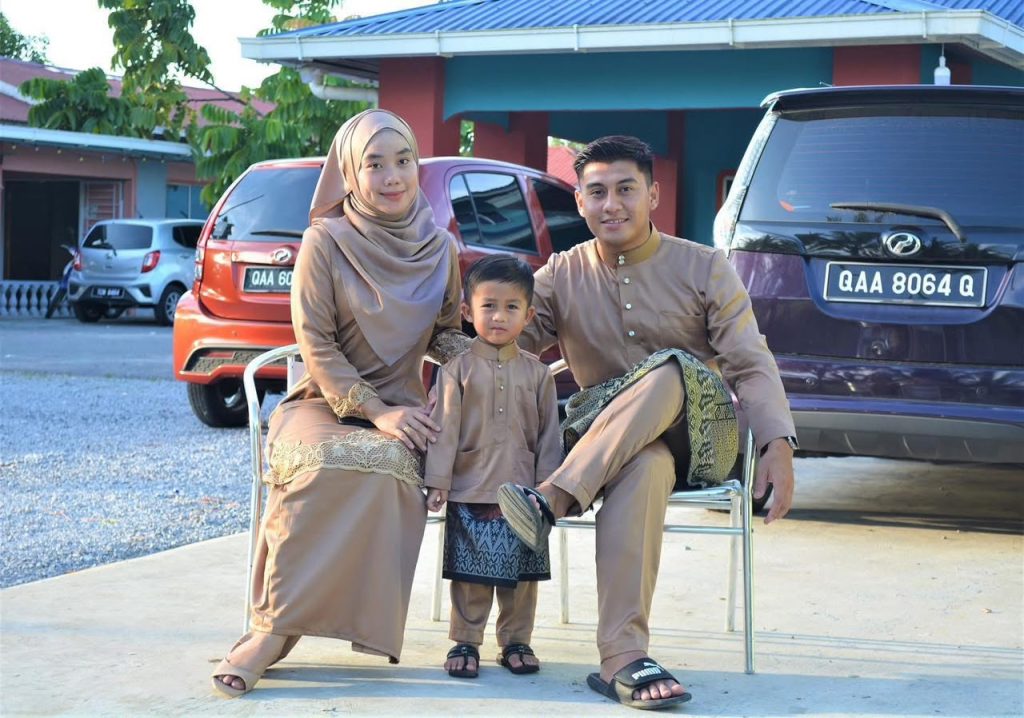
Soryta said she and Khirudin made a conscious effort to ensure that their children never viewed their father’s absence as neglect, but rather as part of a commitment to serving others.
She believes those experiences helped shape not only their children’s maturity but also their appreciation for public service and the importance of putting the needs of others before personal convenience.
“As our children grew older and began to understand the nature of their father’s work, they became proud of what he was doing.”
Annie shared similar reflections, saying that despite the long periods of separation and the demands of Kurung’s career, she never wanted their children to grow up seeing firefighting as a burden.
Instead, she wanted them to understand the values that the profession represented.
“There were many times when their father wasn’t around because of work, but we always reminded them that he was helping people. That made them understand why his work mattered.”
For Farhana, pride often comes in much quieter moments.
She said it is not necessarily seeing her husband in uniform or hearing others praise his work that reminds her why she supports his career, but watching him leave home without hesitation whenever the emergency call comes, regardless of the time of day, the weather or the personal plans they may have made together.
“There are times when we are having dinner or spending time together and suddenly the phone rings. He immediately gets ready and leaves.
“I have learned not to ask him to stay because I know people are depending on him.”
Although Farhana acknowledged that fear never completely disappears, she no longer allows it to overshadow her confidence in her husband’s training, experience and sense of responsibility.
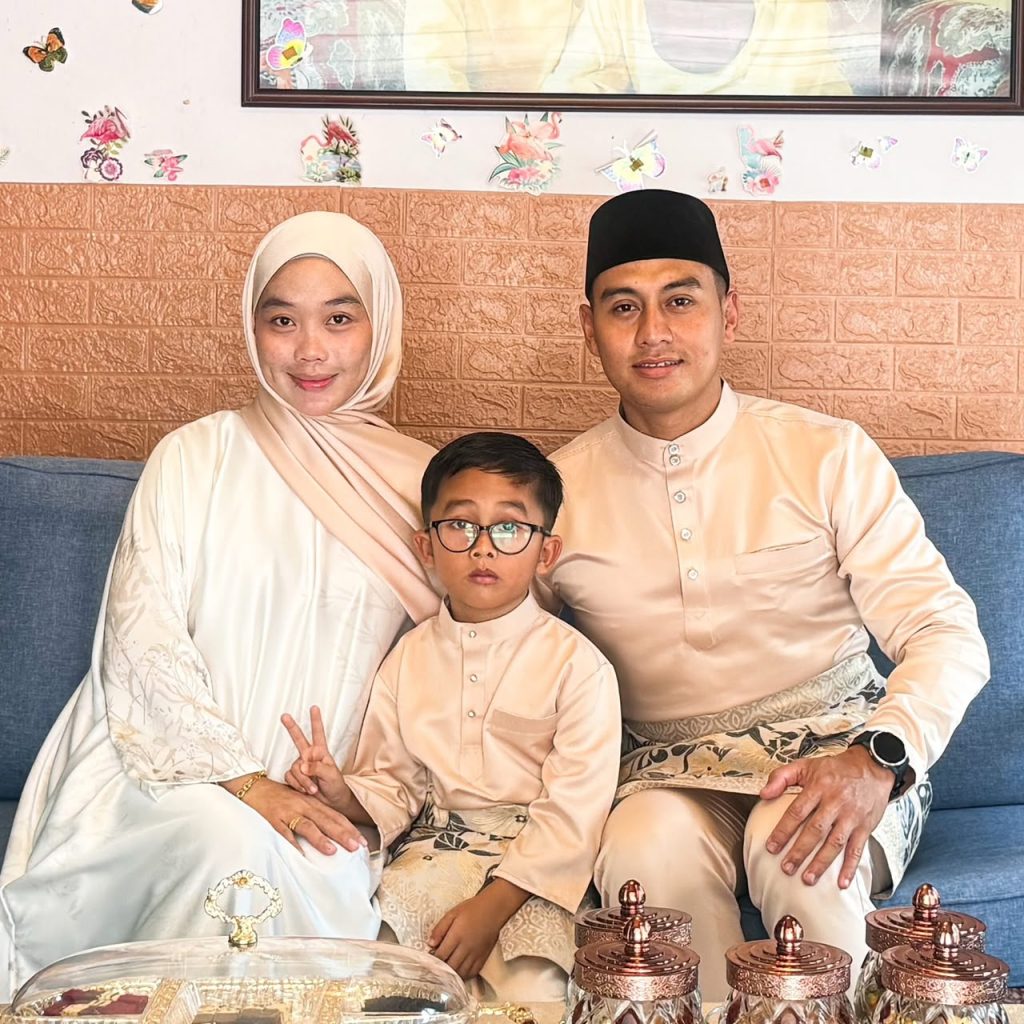
“Of course I still worry, but I have learned to replace fear with trust.”
That trust, shared by all three women, has been strengthened not only by faith, but by years of watching their husbands repeatedly choose service above comfort, placing themselves in situations most people instinctively avoid in order to protect complete strangers.
When asked what advice they would give to younger women who may one day marry firefighters, their answers, though expressed differently, carried remarkably similar themes.
Soryta encouraged them to build their marriage on patience, mutual trust and understanding.
“You must understand the nature of his work. There will be times when he cannot always put the family first because someone else’s family needs him more at that particular moment.
“If you accept that from the beginning, many challenges become easier to face together.”
Annie’s advice reflected the lessons she had learned over decades of marriage, countless separations and raising a family while her husband answered the demands of one of the country’s most challenging professions.
“Don’t compare your husband’s work with other people. There will be sacrifices, but you also have to believe that God is looking after him and you must never stop praying for his safety.”
Farhana, representing the newest generation of firefighter’s wives, offered perhaps the simplest advice of all.
“Sometimes he may not talk about what happened during an operation and that’s okay.
Just let home be the place where he feels safe enough to rest.”
For the public, firefighters are often remembered for the moments when sirens pierce the silence, flames illuminate the night sky or dramatic rescues dominate television screens and newspaper headlines.
For their families, however, the profession is remembered differently.
It is measured in hurried goodbyes before dawn, meals left untouched on the dining table, children learning from an early age that birthdays and family celebrations may have to wait, prayers whispered long after the fire engine has disappeared from view, and the quiet sense of relief that comes with hearing a familiar gate open at the end of another shift.
These are the moments that rarely appear in official reports or public recognition ceremonies, yet they form an inseparable part of every career, emergency response and life saved.
Behind every firefighter who answers the call is a family that has learned to live with uncertainty, to celebrate the safe returns without dwelling on the dangers, and to quietly accept that service to the community often comes before personal plans.
The public may remember the courage displayed at the scene of a fire or disaster, but behind every act of bravery is another story of the husbands, wives, children and loved ones who continue to wait and hope that each goodbye will once again be followed by a safe return home.