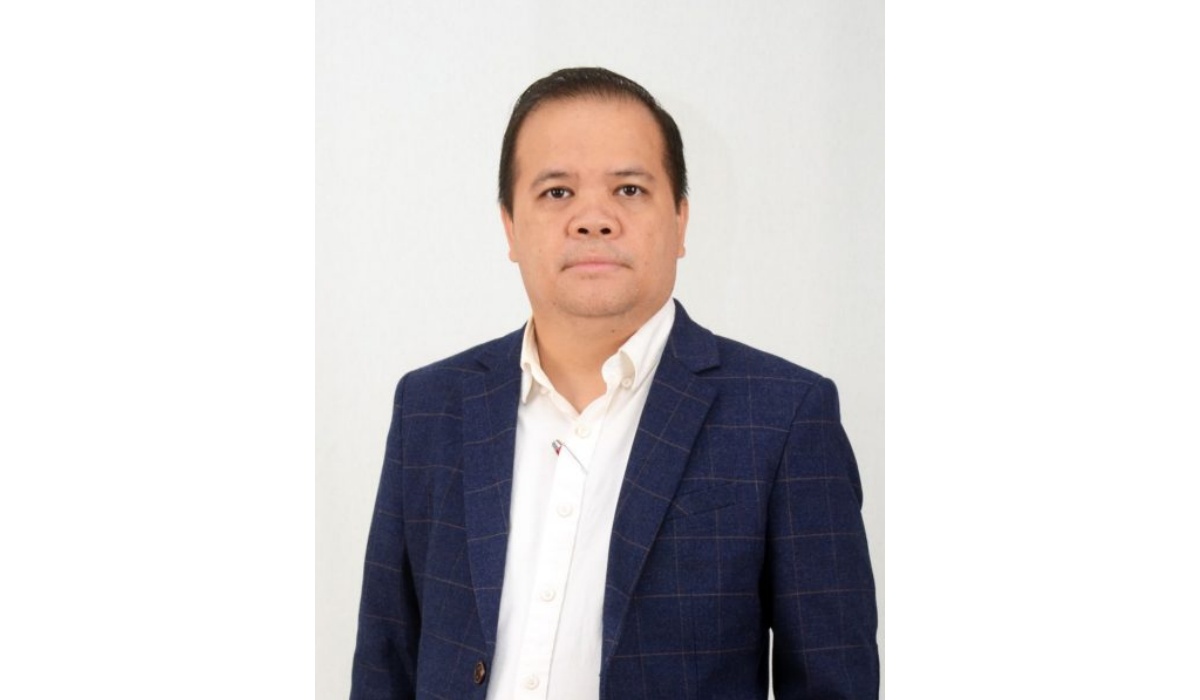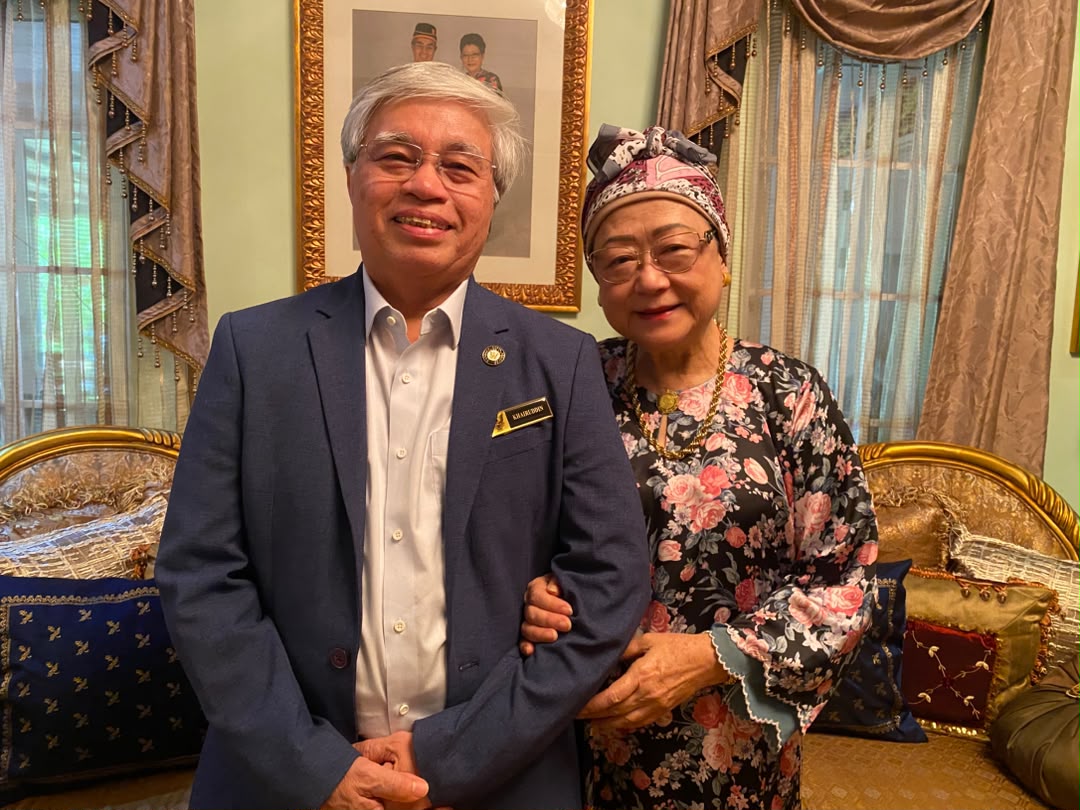
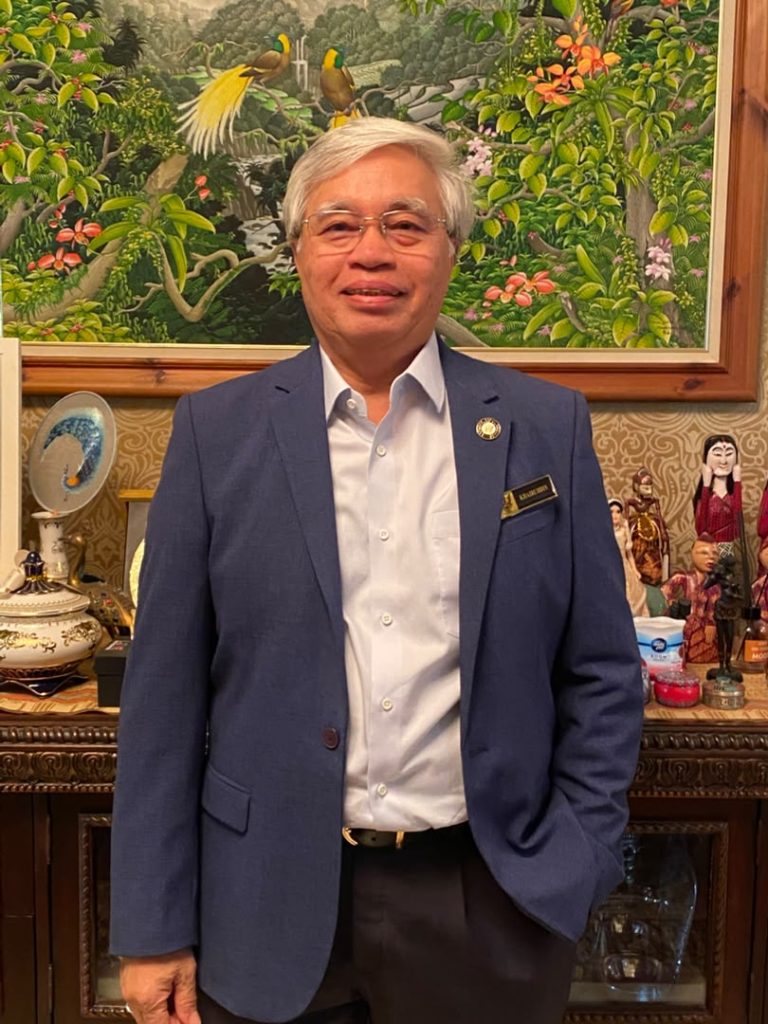
FOR a boy who once slept on a mat in a Felda settlement in Melaka, Professor Emeritus Datuk Dr Khairuddin Ab Hamid, has over the last 40 years scaled the heights of success, thanks to his zeal for education which was put into motion by his father.
Notably, the 68-year-old, affectionately known as Prof K, is credited with helping to build universities and connecting Sarawak’s remote communities to the digital world.
His journey from humble beginnings to becoming a prominent figure in Sarawak’s higher education landscape has been shaped by perseverance, opportunity and an unwavering belief in the transformative power of education.
Over more than four decades in academia, he has contributed to the establishment of Universiti Malaysia Sarawak (UNIMAS), played a leading role in pioneering eBario initiative and helped steer University College of Technology Sarawak (UCTS) towards attaining full university status as Universiti Teknologi Sarawak (UTS).
Yet, despite holding several senior academic positions, Khairuddin considers the success of his former students among the most meaningful rewards of his career.
“Sometimes, former students come up to me and say, ‘Prof, I used to be your student.’ Some have become chief executive officers and hold important positions.
“For me, that is a reward that cannot be measured,” he said in an exclusive interview with Sarawak Tribune.
He recalled meeting former UNIMAS students while performing the haj, when they voluntarily helped his wife, who was using a wheelchair.
The experience reminded him that the relationship between educators and students could continue long after graduation.
A father’s vision
Born in 1958, Khairuddin grew up in FELDA Tun Ghafar Kemendor, Jasin, where his father was among the early settlers who cleared forest land for rubber cultivation.
His father also worked as a school gardener, while his mother operated a school canteen to support their large family.
Financial hardship meant several of his older siblings had limited opportunities to pursue secondary education.
However, his father was determined to give him a different future.
After completing primary school at Sekolah Kebangsaan Kemendor, Khairuddin was instructed to enter an English-medium secondary school despite having studied entirely in Malay.
“That was the breakthrough in my life. My father was a rubber tapper and a school gardener, but he had the vision to send me to an English-medium school.
“He was brave enough to put me there. Looking back, I really admire his vision,” he recalled.
The transition was intimidating, particularly when he found himself studying alongside students already proficient in English.
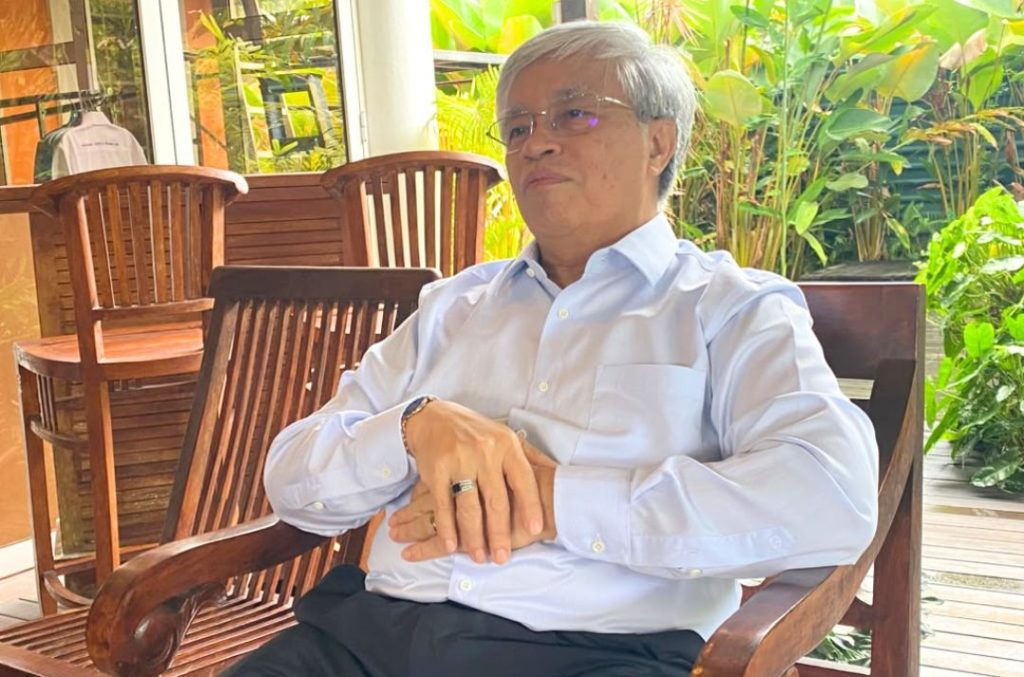
He later attended Sekolah Menengah Teknik Melaka, where his interest in mathematics and engineering developed.
For Khairuddin, entering the school’s hostel was itself a memorable experience.
“At home, I didn’t have my own room. I slept on a mat, but when I entered the hostel, I had my own bed and cupboard.
“To me, that was a luxury. Today, some students might see hostel life as a downgrade, but for me, it was an upgrade,” he said.
He subsequently entered Universiti Teknologi Malaysia (UTM) in 1977 and began his academic career there in April 1982.
He later pursued a master’s degree at the University of Hawaii and obtained his doctorate from the University of Essex in the United Kingdom.
It was during his studies in Hawaii that he met his future wife, Datin Dayang Mariani Abang Zain, a Sarawakian whom he married in 1987.
Building UNIMAS from scratch
Khairuddin’s move to Sarawak came in 1993, shortly after UNIMAS was established.
Having returned to UTM after completing his doctoral studies, he saw an opportunity to contribute to the development of a new university.
With the approval for a transfer, he joined UNIMAS as the founding dean of its Faculty of Engineering.
The challenge was considerable, as the faculty had yet to be physically established.
“When I arrived, there was nothing. The university existed, but the Faculty of Engineering had not been established.
“I was the only one there, and I was told to build the faculty. So we had to start everything from scratch,” he recalled.
He was responsible for developing academic programmes, recruiting staff and establishing laboratory facilities, initially working from modest temporary offices.
Rather than reproducing conventional engineering education, he introduced a problem-based learning approach that encouraged students to solve practical challenges independently.
He recalled how traditional laboratory classes often required students to follow instructions without fully understanding their purpose.
“Students were told where to connect the wires and what readings to take. Everything was already written in the manual.
“They were like robots. I wanted them to think for themselves, understand the equipment and solve problems,” he said.
Khairuddin also emphasised English-language communication, believing that confidence was essential for graduates entering the workforce.
He remembered watching a student who initially struggled to speak English eventually present a final-year project confidently without prepared notes.
“That was my satisfaction. The student had changed from someone who lacked confidence into someone who could stand up and present in English,” he said.
In 1998, he moved to lead UNIMAS’ information technology faculty, where his background in electronics and telecommunications helped shape its digital initiatives.
Bringing technology to Bario
Among his most significant contributions was his leadership involvement in pioneering the eBario initiative, which introduced information and communication technology to the remote Kelabit Highlands.
When the project began in the late 1990s, Bario lacked conventional electricity and telecommunications infrastructure.
Transporting computers, satellite equipment and solar panels into the highlands presented considerable logistical challenges.
Supported by federal funding, the initiative established digital facilities at schools and a community telecentre, giving residents access to communication technology previously unavailable to them.
“We should not wait for rural communities to come out and look for technology. We must bring the technology to them,” he said.
The initiative went beyond providing computers and internet access, creating opportunities for education, tourism and local businesses.
Khairuddin recalled how residents could communicate with the outside world, while visitors could obtain information about homestays and activities in Bario.
The project subsequently attracted international recognition for its contribution towards bridging the digital divide.
However, its greatest impact on him was the relationship established with the local community.
He and his wife were welcomed into a Kelabit family in recognition of their contributions, forging bonds that continued long after the project’s initial implementation.
“We did not start the project expecting recognition. We simply wanted it to succeed and benefit the community.
“Even today, they still remember us and invite us to family events. That is something very sentimental to me,” he said.
For Khairuddin, eBario eventually became more than a technological initiative.
“The eBario project is no longer just about the physical project. It is about the spirit,” he said.
Its success encouraged similar initiatives in Long Bedian, Sabah and Orang Asli settlements in Peninsular Malaysia.
Strengthening UNIMAS
Khairuddin subsequently served as deputy vice-chancellor, overseeing research and development as well as university development responsibilities.
During this period, he helped strengthen the university’s research and publication culture while overseeing major aspects of its permanent campus development in Kota Samarahan.
He recalled working closely with Japanese contractors and consultants on the project, which required extensive planning of academic facilities and infrastructure.
One facility he remembered fondly was the Student Pavilion, developed to provide students with a dedicated space for social and recreational activities.
He explained that the facility was financed through savings accumulated from the university’s annual allocations.
“We saved a little every year. When we had enough money, we built the Student Pavilion ourselves.
“It was not additional government funding. It came from what we had saved because we wanted students to have a proper place for their activities,” he recalled.
He later served as UNIMAS vice-chancellor from January 2008 until March 2013, during which he promoted international collaboration and student recruitment.
Following his tenure, he continued contributing to higher education, including serving as vice-chancellor of University Malaysia of Computer Science and Engineering (UniMy) in Putrajaya from 2014 until January 2018.
Transforming UCTS into UTS
In February 2018, Khairuddin took on another leadership challenge when he became vice-chancellor of UCTS in Sibu.
At the time, non-Bumiputera students accounted for approximately 85 per cent of enrolment, while Bumiputera students made up the remaining 15 per cent.
He believed more opportunities should be created for students from different educational backgrounds, particularly diploma holders and those pursuing technical and vocational pathways.
Among the initiatives introduced were additional degree pathways, alongside programmes combining technical knowledge with management skills.
Bumiputera enrolment eventually increased to approximately 50 per cent.
Another major achievement during his tenure was the institution’s elevation to full university status in November 2021, when UCTS became UTS.
He believed the change was important not merely for institutional recognition but also for strengthening public confidence.
Khairuddin also emphasised industry-recognised qualifications to improve graduate employability.
“I wanted students to graduate not only with a degree but also with professional or industry certifications that employers recognise,” he said.
His tenure at UTS concluded in March 2026.
Education beyond profit
Throughout his career, Khairuddin maintained that universities should provide opportunities regardless of students’ financial circumstances.
At UTS, he recalled discussions on introducing incentives to attract students, including free foundation studies for eligible Malaysian applicants.
He also remembered advising university staff not to turn away students who had travelled from remote areas such as Belaga simply because they could not immediately afford registration fees.
“Let them enrol first. We can discuss the money later,” he said.
For Khairuddin, education should not be viewed merely as a source of revenue.
Reflecting on Sarawak’s educational future, he acknowledged the state government’s commitment to expanding higher education opportunities but stressed that policies alone were insufficient.
He believed effective leadership, sound governance and proper implementation were essential to ensuring initiatives delivered meaningful results.
After more than four decades in academia, Khairuddin’s journey has taken him from a modest FELDA settlement to the leadership of institutions that have helped shape Sarawak’s educational landscape.
Yet, the greatest satisfaction remains seeing former students succeed and communities gain opportunities through education.
For a man whose own future was transformed by his father’s determination, those achievements remain a legacy far more meaningful than titles or recognition.