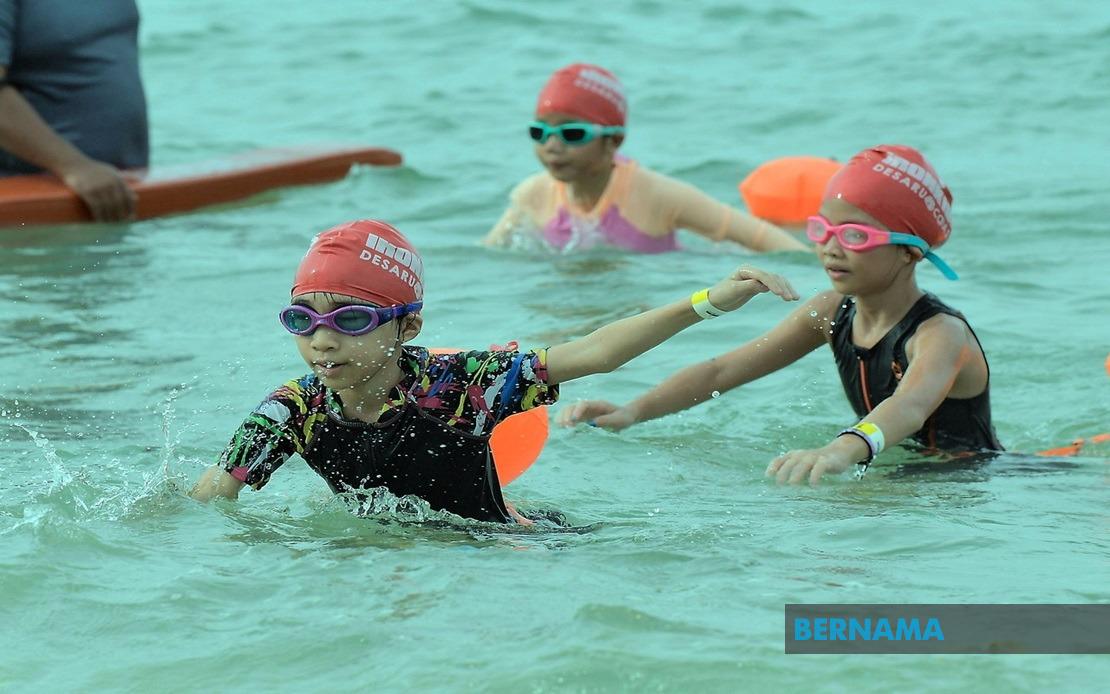
PHNOM PENH: Vietnamese authorities are promoting swimming and water safety programmes for children as the monsoon season sets in, in an effort to reduce drowning incidents that claim thousands of lives every year.
The renewed push comes as child drowning remains a major public health concern in Vietnam, where global advocacy groups estimate that about 2,000 children lose their lives to drowning annually, particularly in flood-prone areas.
Amid the rainy season and the start of the summer school holidays, authorities are expanding swimming lessons, teaching water safety skills and monitoring high-risk rivers, canals and flooded areas, reported Vietnam News on Monday.
The scale of the public health challenge in Vietnam has prompted authorities to expand nationwide campaigns to prevent child drownings, in a country known for its vast river systems, lakes and canals.
“(We) are working with schools, youth organisations and swimming centres to promote the benefits of learning to swim, encourage students to join swimming classes, provide drowning prevention skills and integrate injury prevention education into summer activities,” said Phu Loi Ward People’s Committee Deputy Chairwoman Tran Thi Hong Van, reported the daily.
In May, four students were swept away by strong currents while swimming in Dak Lak Province. Three days later, another five boys drowned in Phu Tho Province, underscoring the dangers children face during periods of heavy rainfall and flooding.
The challenge extends beyond Vietnam.
According to the World Health Organisation (WHO), an estimated 300,000 people died from drowning worldwide in 2021, with Southeast Asia recording the highest regional toll at 83,000 deaths.
The United Nations Children’s Fund (UNICEF) reported that child drowning is also prevalent in Cambodia, where nearly 1,300 children die from drowning each year. It remains one of the leading causes of death among Cambodian children aged five to 14.
WHO’s South-East Asia Regional Status Report on Drowning 2025 identified several reasons for these tragic incidents, as communities live close to rivers, ponds, canals, and coastal zones — essential to daily life.
Seasonal monsoons and recurring floods, intensified by climate change, tend to elevate the risk.
“Social and economic hardships and inequality exacerbate vulnerability. Inadequate housing facilities, unsafe water transport, limited childcare options and poor swimming literacy are recurring phenomena,” said WHO’s report.
UNICEF estimates that nine in 10 drowning deaths occur in low- and middle-income countries, with children under the age of five facing the greatest risk.
In Bangladesh, another flood-prone nation crisscrossed by major rivers, an estimated 40 children die from drowning every day. – BERNAMA