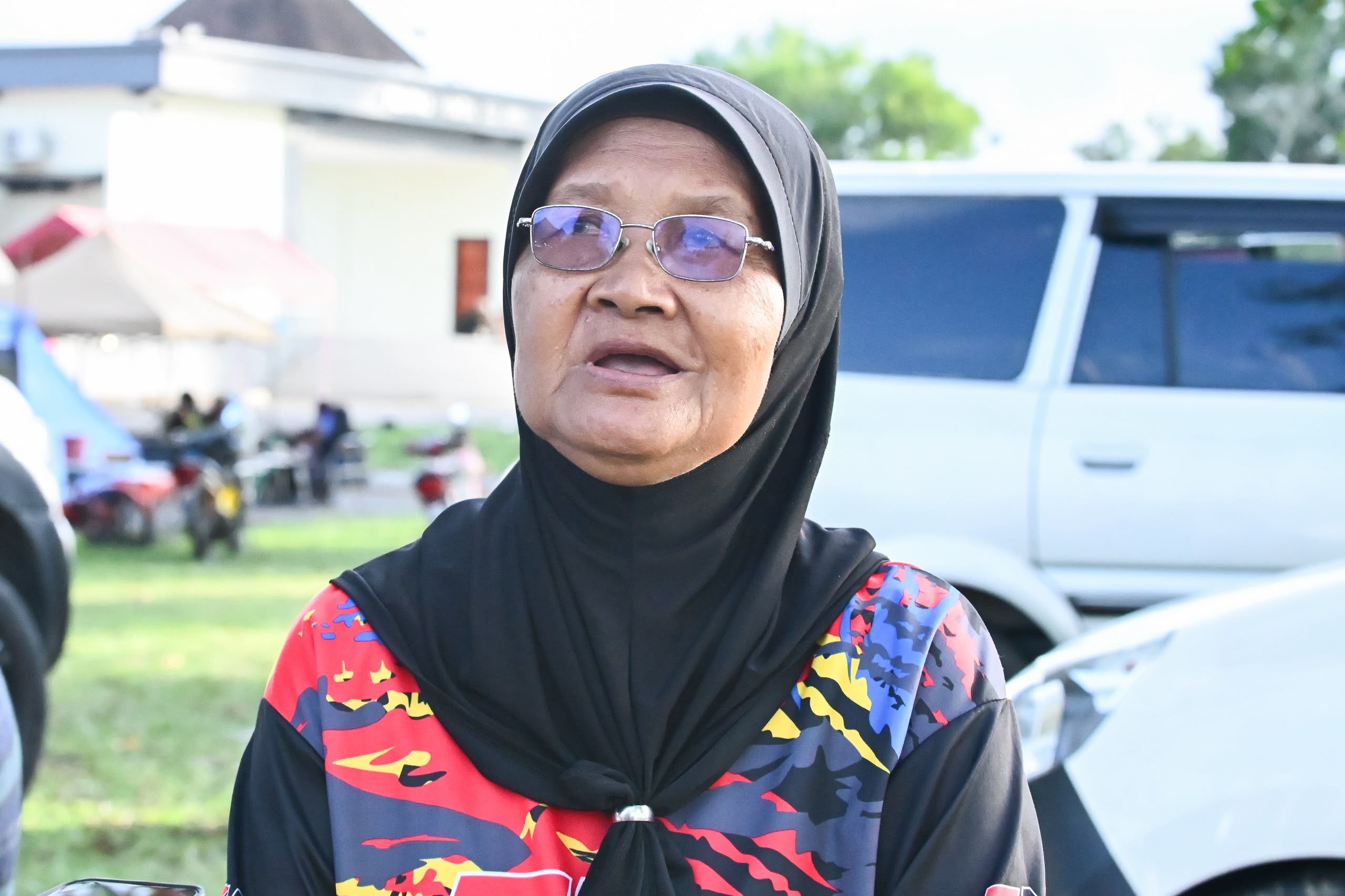
BELAWAI: Fatimah Laing remembers when there were only two or three people in Belawai she could watch to learn how to make pipus.
At 68, she can still talk through each step of preparing the traditional Sarawak delicacy, in which seasoned fish is wrapped in young nipah palm leaves and grilled over embers.
When asked what had changed in Belawai since she was younger, Fatimah thought first of the people who make pipus.
She said there were far more of them now, something visitors could see for themselves at Pesta Belawai, where several stalls sold the leaf-wrapped parcels.
“I learnt by watching other people make it. There are so many people making it now,” she told Sarawak Tribune.
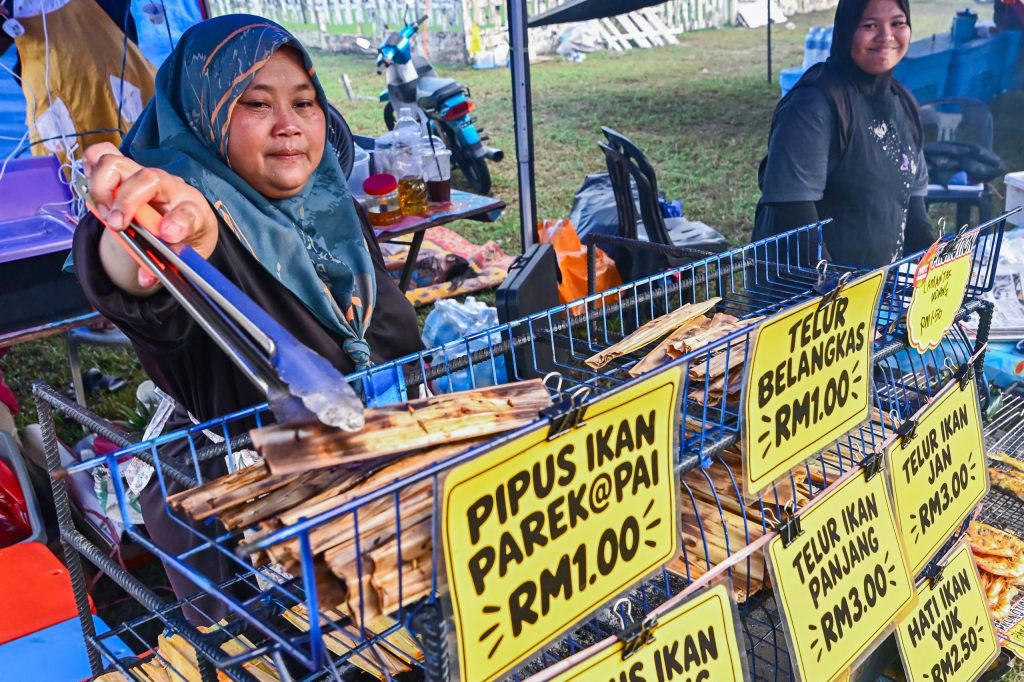
The bright yellow signs at one stall showed how much the filling could vary from one parcel to the next.
Pipus made with ikan parek (stingray) was priced at RM1 each, while the sardine and ikan gonjeng (a type of anchovy) varieties were RM2 each.
Other stalls sold pipus at similar prices.
Fatimah said much of the work happens before the fish is ready to be wrapped.
Her seasoning is simple: salt, Ajinomoto and a little chilli, with eggs also going into the mixture.
Getting the flesh ready for those ingredients is what takes time.
“When I make two or three kilogrammes, it takes me close to two hours. The most tedious part is removing the fish bones which requires a lot of patience.
“After that, I would steam the fish then grind it and mix in a little salt,” she explained.
For Fatimah, the price of the fish determines how much she can make from a batch.
She admitted finding enough fish can be a challenge of its own when several people in the village are making pipus at the same time.
“From two kilogrammes of ikan gonjeng, you can get about RM50 in sales. The fish itself costs around RM20,” she said.
However, Fatimah has put pipus-making aside for now.
Without a regular job, she also earns some income from making sesar unjur, a Belawai speciality made with red prawns known locally as payak.
The prawns’ heads are removed and shell peeled, then laid out straight and smoked until dry.
They can be eaten on their own or used in cooking.
Reported prices for sesar unjur range from about RM115 to RM180 per kilogramme.
Smaller packs have been listed at RM10.50 for 30g, RM50 for 200g and RM99 to RM135 for 500g.
Fatimah said making sesar unjur brought in a little more for her than making pipus.
“I haven’t been making pipus lately. I have been unwell and I can’t stand for very long. Sesar unjur earns me a little more,” she said.
Fatimah’s memories of Belawai also tell of a time when leaving the village meant travelling part of the way by water.
There was a fare for the speedboat and another for the car ride that followed.
These days, she makes the journey by road.
Looking back on the changes she has seen in Belawai over the years, Fatimah said she was pleased with how the village had developed.
“We used to take a speedboat, and after that we still had to pay for a car ride. I am very grateful for the developments that have been taking place here,” she said.