CAVING is an adventurous activity that many find enjoyable due to the unique sense of exploration and discovery it offers.
It provides for a thrilling experience of discovering hidden worlds, appreciating natural beauty, and engaging with geological and historical features in overcoming obstacles.
Sarawak is indeed renowned for its extensive cave systems and is considered a caving paradise.
The state boasts numerous caves, including some of the largest and most spectacular in the world such as the Deer Cave, Clearwater Cave, and the Sarawak Chamber in Gunung Mulu National Park, as well as the caves in Niah National Park.
In Kuching, cavers, be they locals or foreigners, may drive to Bau, which offers two caves that are relatively accessible. One may either explore the Wind Cave or Fairy Cave, or both on the same day.
Having heard of these two, I tried to explore the Wind Cave for a first-hand experience of what it offered.
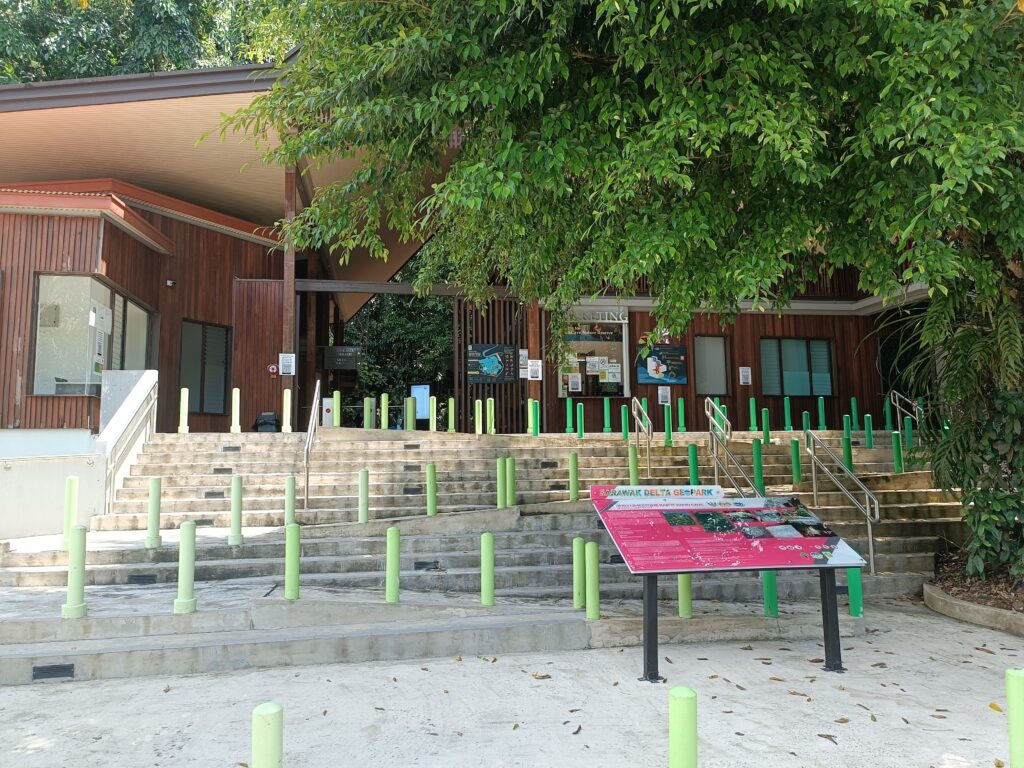
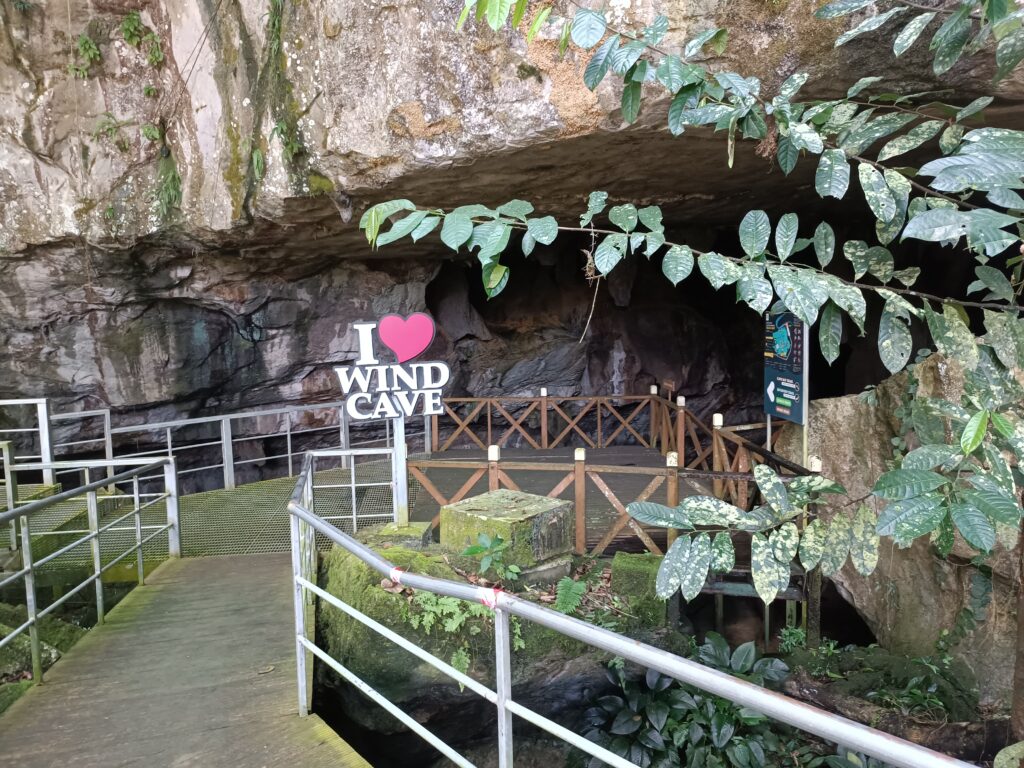
This is not my first caving though, having explored several popular caves at Mulu National Park.
As a senior citizen, I don’t have to pay an admission fee. If you are not a senior citizen, you would have to pay an admission fee of RM1 (for local) and RM5 (for foreigners) per person.
At the entrance, we were told to bring along torch lights for the tour although a hand phone torch sufficed.
Those who do not wear shoes are advised to rent shoes available at the entrance. After payment is made, and receipt issued, visitors can proceed to the cave entrance.
There were many groups, comprising local and foreign visitors, including family members, eager to explore Wind Cave on the day I was there. Some groups had left and some had just arrived.
Based on the trail guide placed at the entrance, visitors can enter through two passages to explore the Wind Cave.
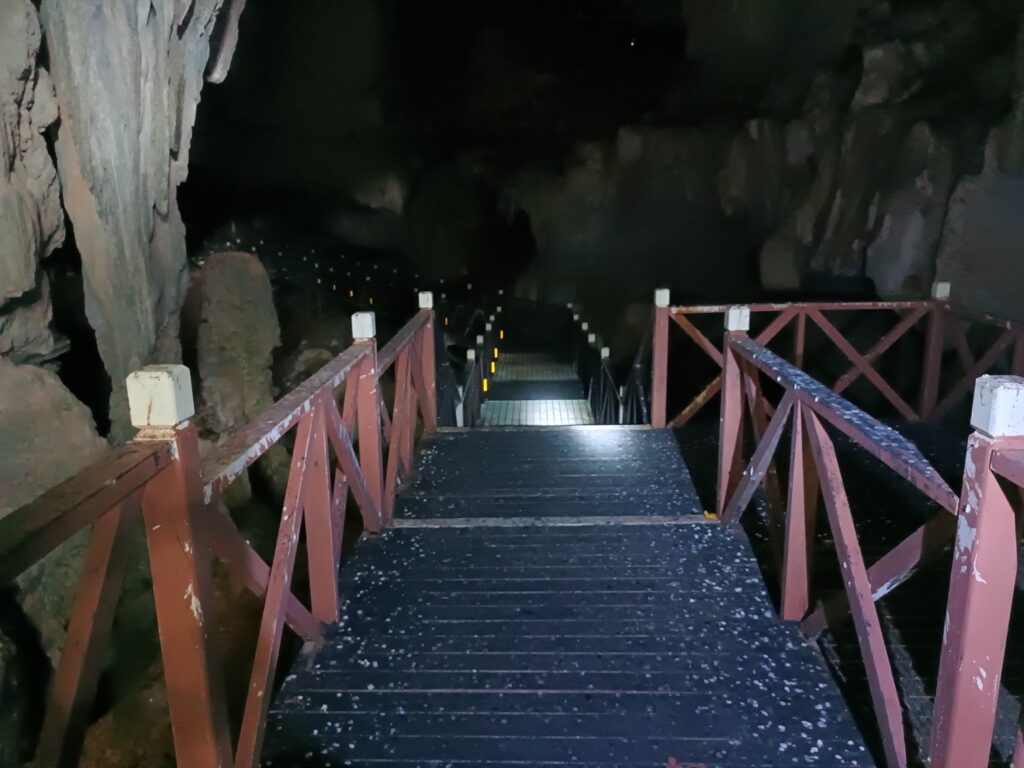
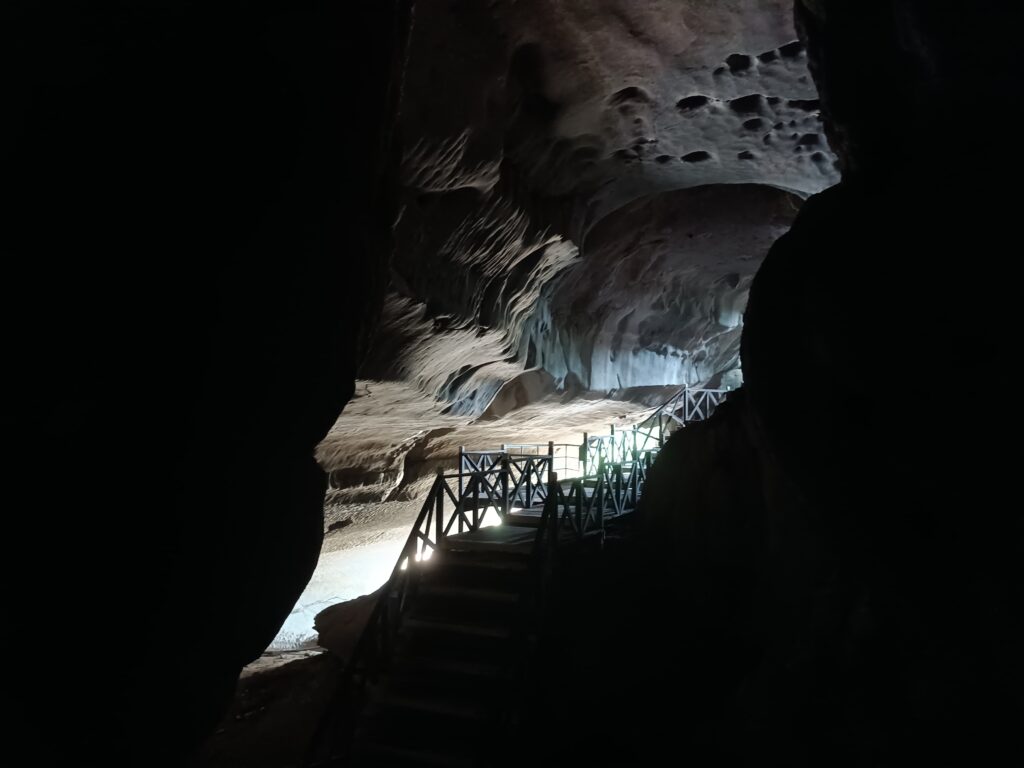
While most caving activities may require physical fitness and problem-solving skills to navigate different terrains and obstacles, it is not the case as far as the Wind Cave is concerned.
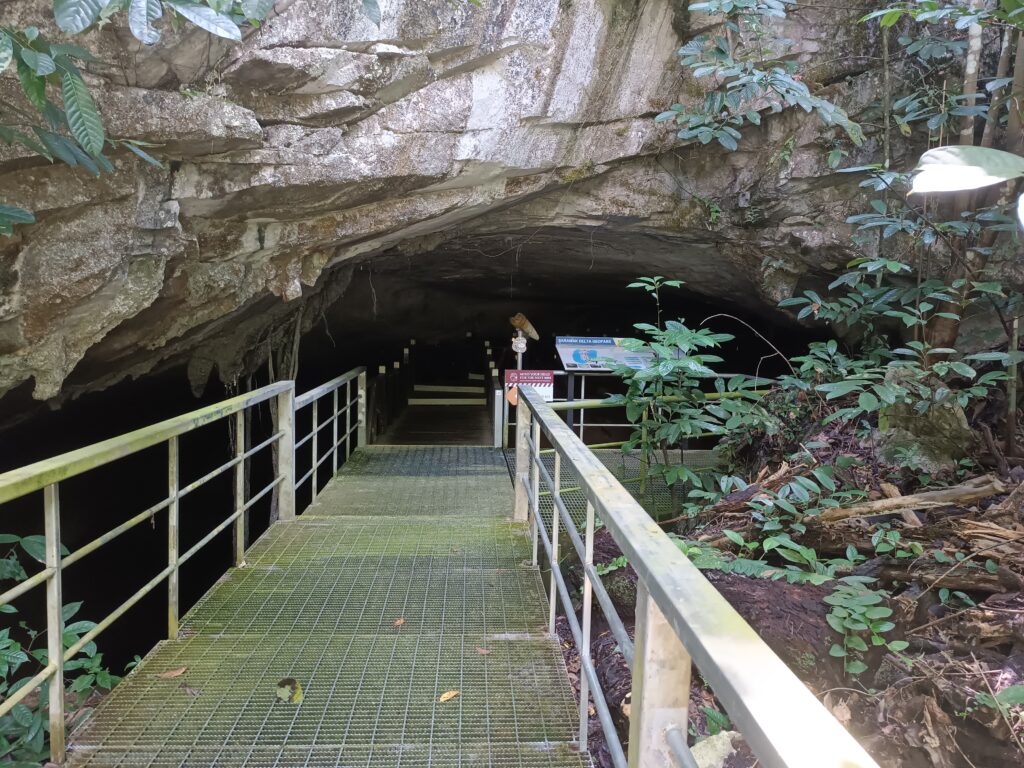
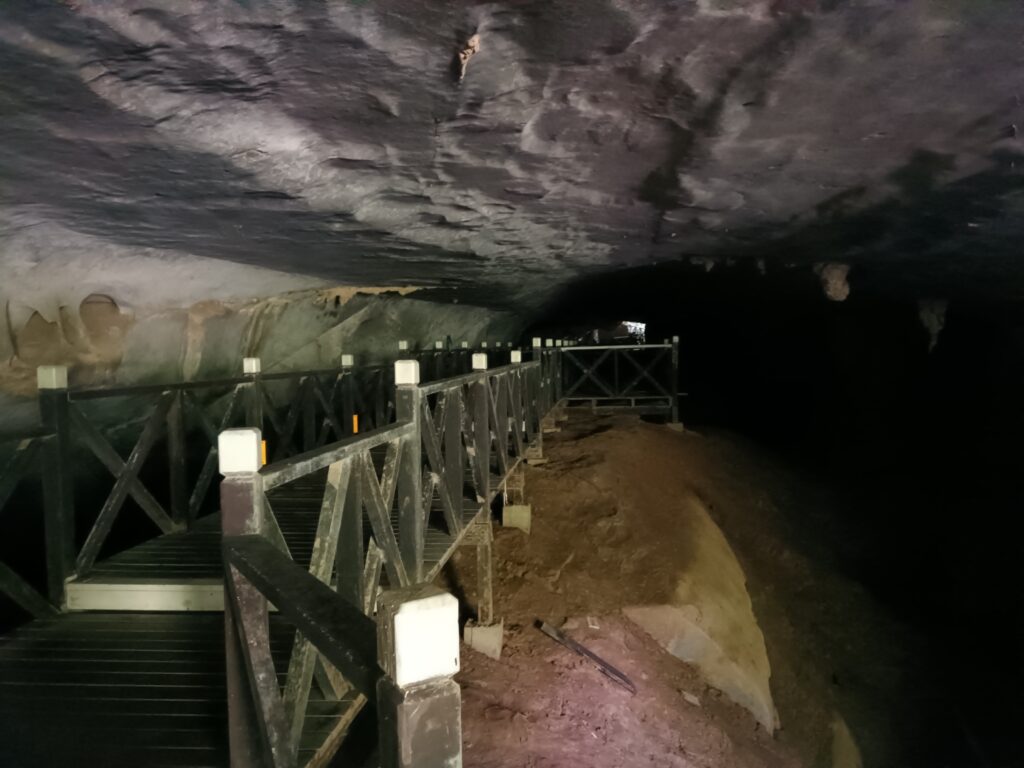
Once we stepped into the cave, the inside was indeed very dark. However, walking through the darkness was relatively easy because of the good trail.
The trails inside the cave were mainly flat footways on planks and metal sheets, with occasional gentle steps to climb only.
Yet, we still had to walk slowly and carefully because it was really dark and the trail floors were quite wet.
From the main entrance of passage No.1, we came to the first junction within the cave system; to the right was a trail to get us to the geology lookout point.
At the end of the trail, we saw the first ray of light that came from outside.
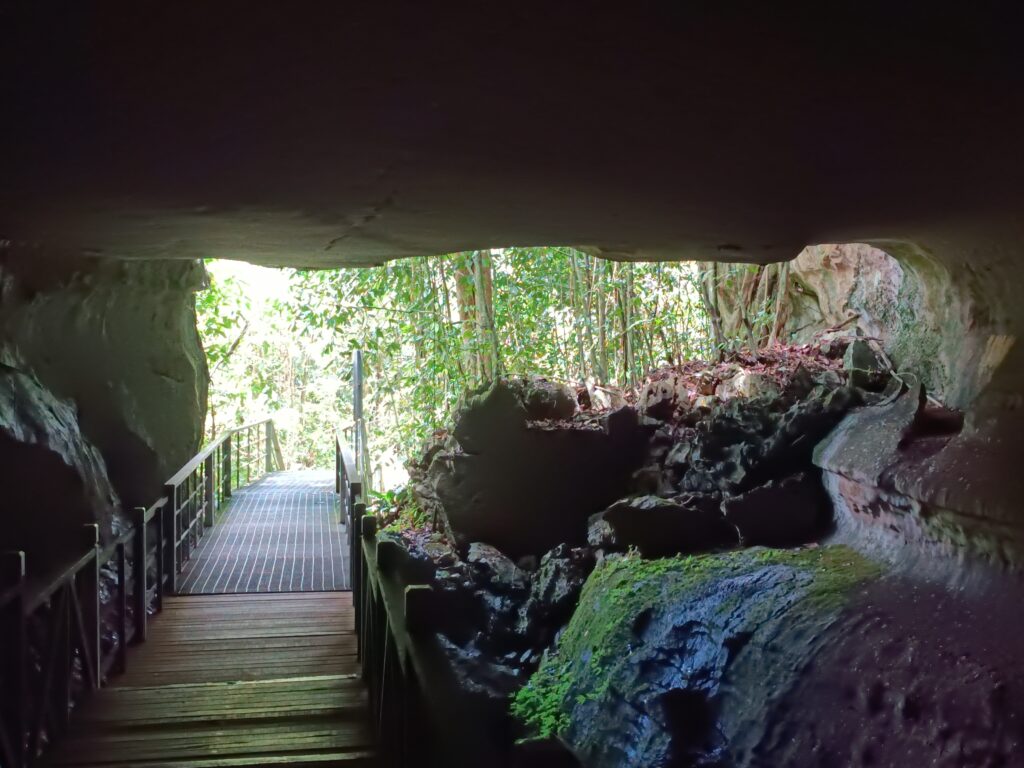
If you climb up to the lookout point, you will see a section of the beautiful scenic view of the Wind Cave Nature Reserve.
Along the way to the geology lookout point, we could also see a lot of bats flying and hanging upside down from the ceilings and wall of the cave.
Then we turned back to proceed with our tour to the other natural wonders in the caves.
There were not many sights to admire along the way in darkness, except for the occasional limestone formations we spotted, like in collage above through the ray of torchlight.
Contrary to its name, I did not find it particularly windy inside the cave.
As we toured through the main trail, we came to the second junction heading to the left. We proceeded along the river view trail and to the river lookout point. Along the way, there were also many bats hanging around.
I tried to spot scallops on limestone with the ray from my torchlight but could not see much as it was dark.

Scallop formation is an indicator of water flow in caves. It is a feature formed when water flowing over the surface of the limestone dissolves the calcium-carbonate.
As we got near to the river lookout point, I could feel the cool breeze blowing through the cave passage.
This is probably how the Wind Cave got its name. The locals also call this cave ‘Lobang Angin’, literally translated as Wind Hole.
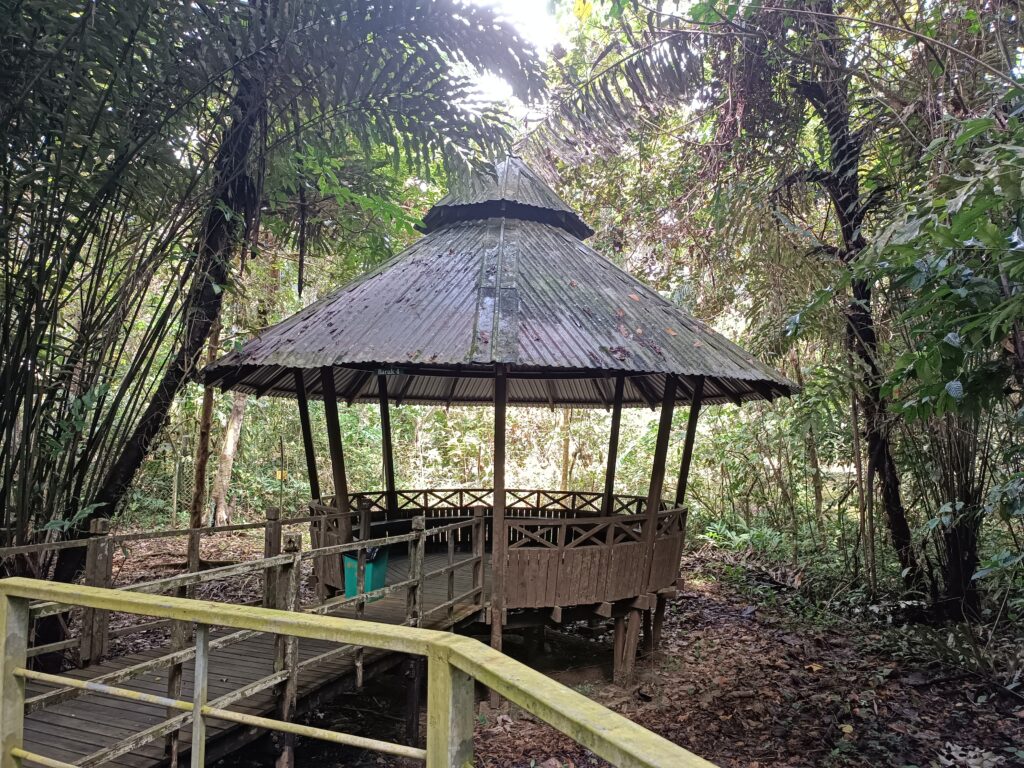
Then we turned back and headed towards the jungle trail, where we found ourselves in a section of the Wind Cave Nature Reserve. Along the trail, which is built with metals, were two ‘baruk’ for resting.
Based on information available at the site, Wind Cave Nature Reserve is also known for many unusual plant species perfectly adapted to the environment. The Amorphohallus is said to be among the strangest.
At the end of the tour, before we completed our one round walk to the finishing point, we dropped by at the Wind Cave Geosite, following the fossil trail.
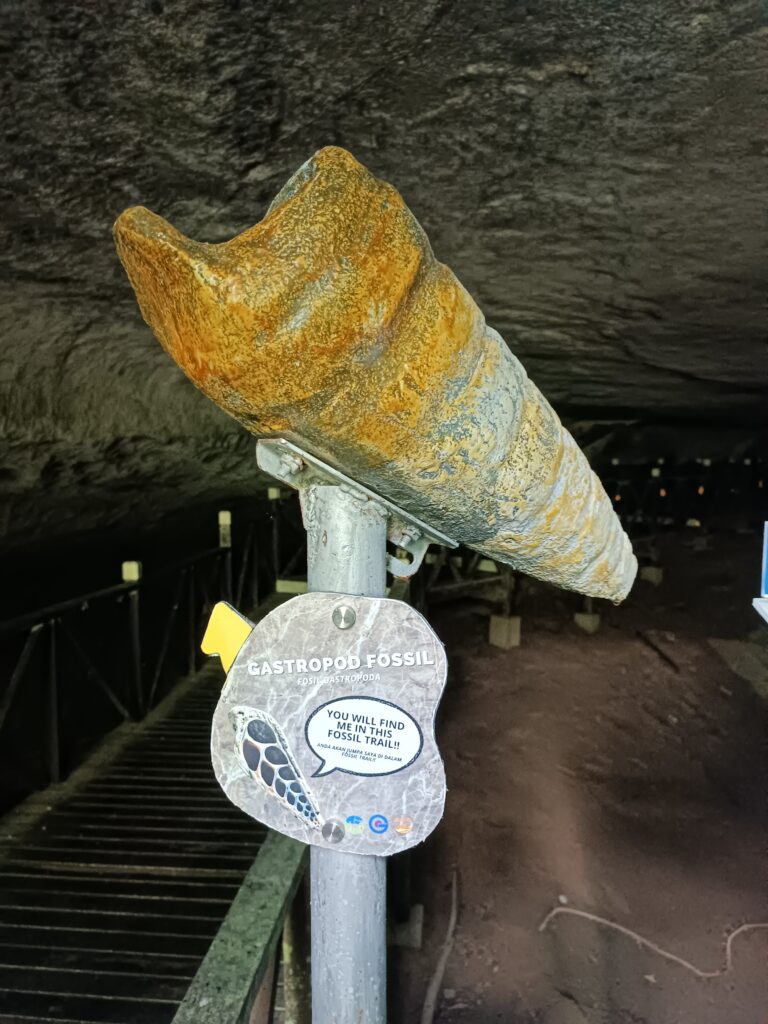
The Fossil Trail, Wind Cave Geosite, has a geological diversity of high scientific and aesthetic heritage value, featuring limestone karst morphology and fossils.
In addition to serving as an existing recreational site, the geosite can be developed as a geosciences learning site regarding fossils within the Sarawak Delta Geopark.
Although cavers may not be able to experience any challenge of navigating difficult terrain and finding new passages, the Wind Cave is still good enough to offer a break from the everyday world, providing a sense of peace and quiet.
Like any other cave, it also offers a unique environment to explore, with completely hidden passages, formations and ecosystems.
The thrill of exploring the unknown, coupled with the sense of reconnecting with a primal sense of curiosity, makes caving in the Wind Cave an equally rewarding and exciting experience.