KUCHING: Artificial intelligence (AI) is rapidly becoming the centrepiece of Malaysia’s digital transformation ambitions, backed by billions of ringgit in investments and growing government support.
Yet as businesses rush to embrace the technology, experts are warning that successful AI adoption will depend less on the tools themselves and more on the people using them.
For Sarawak, which is steadily advancing its digital economy agenda, the challenge is not simply introducing AI into workplaces but ensuring organisations have the right culture, processes and workforce readiness to make the technology deliver meaningful results.
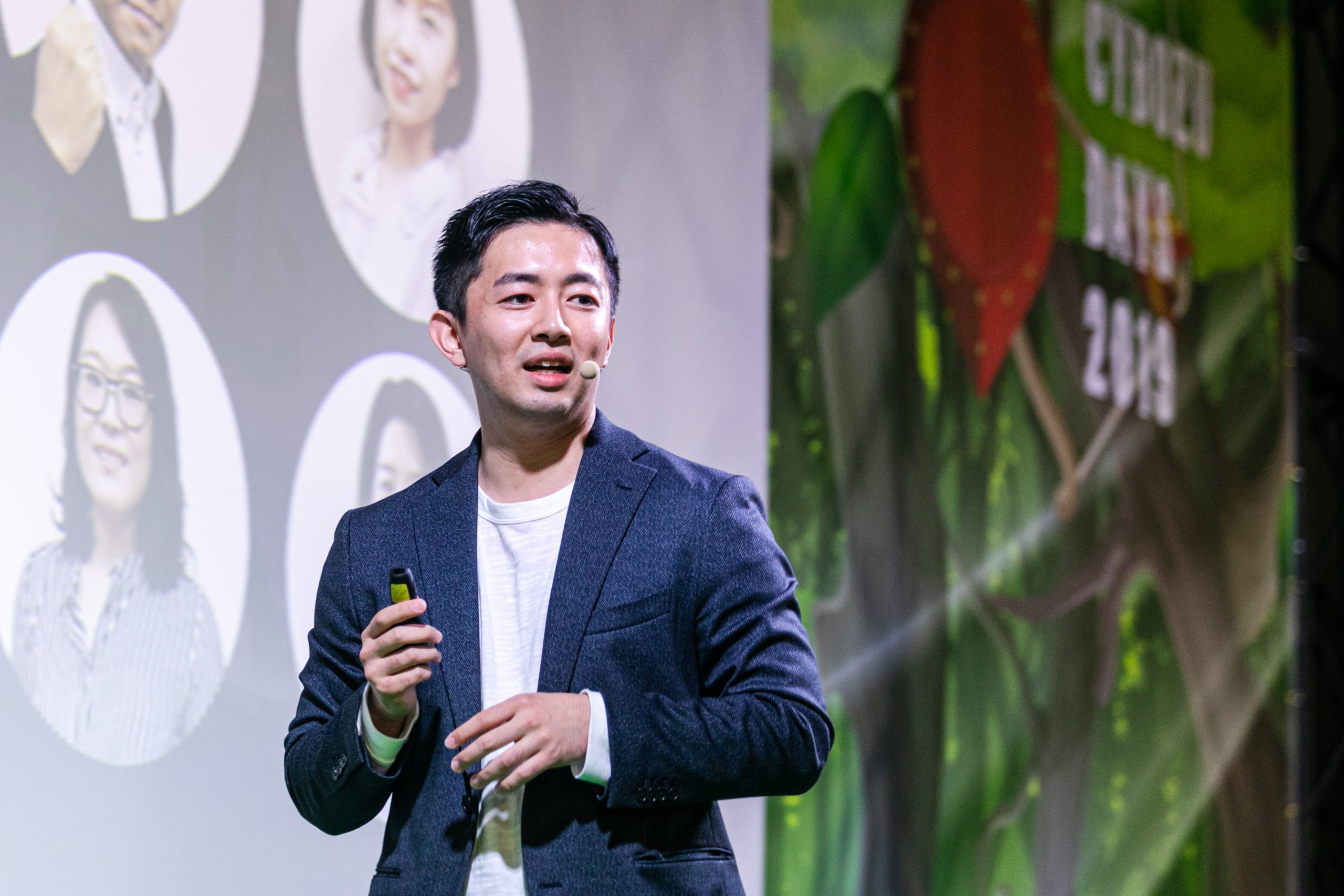
Kintone Southeast Asia’s Managing Director, Tsubasa Nakazawa, believes many organisations are approaching AI from the wrong starting point.
“What we’re seeing on the ground is that many organisations have acquired AI tools without first asking the harder question: are our people ready to work alongside them?” he told Sarawak Tribune in a recent interview.
His observations come as Malaysia emerges as one of Southeast Asia’s fastest-growing AI markets. The country is expected to attract nearly one-third of the region’s AI investments, with more than USD40 billion (approx. RM169.2 billion) projected to flow into the sector by 2030.
Despite the enthusiasm, actual adoption remains relatively limited. Nakazawa noted that only about 10 per cent of businesses are using AI to any significant degree, suggesting that the barriers are no longer access to technology or awareness.
Instead, organisations are grappling with confidence, capability and cultural readiness.
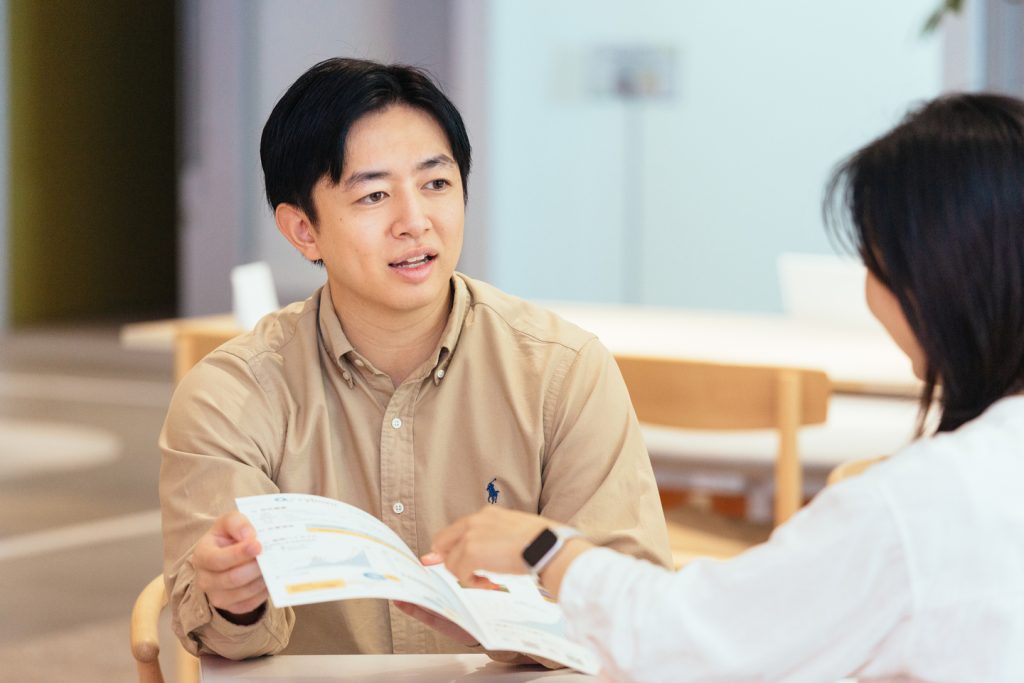
Employees who are unable to evaluate AI-generated recommendations or challenge inaccurate outputs often find themselves either ignoring the technology altogether or placing too much trust in it.
“That’s not AI adoption. That’s AI liability. When teams aren’t equipped to question what AI produces, errors don’t just slip through – they scale,” Nakazawa said.
According to him, many businesses assume AI will solve existing inefficiencies, but the reality is often the opposite. AI systems tend to amplify weaknesses that already exist within an organisation.
“If your workflows are undocumented, your approval chains are ambiguous or your data is inconsistent, AI doesn’t fix any of that. It accelerates it,” he stressed.
One of the most common problems he encounters is unclear accountability.
When AI systems generate recommendations, flag irregularities or assist in decision-making, organisations frequently fail to establish who remains responsible for the final outcome.
“The first thing businesses overlook is unclear ownership. When AI is generating a recommendation or flagging an anomaly, someone needs to be accountable for what happens next,” Nakazawa added.
He also highlighted the importance of organisational culture, particularly the willingness of employees to question decisions.
In workplaces where staff has traditionally been conditioned to defer to authority, the same behaviour can easily extend to AI systems.
“If your team has been conditioned to defer to authority, they’ll defer to AI outputs the same way,” he reiterated.
For AI to be effective, organisations must create environments where employees feel psychologically safe, challenging recommendations and raising concerns when something appears wrong.
This becomes even more important as AI-generated misinformation and inaccurate outputs become increasingly common.
To minimise risks, Nakazawa advocates stronger governance frameworks, beginning with traceability.
Every AI-assisted decision should be recorded and tracked, detailing who initiated it, what recommendation was generated, who approved it and when the decision was made.
“The starting point is traceability. Every AI-assisted decision should be traceable. This isn’t just audit hygiene; it’s a behaviour-shaping mechanism,” Nakazawa said.
At the same time, organisations must carefully determine where human oversight remains essential.
Nakazawa’s guiding principle is straightforward: automate routine tasks but retain human ownership over judgement-based decisions.
“Automate tasks, not judgments,” he said. “Strategic decisions, performance evaluations, customer-facing resolutions and anything with ethical or legal weight should always require human ownership.”
Nakazawa added that businesses should also rethink how AI is introduced into workplaces. Rather than treating AI as a separate tool that employees must learn independently, organisations should integrate it directly into existing workflows.

“When AI is built directly into the workflows people already use, rather than sitting as a separate tool they have to go out of their way to access, the barrier drops significantly,” he said.
This philosophy underpins Kintone’s collaboration with the Sarawak Digital Economy Corporation (SDEC), which focuses on strengthening digital readiness across businesses and public sector agencies in the state.
Through workflow digitisation initiatives, organisations are encouraged to establish strong digital foundations before moving towards more advanced AI applications.
“You can’t build AI readiness on manual, paper-based processes,” Nakazawa said.
He noted that many small and medium enterprises (SMEs) that previously relied on WhatsApp messages and email chains for approvals have successfully transitioned to structured digital workflows, making accountability clearer and operational bottlenecks easier to identify.
Beyond technology deployment, Kintone and SDEC have also organised industry seminars and awareness programmes to expose businesses to practical use cases, helping bridge the gap between understanding AI and implementing it effectively.
Looking ahead, Nakazawa sees enormous opportunities for both Sarawak and Malaysia as investment, talent development and government support continue to grow.
However, he cautioned against measuring progress solely by the speed of AI deployment.
“The risk is that speed becomes the measure of progress. When organisations prioritise deployment over readiness, AI becomes a cost centre dressed up as a strategy,” he opined.
“The technology gets implemented, results disappoint and trust erodes not because the tools failed, but because the conditions for success were never in place.”
For Sarawak, where AI adoption remains in its early stages, he believes this presents a unique advantage. The state has an opportunity to build the right foundations from the outset, ensuring that technology, people and organisations evolve together.
“What collaborations like ours with SDEC can contribute is the connective tissue, ensuring that as AI scales, the people and organisations it touches are growing alongside it, not just adapting to it,” Nakazawa said.
As AI continues to reshape industries and workplaces, Nakazawa believes the organisations that succeed will not necessarily be those with the most advanced technology, but those that recognise a simple truth: the future of AI remains fundamentally human.