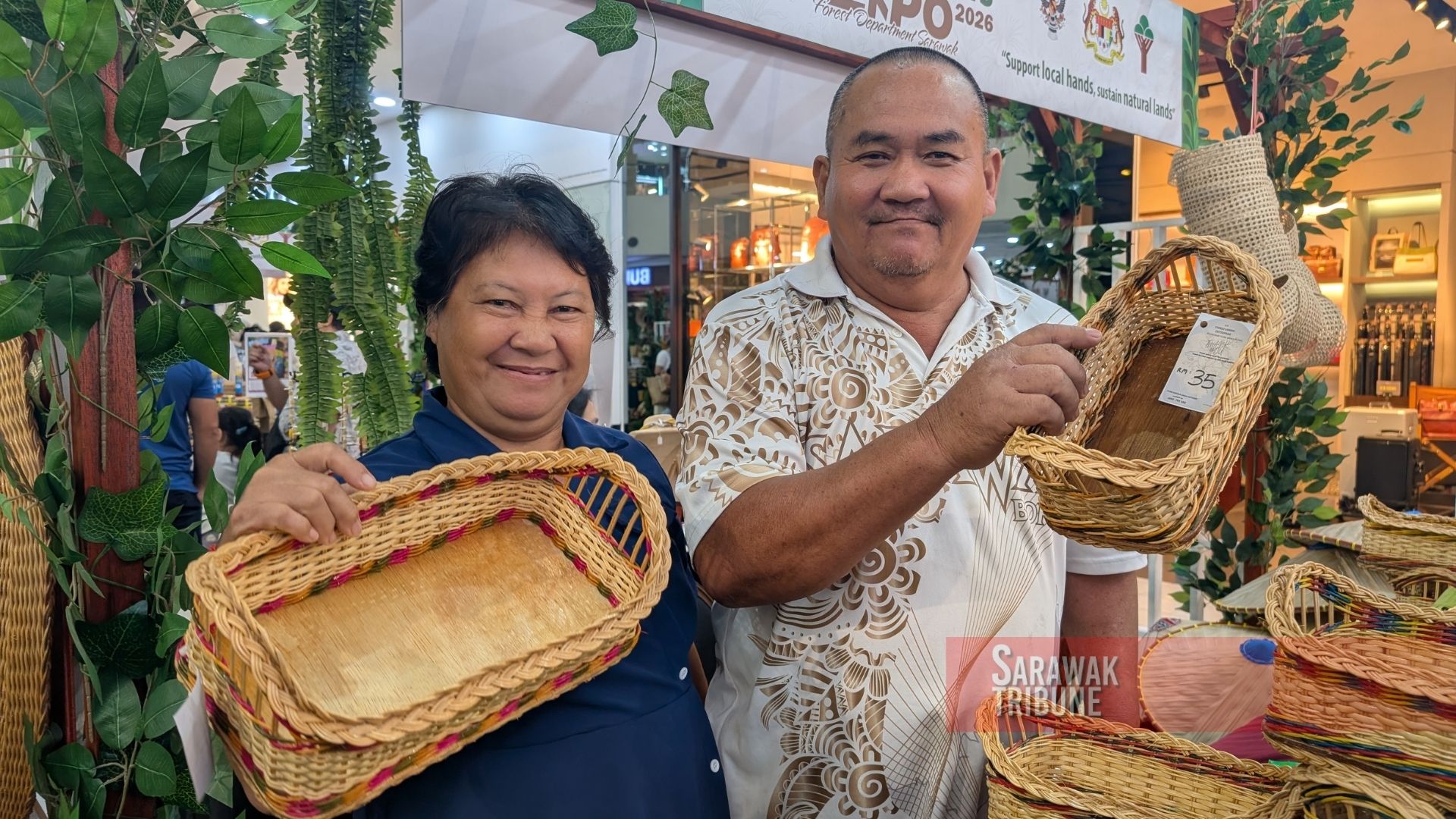
BEFORE a rattan basket reaches a customer’s hands, its journey can be traced back to deep in the forest, where the search for the right materials requires patience, strength and years of traditional knowledge.
And for Anthony Jawi Duaw and his wife, Juliana Umin, rattan weaving is more than just a craft.
It is a way of life that connects them to the forest whilst preserving a traditional skill that has long been part of rural communities in Sarawak.
The couple from Rumah Mujah, Batu 12, Jalan Bintulu-Miri, have been producing rattan handicrafts for more than five years, transforming naturally sourced materials into beautifully crafted household items.
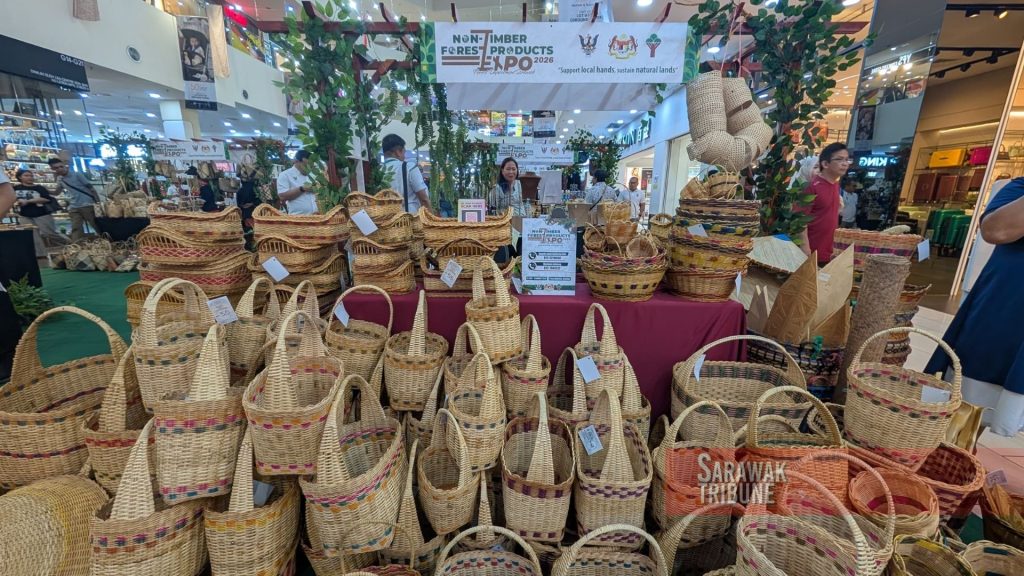
Their works were among the products showcased at the Non-Timber Forest Products (NTFP) Expo 2026, held at Plaza Merdeka in Kuching from July 31 to Aug 9.
Anthony, 55, said their journey into rattan handicraft began with the making of traditional raga — rattan baskets that were commonly used by people in the past.
While he helps with the process, he said his wife, Juliana, 53, was the more experienced weaver who handled most of the intricate work.
“Almost all our products are made from rattan,” he said, adding that the raw materials were collected personally from forests around Bintulu, particularly in the Temudak area.
The couple have been harvesting rattan from the forest for about five years, while the products they currently produce have been developed over the past four years.
However, their experience with traditional rattan baskets goes back much further.
Their skills in weaving were further strengthened after learning from a craftsman known as Pak Amin from Kuching. They also attended two training courses focusing on making rattan baskets and ‘tudung saji’ (traditional food covers), which helped improve their techniques.
Despite the beauty of their finished products, producing them requires considerable effort long before the weaving begins.
Anthony and Juliana venture into the forest to search for rattan without assistance from others. They usually make the trip about twice a month, spending around half a day collecting as much rattan as they can carry.
“It depends on our ability. We take only what we are able to bring back because rattan can be very heavy,” he said.
However, finding suitable rattan has become increasingly difficult over the years.
Anthony said the availability of rattan had declined, which he believed was partly due to the expansion of oil palm plantations that had reduced forest areas.
As a result, they now have to travel deeper into the forest because areas closer to their village have become less productive.
“Places nearby have fewer rattan resources now. Sometimes we have to go further to look for them,” he said.
The search also comes with challenges. Although forests may still exist, not every area contains suitable rattan. The couple also need permission before entering areas belonging to other people.
Once the rattan is brought home, another demanding process begins.
The raw material must first be cleaned before being split into strips, dried under the sun and processed into fine strands suitable for weaving.
Anthony described the process as challenging and requiring patience, especially because each product required careful attention to detail.
While Juliana focuses on weaving, Anthony assists in whichever way he can, including helping to prepare materials and joining her during trips into the forest.
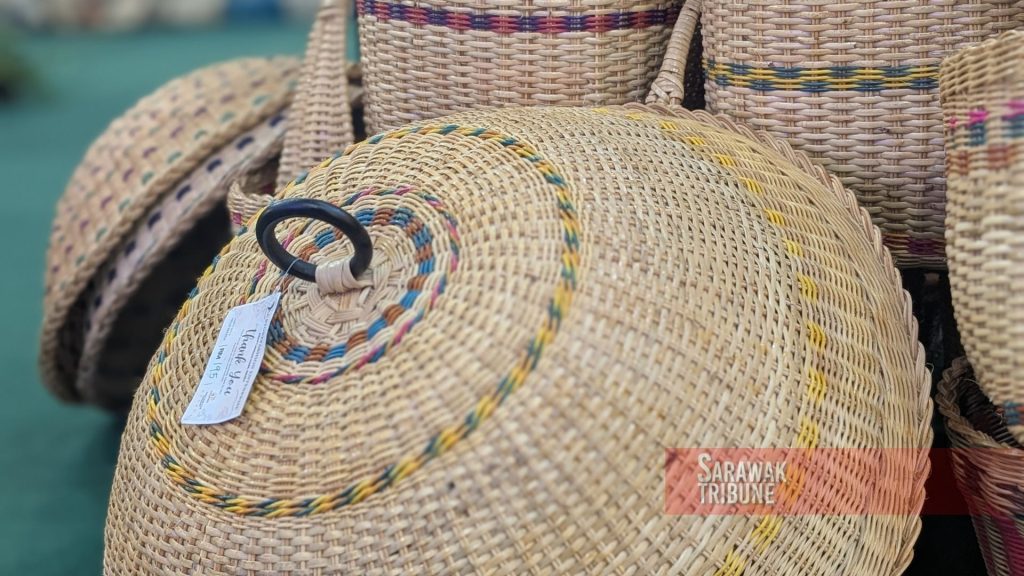
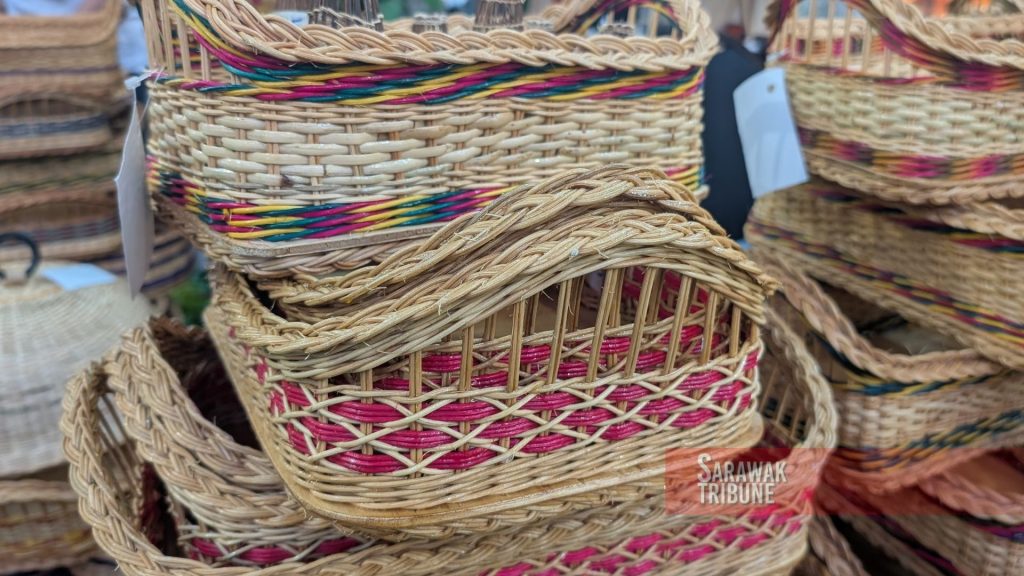
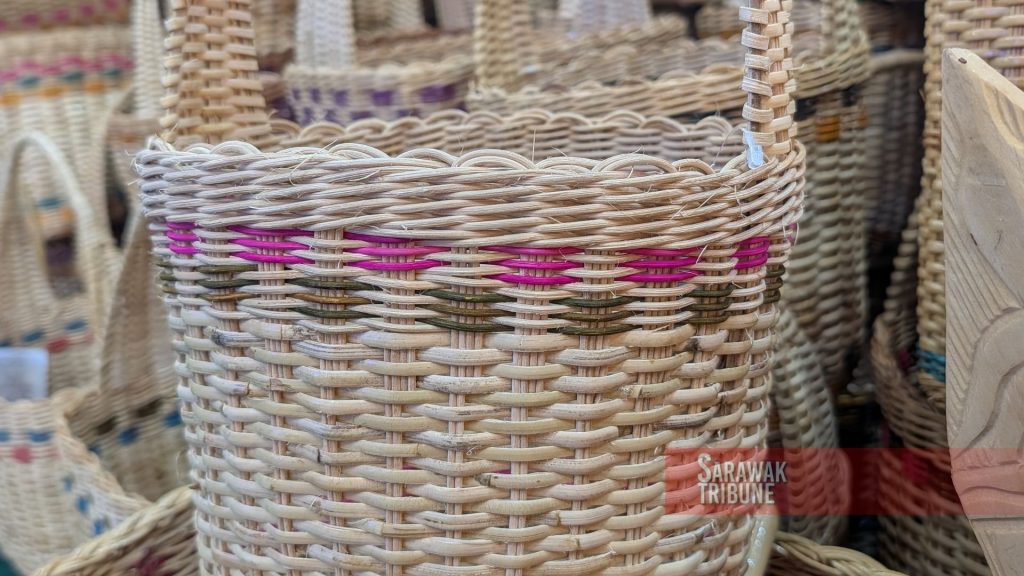
Together, they produce a variety of rattan products, including traditional baskets, raga, laundry baskets, ‘tudung saji’ and rattan trays.
Depending on the size and complexity of the design, they can complete around five medium-sized baskets in a day. For larger baskets, they can produce about two to three pieces daily.
The basket body is usually completed first before the handles are attached as the final step.
Although the couple do not own a dedicated shop, they continue to market their products through various channels.
Their handicrafts are sold at morning markets and local community markets near Rumah Mujah in Bintulu. Many residents from their longhouse are also involved in producing rattan handicrafts.
Their child also helps promote their products through Facebook and other social media platforms, allowing customers to place orders online.
“So far, most of our customers are from within Sarawak, with no orders yet received from Peninsular Malaysia. But I hope, someday our products can reach the market outside the state,” he said.
Beyond selling their products locally, participation in exhibitions and programmes has helped them reach a wider audience.
Anthony said he had taken part in four programmes and exhibitions organised by the Forest Department Sarawak over the past few years, including events held in Kuching and Miri.
“These programmes helped increase sales while allowing more people to appreciate our craftsmanship behind rattan products,” he said.
Looking ahead, Anthony hopes Sarawak’s traditional rattan handicrafts will receive greater promotion and gain access to wider markets.
He also hopes more efforts will be made to conserve natural rattan resources as the availability of raw materials continues to decline.
For him, preserving the craft is not only about maintaining a source of income but also ensuring that the knowledge and skills behind rattan weaving are not lost.
He has already started encouraging his grandchildren to learn the basics of rattan weaving, hoping the younger generation will continue the tradition.
For Anthony and Juliana, every woven basket carries a story — one that begins in the forest, passes through skilled hands and represents the enduring connection between Sarawak’s people, culture and natural heritage.