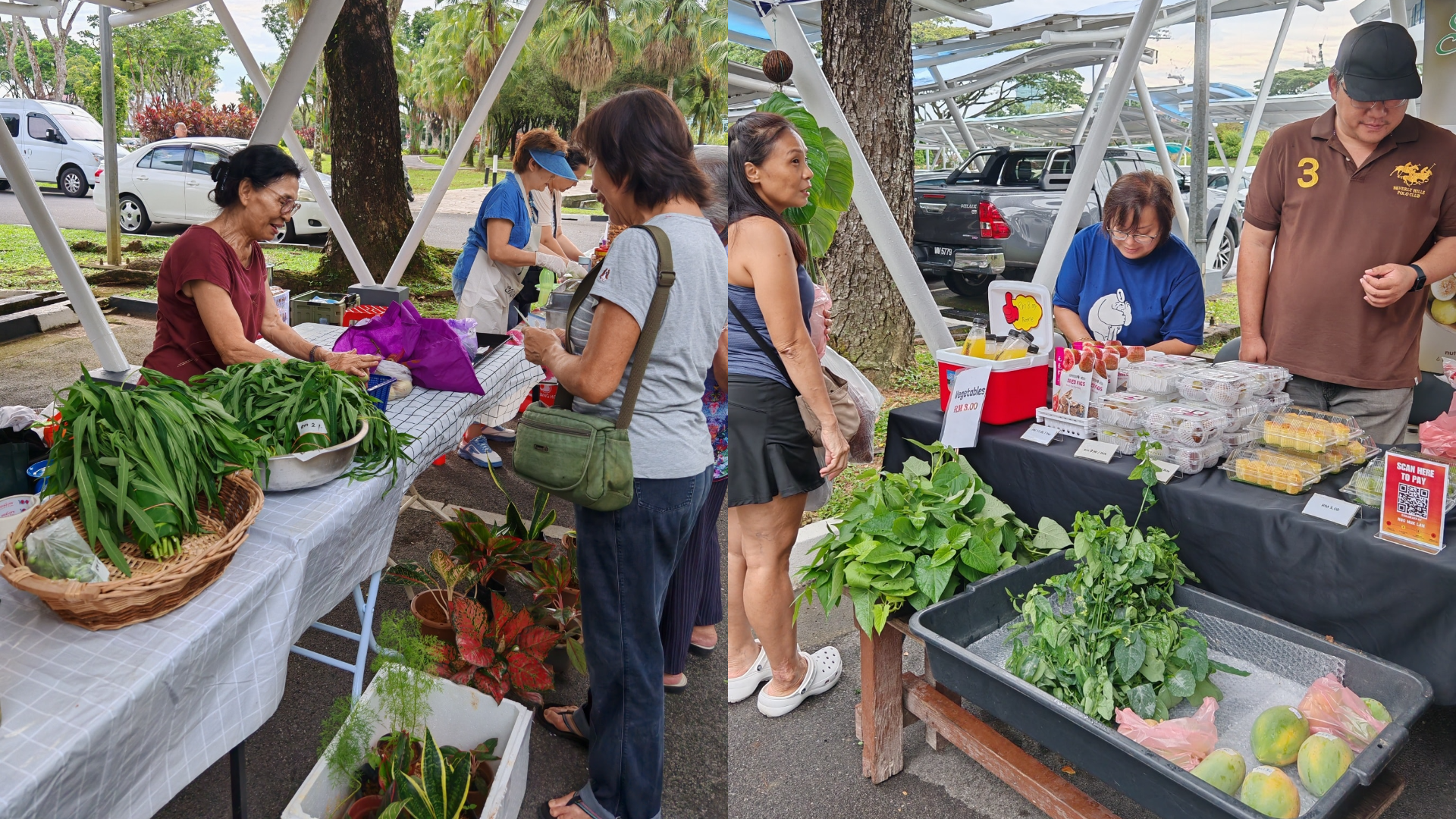
KUCHING: When Kuching Natural Farmers Market (KNFM) first took shape, it was not obvious that it would last.
There were no sponsors, no advertising budget, no formal organisation behind it. What existed instead was a shared unease of thoughts about food quality, health and trust, and two women who believed that something as ordinary as buying vegetables could be done differently.
Held on the first and third Saturdays of each month at the car parking space of Kuching South City Council (MBKS), here KNFM has since grown into a regular meeting point between farmers and consumers.

Kuching urban farming
For Mini Ng, co-founder of KNFM, the story started nearly eight years earlier, long before the idea of a market entered the picture.
Trained as an accountant, she and her husband began to worry about where food systems were heading.
“We predicted that the economy wouldn’t always be stable where food prices would rise, people would lose their jobs and food security would become a serious issue.
“We wanted to know what we were eating and whether it was something we could trust”, Mini said.
Those concerns led to the formation of Kuching Urban Farming (KUF), which Mini started with a small group of friends who shared similar thoughts but little practical farming experience.

“There were teachers, salespeople, not farmers at all, and we learned everything from scratch!” she added.
Learning was a messy process where the group relied on online research, advice from friends and eventually guidance from the Department of Agriculture.
They invested their own funds, experimented repeatedly and accepted failure as part of the process.
“There were successes, but there were also a lot of disappointments. Because there’s a lot of every kind of pest you can imagine like insects, fungus, even animals, we have to dealt with all of it,” she said.
Over time, they adapted to farming, with composting, worm farming and natural inputs reduced costs.
The KUF farm also became a place of outreach, including a weekly programme teaching special needs children on how to grow vegetables.
Then came the encounter that changed the direction of the project, where she met Wee Ai Chin.
A fateful encounter
“I remember one day, I was in a building called Koperasi Hijau Sarawak Berhad and I bumped into a lady, who started asking me who started the farm here?
“That was Wee Ai Chin and she had a meeting in the same building that day”, Mini recalled.
Ai Chin, who had recently returned to Sarawak after decades working overseas on rural development projects, was immediately intrigued.
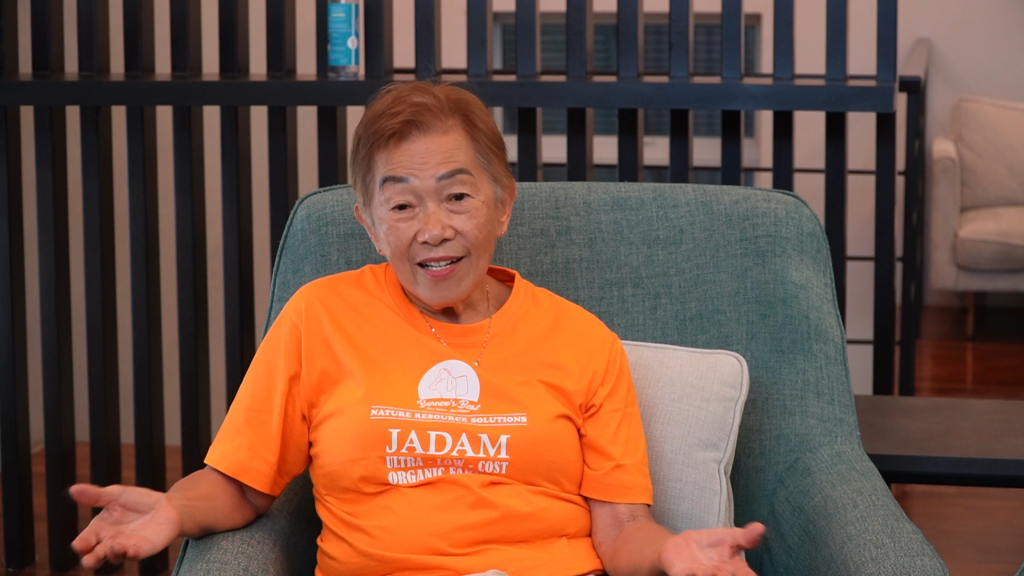
Ai Chin’s return home had not been easy.
“I came back expecting to see the kind of poor communities I had worked with elsewhere but instead, what disturbed me was something else.
“I noticed that some market sellers were selling produce they themselves would not eat.
“When I asked why, they said they didn’t trust how crops were grown which raised serious questions for me,” Ai Chin explained.
When Ai Chin saw Kuching Urban Farming, she saw possibility but also a gap.
“You have the knowledge, you have the produce, why is it only for yourselves?” she asked Mini, suggesting that their excess harvest could be shared with the wider community.
Kuching Natural Farmers Market’s idea mooted
The idea of a farmers’ market followed quickly and within a week, the first KNFM market was organised and it was the busiest week of their lives.
From the start, the market imposed rules that not everyone agreed with. Vendors had to practise natural farming, without pesticides and without dependence on synthetic fertilisers.
“We knew some people would walk away but if we compromised early, we would lose what we were trying to protect,” Ai Chin said.
Finding sellers, attracting customers and securing a venue proved challenging. For a period, KNFM operated without a fixed location.
Stability came when KNFM secured a regular space at the MBKS car parking space and from there, the market began to grow slowly, and without paid promotions.
“We don’t advertise much. People come because someone tells them, ‘You should try this’ and ‘I heard a place where we could get fresh ingredients’. These are the things that brought customers to us,” Ai Chin added.
KNFM also chose not to operate like a conventional market where there are no commissions, no price mark-ups and no middlemen.
“You can look at the farmer and ask how the food was grown, and they will gladly tell you how. That is the difference between KNFM and your everyday grocery store,” Ai Chin said.
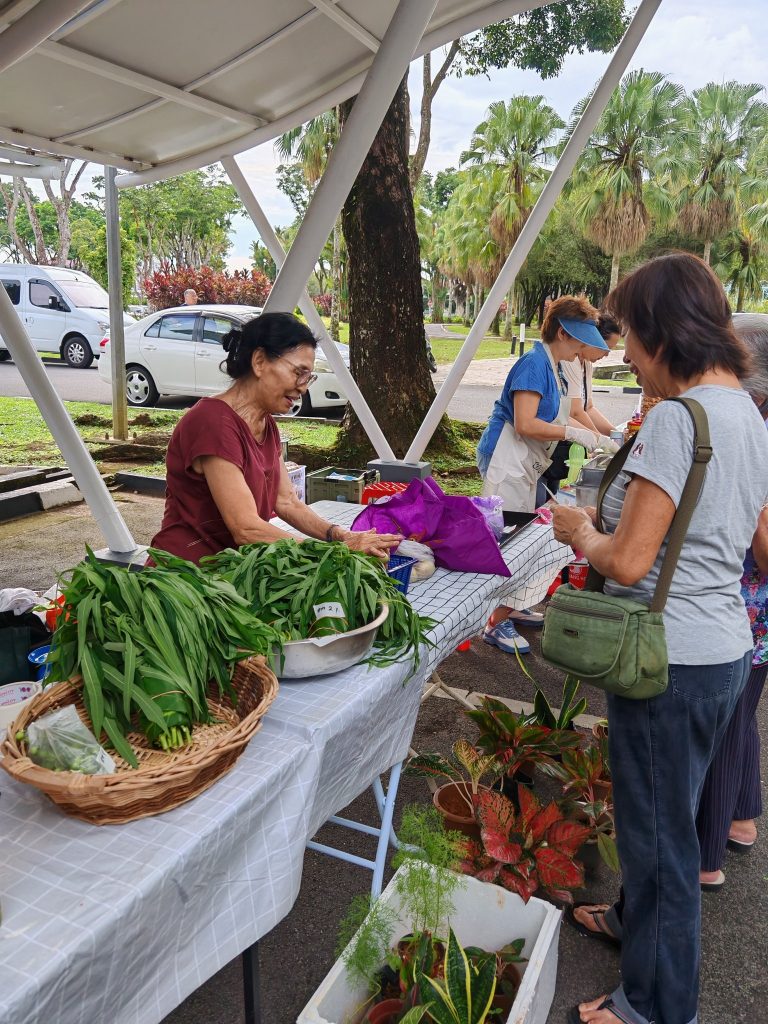
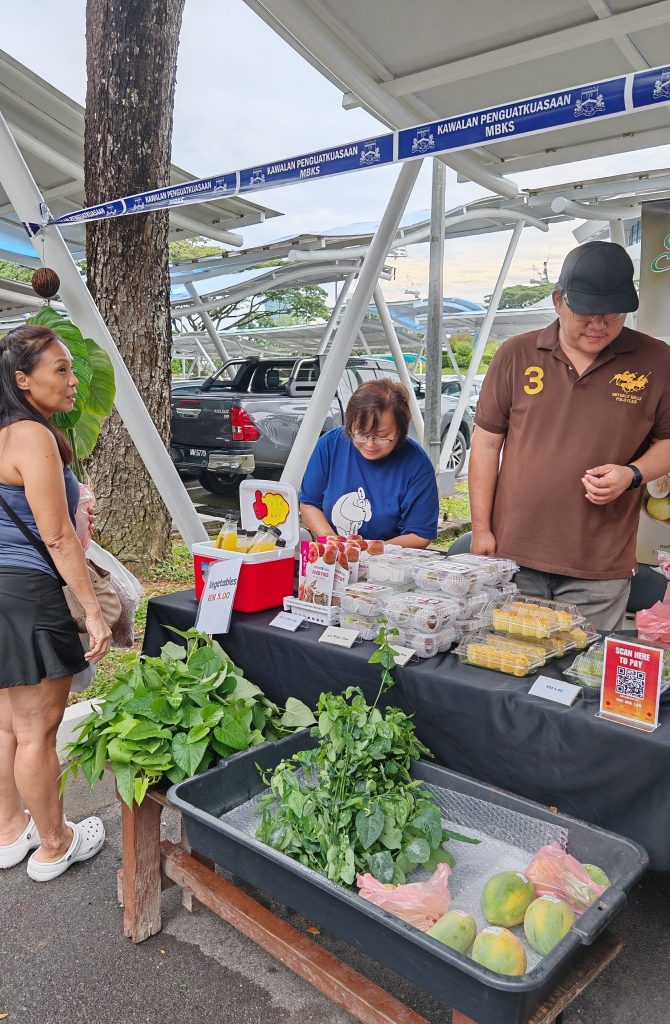
Over time, a community formed, vendors returned and customers recognised familiar faces behind booths.
Cultural performances including musicians, dancers, small ensembles became part of the atmosphere, not as entertainment, but as an extension of community life.
Yet even as the market expanded, its founders remained cautious.
Mini sees herself as a builder, focused on systems, logistics and people.
Ai Chin, by contrast, is unapologetically challenging.
“People here love good food, but good taste doesn’t always mean good for your health”, Ai Chin added.
That tension between practicality and philosophy has shaped KNFM’s identity.
“Growth is tempting but growth without values doesn’t mean much,” Mini said.
Both founders agree that KNFM is not meant to replace supermarkets or dictate how people should eat, instead, it offers an alternative where one rooted in trust, transparency and choice.
KNFM began with ten tables and a week’s worth of planning but it survived not because it grew fast, but because it grew carefully, shaped by doubt, defended by principle and sustained by a community that chose to believe it was worth keeping.