For centuries, Sarawak’s indigenous communities have harnessed the healing power of plants, passing down knowledge through stories rather than textbooks. Today, the Sarawak Biodiversity Centre is transforming that wisdom into a modern bioindustry, bridging traditional knowledge with cutting-edge science to create pharmaceuticals, personal care products, and sustainable economic opportunities for local communities.
How indigenous wisdom is shaping Sarawak’s biofuture
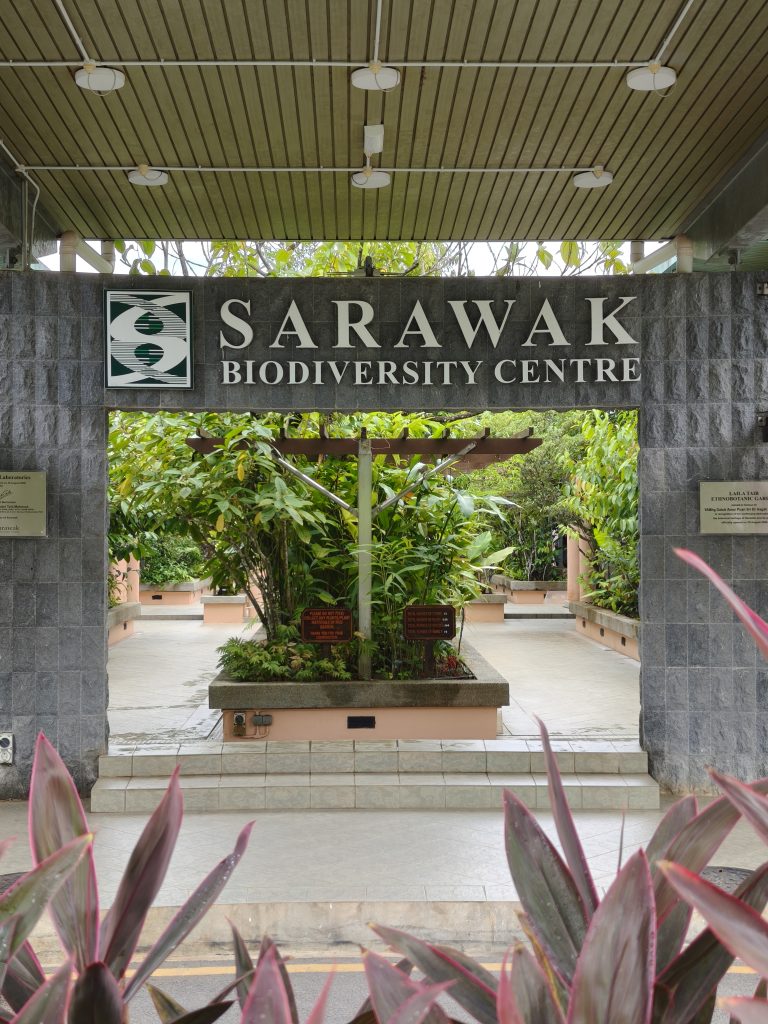
FOR generations, Sarawak’s indigenous communities turned to leaves to cool fevers, roots to ease pain, and bark to treat infections. Knowledge travelled not through textbooks, but through stories – whispered from grandparents to grandchildren, tested by time and trusted by necessity.
Today, that same forest may hold the blueprint for something far bigger: not just healing, but economic transformation.
As the world marks World Wildlife Day 2026 under the theme ‘Medicinal and Aromatic Plants: Conserving Health, Heritage and Livelihoods’, Sarawak is quietly positioning its biodiversity as both cultural inheritance and future industry – through the work of the Sarawak Biodiversity Centre (SBC).
Behind the SBC team is the belief that biodiversity is the ‘living library’ of natural products. For the team, if biodiversity is not conserved, we risk losing potential biodiscoveries and valuable natural compounds. Beyond this, we also risk losing cultural and natural heritage, along with the centuries of indigenous wisdom tied to biodiversity.
Sharing insights on the day’s theme, SBC spoke to Sarawak Tribune about the forests being our future pharmacy whilst also highlighting the potential shrouded within the rainforests.
Are our forests our future pharmacy?
There is a long-standing relationship between the communities and the forests that provide for them, whether in the form of food, therapeutics, or building materials.
Much of this knowledge is often handed down by word of mouth and not formally documented over the years.
With its mandate through the Sarawak Biodiversity Centre Ordinance, 1997, SBC embarked on building a Natural Product Library (NPL) derived systematically from the documentation of traditional knowledge of over 40 indigenous communities in Sarawak since 2001.
When SBC began the work of building up the NPL 27 years ago, it was not apparent at first to what extent this library would take form.
Today, by centralising Sarawak’s biological assets into the NPL, SBC provides a one-stop centre for new discoveries in pharmaceuticals, nutraceuticals, cosmeceuticals and many other industrial applications.
Can you elaborate on why SBC embarked on this journey?
The Sarawak government initiated this journey through SBC based on three primary reasons:
Wealth Creation from the Bioindustry: To move away from being mere suppliers of raw materials and an economy based on extraction of the state’s sovereign natural resources and pivot Sarawak towards a robust bioindustry.
Documentation and Conservation of Traditional Knowledge: The urgent need to systematically document traditional knowledge of indigenous communities related to their use of biological resources.
Access and Benefit Sharing (ABS): Ensuring equitable sharing of benefits with indigenous communities arising from the development of these biological resources and their associated traditional knowledge.
In short, the NPL at SBC is a “gold mine” that allows Sarawak to participate in the growing global bioindustry, while ensuring that access to our biodiversity is safeguarded and that the communities – the original keepers of the knowledge – are duly acknowledged and receive equitable benefits arising from this new market.
To date, resulting from a collection spanning over 27 years, SBC’s NPL comprises, among others:
(i) 29,069 plant extracts
(ii) 704 essential oils
(iii) 34 scent tracks
(iv) 34,165 microbe extracts
(v) 680 algae strains
How does the NPL bridge traditional knowledge and modern science?
The NPL bridges traditional knowledge and modern science through the following process:
Prior Informed Consent and Traditional Knowledge Documentation with Indigenous Communities:
Before a single plant is documented or collected, SBC engages in Prior Informed Consent discussions with the communities. This ensures the communities’ role as partners rather than mere subjects in research. SBC then works alongside the communities to document the traditional knowledge and the plants they have utilised.
Systematic Collection and Identification:
Specimens are collected from the communities, with their consent and brought to SBC’s laboratories, where they undergo identification and are preserved as herbarium specimens as records.
Extraction and Fractionation:
This is where the NPL is built, extract by extract. Biological material is extracted from the plants and turned into crude extracts and fractions. Crude extracts provide general information on the plant, while fractions are refined layers of compounds that make it easier to identify active ingredients.
Screening and R&D:
These extracts are stored in specialised freezers or cold rooms, catalogued in SBC’s Laboratory Information Management System, and screened for bioactivities. Researchers worldwide can also screen these samples against specific diseases or develop novel active ingredients into other products, such as personal care items or industrial applications, under legal agreements defined by the Sarawak Biodiversity Centre Ordinance and Regulations.
Commercialisation:
Once R&D results yield a viable prototype, the process moves into commercialisation. This involves scaling up production and refining formulations to meet consumer demands. This is now undertaken by SBC’s commercial arm, BioVerde Technologies Sdn Bhd, established in 2025.
SBC’s R&D operates on several tiers:
Tier 1: Personal care products such as essential oils, based on traditional claims and basic R&D.
Tier 2: Healthcare and cosmeceutical products derived from traditional remedies, including skin brightening or anti-wrinkle formulations, requiring R&D, efficacy, and safety data.
Tier 3: Pharmaceutical products from biological resources for medicinal use, requiring clinical data and extensive validation.
How many useful plant species in Sarawak are currently documented?
Collectively, SBC has documented 7,606 plants used over centuries by indigenous communities since 2001, from 28 ethnic communities across 127 locations in Sarawak. Approximately 50 per cent are categorised as having medicinal value, 20 per cent for food, and 4 per cent for flavours and fragrances. Other documented uses include dyes, antidotes, poisons and rituals.
With community partners, SBC has mapped plant resources, documented traditional uses, and developed sustainable harvesting protocols – building a foundation of respect and knowledge-sharing.
What are some examples of plant species that have undergone scientific validation?
All collected plants undergo scientific validation or screening for active compounds. Examples include:
Essential Oils:
SBC has accumulated over 700 essential oils, with their chemical compositions analysed via gas chromatography-mass spectrometry (GCMS). Compounds are compared against the National Institute of Standards and Technology (NIST) library to identify them accurately. Many contain bioactive compounds that influence neurological pathways. Examples include:
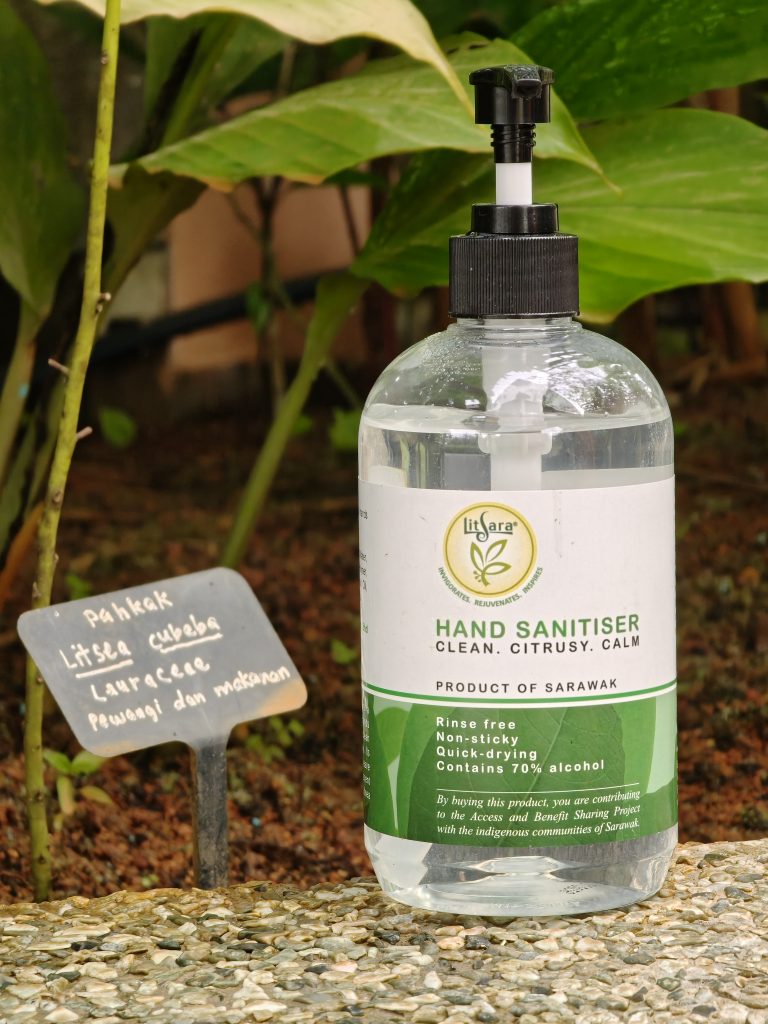
LitSara® leaf oil: Contains eucalyptol, also found in rosemary oil, which research shows can enhance focus and speed up thinking. LitSara® fruit oil contains citronellal, promoting relaxation and calm alertness.
Bunga Ta’ang (Adenosma nelsonioides) (AdenoSara®): Contains carvacrol, supporting memory, neuron health, and mild mood enhancement.
Kemuyang Merah (Homalomena ardua): Contains linalool, known to improve memory during sleep and reduce stress.
Beyond these stress-related benefits, several other native species have also been scientifically examined for their distinct therapeutic properties.
Other examples of plants scientifically validated for different applications are:
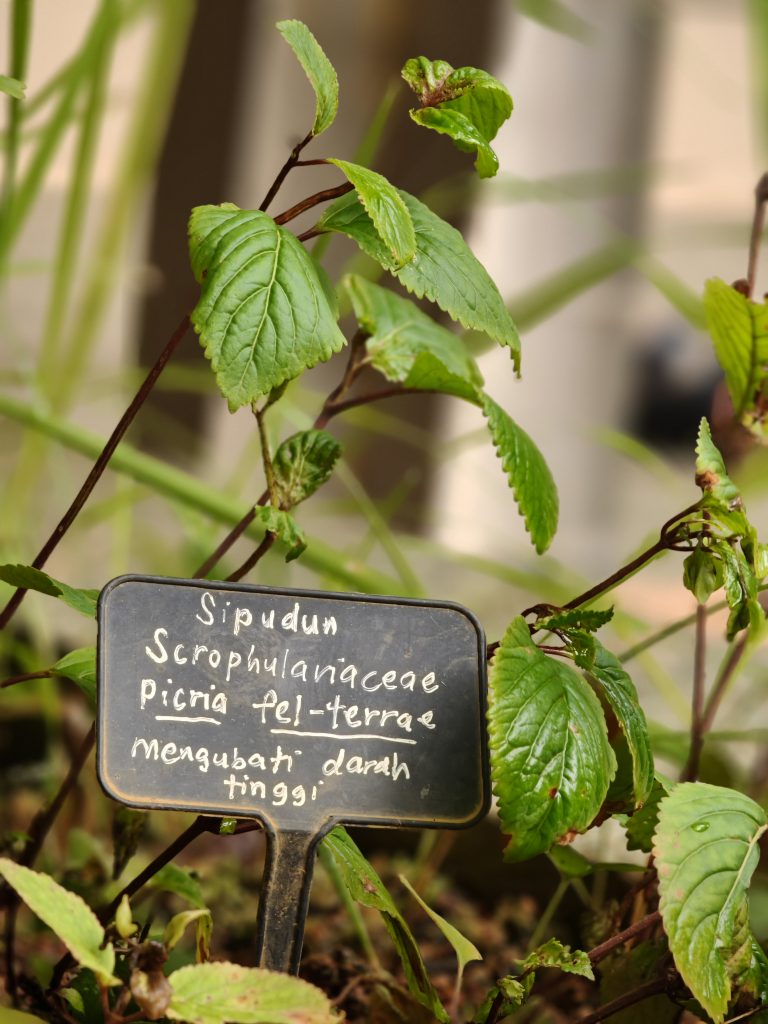
Sipudun (Picria fel-terrae): Traditionally used by Bidayuh communities to lower blood pressure and treat intestinal worm infections in children. Found in secondary forests, forest margins, village surroundings, and disturbed agricultural landscapes, Sipudun has been scientifically confirmed to possess strong anthelmintic activity, effective against parasitic larvae (Haemonchus contortus). In November 2025, SBC signed an MOU with the Department of Veterinary Services to further test its use in deworming livestock, offering a local, natural alternative to chemical treatments.
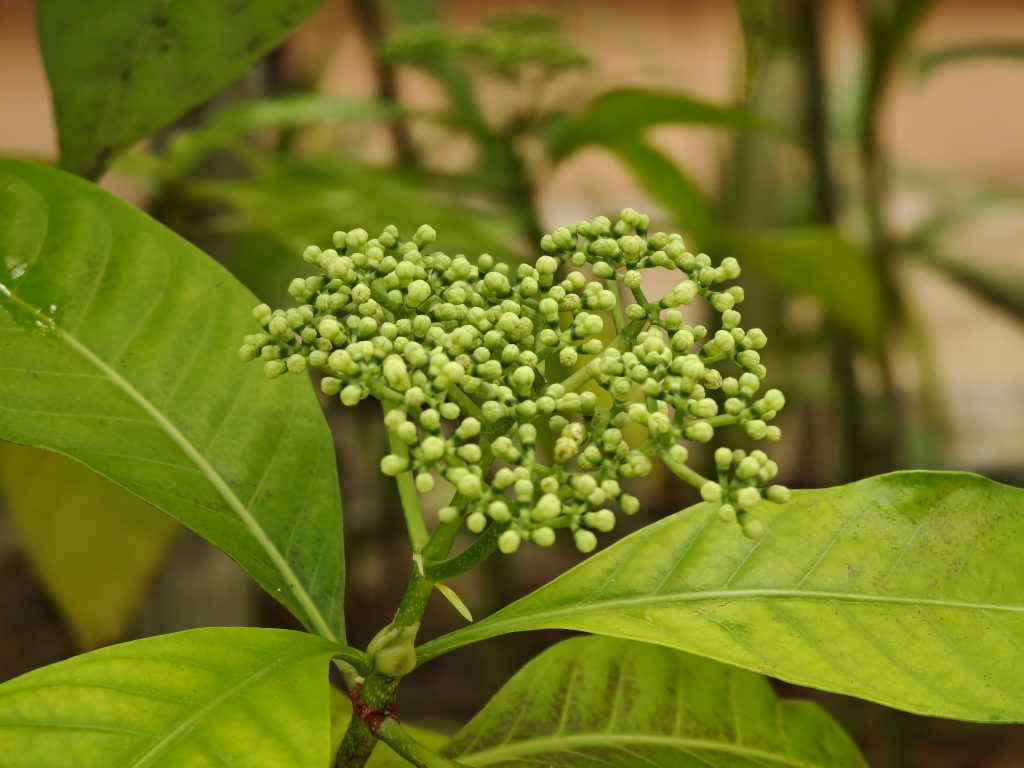
Engkerebai (Psychotria viridiflora): Used by the Iban community for fever, wounds and producing natural dyes for Pua Kumbu. Laboratory tests reveal anti-tyrosinase (skin brightening) and anti-ageing properties. SBC signed benefit-sharing agreements with five Iban communities to establish a sustainable supply chain for R&D and commercialisation of a skin brightening product.
Are any products being commercialised locally or exported?
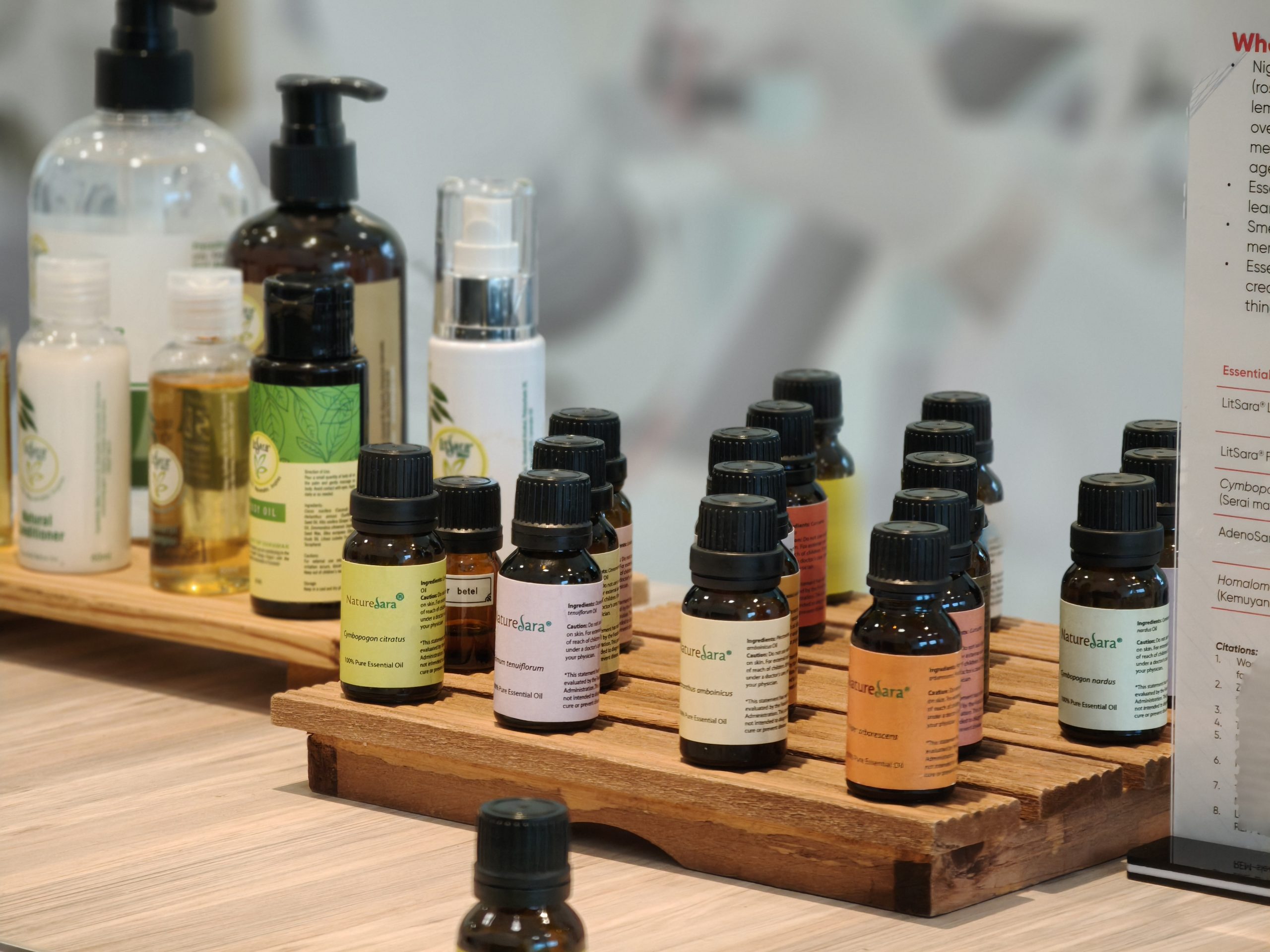
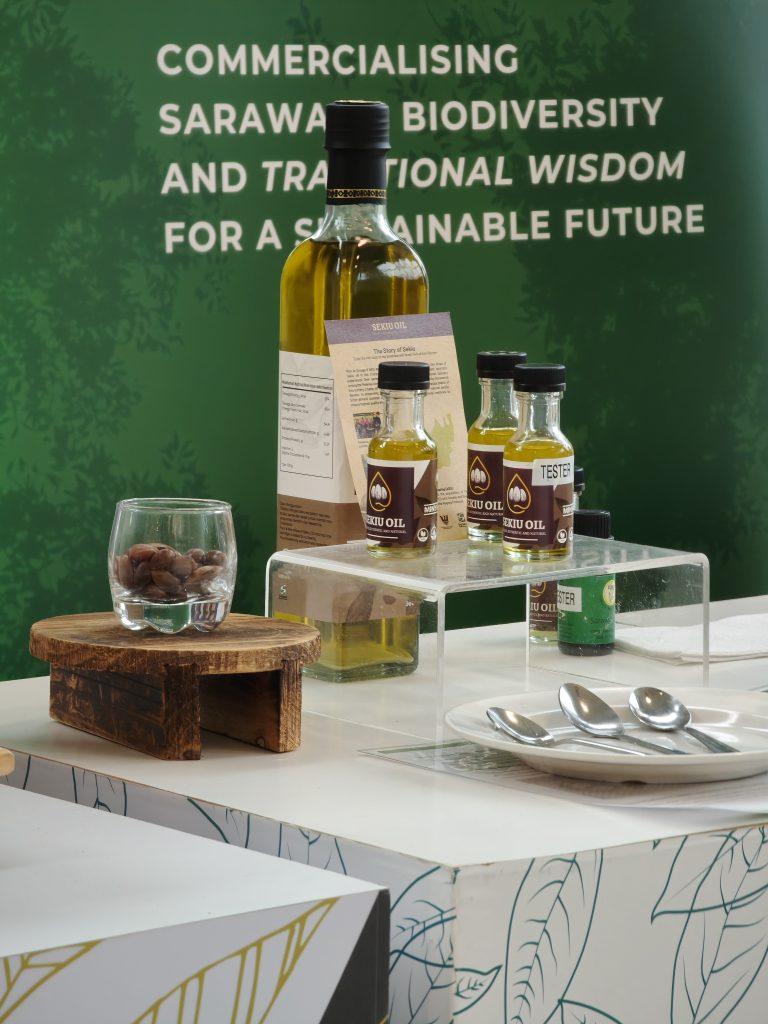
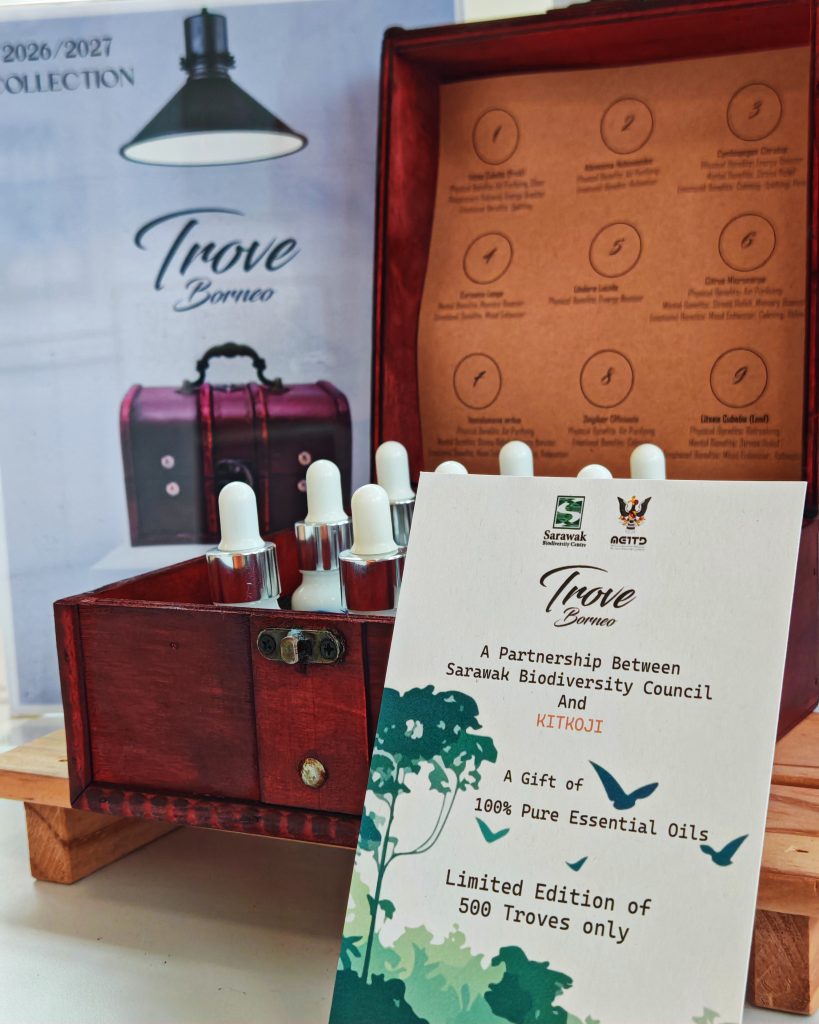
Sarawak’s flagship range, LitSara®, includes essential oils, soaps, and personal care products sold locally and abroad. In 2025, SBC launched Trove Borneo, a collection of nine essential oils in partnership with Singapore-based Kitkoji Pty Ltd. Other brands include AdenoSara® (pet care) and NatureSara® (nature-inspired scents, including Normah Orchid, Phalaenopsis bellina).
How does the rural community benefit from this?
Communities involved in LitSara®, AdenoSara®, MadhuSara®, and Engkerebai projects now engage in sustainable cultivation and processing of premium essential oils and plant materials. Benefit-Sharing Agreements (BSAs) ensure equitable returns from sales of essential oils, raw materials, and end-products.
Other benefits for the communities involved include:
Capacity Building: Standardising harvesting, cultivation and distillation for global quality control.
Digitalisation: Blockchain integration into ABS frameworks ensures transparent tracking of products from forest to consumer.
Project Infrastructure: SBC works with partners to secure funding for distillation facilities, solar power and community farm resources.