AS dusk slowly settles over Kuching and the golden light reflects across the calm waters of the Sarawak River, the city prepares for one of the most anticipated moments of the day during Ramadan – the breaking of fast.
Traditionally, the air would be filled with the familiar aromas of grilled satay, fried fritters, and the comforting fragrance of simmering laksa broth.
But in 2026, something new drifts through the evening breeze.
Alongside these classic scents are the unmistakable notes of toasted kataifi pastry, melting chocolate, and the sweet fragrance of caramelised sugar.
From neighbourhood villages to bustling commercial buildings, a new generation of dessert entrepreneurs is reshaping the Ramadan culinary landscape.
What once centred on traditional kuih and classic sweets is now expanding into a vibrant blend of international flavours and local creativity.
Viral desserts, inspired by global trends on social media, are gaining popularity among Kuchingites eager to try something different after a long day of fasting.
Two young women are leading this movement: Natasha Suhaimi, founder of EMOCHI in Kampung Bintawa Tengah, and Siti Aishah Abdullah, owner of Aisyah Dessert at the Saujana Building.
Through their innovations, they are not only satisfying sweet cravings but also redefining how Ramadan desserts are experienced in the digital age.
The Sarawak Tribune went behind the scenes with these local entrepreneurs to explore their trending creations.
A fusion born in Bintawa
In the close-knit riverside community of Kampung Bintawa Tengah, 28-year-old Natasha Suhaimi has quietly built a reputation as one of Kuching’s most inventive dessert makers.
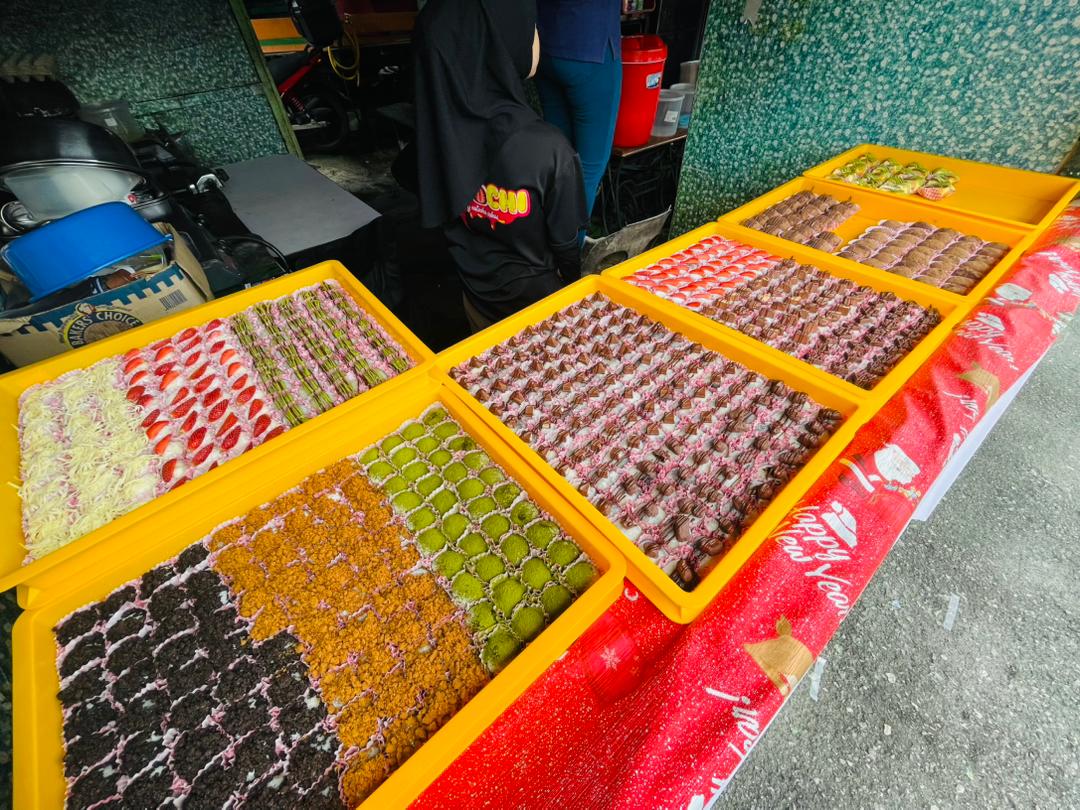
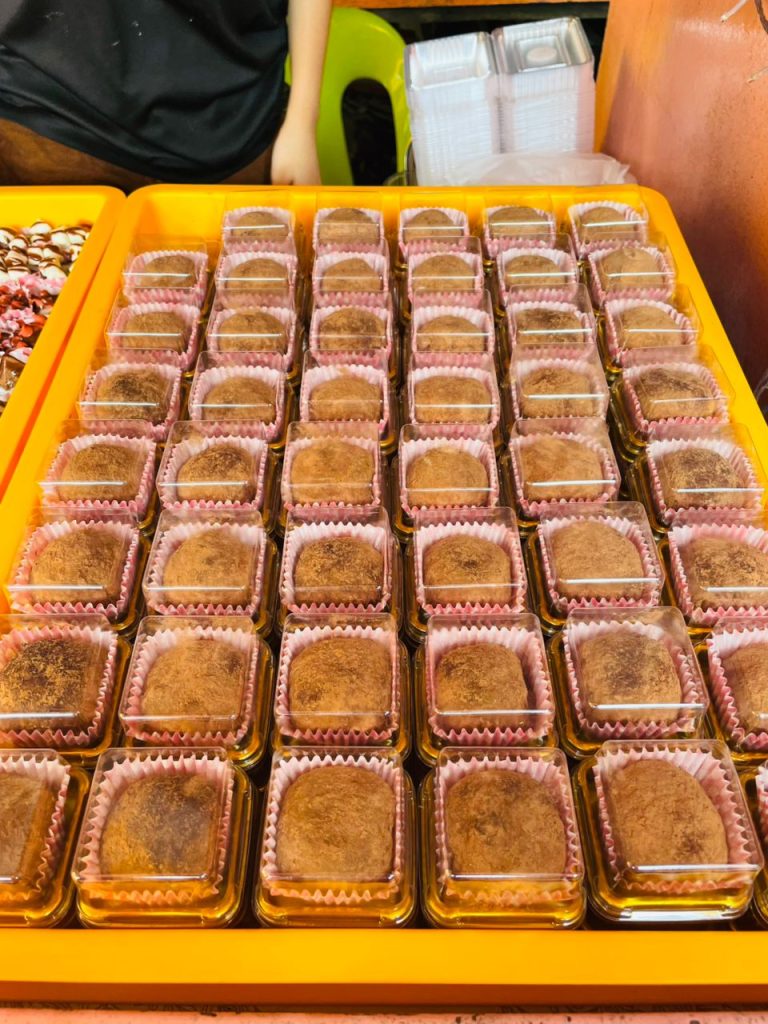
Her small business, EMOCHI, has become a magnet for customers eager to try her signature creation, the Kunafa Mochi.
Natasha’s idea was simple but daring: combine the beloved Middle Eastern dessert kunafa with the soft, chewy texture of Japanese mochi.
“Kunafa is the trend right now. I saw how much people enjoyed the crunchy pastry and rich flavours. But I wanted something easy to hold and eat, portable but still exciting. That’s when I thought about wrapping the kunafa inside mochi,” she told the Sarawak Tribune.
The result is a dessert that surprises with its unique contrast of textures.
The outer mochi layer offers a soft, elastic bite, while the filling reveals a crunchy centre of butter-toasted kataifi pastry – a combination that quickly won over dessert lovers.
For Natasha, flavour alone is not enough.
“In 2026, presentation matters just as much as taste. People eat with their eyes first. If a dessert doesn’t look festive or ‘meriah’, it doesn’t feel special for Ramadan,” she said.
Each mochi is carefully decorated with colourful toppings and fillings. Strawberry, Kinder Bueno, and Cadbury remain among the most popular, presented like miniature dessert artworks.
Customers often photograph them before taking their first bite, sharing the creations on TikTok and Instagram — posts that have played a major role in EMOCHI’s rapid rise.
Riding the wave of global trends
Natasha’s creativity extends beyond the Kunafa Mochi. She has also introduced the Dubai Chewy Cookie, a viral treat attracting international attention.
The decadent dessert features a rich chocolate cookie base filled with crunchy kunafa and coated in a gooey layer of melted marshmallow. When broken apart, the marshmallow stretches dramatically, creating the “pull” effect that social media users love to capture.
“The texture makes it fun. People like interactive desserts — when they pull it apart and see the filling stretch, it becomes an experience,” Natasha explained.
The cookie’s dramatic appearance has made it especially popular among younger customers and content creators, cementing EMOCHI as one of the city’s trendsetting dessert brands.
A Venezuelan inspiration in Saujana
Across town, at the Saujana Building, another unique dessert story unfolds.
Siti Aishah Abdullah, founder of Aisyah Dessert, draws inspiration from Venezuela. Her signature Ramadan treat is Quesillo, a creamy custard flan topped with caramel sauce.
“At first, I wanted something different from the typical Ramadan desserts. Quesillo stood out because of its soft texture and balanced sweetness. After fasting all day, people want something light and smooth,” she said.
Perfecting the dessert proved challenging. Weeks of experimentation were needed to achieve the ideal consistency.
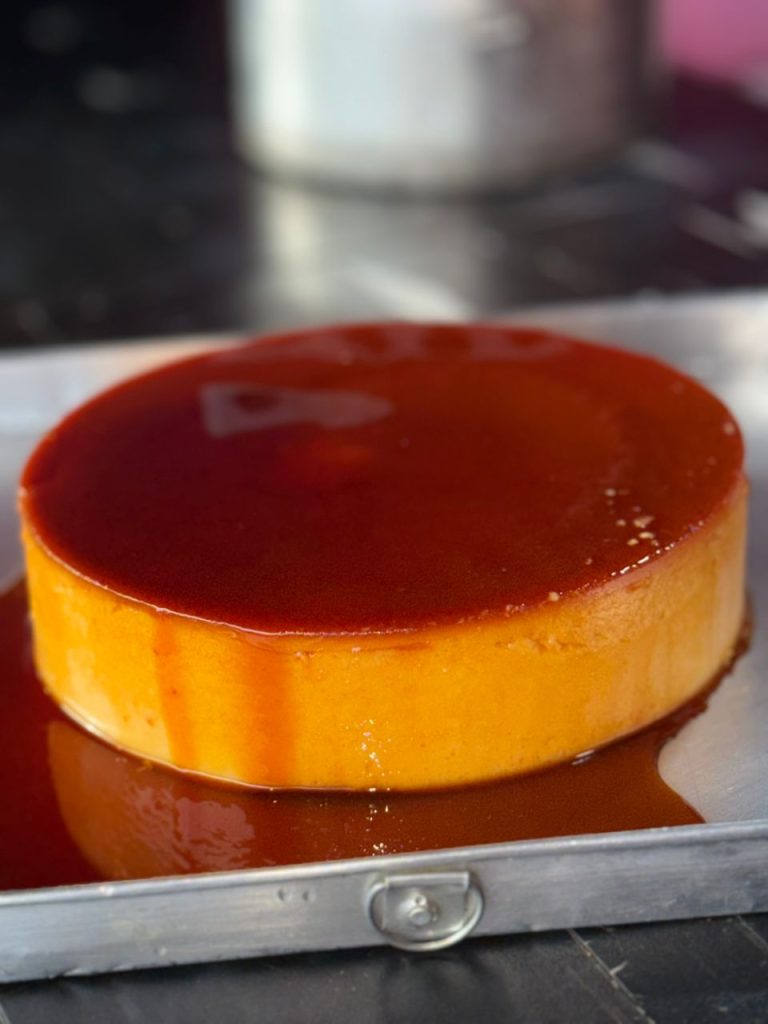
“The biggest challenge was texture. We wanted it soft and silky, yet able to hold its shape when served. Many batches later, we finally achieved the delicate ‘wobble’ that signals a perfect flan,” she explained.
Temperature control and sugar caramelisation were critical; even a slight change could ruin the custard. Adjusting the sweetness to suit local tastes was equally important.
“We didn’t want it too rich. The goal was a dessert families could enjoy together without being overwhelmed by sugar,” she said.
A dessert made for sharing
Customer response has been overwhelmingly positive. Visitors often seek out the Quesillo after seeing it online. Its glossy caramel topping and golden custard base make it highly photogenic — perfect for social media.
For many young food enthusiasts in Kuching, trying viral desserts has become part of the Ramadan experience. Families often buy a mix of traditional kuih and new creations, blending old and new in a way that reflects the city’s evolving culinary culture.
Social media: The new storefront
Both Natasha and Siti Aishah agree that social media has transformed how small food businesses operate.
“Social media is no longer just a promotional tool. It’s how customers discover us,” Natasha said.
Facebook keeps her connected to core fans, but TikTok drives growth. Short videos of crunchy kunafa or stretchy marshmallow can quickly reach thousands, some of whom travel from afar just to try the desserts — even from Peninsular Malaysia.
Siti Aishah echoed this.
“When customers post photos of our desserts, it’s a recommendation to their friends. In a close-knit city like Kuching, word-of-mouth – online or offline – is powerful.”
The Ramadan hustle
Running a business during Ramadan demands dedication. Both entrepreneurs start long before their stalls open to ensure every item is fresh.
For Natasha, freshness is essential to maintain the delicate balance between chewy mochi and crispy kunafa.
“These desserts can’t be made too early. The kunafa must stay crunchy while the mochi remains soft,” she said.
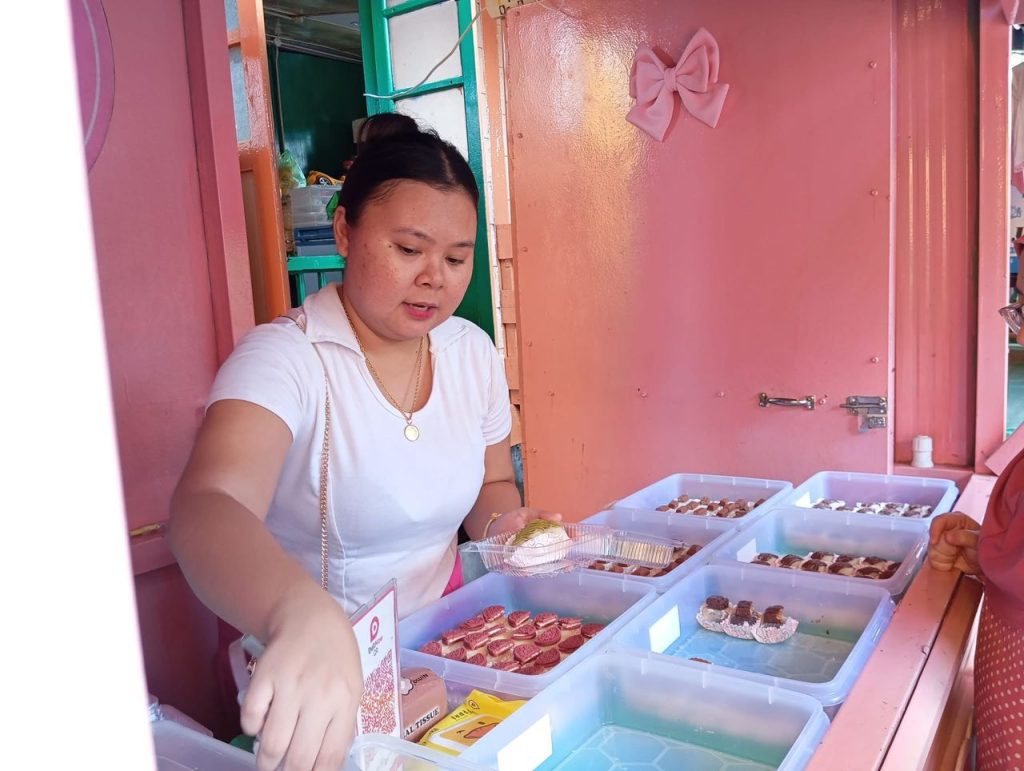
Her team races against the clock each morning to finish batches by 1 pm.
At Aisyah Dessert, consistency is key.
“During Ramadan, demand rises, but we cannot compromise on quality. We prefer selling out early rather than serving desserts that aren’t perfect,” Siti Aishah said.
Beyond Ramadan
As Hari Raya approaches, both entrepreneurs hope their creations will remain popular beyond the fasting month.
For Natasha, the Kunafa Mochi has already become EMOCHI’s defining dessert.
“It started as a Ramadan experiment, but now it’s our signature item. Customers ask for it year-round,” she said.
Siti Aishah is exploring local variations for her Quesillo.
“We’re thinking of pandan or nipah palm sugar (gula apong) versions, giving this Venezuelan dessert a Sarawak twist,” she revealed.
A new chapter for Ramadan treats
As the call to prayer echoes across Kuching each evening, signalling the end of the day’s fast, crowds gather around stalls and dessert counters.
Some reach for traditional favourites – martabak, kuih bongkol, or bubur lambuk. Others eagerly try the latest viral dessert they spotted online earlier that day.
Together, these choices illustrate how Ramadan traditions continue to evolve. For young entrepreneurs like Natasha Suhaimi and Siti Aishah Abdullah, the holy month has become a platform for creativity and innovation.
By blending global inspiration with local flavours – and harnessing the power of social media – they are shaping a new generation of Ramadan treats that resonate with modern tastes, helping define the future of Kuching’s vibrant dessert culture – one sweet creation at a time.