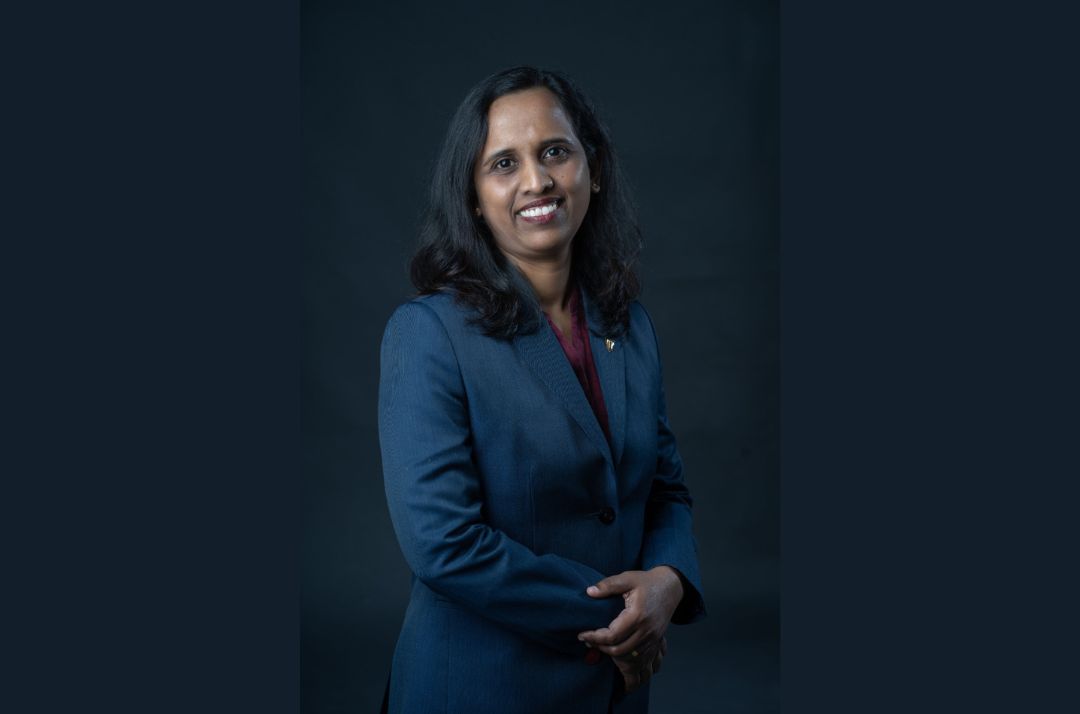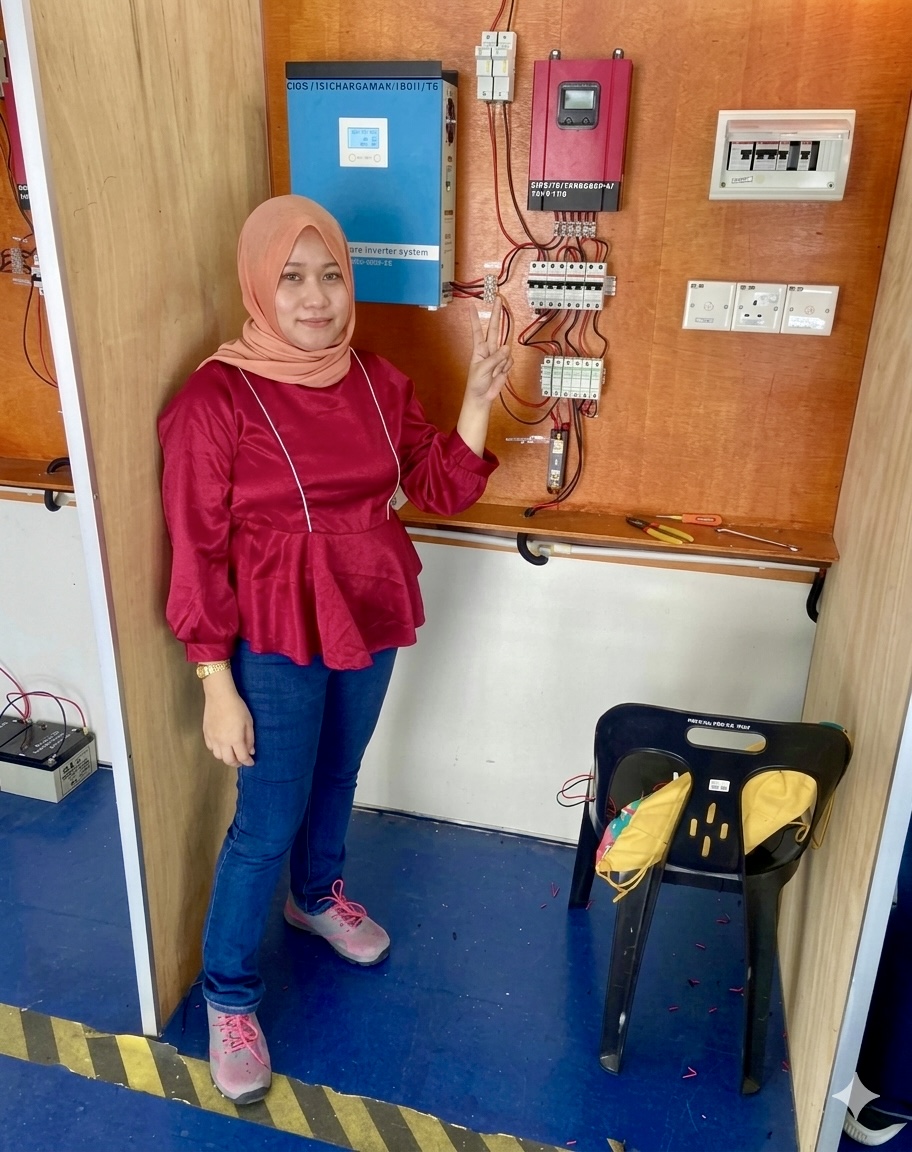
In one of Malaysia’s most male-dominated professions, Khalida Razalie stepped into a steel-toed world and chose action over assumption – proving that competence, not gender, defines a chargeman.
International Women’s Day: Powering change in a man’s world
WHEN people hear the word “chargeman”, they rarely picture a woman.
They imagine steel-toed boots, industrial switchboards, high-voltage cables – and almost always, a man.
Khalida Razalie knows that assumption well. She has seen the raised eyebrows. She has heard the surprise in people’s voices. But she also knows something else: electricity does not care about gender – only competence.
And competence, she decided early on, would be her answer.
Six months pregnant, she was still attending her L1 chargeman classes.
While others suggested she slow down, she revised electrical regulations and installation codes. One month after giving birth, she walked into the examination hall and sat for her professional certification test.
She passed.
There were no headlines. No applause. Just a quiet, personal victory – and a certificate of competency that placed her in one of the most male-dominated technical professions in the country.
Choosing a path few women take
The chargeman profession has long been dominated by men, and Khalida is fully aware of the reality she stepped into.
“Few women are brave enough to embark on this endeavour due to the demanding academic and practical examinations required to qualify,” she told Sarawak Tribune.
The path itself is far from easy. To become licensed, candidates must first obtain a certificate of competency — without it, a chargeman cannot legally oversee or perform electrical installation work.
The examinations test both theory and practical skill. Candidates must understand load calculations, protection systems, wiring regulations, and fault diagnostics.
Above all, they must demonstrate the ability to identify risks before they become accidents. The responsibility is immense.
“A chargeman is responsible for maintaining and operating electrical installation systems while adhering to safety protocols in compliance with the Electricity Supply Act 1990 and the Electricity Regulations 1994,” the mother of two added.
The job involves inspecting, examining, and testing electrical components such as main and mini switchboards in buildings. It requires troubleshooting faults, supervising teams when necessary, and ensuring that every installation meets strict safety standards.
Beyond that, a chargeman also carries legal accountability. If an electrical failure results in injury or damage, investigations often begin with the person certified to oversee the system. It is meticulous, technical work – and mistakes can be costly.
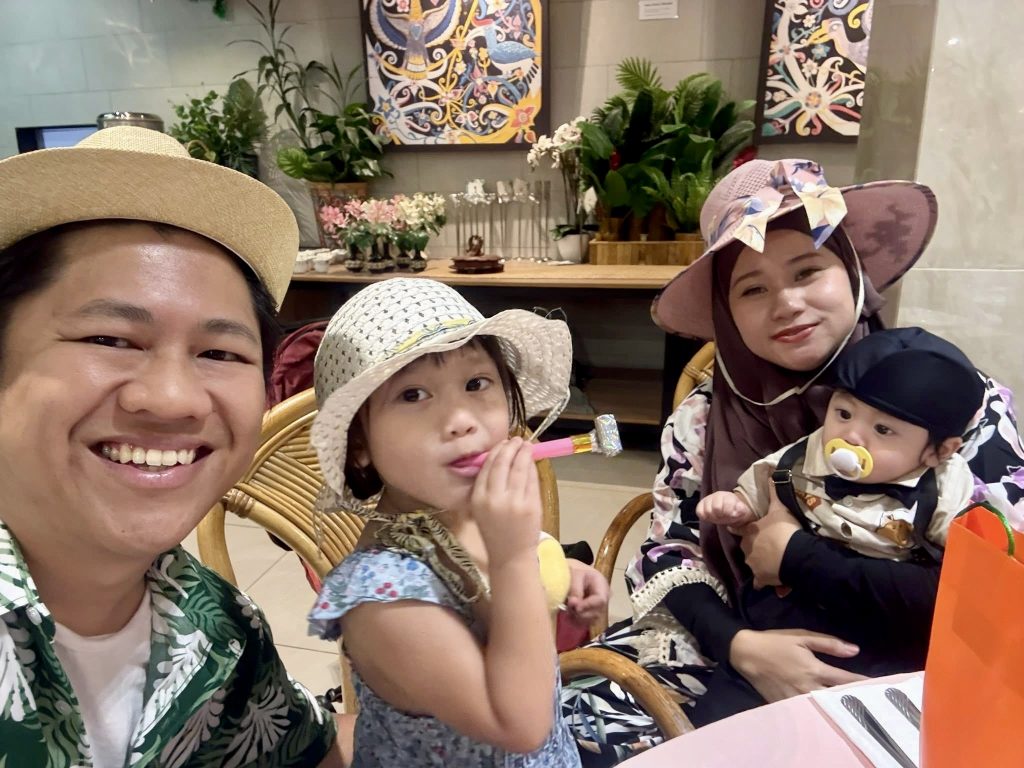
But for the 39-year-old, the difficulty was part of the appeal.
“I have to admit that my intense passion for electricity has increased my drive to work in this field and demonstrate to other people that women can hold their own against men,” she said.
Her interest in electricity began not as a statement, but as curiosity – how systems connect, how unseen currents power visible results.
Over time, that curiosity grew into commitment. Khalida wanted to understand not just how electricity works, but how to control it safely – a responsibility that few people, and even fewer women, choose to carry.
Surprise, support, and quiet determination
Her career choice surprised many people around her.
“I can tell that my career choice has astonished many people around me. They were happy that I could compete with males, though, at the same time,” she said.
Some were sceptical at first. Others were quietly proud. A few questioned whether the physical demands would be too taxing. Electrical sites are not always air-conditioned classrooms; they can involve climbing, inspecting panels in tight spaces, or working long hours during maintenance shutdowns.
But Khalida never framed her journey as rebellion. It was simply a matter of interest and capability.
What stands out most is not just that she entered the field, but that she refused to pause her ambitions during one of the most physically demanding periods of her life.
Pregnancy did not exempt her from revision. Motherhood did not delay her exam date.
She continued attending classes while expecting her child. She revised regulations and technical standards between doctor’s appointments. She balanced rest with responsibility. And weeks after giving birth, she sat for her examination.
That decision required more than academic preparation. It demanded mental resilience – the ability to focus on complex technical scenarios while adjusting to sleepless nights and a new routine at home.
“From this point on, I also want to highlight that, no matter what, we can achieve our goals as long as we have the will to do so,” she emphasised.
There is no dramatic tone in her voice when she says it. Just conviction.
Her story is not loud. It does not rely on grand declarations. Instead, it rests on consistency – showing up to class, completing assignments, sitting for exams, earning the credential.
In industries where women remain under-represented, consistency itself becomes a quiet form of resistance.
Powering opportunity
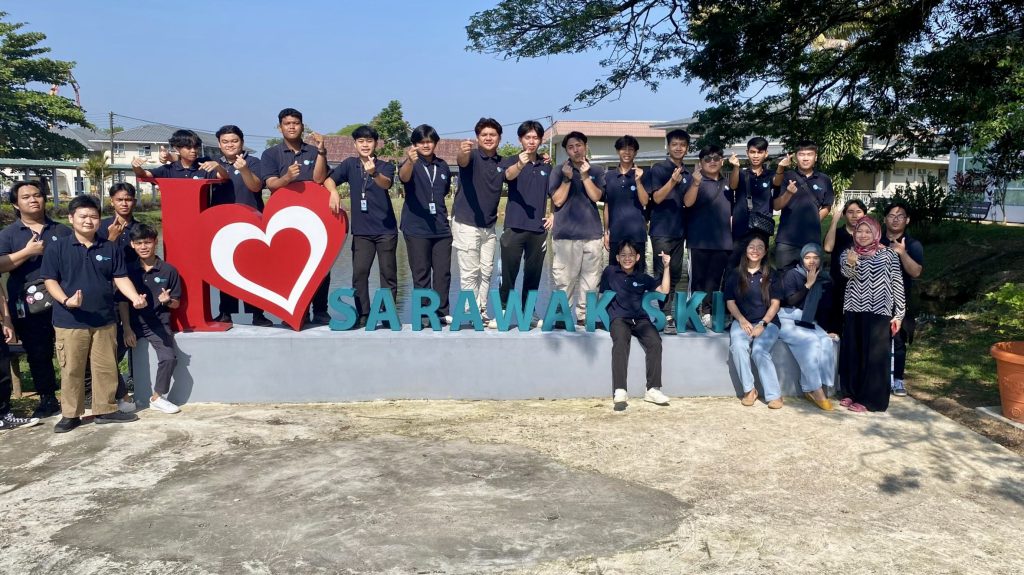
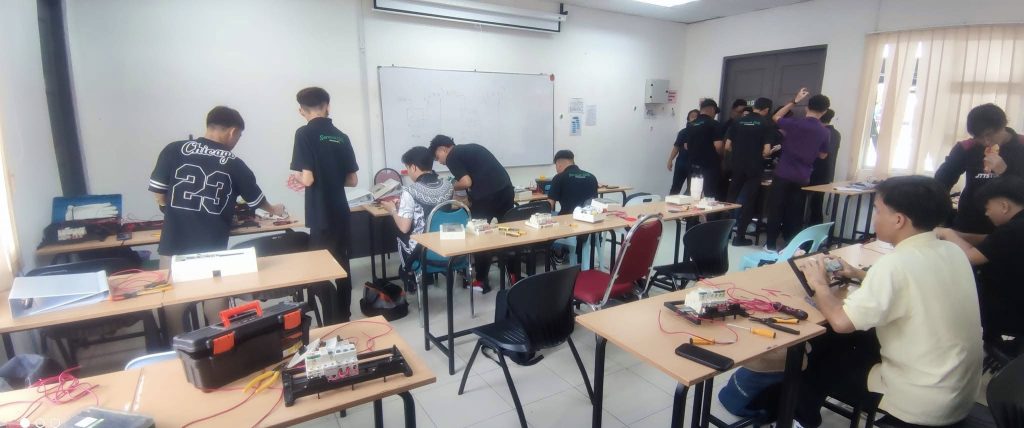
Today, Khalida serves as an instructor for the Single-Phase Electrical Installation and Maintenance course at Sarawak Skills, guiding a new generation through a field that still sees few women.
Her classroom is filled with diagrams, safety codes, and circuit discussions – but it also carries something less visible: representation.
When female trainees walk into her class, they no longer see a profession defined solely by men. They see someone who has done the job, passed the exams, and understands both the technical rigour and the personal sacrifices involved.
She teaches more than wiring systems. She teaches compliance, discipline, and accountability. She reminds trainees that safety is not optional – that every procedure, from isolating power sources to testing circuits, exists for a reason.
Careers in this field are not only technically demanding – they can also be financially rewarding.
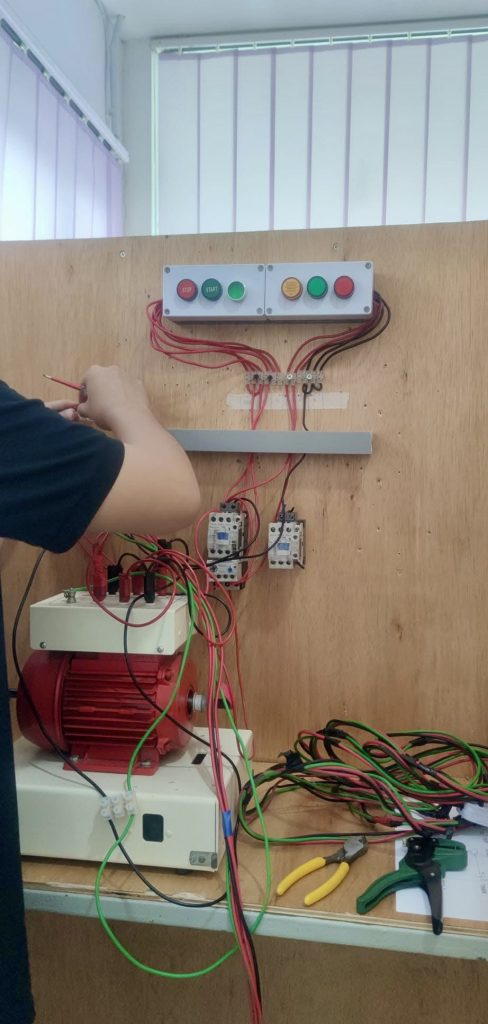
According to Khalida, a low voltage chargeman can earn between RM3,500 and RM5,400 per month depending on experience and expertise. Those working with high-voltage systems – 11kV and 33kV overhead – may receive between RM8,000 and RM12,000 monthly.
With additional certifications and years of service, opportunities expand into supervisory roles, consultancy, or specialised industrial sectors. In a time when many young people worry about job stability, technical competency offers a clear pathway.
In conversations about women’s empowerment, financial independence is often overlooked. Yet access to skilled, well-paid technical careers is a powerful form of economic justice. It reduces dependency. It expands choice. It strengthens families.
On International Women’s Day 2026, themed ‘Rights. Justice. Action. For ALL Women and Girls’, stories like Khalida’s embody what those words mean in practice.
Rights mean access to education and certification; Justice means equal opportunity in male-dominated industries; and Action means enrolling in the class anyway – and sitting for the exam anyway.
It also means institutions opening doors, training centres welcoming diversity, and industries recognising talent wherever it exists.
Message to young women
When asked what advice she would offer young women considering this path, Khalida’s response is both practical and spiritual.
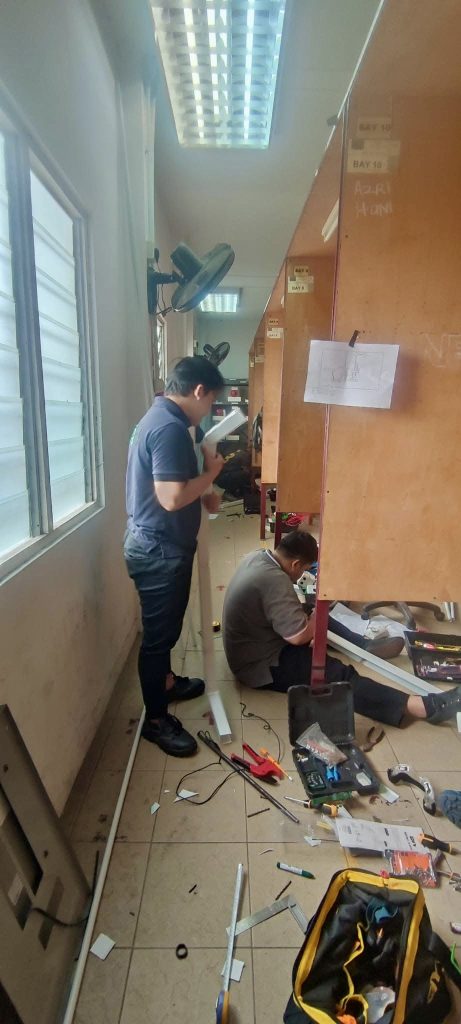
“Never give up on a task easily, even if it presents physical difficulties. Never stop praying and working hard; insyaAllah, everything will work out fine,” she said.
She pauses before adding something equally important:
“Just keep in mind that a chargeman’s salary and benefits are frequently competitive.”
It is a reminder that ambition does not have to come at the expense of stability – and that technical careers are not reserved for one gender.
She also encourages young women to prepare themselves mentally. The environment may not always be familiar. They may be the only woman in the room. But competence builds credibility, and credibility builds confidence.
Khalida does not describe herself as a trailblazer.
She speaks instead of compliance standards, certification procedures, and safety protocols.
Yet every time she stands in front of a switchboard, or a classroom of trainees, she quietly challenges an old image of who belongs in that space.
Electricity does not discriminate. It flows where circuits are complete.
And in workshops filled with wires and voltage panels, Khalida has completed her own circuit – connecting passion to profession, motherhood to ambition, and possibility for the next young woman who might decide that “chargeman” is not a word reserved for men.