Rediscovering the Sarawak State Museum grounds, a place where history, nature, and childhood memories meet. Once filled with music, laughter, and family outings, the gardens and old buildings still carry echoes of the past, while visitors today continue to create new moments in this beloved Kuching landmark.
A Walk Through Time
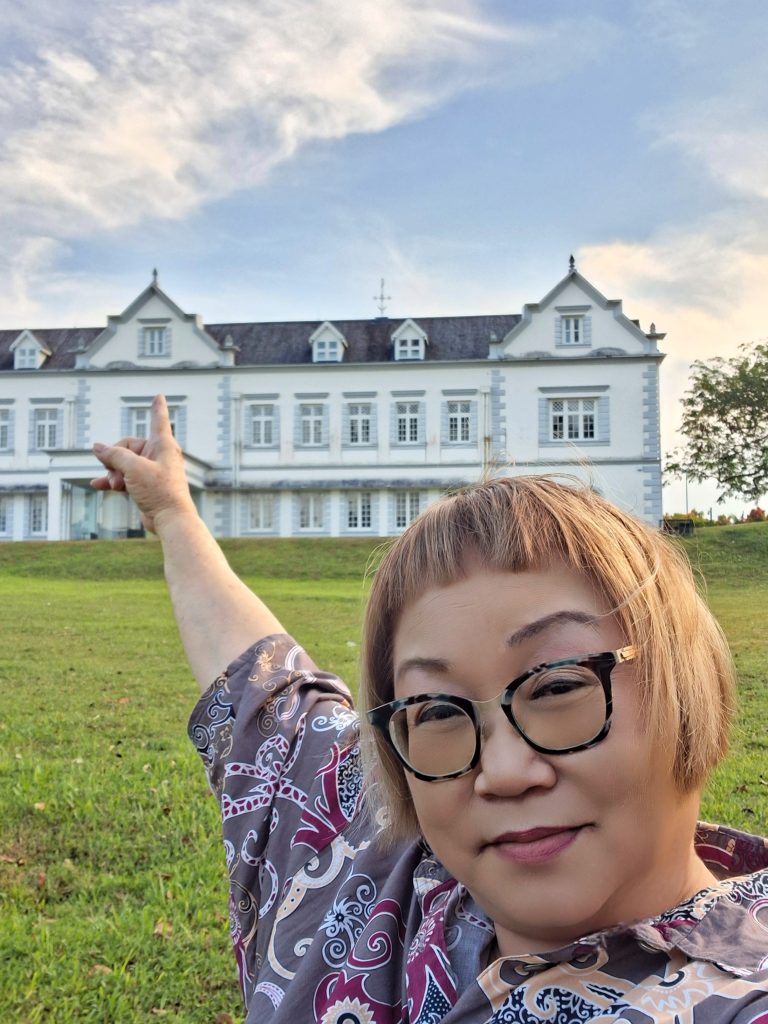
It was during this past Ramadan, while waiting for friends to break the fast (iftar) at the Borneo Cultures Museum (BCM) Restaurant, that I found myself with a rare pocket of unhurried time. Drawn by a quiet, almost instinctive pull, I lifted my gaze to the old museum perched on the hill. In that fleeting moment, time seemed to soften, and I was carried gently back to my childhood.
I saw myself again, a small child racing up and down those grassy slopes, carefree and brimming with energy. Behind me, my father’s familiar voice would call out, warm yet cautioning, “Not too fast. Be careful”. Even now, the echo of his words lingers, as vivid as if he were still walking just a few steps behind me.
Moved by that memory, I found my feet leading me from the new BCM car park towards the entrance. When I reached the road, I paused and looked across at the old museum grounds. Something stirred quietly within me, like a recognition, a longing, a sense of return.
Memories came rushing back, not in fragments but in a gentle flood. Sundays spent with my parents and siblings unfolded once more in my mind. They were simple, unhurried days when joy was found in open spaces, laughter, and togetherness. It was a time before the rise of shopping malls and theme parks, when places like these were more than enough to fill our days.
Standing there, I felt a quiet resolve take shape. Yes, to write about the Sarawak State Museum grounds, a place that once pulsed with life and laughter, and which still lives on, tenderly, in the memories of those who knew it.
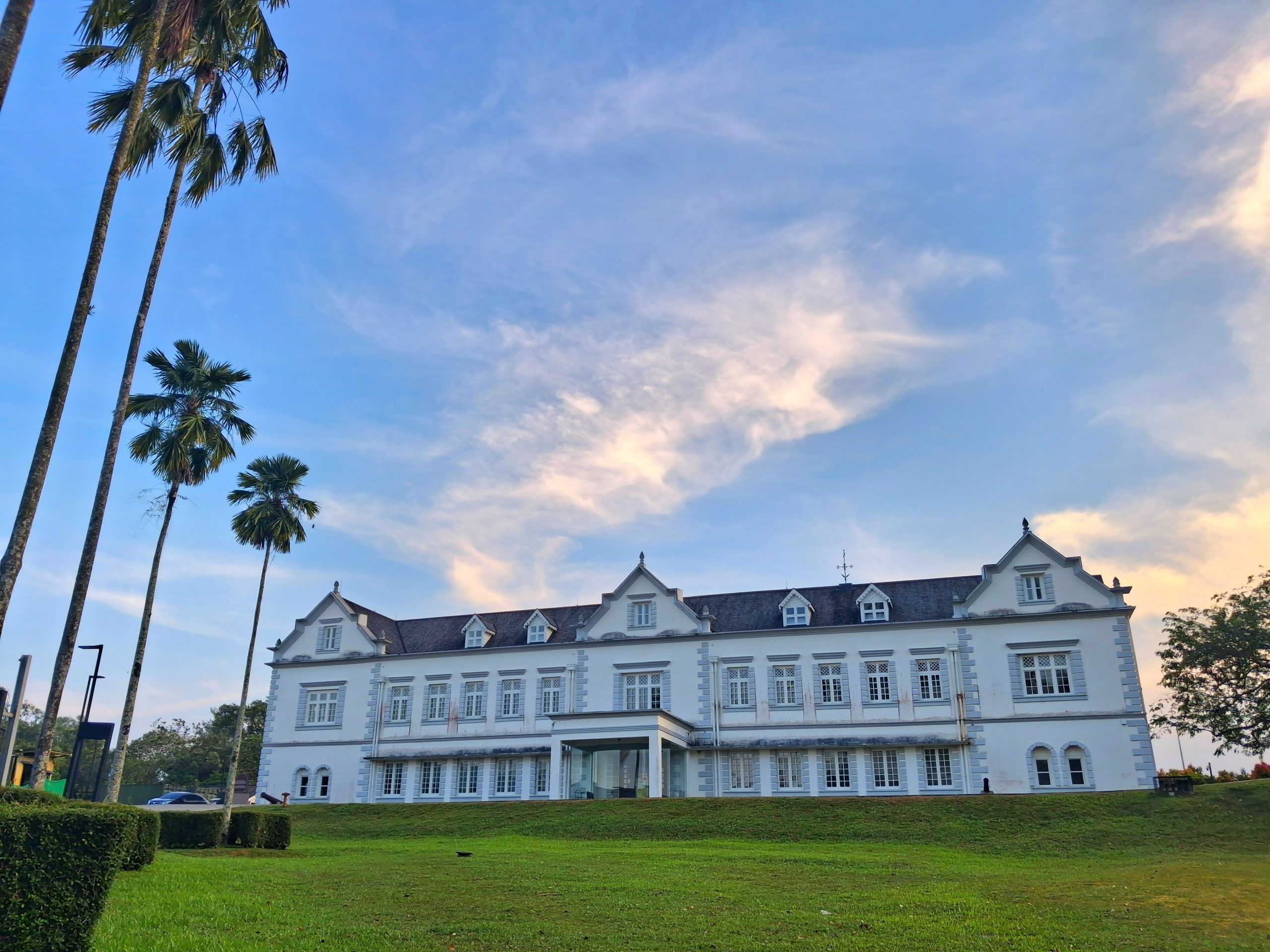
According to archival records, the land on which the museum grounds stand was once an old Chinese community burial ground. Clearing began in March 1888 to make way for the Sarawak State Museum, with foundation works commencing later that same year. Completed in 1891, the Sarawak State Museum building bears the imprint of colonial design.
Built during the reign of Queen Victoria (1837-1901), the rectangular structure stretches 50 metres in length and 13.5 metres in width. Its design reflects a quiet elegance — simple, symmetrical, and functional, all well suited to the tropical climate. High ceilings allow air to circulate freely, while subtle Italian Renaissance touches reveal themselves in the graceful arches of its windows.
Recognised as the first museum in Borneo built in this architectural style, it was officially opened by Charles Brooke, the second White Rajah of Sarawak, on August 4, 1891. Expanded to its present form in 1911, it was once regarded as one of the finest museums in Southeast Asia and a source of pride for the region.
Time, however, leaves its mark on all things. The building aged, and on October 23, 2017, it was closed to the public for restoration. Although approximately RM28 million has been allocated for its refurbishment, it remains closed today, and we are quietly waiting for its reopening.
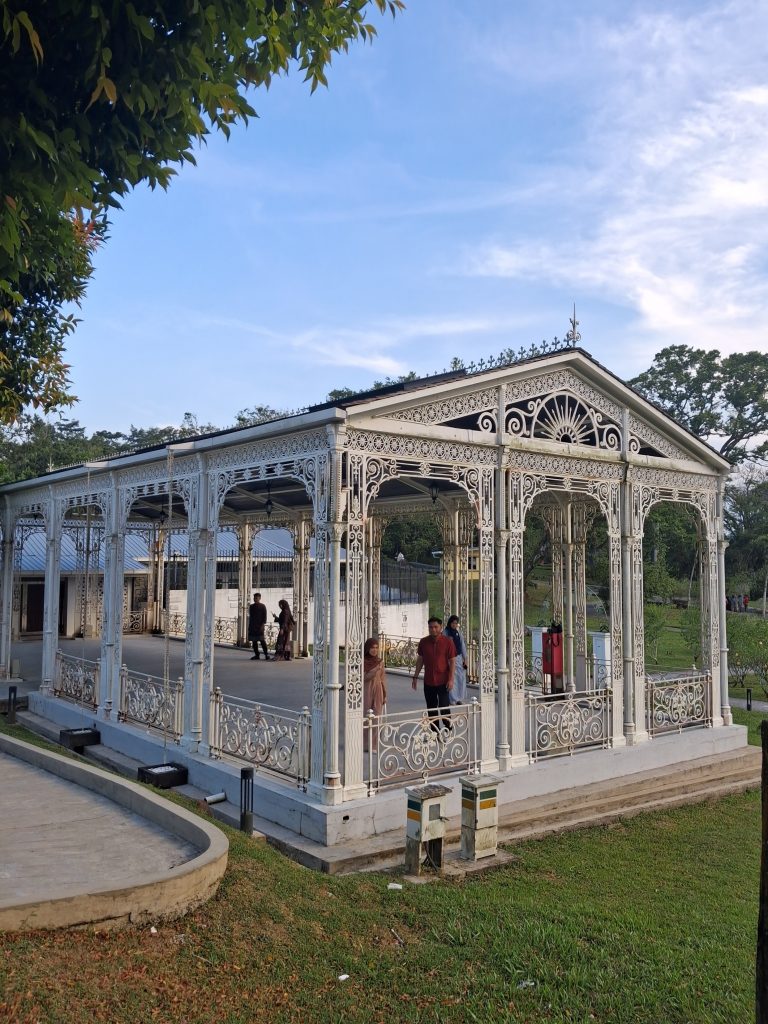
Nearby, the old pavilion that once housed the aquarium still stands. Its iron framework, now bare, feels like a delicate skeleton of memory. Groups of families, and some in Raya attire, linger there, taking photographs, perhaps sensing, as I did, the echoes of what once was.
Beside the museum lies Tugu Pahlawan Garden, a verdant sanctuary where history and nature meet. The garden carries a quiet dignity, honouring national heroes while offering a serene retreat in the heart of Kuching.
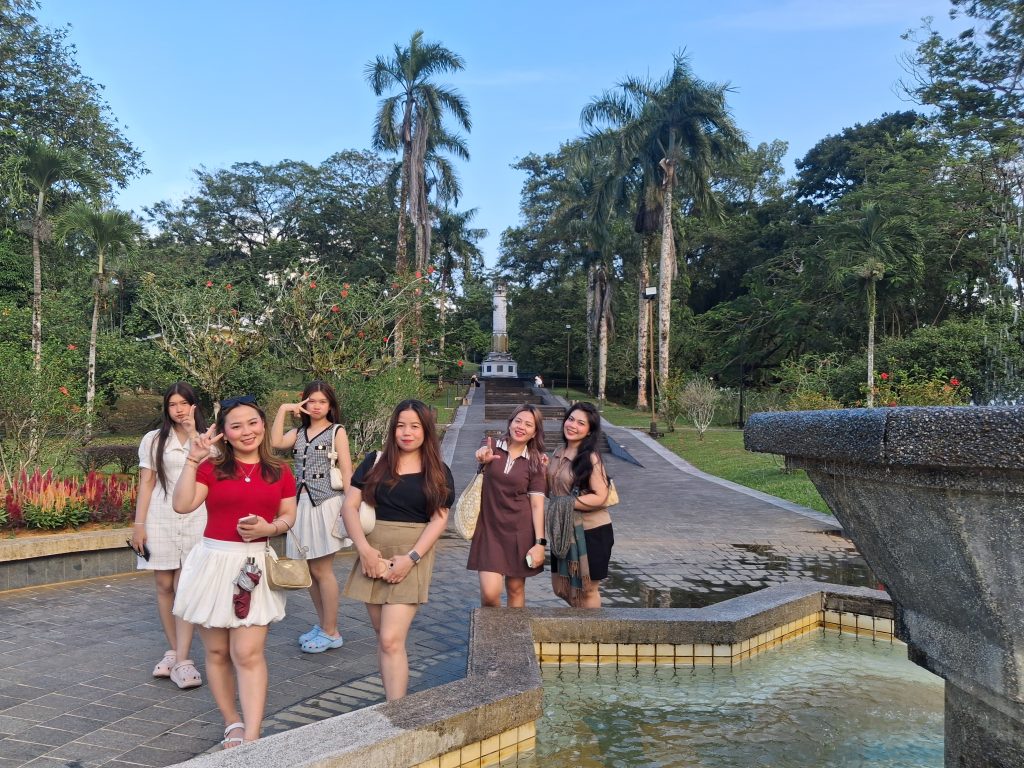
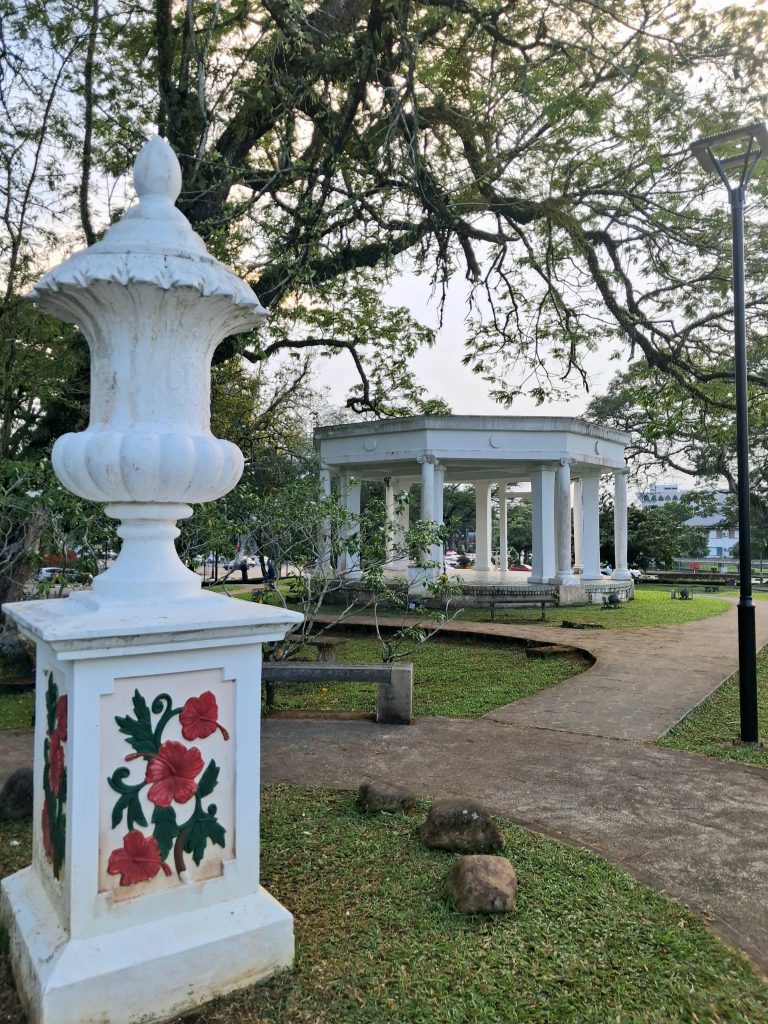
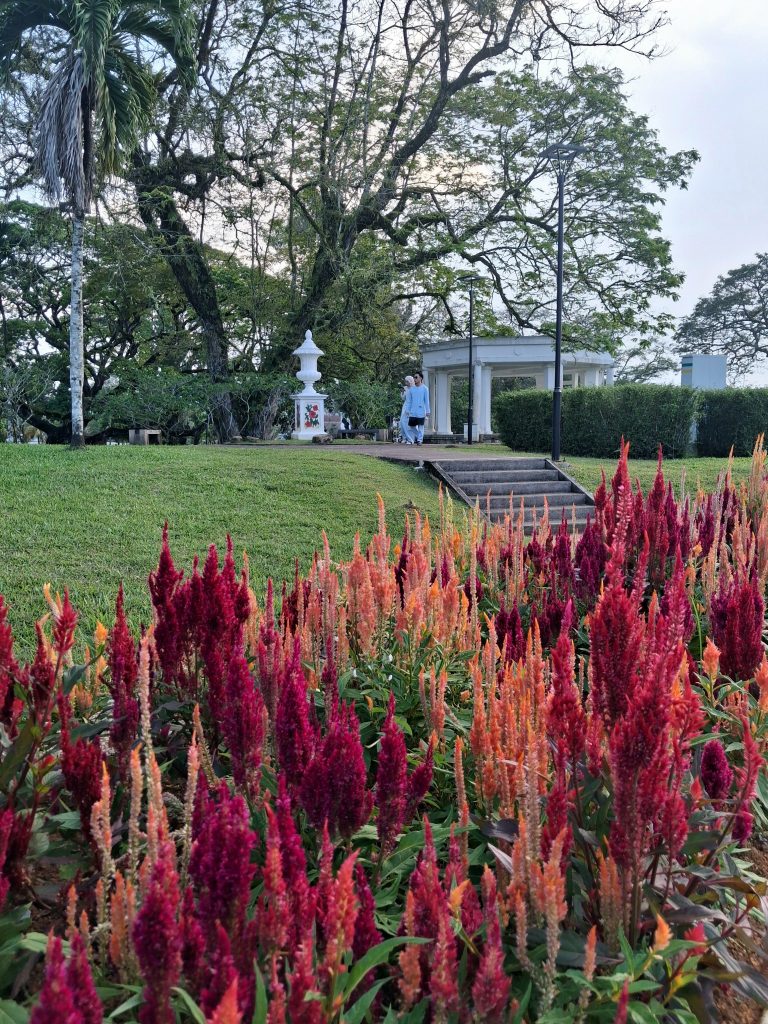
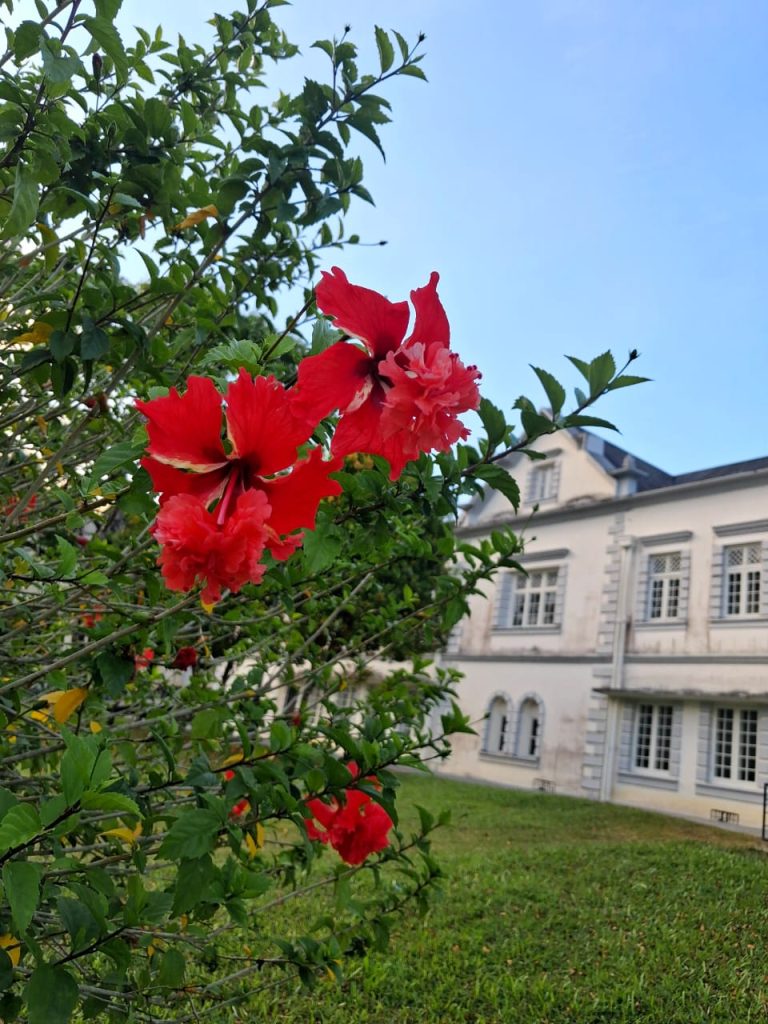
The trees, some over a century old, stand like silent witnesses to time. Beneath them, manicured lawns stretch out, softened by clusters of tropical blooms. As one walks down the steps towards the water feature, Hibiscus rosa-sinensis greets the eye, its lush petals unfolding in shades of red, white, and pink, each bloom a small celebration of life in the tropics. They are my favourite blooms.
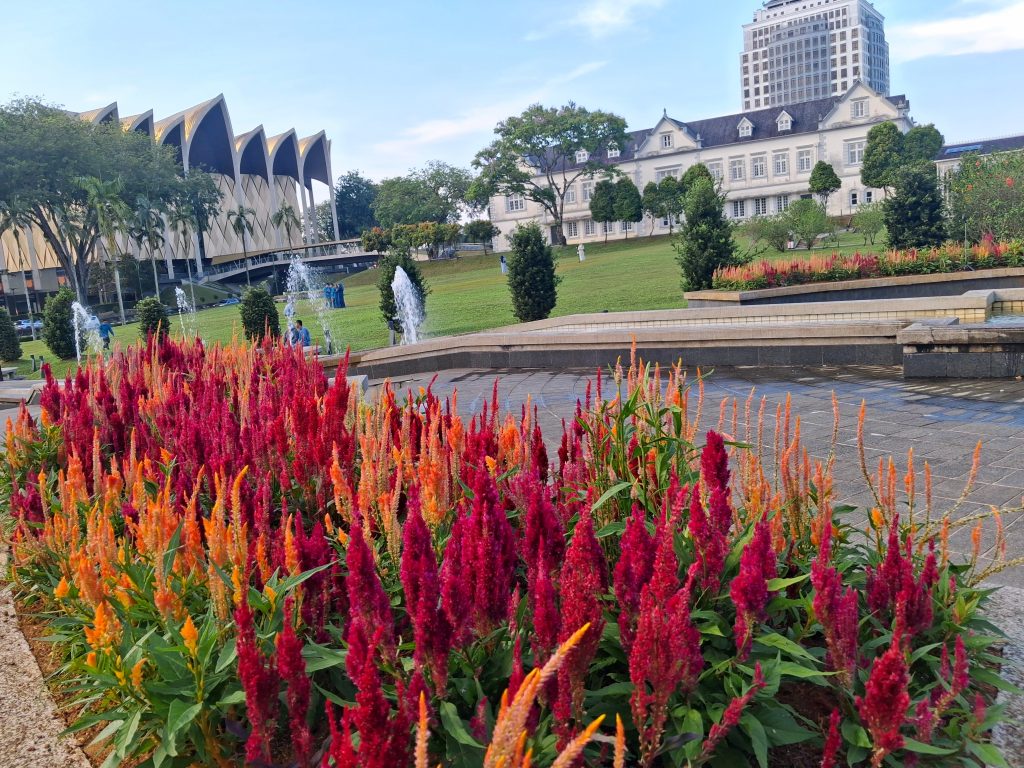
Nearby, bright orange buttercup daisies add cheerful bursts of colour, while the striking red and orange cockscomb (Celosia spicata) rises in feathery plumes. These flowers thrive in the warmth of our climate, drawing visitors who pause to admire them. It is a familiar sight; mainly ladies posing among the blooms, camera stands in place, capturing moments that will soon become memories of their own.
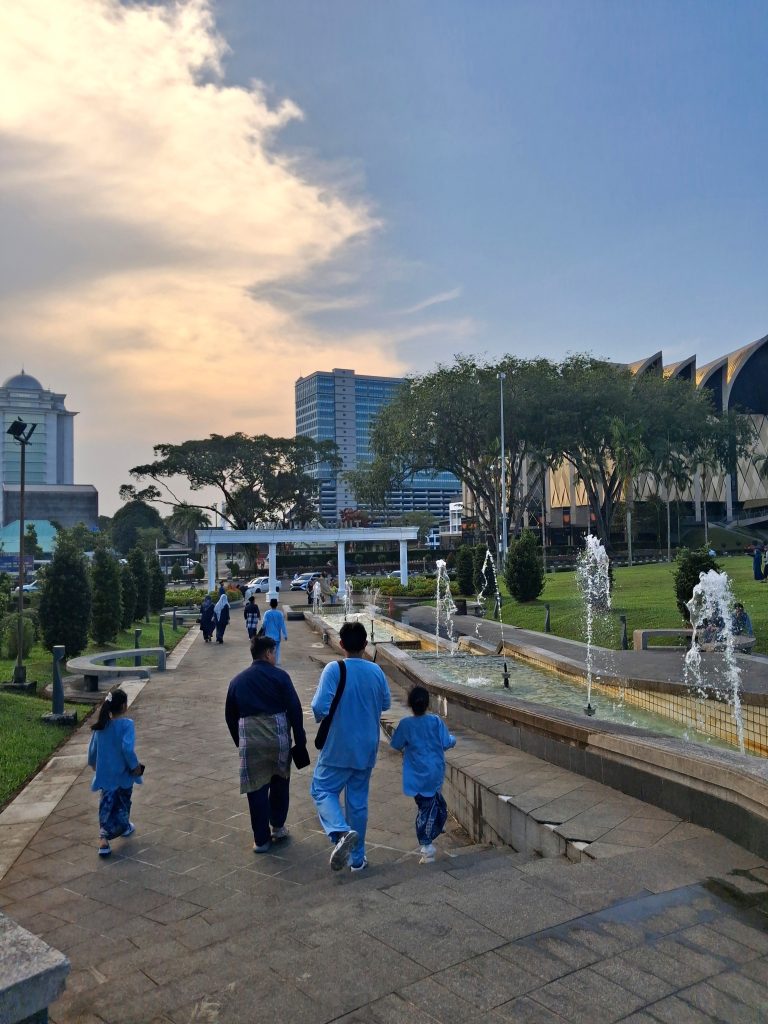
A long, narrow pool stretches quietly across the grounds, the shallow water mirroring the sky above and the trees that lean gently towards its surface. Small fountains ripple the water, adding a soft, rhythmic movement without disturbing the stillness of the walkways.
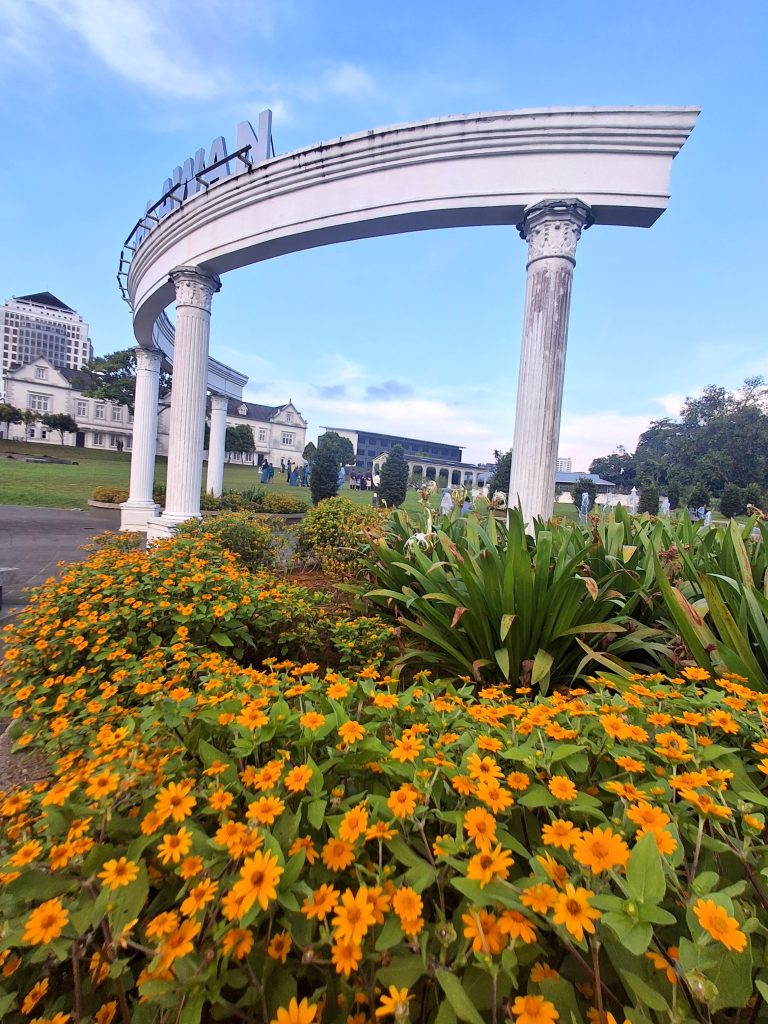
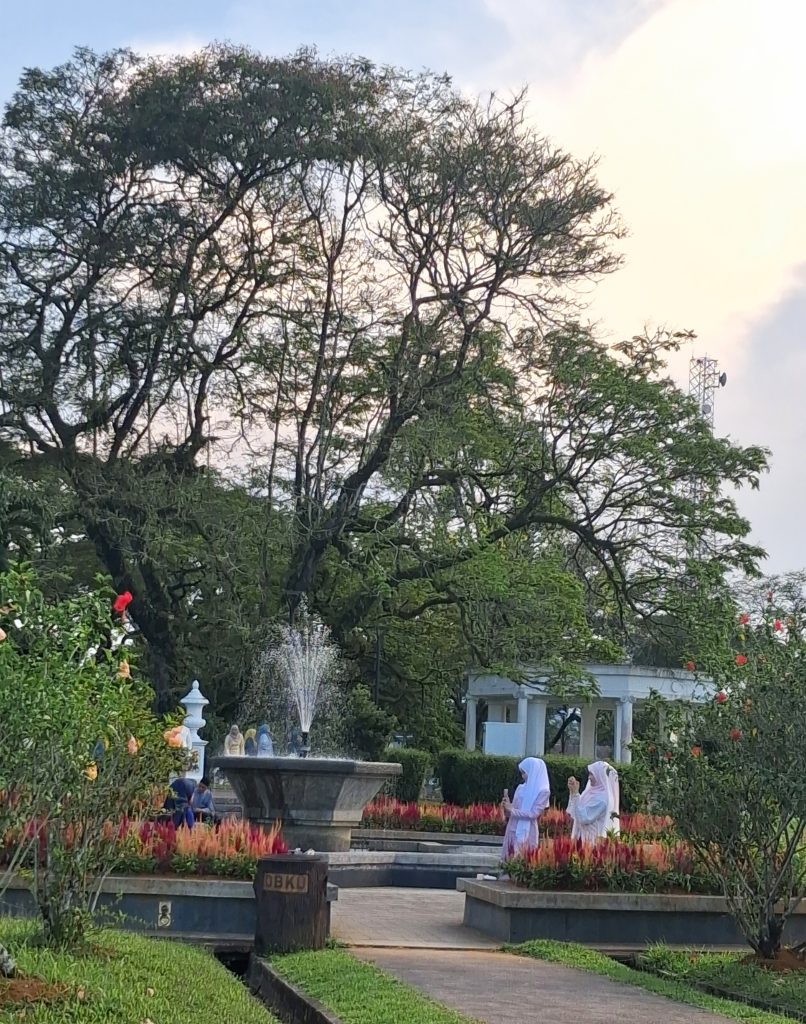
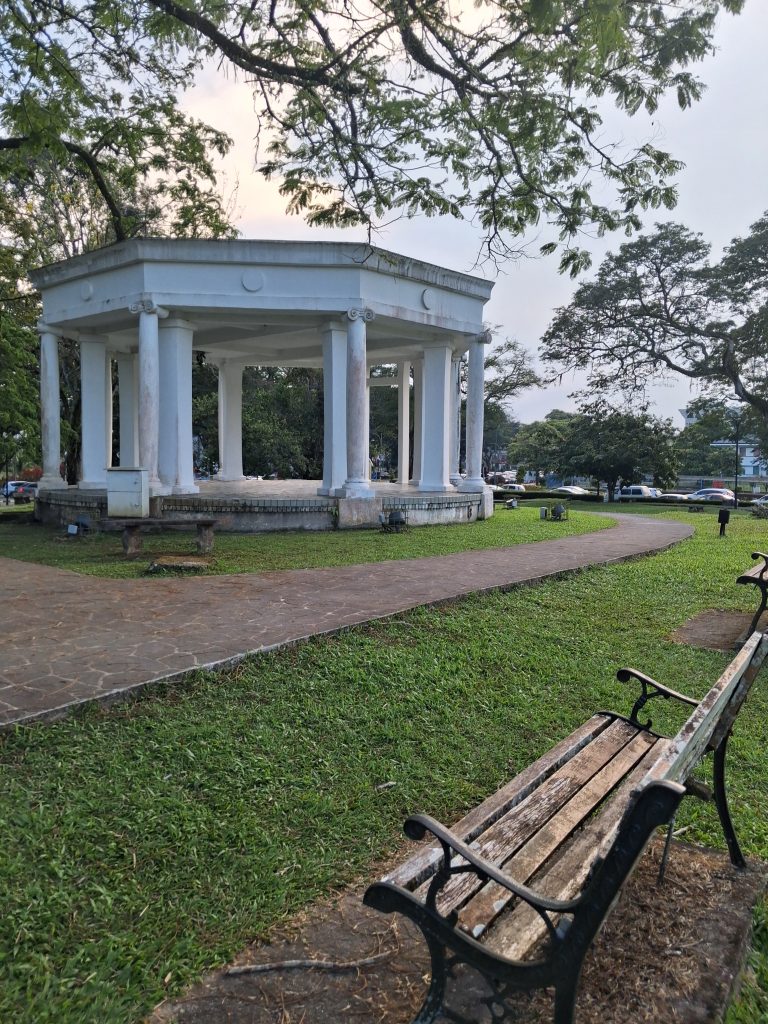
The colonial-style bandstand pavilion remains, steadfast through the years. Once, it was alive with music and laughter. Every Sunday at around 4 pm, the Sarawak Constabulary Police Band, dressed in full uniform, would perform beneath its circular roof. Families gathered, children played, and young couples lingered. On special occasions, the air would be filled with the stirring sounds of Scottish bagpipes, mingling with lively jazz melodies.
And when hunger or thirst called, there was the old Summer House, with its ornate Chinese-style roof. It offered simple local delights like curry puffs, belacan beehoon, laksa, and ice kacang drizzled with milk. Today, it stands silent, no longer in use, but not forgotten.
The Sarawak State Museum grounds were, and remain, a place woven into the lives of many. Just recently, on a Sunday there, I found myself smiling at the sight of young locals dressed in their finest Raya attire, and visitors in their short skirts wandering through the gardens and capturing photographs. In them, I saw a reflection of the past. New memories are being made in a place rich with old ones.
And perhaps that is the true beauty of this place. Though time moves forward, the soft and enduring echoes remain, waiting to be rediscovered.