Trust issues over performance and support hold buyers back
KUCHING: Range anxiety, limited charging infrastructure and high upfront costs remain key barriers holding Sarawakians back from adopting electric vehicles (EVs).
Despite growing national momentum towards electrification, hesitation on the ground reflects the state’s vast geography, infrastructure gaps and unique travel patterns — all of which continue to shape purchasing decisions.
For potential buyer Mohd Hazhmirudin Kamarudin, a Neuro-Linguistic Programming (NLP) trainer from Sibu, the issue is straightforward: distance.

“Range is the main concern. Sarawak is huge and towns are far apart.
“Kuching to Sibu is already more than 300km, and charging points are rare once you leave the city,” he told Sarawak Tribune.
His concern points to a familiar challenge in East Malaysia, where long intercity drives often come with limited amenities along the way.
Charging accessibility is another major worry, especially outside urban centres. Hazhmirudin said even conventional fuel supply can be inconsistent in rural areas — raising doubts about how EVs would perform in similar conditions.
“The Pan Borneo Highway is still being upgraded and chargers are not really part of the plan yet.
“Even petrol stations in rural areas sometimes run out of fuel. If that happens with petrol, imagine with EV chargers,” he said.
Home charging, often seen as a key advantage of EV ownership, is also not always practical. Hazhmirudin noted that village homes and older apartments may lack dedicated parking or the setup needed for charging.
Cost remains another sticking point.
“Even with tax exemptions and rebates, EVs are still expensive,” he said, adding that affordability must improve before mass adoption becomes realistic.
Beyond cost and infrastructure, confidence in EV technology is still uneven. Hazhmirudin highlighted the lack of workshops capable of handling EV repairs outside major cities such as Kuching, raising concerns about long-term maintenance and support.
He also questioned whether EVs are suited to Sarawak’s terrain and travel habits.
“Not really suitable unless you stay in the city. Many of us travel off the main roads—for work or going back to hometown—on gravel roads, logging tracks and steep hills. EVs are not proven yet for that,” he said.
Peak travel seasons such as Gawai and Chinese New Year could further strain the limited charging network.
“If everyone queues for the few chargers available, it will be chaos,” he added.
Still, Hazhmirudin said he would reconsider if three conditions are met: more affordable pricing — ideally below RM80,000 — wider charging coverage across highways and rural areas, and proven performance under Sarawak conditions.
He also flagged broader structural concerns, including power grid stability in rural areas, the absence of a viable secondhand EV market and uncertainty over road tax policies once current exemptions expire.
On the industry side, sales advisor Dayangku Afzadamiya Awangku Omar Asfuaddin of Proton Supernau Bintulu said charging infrastructure remains the most common concern among customers.

However, she noted that efforts are underway to close the gap, with initiatives by Sarawak Economic Development Corporation (SEDC) and Sarawak Energy Berhad (SEB) expanding charging networks in line with the national target of 10,000 stations by 2025.
She said the impact of infrastructure limitations differs between user groups.
“For urban users, it is less of an issue because they can charge at home.
“But for those who travel long distances, range is still a concern,” she said.
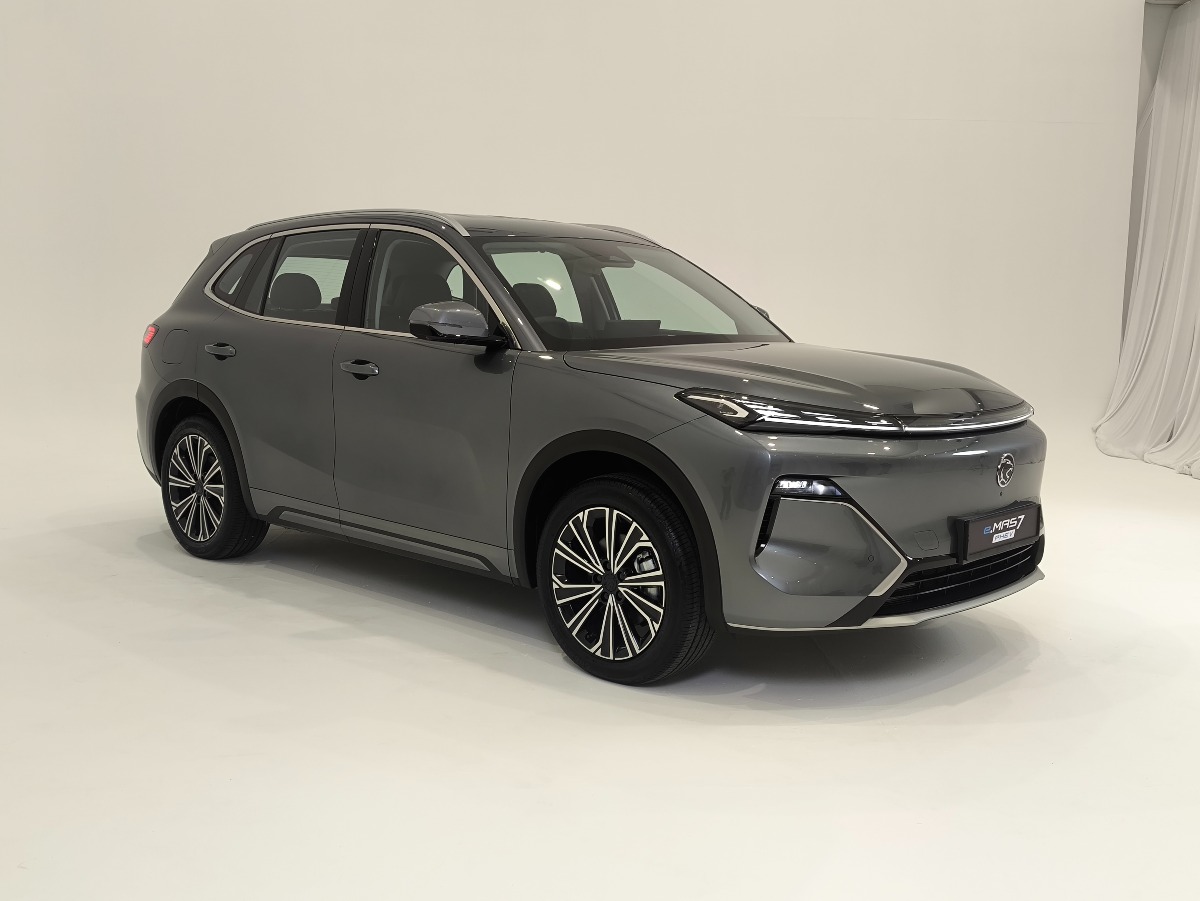
As a transitional solution, she pointed to hybrid options such as Proton’s eMAS 7 plug-in hybrid electric vehicle (PHEV), which offers an extended range of up to 1,065km.
On pricing, Dayangku Afzadamiya urged consumers to look beyond upfront costs.
“From the perspective of charging, servicing and maintenance, EVs can be much cheaper than petrol cars over time,” she said, adding that more affordable models are entering the market.
She also addressed concerns over durability, noting that EV technology has undergone extensive testing.
“Our EV models have gone through rigorous stress tests to meet Malaysian road conditions, and we offer an eight-year warranty for high-voltage batteries and key components,” she said.
Misconceptions about battery lifespan remain common, she added, despite data showing that degradation is generally low and batteries can last the lifetime of the vehicle.
While interest in EVs is gradually rising — supported by policies targeting 30 per cent adoption by 2030 — industry observers say bridging the gap between ambition and reality will take more than incentives.
Expanding charging infrastructure beyond major cities, strengthening technical support networks and addressing cost concerns will be critical.
Until then, for many Sarawakians, the decision to switch remains grounded in practicality — whether EVs can truly meet the demands of daily life across one of the country’s largest and most geographically diverse states.