THE Department of Statistics Malaysia’s latest household income classification, based on the most recent survey, marks a defining moment in the nation’s socioeconomic narrative.
By dividing households into T20, M40 and B40 with refined sub-categories, the Economic Planning Unit (EPU) provides clarity on income thresholds. Yet, this clarity also reveals the widening gap between aspiration and affordability – a reminder that numbers can illuminate progress while exposing persistent inequality.
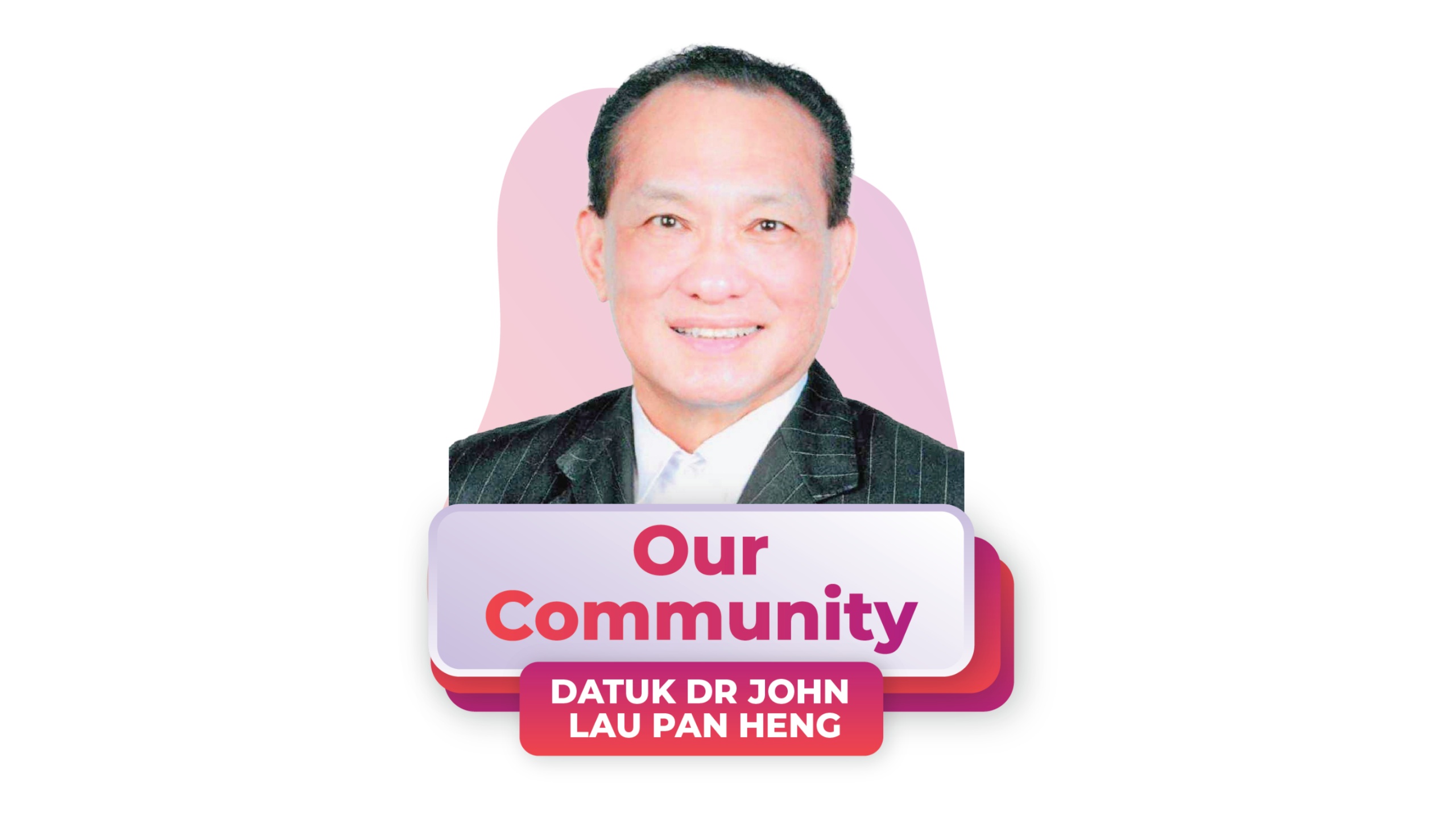
The New Straits Times addressed this issue in its May 14, 2026 edition. As a PhD candidate in Economics at University of Malaysia Sarawak (UNIMAS), I hold a particular interest in household income grouping and wish to share my perspective on its implications.
The current framework
At first glance, Malaysia’s income bands appear straightforward. The T20 earn RM15,039 and above monthly, the M40 fall between RM7,211 and RM15,038, and the B40 earn below RM7,210. Beneath these broad categories lie finer distinctions: B1 (RM5,401–RM7,210), B2 (RM3,070–RM5,400) and B3/B4 (RM3,069 and below). Each represents a different shade of struggle, offering policymakers sharper focus on the poorest households.
Yet, questions of fairness persist. Consider a household of four: a father earning RM5,200, a housewife mother and two children earning RM5,000 each. Together, they fall under T20. But if the children live separately, the parents’ household drops into B40. Such inconsistencies highlight the limitations of rigid thresholds that ignore household composition and living arrangements.
I call for clarity in classification which must evolve with empathy, fairness and dynamic recalibration every three years to reflect inflation, wage growth, and economic shifts.
Toward a hybrid model
A more equitable approach lies in a hybrid model – combining percentile-based grouping with adjustments for regional cost of living and household size. This balances clarity for policymakers with fairness for families.
Malaysia’s current B40/M40/T20 framework provides a strong foundation but refining it with regional sensitivity and per capita measures would better capture lived realities.
Crucially, income thresholds must undergo dynamic updates every three years to ensure they remain relevant. Regular reconciliation with inflation, wage growth and economic shifts would prevent classifications from becoming outdated. Without such recalibration, the income table risks losing its credibility as a measure of national wellbeing.
Uneven prosperity
Malaysia’s income story is one of uneven prosperity. Urban centres such as Kuala Lumpur, Penang and Johor Bahru surge ahead, buoyed by digitalisation and high-value industries. Meanwhile, rural communities in Sarawak and Sabah remain anchored in lower-income brackets, reliant on agriculture and informal work.
In Sarawak, the disparity is palpable. Coastal towns flourish with oil and gas, while interior regions grapple with limited connectivity and employment opportunities. The new income table is therefore not merely a national measure – it is a call for regional equity.
The middle-class squeeze
The M40, often romanticised as Malaysia’s backbone, is increasingly squeezed by rising living costs. Many households earn too much to qualify for aid yet too little to feel secure. A family earning RM8,000 in Kuala Lumpur may appear comfortable but after housing, childcare, transport and food, little remains for savings or emergencies. This vulnerability slows social mobility and weakens national resilience.
The B40 reality
For the B40, the struggle is daily and multidimensional. It is not just about income – it is about access: to quality education, healthcare and digital infrastructure. Sub-categories B1, B2 and B3/B4 sharpen focus on the poorest Malaysians, enabling targeted interventions.
Yet, clarity alone is insufficient. Policies must translate into action. Tailored solutions – community entrepreneurship, microcredit for rural women, and digital literacy for youth – can transform these numbers into narratives of empowerment.
Policy implications
The new income table offers policymakers a clearer lens but clarity must be coupled with compassion. The Shared Prosperity Vision 2030 remains Malaysia’s guiding star, yet bridging the gap between policy intent and ground impact requires urgent attention in three areas:
- Education equity – Strengthen rural schools and vocational pathways.
- Affordable housing – Expand rent-to-own schemes and cooperatives.
- Digital inclusion – Equip lower-income households with connectivity and skills.
- These are not welfare measures – they are investments in human capital.
The Road Ahead
Malaysia’s revised income table is more than statistics – it reflects opportunity and inequality. The T20 prosper, the M40 face rising costs, and the B40 struggle daily. Median incomes show many households cannot sustain modest urban living while rural regions highlight uneven prosperity.
True progress demands inclusive growth. Clarity must inspire empathy, and empathy must drive action. Most importantly, income thresholds must be reviewed and reconciled every three years to ensure they remain aligned with inflation, wage growth, and economic shifts.
Malaysia’s prosperity will be truly shared only when the B40 dream without fear, the M40 live securely and the T20 contribute with compassion – uniting the nation in purpose.
The views expressed here are those of the writer and do not necessarily represent the views of Sarawak Tribune. The writer can be reached at drjohnlau@gmail.com.