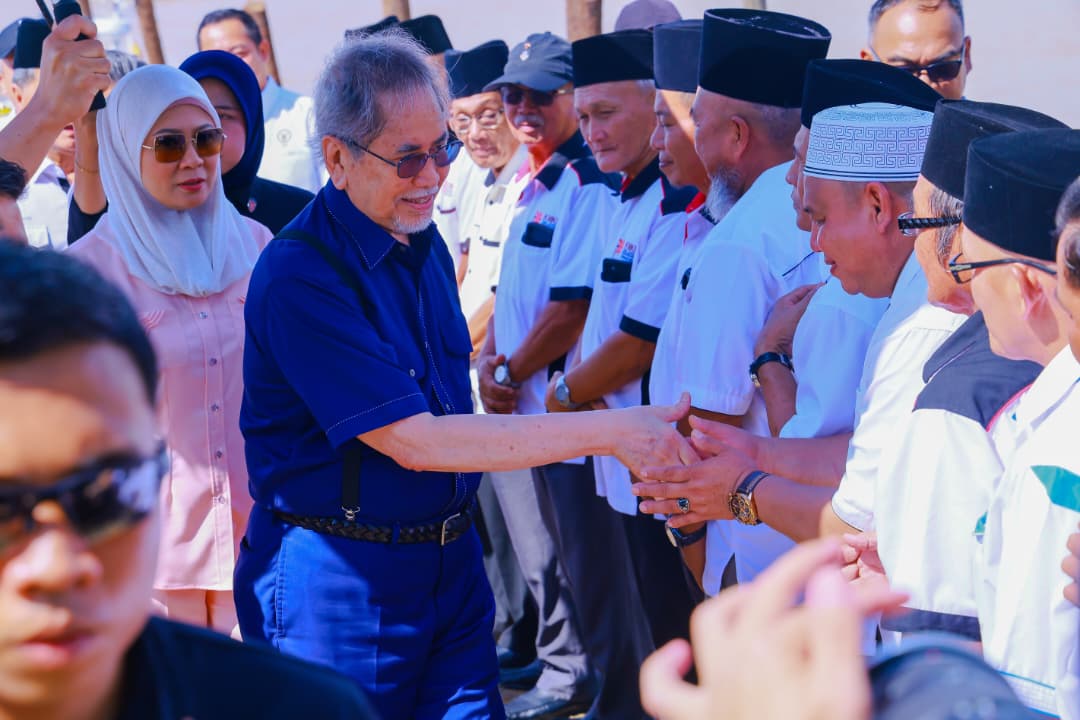
AS dawn broke over Sarawak’s coastline on May 2, the calm rhythm of waves and the thick green embrace of mangrove forests set the stage for a deeply personal journey by Head of State Tun Pehin Sri Dr Wan Junaidi Tuanku Jaafar and Toh Puan Datuk Patinggi Fauziah Mohd Sanusi.
What unfolded over the next two days through the Kembara D’Astana to Lingga was not merely an official visit, but a voyage through memory, heritage and the civilisational roots of Sarawak itself.
Aboard the catamaran Damai Princess, the Head of State travelled with family members Sharifah Fariah, Sharifah Nong-Jasima and her husband Muhammad Nur Hakeem, alongside Senior Private Secretary Datuk Seri Syed Hamzah Syed Paie, on a journey that blended state duty with heartfelt nostalgia.
The expedition began as early as 6.15 am from the Sarawak Rivers Board (LSS) Terminal in Pending, cutting across coastal waters towards Kampung Triso — not just another stop on the map, but the very village where Wan Junaidi’s story first began.
As the vessel glided past Muara Tebas and the towering Sejingkat Bridge, the changing face of Sarawak came into view — modern development rising alongside timeless landscapes that once shaped generations before it.
But it was while passing Pulau Burung and Pulau Triso Laut that memories truly surfaced.
Wan Junaidi fondly recalled trailing behind his late father on bird-hunting trips to the islands during his childhood — moments of simplicity that quietly moulded the values and resilience of the man who would one day become Sarawak’s Head of State.
The return to Kampung Triso carried emotional weight.
Upon arrival, Wan Junaidi and Fauziah first visited the village cemetery to pay respects at ancestral graves before making their way to the site of his old family home and the well that once served as a lifeline during his younger days.
Every step appeared to bridge past and present.
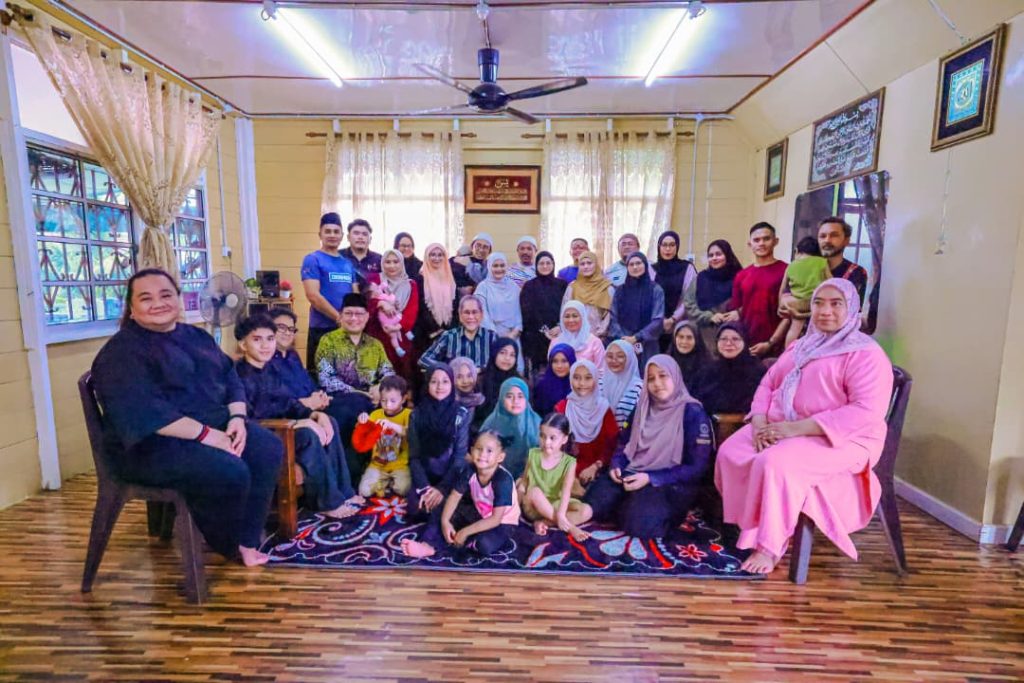
A warm family gathering later brought together 21 descendants of the late Tuanku Anis Tuanku Bujang at the residence of village chief Awang Mos Sulaiman.
The reunion became more than just a social visit. It was a quiet reminder that no matter how far life’s journey travels, roots remain firmly planted in the soil of home.
Before departing, Wan Junaidi and his entourage stopped at the Kampung Triso Mosque, where villagers eagerly gathered to meet the leader many still regard with deep affection and familiarity.
The voyage then continued to Sebuyau, a district currently undergoing rapid transformation with the construction of the Batang Lupar Bridge — a symbol of connectivity linking communities once separated by river and distance.
Yet amid the progress and development, the visit also carried sorrow.
Wan Junaidi paid a condolence visit to the family of his late cousin, Wan Morsidi Tuanku Sait, better known as Wan Dinel, whose passing had recently left a void within the extended family.
For the grieving family, particularly widow Sharifah Hasiah Tuanku Mashor, the presence of Sarawak’s number one leader offered not only comfort, but a profound sense of togetherness.
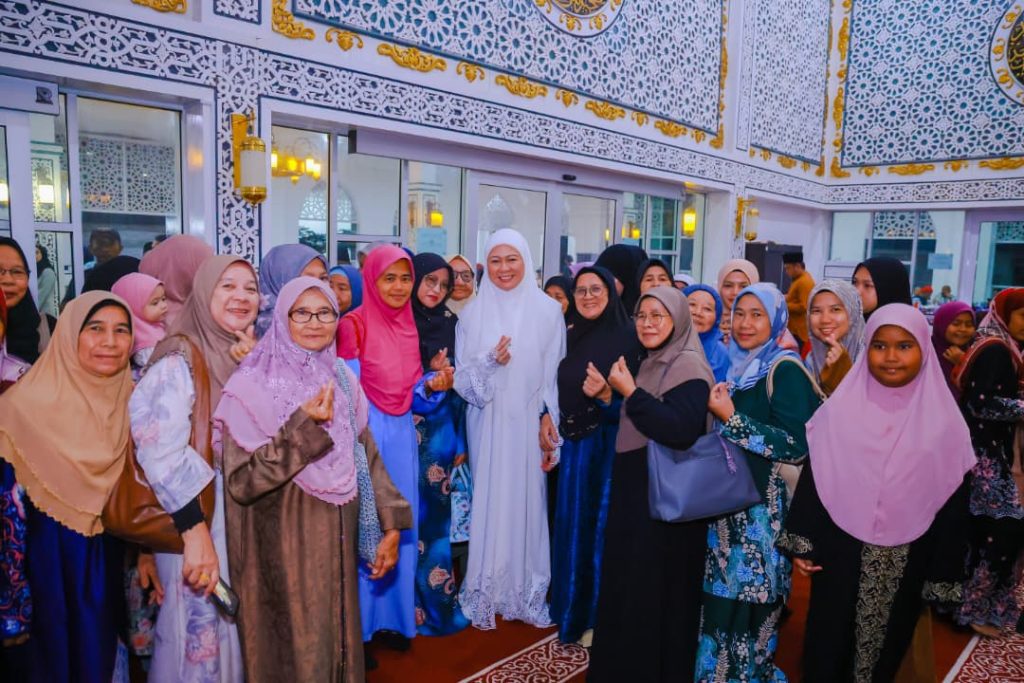
That evening, Masjid Al-Muflihin in Sebuyau became the setting for a deeply spiritual gathering.
Around 500 family members, relatives and villagers attended the Majlis Wida held in conjunction with Wan Junaidi and Fauziah’s upcoming haj pilgrimage.
Under the soft glow of mosque lights, congregational prayers, Yassin recitations, haj reminders and prayers for safe travels filled the night air — transforming the ceremony into a moving expression of love, faith and unity between leader and people.
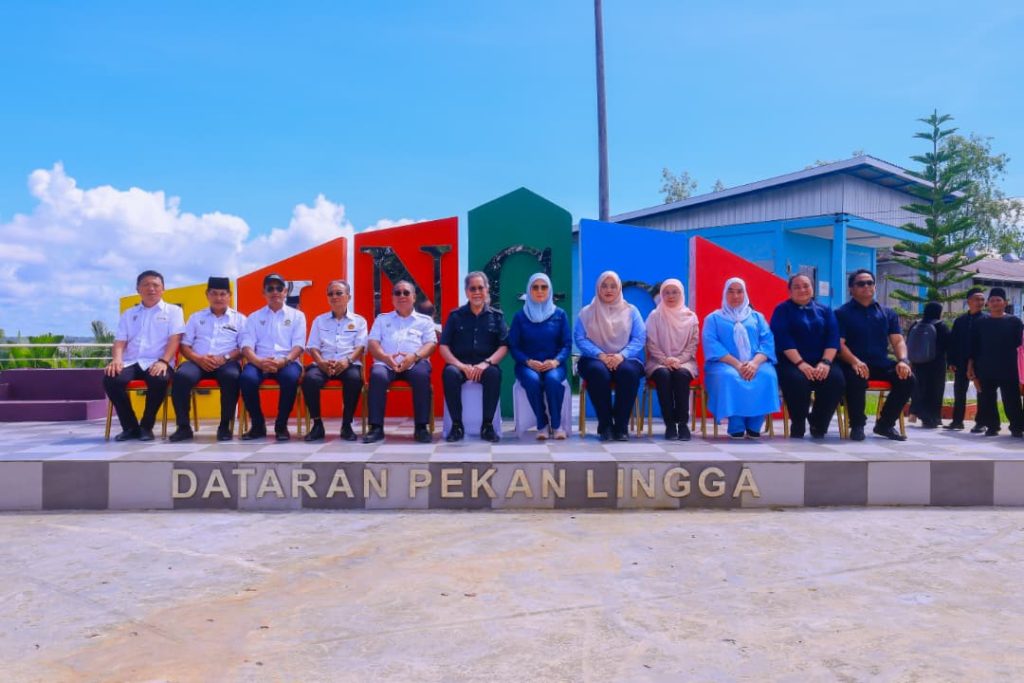
On the second day, the journey arrived at its final destination — Lingga, affectionately known as “Pekan Terubok”.
Behind the quiet riverside town lies a lesser-known chapter of Sarawak’s administrative and civilisational history.
Here, Wan Junaidi officiated at the handover of the Lingga-Banting manuscripts, including the historic Banting-Lingga Code, an important document proving that local communities had long practised organised systems of governance long before the modern era.
The manuscripts stood not merely as relics of the past, but as evidence of a society rich in intellect, order and identity.
Wan Junaidi also toured exhibitions showcasing traditional weaponry and the genealogy of Lingga’s aristocratic families before presenting contributions to Masjid Al-Hana.
The visit to Lingga felt less like an official function and more like a homecoming stitched together by heritage and bloodline.
Wan Junaidi and Fauziah later posed for commemorative photographs with descendants of Tuanku Tubi Tuanku Lada Al Yahya, rekindling bonds that have endured across generations.
Among those present were Penghulu Wan Amit Wan Kamil and Sharifah Zaleha Wan Kamil, Wan Shamsu Wan Kamil, Wan Drahman Tuanku Yassin, Wan Ahmad Nadziran Wan Amit, Marjanah Abin, Wan Arman Wan Drahman, Wan Hussin Wan Drahman, Wan Hafis Wan Drahman and Aminah Abdullah.
Lingga assemblywoman Dayang Noorazah Awang Sohor aptly described the visit as “sirih pulang ke gagang” — a symbolic return to one’s origins.
For Wan Junaidi, Triso, Sebuyau and Lingga are far more than former political constituencies he once served during his 14 years as Batang Lupar MP.
They are living archives of family, sacrifice, struggle and memory.
As Kembara D’Astana drew to a close, one message remained unmistakably clear — distance does not weaken unity when bonds are built on sincerity and shared history.
From fishermen at river mouths to small traders in quiet towns, the people welcomed Wan Junaidi not simply as a Head of State, but as a familiar son returning home — listening, reminiscing and embracing the people who shaped his journey long before titles and office ever did.
In retracing the footsteps of heritage, the voyage also strengthened the ties of kinship and etched yet another meaningful chapter into the story of Sarawak.