THE arrival of Hari Raya Aidiladha is often synonymous with the tradition of distributing qurban meat, but many tend to overlook proper storage and food safety practices, increasing the risk of food poisoning.
Careless handling can lead to serious health complications such as dehydration among children, while for senior citizens and patients with chronic illnesses such as kidney disease or diabetes, the effects may result in hospitalisation.
Universiti Putra Malaysia (UPM) dietitian Jazlina Syahrul said although meat can last between six and 12 months in the freezer, hygiene must be strictly maintained throughout the entire chain of handling, from cutting and portioning to the thawing process.
“The most common mistake people make is leaving meat at room temperature for too long during distribution, even though raw or cooked meat should not be left out for more than two hours.
“The temperature range between 4 and 60 degrees Celsius is known as the ‘Danger Zone’ because bacteria multiply rapidly within this range.
If the weather exceeds 32 degrees Celsius, the safe period becomes even shorter, only about one hour,” she told Bernama.
She explained that delayed storage allows bacteria such as Salmonella and E. coli to multiply, while also cautioning against placing still-hot meat directly into the refrigerator as it raises the internal temperature and may affect other stored food.
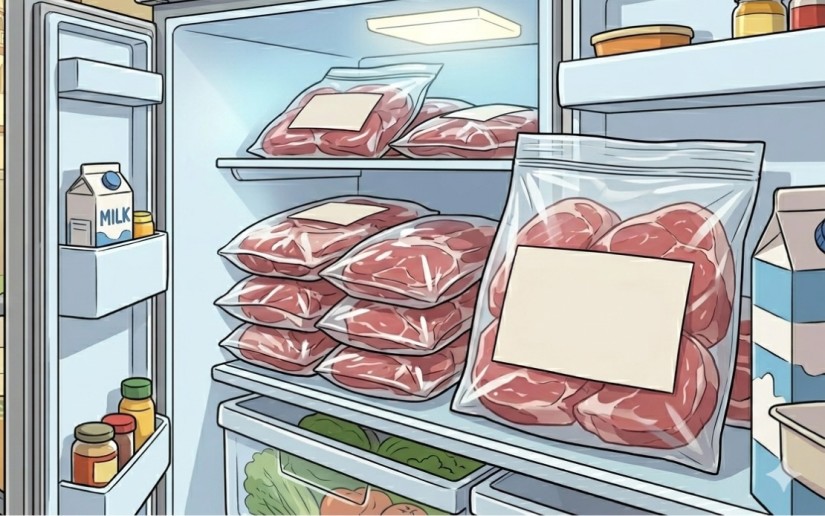
Jazlina also discouraged the practice of freezing meat in large chunks or in quantities unsuitable for a single meal, noting that thawed meat is unsafe to refreeze.
On the common practice of washing raw meat before storage, Jazlina said rinsing meat under running tap water could trigger cross-contamination, especially if the same area is later used to prepare other food.
According to her, such washing may cause water droplets carrying invisible bacteria to spread to surrounding areas, including sinks, kitchen counters, knives, chopping boards and cooking utensils.
“However, this does not mean meat should never be cleaned at all. If there are visible physical impurities such as soil, sand or hair, they can be removed carefully.
“If rinsing is absolutely necessary, avoid washing the meat directly under strong running water. Instead, use water in a basin and rinse gently to minimise splashing.
Afterwards, pat the meat dry with clean kitchen towels to reduce moisture before storage, and ensure the sink, kitchen surfaces and utensils used are properly cleaned and sanitised,” she said.
She stressed that negligence in handling meat could lead to serious health complications such as dehydration among children, while elderly individuals and patients with chronic conditions.