When Dr Ong Gek Bee first began treating children with cancer, one of the greatest challenges was not just medical treatment, but what happened beyond the hospital bed.
Her journey in treating paediatric cancer patients started when she was undergoing training at Hospital Kuala Lumpur (HKL) in 1992.
At the time, HKL treated children from across Malaysia, including those from East Malaysia.
However, Dr Ong observed that patients from Sarawak and Sabah faced additional socio-economic challenges due to distance, financial constraints, and the lack of accommodation in Kuala Lumpur.
She added that emotional and psychosocial support was also limited, especially for families separated from their loved ones during treatment.
Back then, mobile phones were only beginning to become common, and video calls did not yet exist, making communication with family members back home far more difficult.
“Some refused to go to KL for treatment, while others ended up stopping treatment halfway because they returned home and found it too difficult to come back again,” she recalled.
It was this reality that pushed Dr Ong, now medical adviser to Sarawak Children’s Cancer Society (SCCS), to bring parents together and plant the early idea of a support society for families facing childhood cancer.
When she began working at Sarawak General Hospital (SGH), a shared-care system was introduced in 1997, where initial diagnosis and treatment planning were conducted in Kuala Lumpur, while follow-up care continued in Sarawak.
“The same challenge remained. Families from Kuching could go home, but those from outstation areas had nowhere to stay.
“They either had to rely on relatives or remain in the ward because there was simply nowhere else to go,” she said.
How SCCS began
The turning point came in 1999, when JCI Damai organised an activity for children with cancer and their families.
For Dr Ong, it became the opportunity she needed to gather parents and explain why Sarawak needed a dedicated support society.
“JCI Damai gave me the opportunity to bring these families together and share why we needed a society,” she said.
The gathering eventually led to the formation of SCCS, which was formally registered in 2001.
However, Dr Ong emphasised that much of the credit belongs to the parents and early volunteers.
“They were the ones who built the society. I merely mooted the idea,” she said.
The early group consisted largely of parents whose children were undergoing treatment or follow-up care.
Dr Ong said she had drawn inspiration from her former superior, who helped establish the Sarawak Thalassaemia Society, as well as from her paediatric oncology training in the United Kingdom.
With determination, the parents and supporters secured a government house near the hospital, which became SCCS’s first halfway home.
“I was very happy because it was so close to the hospital. If there was any emergency, they could walk over or call for help immediately,” she said.
A home away from home
The first halfway home made an immediate and meaningful difference.
For families from rural Sarawak, it provided not just shelter, but peer support and a sense of dignity during one of the most difficult periods of their lives.
Although rooms had to be shared, Dr Ong said it was still a significant improvement, offering families a true home away from home.
She also credited SCCS’s first administrator, Johnny Tan, a retired bank manager, for managing the facility.
Tan handled room arrangements, often responding to last-minute needs, especially when children required isolation due to infection risks.
“He was strict, but he loved the children, and they loved him too. If a child needed isolation, he would immediately rearrange the rooms,” she said.
Beyond accommodation, the halfway home helped reduce congestion in hospital wards and improved treatment continuity.
Dr Ong said parents naturally began supporting one another, particularly newly diagnosed families.
“We would have families who had completed or were nearing the end of treatment speak to new parents. They wouldn’t say it was easy, but they were living proof that the journey could be overcome,” she said.
Dr Ong pointed out that parents are often more receptive to hearing from those who have walked the same path.
“You can talk about percentages, but what do percentages mean to a parent? Either your child survives, or they don’t.
“Families who have gone through it are able to share their experiences in a way that truly resonates,” she said.
This parent-led support system became one of SCCS’s strongest foundations.
Expanding holistic support
Today, SCCS has grown into one of Malaysia’s largest childhood cancer support organisations.
Its executive director, Jodie Sim, said the organisation began with emotional support among parents, but gradually expanded as more needs became apparent.
“It started as emotional support for one another. There was no grand vision at the time; it was simply about helping each other get through the journey,” she said.
Sim began volunteering with SCCS in 2009 before joining full-time in 2013.
She later assumed her current role as executive director in 2021.
Her introduction to SCCS came through Rodney Wong, a father of a childhood cancer survivor and now the society’s treasurer.
He shared with her the challenges families faced and proposed a head-shaving fundraiser — an idea that later evolved into SCCS’s flagship GoBald campaign.
“I thought, why not? It felt meaningful and like something that could make a difference,” she said.
Sim revealed that SCCS continues to be guided by individuals with lived experience.
About 70 per cent of its committee members are parents of children who have undergone treatment or survivors themselves.
One such member is Dr Joshua Tiong Hung Sung, a childhood cancer survivor and former patient of Dr Ong, who now serves as SCCS vice-president.
“It is incredible to have survivors on the board. They bring lived experience, help shape the vision, identify gaps, and guide improvements,” she said.
Bridging the gaps hospitals cannot fill
For Sim, SCCS plays a crucial role because hospitals alone cannot address all the challenges families face.
She stressed that treatment abandonment is often not due to unwillingness, but to practical and emotional barriers.
“Travel costs are one challenge. Many families from rural areas don’t know anyone in Kuching, and there is a lot of fear.
“They ask themselves: Where will we stay? Who will care for the child? Can we afford it? What happens to our income or our other children? There may also be stigma or reliance on traditional healing,” she said.
These factors significantly influence whether families continue treatment.
Through accommodation and transport support, SCCS has helped reduce treatment abandonment among childhood cancer patients in Sarawak.
Sim said SCCS staff are also stationed at Ward 2A of SGH, enabling early engagement with newly diagnosed families.
“When a new patient is admitted, our staff will approach the family, introduce SCCS, and explain how we can help,” she said.
The SAFER model of care
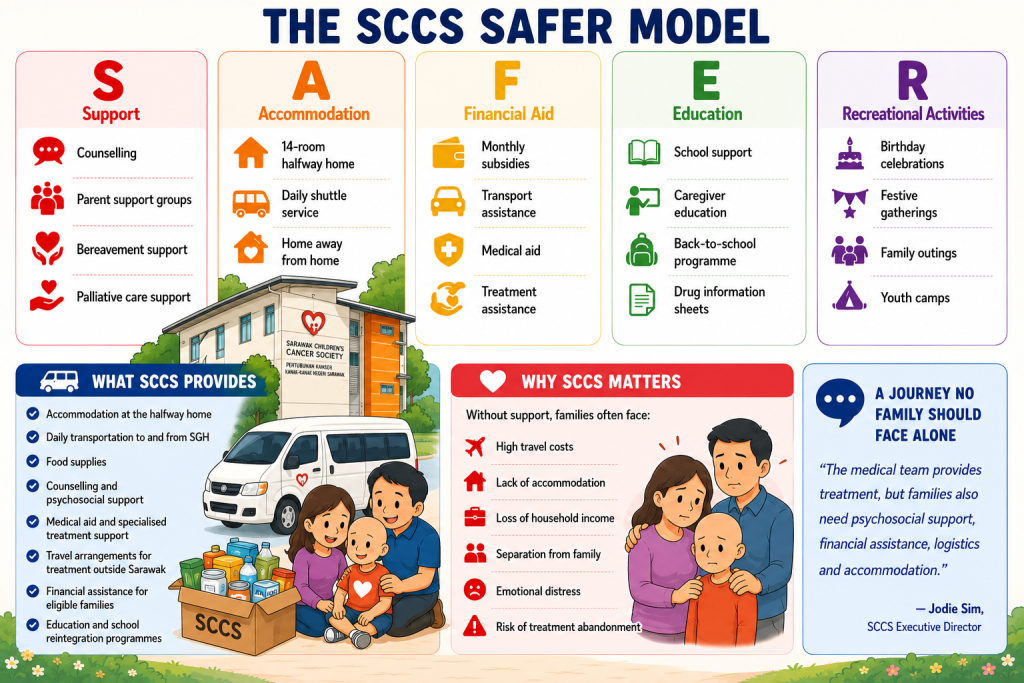
SCCS now operates under its SAFER model — Support, Accommodation, Financial aid, Education, and Recreational activities.
Support services include counselling, palliative home visits, bereavement care, and post-bereavement support.
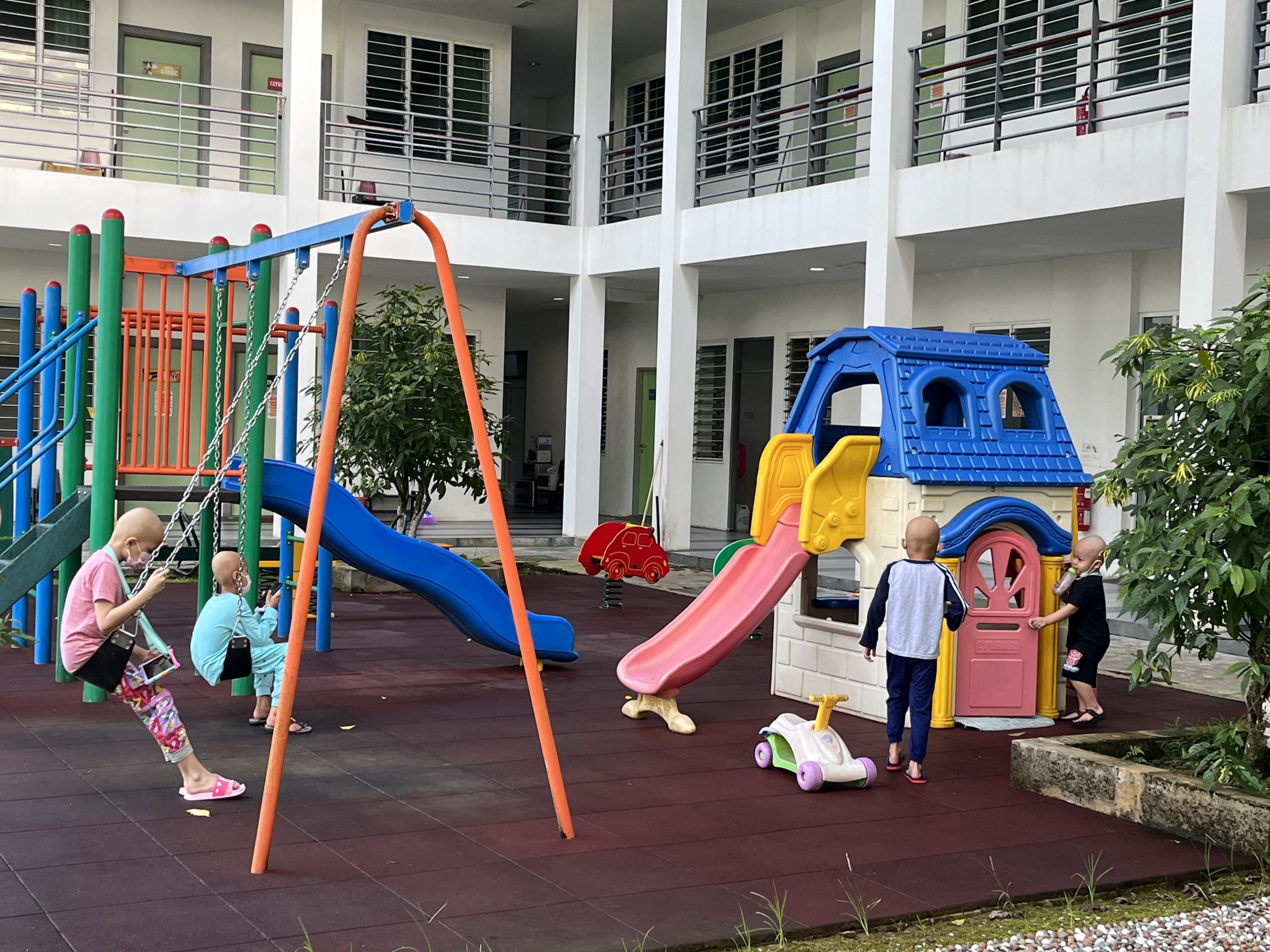
Accommodation is provided through the SCCS halfway home, which houses 14 rooms for outstation families, along with daily shuttle services to the hospital.
Sim said education remains a priority, even during treatment.
“There is a ‘Sekolah Dalam Hospital’ at SGH. Children staying at the halfway home can attend classes between treatments, usually for half a day,” she said.
Financial aid includes monthly subsidies, transportation assistance, and medical support.
Eligible families may receive RM450 per month while staying in Kuching.
Sim said medical aid remains one of SCCS’s largest commitments, covering specialised drugs, immunotherapy, surgeries, and treatments not readily available through public healthcare.
“Last year, the highest amount we spent on one child was RM590,000 for immunotherapy. It is the first in SCCS’s history,” she said.
In 2025 alone, SCCS spent approximately RM2 million on medical aid — the highest in its 25-year history.
Sim said they are aiming to raise RM5 million this year to sustain its services and prepare for high-cost cases.
“That is why fundraising is continuous. When a child needs treatment, we cannot afford to wait months to raise funds,” she said.
Education, dignity, and returning to normalcy
In 2024, Sim said SCCS introduced caregiver and patient education programmes using toys, tools, and role-play to help children understand their treatment.
This includes explanations of chemotherapy, central lines, and nutrition, among others.
“We are also developing a back-to-school initiative to support children returning to school after treatment. Teachers are often unsure how to manage these children.
“Some may unintentionally exclude them, especially from physical activities, out of fear. We provide resources to help both teachers and students navigate this transition,” she said.
SCCS also conducts public awareness talks and produces informational materials.
“We are currently working on drug fact sheets in local languages to improve understanding among families,” she said.
Recreational support remains equally vital, with SCCS hosting birthdays, festive celebrations, outings, and annual youth camps for survivors.
Hope beyond survival
Both Dr Ong and Sim acknowledged the emotional weight of childhood cancer.
For Dr Ong, the most difficult moments are when patients are lost.
“It is never easy,” she said. For Sim, grief is part of the work but also part of a conscious choice.
“There was a moment when I realised I had a choice. I could leave, but the families could not.
“So, I asked myself whether I was willing to carry this — the grief and the sadness. It is a price I am willing to pay,” she said.
For her, hope is not limited to survival. “Even when a child does not survive, hope does not disappear. It lies in how families continue to move forward.
“Some bereaved parents become volunteers or committee members, and that is incredibly inspiring,” she said.
From community effort to a model for Malaysia
Sim emphasised that SCCS’s growth has been driven by strong community support.
She described it as a collective effort — with land provided by the government and the halfway home made possible through donations, sponsorships, and professional contributions.
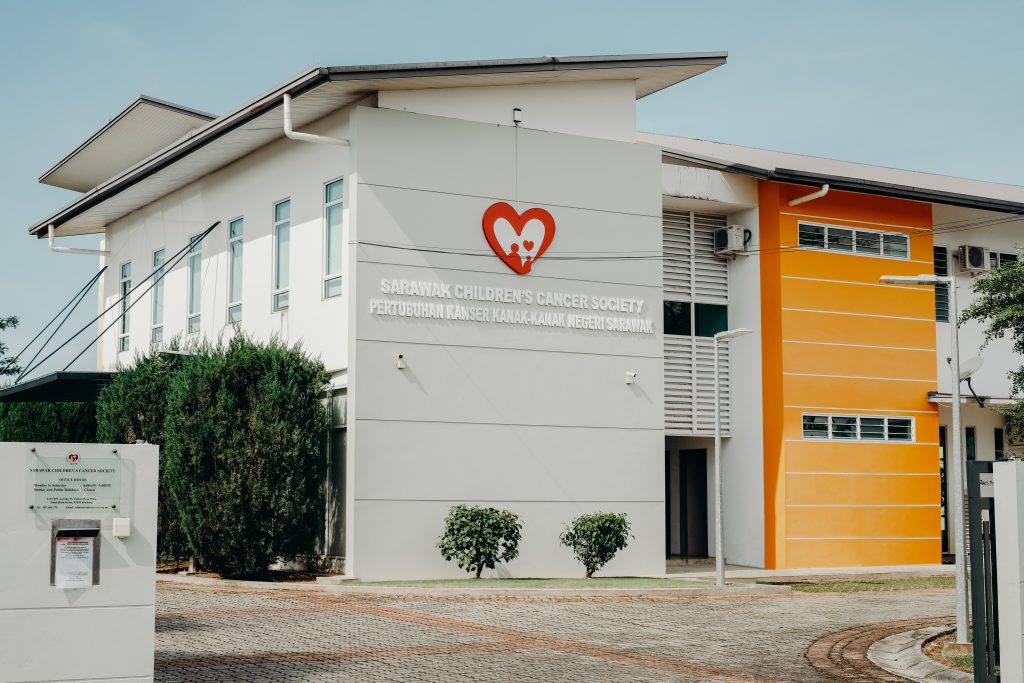
“The SCCS building is a testament to what a community can achieve,” she said.
At the same time, Sim highlighted the need for stronger policies to ensure no child is left behind.
This includes improving access to treatment, addressing survivorship needs, and tackling issues such as insurance.
She pointed to the “right to be forgotten” in parts of Europe, where cancer survivors are no longer penalised when applying for insurance after a certain period.
“These are the kinds of policies that show it is time for us to improve,” she said.
With SCCS set to mark its 25th anniversary, Dr Ong believes this model can be replicated elsewhere.
“A successful model already exists, but replication requires long-term commitment,” she said.
On that note, Sim said this vision is starting to take shape through Childhood Cancer Malaysia (CCM), a national coalition comprising seven support groups.
While SCCS’s direct services remain in Sarawak, she said they are committed to sharing its expertise, SOPs, and resources nationwide.
“We want every child in Malaysia to have access to the same level of support. Every state is different, but that does not stop us from sharing what we have learned,” she said.
Looking ahead, Sim said the focus is shifting towards survivorship.
“We are seeing more children survive, but they face long-term challenges — cognitive effects, secondary cancers, and difficulties returning to normal life. Supporting this growing group will be key in the next phase of our journey,” she said.
Not alone in the journey
Reflecting on SCCS’s journey, Dr Ong stressed that the organisation was never built by one individual, but by a collective of parents, volunteers, and the wider community.
Her hope is that its impact will continue to grow, ensuring no family faces childhood cancer alone.
“Every child deserves not just treatment, but support throughout the journey,” she said.
Sim echoed this, describing SCCS as a vital complement to medical care.
“The medical team provides treatment, but families also need psychosocial support, financial assistance, logistics, and accommodation. We cannot allow an entire family to come to a standstill because of one situation,” she said.
At its core, Sim said SCCS remains what it was always meant to be — a support system built by families, strengthened by the community, and driven by the belief that no one should face childhood cancer alone.
“We are here to support each family throughout their journey and to make sure they are not alone,” she said.
● In Part Three of this special report, Sarawak Tribune takes a closer look at the emotional journey experienced by children diagnosed with cancer and their families.