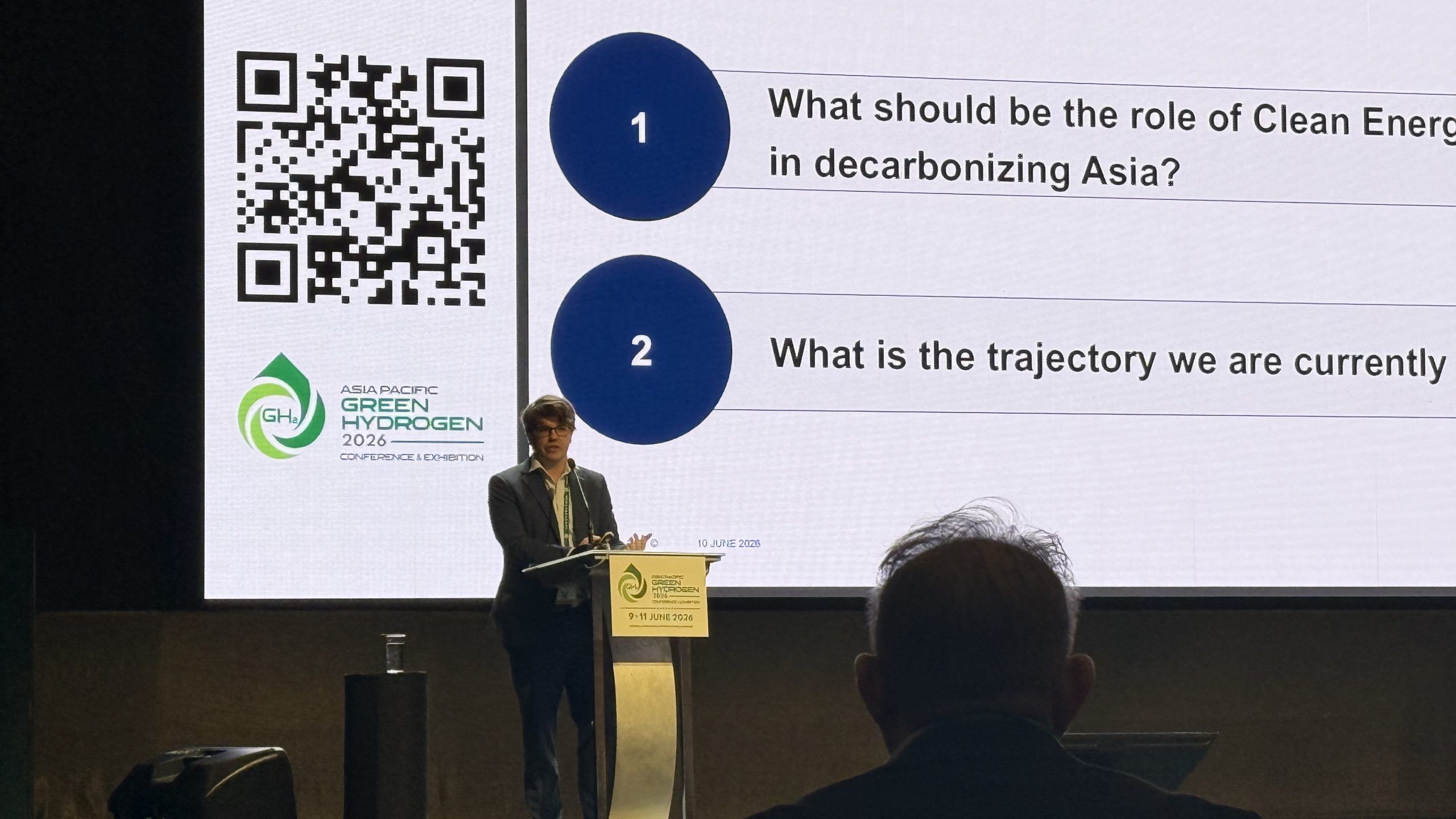
KUCHING: Strong government intervention is needed to overcome barriers that continue to slow the growth of the hydrogen sector, particularly in infrastructure development and investment.
DNV’s Head of Energy Markets and Strategy APAC, Mats de Ronde, said governments across the Asia-Pacific region will play a critical role in accelerating the hydrogen economy by coordinating demand, fostering international partnerships and developing shared infrastructure hubs.
“We definitely expect governments to play an important role in, for example, aggregating demand, forming partnerships with other countries, and develop hub bases that really share the burden of this infrastructure,” he said during the plenary session on “The Role of Clean Energy Commodities in Decarbonising Asia Pacific” at the Asia Pacific Green Hydrogen (APGH) Conference and Exhibition 2026 here Wednesday.
Mats said hydrogen development requires extensive supporting infrastructure, making coordinated planning essential to avoid unnecessary duplication of facilities and costs.
Rather than having individual projects build separate terminals and shipping networks, he said countries should focus on developing shared infrastructure hubs that can be utilised by multiple projects.
“You really want to develop hubs that can create synergies and lower the overall costs for each of the projects involved,” he said.
According to him, a more strategic and coordinated approach to infrastructure development would significantly improve the commercial viability of hydrogen projects throughout the region.
Mats said that while Asia-Pacific is expected to outperform global hydrogen demand growth, the region’s transition towards green hydrogen is progressing too slowly to meet global decarbonisation targets.
He said hydrogen demand in the region is projected to triple by 2060, with green hydrogen expected to become the dominant production pathway over time.
However, the pace of growth remains constrained by the lack of mature regulatory and legal frameworks, which are still in the early stages of development in many countries.
To address these challenges, he outlined several policy recommendations, beginning with measures to close the cost gap between clean hydrogen and conventional energy sources.
He said governments could adopt different approaches depending on national circumstances, including subsidies, carbon taxes, sustainable fuel mandates and low-carbon procurement policies to stimulate both supply and demand.
Mats also highlighted access to financing as a major challenge.
He said private investors remain cautious due to low project margins and market uncertainty, while governments often face funding limitations and technical capacity constraints.
As a result, he suggested the expansion of funding mechanisms such as blended finance and green financing initiatives to support early-stage hydrogen projects.
Another priority, he said, is the harmonisation of technical and environmental standards across countries.
Currently, differing definitions and classifications of clean hydrogen create uncertainty for project developers and potential buyers.
“The harmonisation of all these standards will really help unburden them, provide more clarity and ideally give them access to a broader market,” he said.
He added that common standards would improve market confidence and make it easier for producers to secure buyers across different countries.
On the future of hydrogen production, Mats said blue hydrogen could serve as a practical transitional solution in the near term due to existing cost challenges.
However, he expects green hydrogen to become the dominant form of hydrogen production globally as renewable energy costs continue to decline.
“We do expect a re-emergence of blue hydrogen as a viable, intermediate, temporary solution. But longer term, we expect that green hydrogen will become the dominant pathway,” he said.
Mats also urged policymakers and industry players to adopt a realistic approach to project development, noting that only about 20 per cent of hydrogen projects announced worldwide ultimately reach implementation.
Instead of focusing solely on ambitious targets, he said stakeholders should learn from successful projects and apply those lessons to improve future project outcomes.