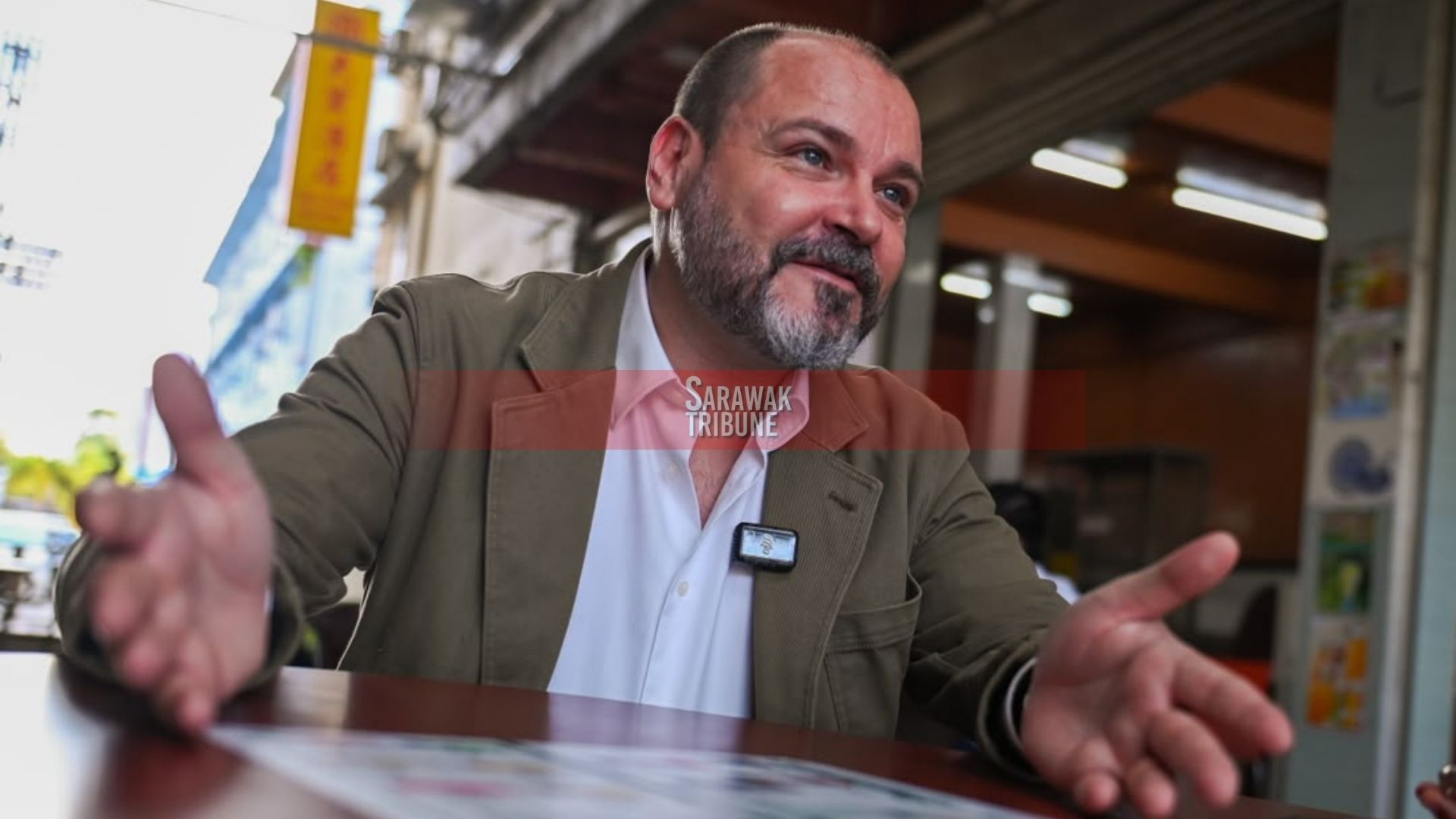
A FRIENDSHIP which began two decades ago has now formed a bridge between Sarawak and Barcelona.
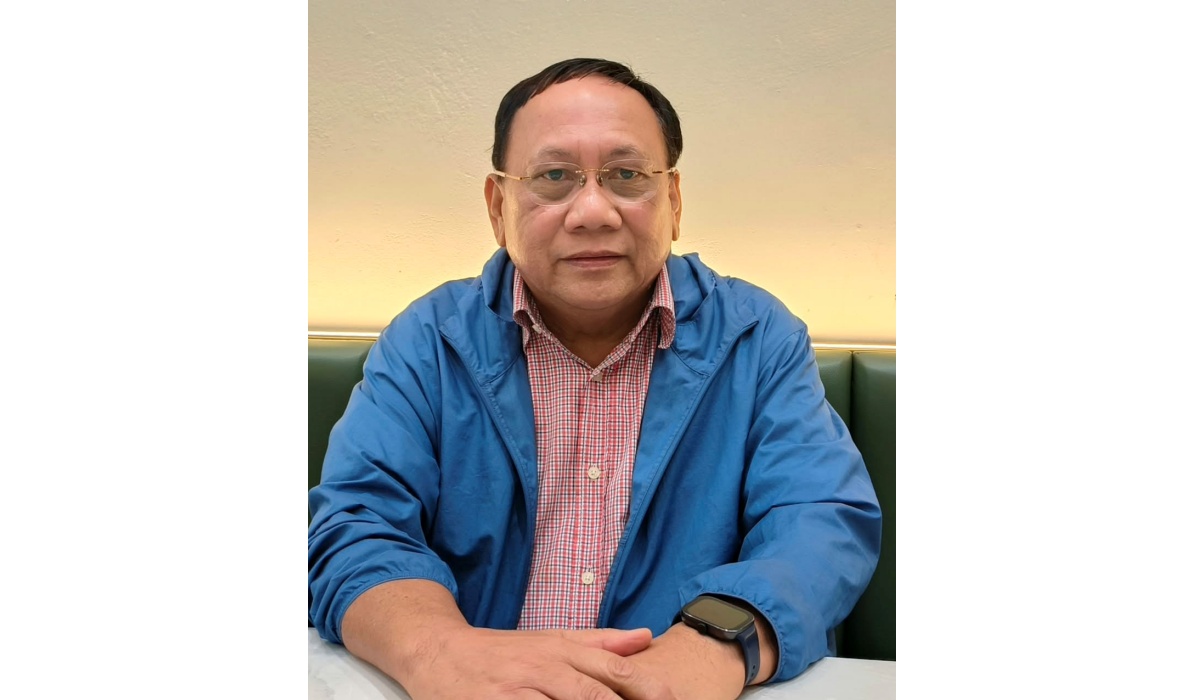
BCN Smart Technologies Sdn Bhd founder and managing director Jordi Pol first visited Sarawak about 20 years ago, a trip that marked the start of his long connection with the state.
Over time, that connection deepened through return visits, personal ties and a growing interest in Sarawak’s place in the region.
You first came to Sarawak about 20 years ago. What has kept you connected to the state?
I went to Miri for the first time because one of my best friends is from Miri. We went to Lambir Hills National Park.
My first friends in Malaysia were Sarawakians. I have friends from the Kelabit community, from Bario and from Miri, and they became my best friends.
Today, 20 years later, this group of friends has grown. Some of them are working for the government and some are leaders in sustainability. Now, we are working together.
What changes have stood out to you most over the past two decades?
What I have seen in these 20 years is an influx of Sarawakians who have been trained around the world and are coming back. They are now playing important roles here.
That is something I like very much about Sarawak. The ambition and energy of Sarawak’s young generation is truly inspiring to witness.
And of course, the infrastructure has grown tremendously. But more importantly, what stands out to me is the shift in leadership and the renewed sense of ambition that has been set in motion. That, to me, is truly remarkable and deeply inspiring.
The fact that Sarawak is going to the world and portraying the future of Southeast Asia is extraordinary.
You said Sarawak has the past, present and future. What did you mean by that?
I am very impressed by Sarawak because it feels like a place where the past, present, and future all exist together in one space. You can experience rich heritage and tradition, while at the same time engaging in conversations about today’s global challenges and issues.
At the same time, Sarawak is becoming increasingly important in the global energy landscape, especially in a time of energy transition, where it plays a key role as an energy supplier. This makes Sarawak highly relevant in today’s world.
And when you speak with its leaders, you can clearly see a forward-looking vision for the future. It is rare to find a place where history, current relevance, and future ambition are so deeply connected all at once.
How do you view Sarawak’s current leadership and its relationship with Europe?
I think the ambition of Sarawak is extraordinary. This leadership, which is very much focused on sustainability, is very much in line with the values of Europe.
That is why I can see a very strong friendship between Europe and Sarawak. In 2024, we created Europe Day here in Sarawak, and we brought companies and ambassadors here.
I think Sarawak is, for Europe, a very important platform. That is why I am also working to strengthen the relationship between Sarawak and Spain.
I do believe that Barcelona could be a good partner to Kuching. I am also putting forward the idea of creating Barcelona-Kuching sister cities because I can see that the ambition of Sarawak, Catalonia, Barcelona and Kuching is very much in line.
What can Sarawak offer Spain and Europe, and what more can be done to build that bridge?
We see Sarawak as a place of real promise, and one that we deeply respect. There is a strong opportunity for Sarawak to become a long-term bridge between Southeast Asia and Europe, including Spain.
Today, awareness of Southeast Asia in parts of Europe is still limited, and even within that, Malaysia is not yet fully understood. People may recognise Borneo, but Sarawak itself is still relatively unknown. That is why initiatives like the Sarawak government’s regular engagement in Barcelona are so important—they help open doors and build understanding.
From our perspective, Sarawak represents a place of transformation and opportunity. This is also personal for me, as I have had the privilege of serving as one of the
founding members of the Spanish Chamber of Commerce in Malaysia, where I was Chairman for nine years and now continue as an adviser.
To strengthen this relationship, we need strong organisations and platforms that can actively build this bridge between regions. But beyond institutions, what is most important is awareness—bringing Sarawak to Spain and Europe, and in the same way, bringing Spain and Europe closer to Sarawak.
Above all, what stands out most about Sarawak is its people. That human connection is its greatest strength, and it is what we should be sharing more widely. In doing so, we create not just awareness, but a genuine two-way understanding between Sarawak, Spain, and Catalonia.
What should Sarawakians know about Spain?
There are many reasons to go to Spain. If you like technology, go to Mobile World Congress. If you like football, go and watch football. If you like the beach, go and sail in Spain.
I also feel that Sarawak and Spain are deeply connected in spirit. Both are rooted in a strong sense of humanity, and I see that same warmth, openness, and human-centred way of thinking reflected in Sarawakians as well.
It is this shared humanistic value that makes the connection between Sarawak and Spain feels so natural and meaningful.
How would you explain a smart city, and why does it matter for Sarawak?
A smart city is a concept where we put together technology, people and administration on common ground to improve the management of infrastructure.
It is about monitoring utilities using technology, for example, Internet of Things devices that can tell us about the distribution of utilities and maintenance.
It goes from utilities management to traffic management and weather management. All this can be centralised and help the administration run the city. The advantage is efficiency. Efficiency means reducing costs but also easing people’s lives. I think that is very important.
There are projects under discussion, not only in urban areas but also in rural areas. We are working with different administrations to see how we could set up and run the system. DBKU is working on a project for smart cities, and we have been in talks with them.
Why is Barcelona an important reference point, and why does Sarawak’s presence at Mobile World Congress matter?
Barcelona is a reference city worldwide for smart cities.
Barcelona was designed a long time ago by a very famous urbanist, Ildefons Cerdà. He designed the city like a grid, and every block was a combination of housing and parks to put people together.
The city has evolved, but because of this grid, Barcelona is a lot easier to manage.
Today, the deployment of technology is very high. Barcelona was one of the first cities to put in 5G and many Internet of Things devices to run and automate systems.
Barcelona today is one of the top cities in the world when it comes to technology, thanks to these events and the leadership that brings people from around the world to discuss these issues in the city.
Sarawak has been going every year to the Mobile World Congress since 2023. It has been led by the Ministry of Utility and Telecommunication, and now many other agencies are going.
This year, Sarawak truly demonstrated its strength and ambition through an outstanding pavilion, bringing together nine state agencies across different ministries. What stood out was not just the scale, but the clarity of vision—spanning Artificial Intelligence, the Digital Economy, Investment, Renewable Energy, Digital Government, Research and Development, and Smart Cities.
It reflects a state that is not only ready for the future, but actively shaping it— purposefully positioning itself to attract meaningful investment and global partnerships.
One of the projects discussed is AI healthcare. How could it support rural communities in Sarawak?
One of the projects we are discussing is providing healthcare support using AI. The idea is to develop an AI agent that could understand Iban and other languages in different districts of Sarawak.
In remote rural areas, normally there is limited access to a nurse or doctor. The idea is that people could provide healthcare support to patients using smartphones.
The system can start the screening process and send the information to the closest hospital or Klinik Kesihatan. Then the hospital can start preparing everything to support that particular patient.
I am not a specialist in the regulatory space, but my understanding is that AI should be viewed primarily as an enabling tool, rather than a replacement for human decision-making or responsibility.
In practical terms, AI can help improve efficiency, speed up processes, and reduce human error. However, it should be applied in a way that supports and augments existing systems, rather than being seen as something that operates independently of them.
In relation to the project, we are currently working closely with the Sarawak AI Centre to establish and implement pilot initiatives. The implementation phase can progress relatively quickly, and we are optimistic that we could begin seeing initial outcomes by the end of the year.
From a technical standpoint, testing can be carried out in a controlled environment. However, the extent to which these solutions can be deployed and used at scale will ultimately depend on the regulatory framework and approval processes in place.
Aside from smart cities and AI, your company is also looking at energy projects in Sarawak. How could hydrogen help off-grid rural communities?
We have a technology consulting firm and a system integrator, and we are currently working on several projects in Sarawak.
The projects are focused on three main areas: energy, digital transformation and innovation centres.
In the energy space, one of the projects we are exploring is rural electrification using hydrogen technology, and we are working closely with the Ministry of Utility and Telecommunication.
For us, electrification is not only about bringing power — it is about bringing opportunities.
When electricity reaches a community, it creates possibilities for education, connectivity, healthcare and everyday life.
Spanish funding is being considered to support a feasibility study to identify a suitable location where our system could be introduced. The technology produces hydrogen using methanol feedstock.
It works in a similar way to a generator set. But instead of relying on diesel, it uses methanol — and Sarawak already has strengths as a producer of methanol.
The technology itself has already been tested. Now, the question is how to adapt and apply it in a way that creates meaningful value for Sarawak’s communities.
The project focuses on bringing electricity to an off-grid rural area using hydrogen, while also exploring how the same ecosystem could support future hydrogen mobility pplications.
Now, discussions are ongoing between the Spanish and Sarawak governments, and the Spanish side has already approved support for the project.
The conversations so far have been very encouraging, and the next steps will go through the relevant internal processes.
Of course, implementation will come with challenges. The system is housed within a 20-foot container, and transporting and deploying it in remote locations will require planning and coordination.
But ultimately, what we hope to bring is not only an energy solution. We hope to contribute to a future where geography does not limit opportunity — where communities, no matter how far they are, can access the same possibilities as everyone else.
And if there is one place in the world showing ambition to lead in this journey towards new energy solutions, I believe Sarawak is one of them.
You also mentioned football as an area Sarawak and Barcelona can explore. What can Sarawak learn from Barcelona’s system?
I think football is something that we can explore. Football puts people together. Sports also play a very important role.
It is the system that both Madrid and Barcelona, and many other clubs in Spain, have set up through their own academies.
Bringing the academies to this part of the world will certainly help develop football in Sarawak.
The key to FC Barcelona is the academy, La Masia. It is a combination of foreign players and local players.
When there is a good player, they bring him in at the young age of 14 and put him in the school.
They play football every day, and the academy nurtures these players. They need more Sarawakian players. Sarawakian players come from everywhere, not only Kuching.
To improve skills, the answer is setting up schools.
La Masia is a school, and they have very good coaches. We could bring coaches here to help, but not only coaches for the team. They should be coaches for the football schools.
In those schools, you teach football. You teach the values of competition. You teach humanistic values.
After two decades of knowing Sarawak, what keeps you coming back?
I love Sarawak very much. What I like about Sarawak is that it is diverse, inclusive and respectful. This makes Sarawak very strong.