“Never let your sense of morals prevent you from doing what is right.”
– Isaac Asimov, American writer
EVERY election season seems to produce miracles. Roads that were ignored suddenly attract attention; service centres become active; community functions receive unexpected visits; handshakes become more frequent; and smiles become broader.
And if I may say, phone calls that once disappeared into a political black hole are suddenly answered within minutes.
Yet, as rumours of a state election or general election gather momentum, a remarkable awakening occurs. Villages, longhouses, markets and coffee shops receive unexpected visits. Social media accounts become unusually active. It is almost as though some invisible alarm clock has sounded across the political landscape, signalling that it is once again time to reconnect with the people.
To be fair, this observation does not apply to every elected representative. I should say there are many MPs and assemblymen who understand that public office is a trust and not a privilege. They continue serving diligently regardless of whether an election is near or otherwise. Their doors remain open, their phones remain active, and their commitment to their constituents does not fluctuate according to the electoral calendar.
However, there is also a minority whose political activity appears to follow a distinct seasonal pattern. During the years immediately after an election, they become increasingly difficult to reach. As the next election approaches, however, their energy levels rise dramatically and their visibility increases correspondingly.
It is a transformation so striking that one could be forgiven for comparing it to polar bears emerging from a long winter hibernation. For months or even up to a year, they may have remained hidden from public view, but once the ‘sweet scent’ of an election fills the air, they suddenly reappear with renewed vigour and an apparent rediscovery of their affection for the people.
Yeap, they are suddenly deeply in love with us again!
Over the years, I have listened to countless stories from ordinary citizens who simply wished to meet their elected representatives to discuss problems. These were not unreasonable requests. Some wanted assistance with welfare matters, others sought clarification on development projects, while many simply hoped to bring local concerns to the attention of those entrusted to represent them.
Yet the responses they received were often depressingly familiar. YB is busy; YB is travelling; YB is attending a meeting; YB is unavailable; or YB is on leave. After hearing these explanations repeatedly, one begins to wonder whether some elected representatives spend their entire lives in meetings.
If every excuse offered by certain personal assistants were taken at face value, it would appear that these YBs move seamlessly from one meeting to another 24 hours a day without ever finding a spare moment to meet the very people who placed them in office. Such dedication to meetings would undoubtedly deserve recognition, although perhaps not the kind of recognition they might prefer.
One incident that was related to me recently perfectly sums up the problem. A group of constituents had gathered at a service centre hoping to meet their elected representative on matters affecting their community. They were politely informed that YB was not in the office and would therefore be unable to see them.
Most accepted the explanation and prepared to leave. What they did not know was that YB was, in fact, upstairs in the very same building. He was not engaged in a crucial policy discussion, negotiating a major development project, or attending an urgent government briefing. He was reportedly listening to BBC coverage of the US-Israel-Iran conflict.
There is, of course, absolutely nothing wrong with keeping abreast of world affairs. Every leader should be informed about global developments. However, it becomes rather difficult to justify telling voters, including me, that their elected representative is unavailable when he is physically present just a few metres away. Apparently, the people who elected him were considered less important than whatever was being discussed on the radio.
Too often, some politicians appear to forget that elections do not elevate them above the people. On the contrary, elections place them in the service of the people. The voters are not indebted to politicians for contesting elections. Politicians are indebted to voters for entrusting them with public office.
Every salary, allowance, office, vehicle and support staff provided to an elected representative is funded directly or indirectly by taxpayers. In the simplest possible terms, the people are the employers, and elected representatives are their employees. This reality may sound uncomfortable to some, but it lies at the very heart of representative democracy.
Those entrusted with public office should never lose sight of the fact that they occupy their positions because citizens placed them there and that they remain accountable to those same citizens throughout their term, not merely during election campaigns.
This brings us to the title so many politicians proudly carry before their names: Yang Berhormat or YB. Unfortunately, some individuals appear to view the title as a reward rather than a responsibility. They treat it as a symbol of status rather than a reminder of duty.
Still, respect cannot be conferred permanently through a title. Respect must be earned continuously through conduct. The title itself does not make a person honourable. Rather, a person becomes honourable through the manner in which he or she serves the people.
Constituents do not measure respect by how many banners display a politician’s photograph or how often speeches are delivered from a stage. They measure respect through accessibility, sincerity, humility and service. A politician who cannot be found when people need help but suddenly becomes highly visible during election season should not be surprised if voters eventually begin questioning whether the honour attached to the title is truly deserved.
More importantly, public service requires integrity, and integrity remains the most valuable political asset any elected representative can possess. Political influence may rise and fall, and popularity may fluctuate. Election victories may come and go; however, trust remains the foundation upon which every successful political career is built.
Elected representatives must constantly remind themselves that politics is not a five-year performance culminating in an election campaign. It is a daily commitment to serve, listen, engage and respond to the concerns of ordinary citizens.
As another election cycle gradually approaches, voters would do well to look beyond the sudden increase in activity that invariably accompanies campaign season. The true measure of a YB should not be based on the final few months before polling day but on the entire record of service accumulated over the preceding years.
Constituents should ask themselves simple questions. Was this person present when assistance was needed? Did this person listen to the people after winning office or only before it? These questions matter because elections are ultimately exercises in accountability. Campaign speeches may influence emotions, but performance influences judgement.
That is why every YB should remember a simple but powerful principle: YBs should be honest when challenged, be fair in service, be present when needed, and be committed to serving at all times, not only during election time. Those words capture the essence of democratic leadership far more effectively than any slogan or campaign promise ever could.
The title YB is not a privilege; it is a responsibility. Respect comes not from being addressed as YB but from serving in a manner worthy of that title. And as election season approaches once again, politicians should remember that while they may occasionally forget the people between elections, the people rarely forget them. I, for one, don’t.
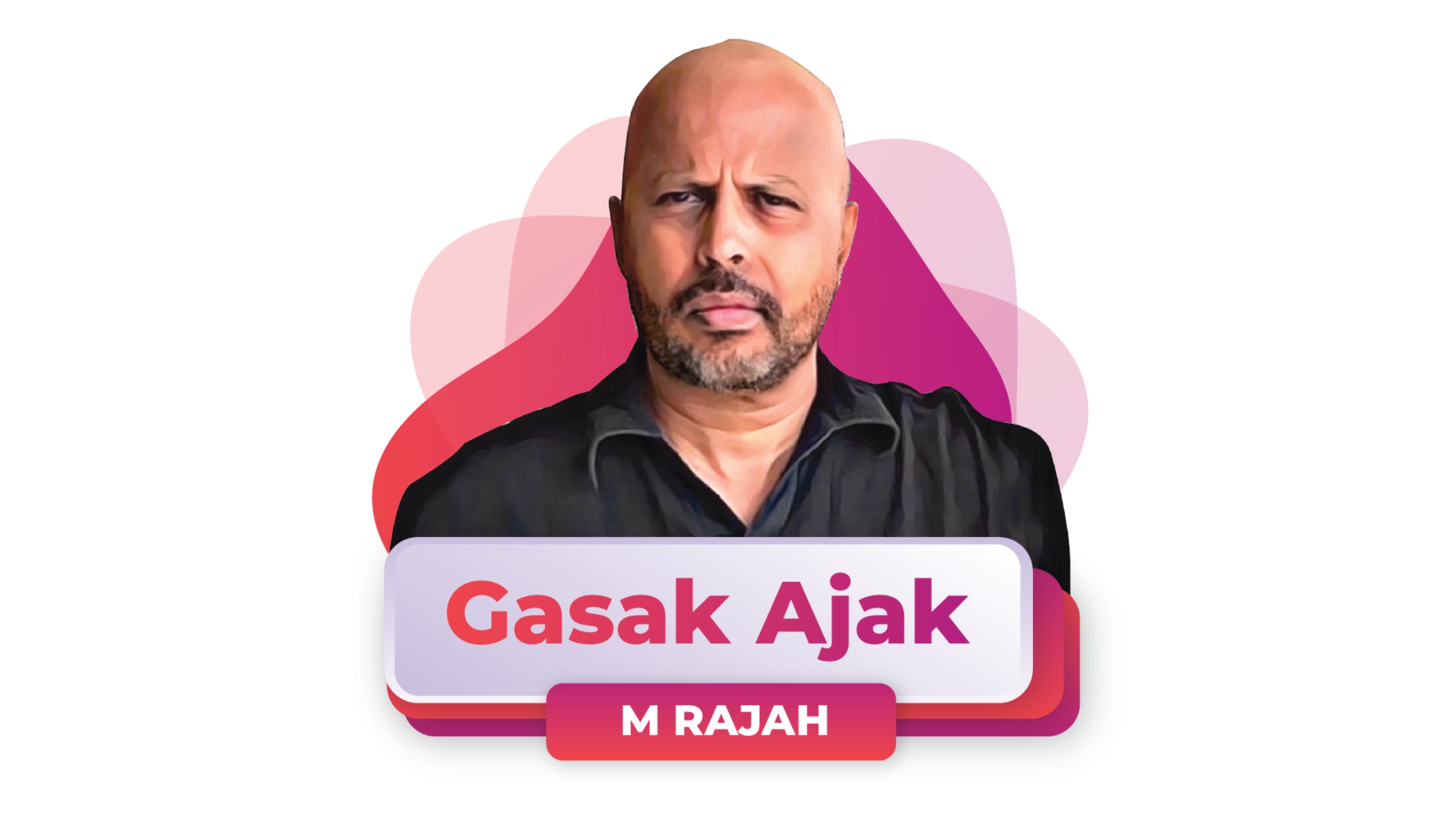
The views expressed here are those of the columnist and do not necessarily represent the views of Sarawak Tribune. The writer can be reached at rajlira@gmail.com