THERE are some training sessions where you walk away remembering the slides, the notes and the techniques that were taught.
Then there are those rare occasions when what stays with you long after the programme ends are the conversations, the stories shared over coffee breaks and the unexpected connections that remind you why journalism is such a unique profession.
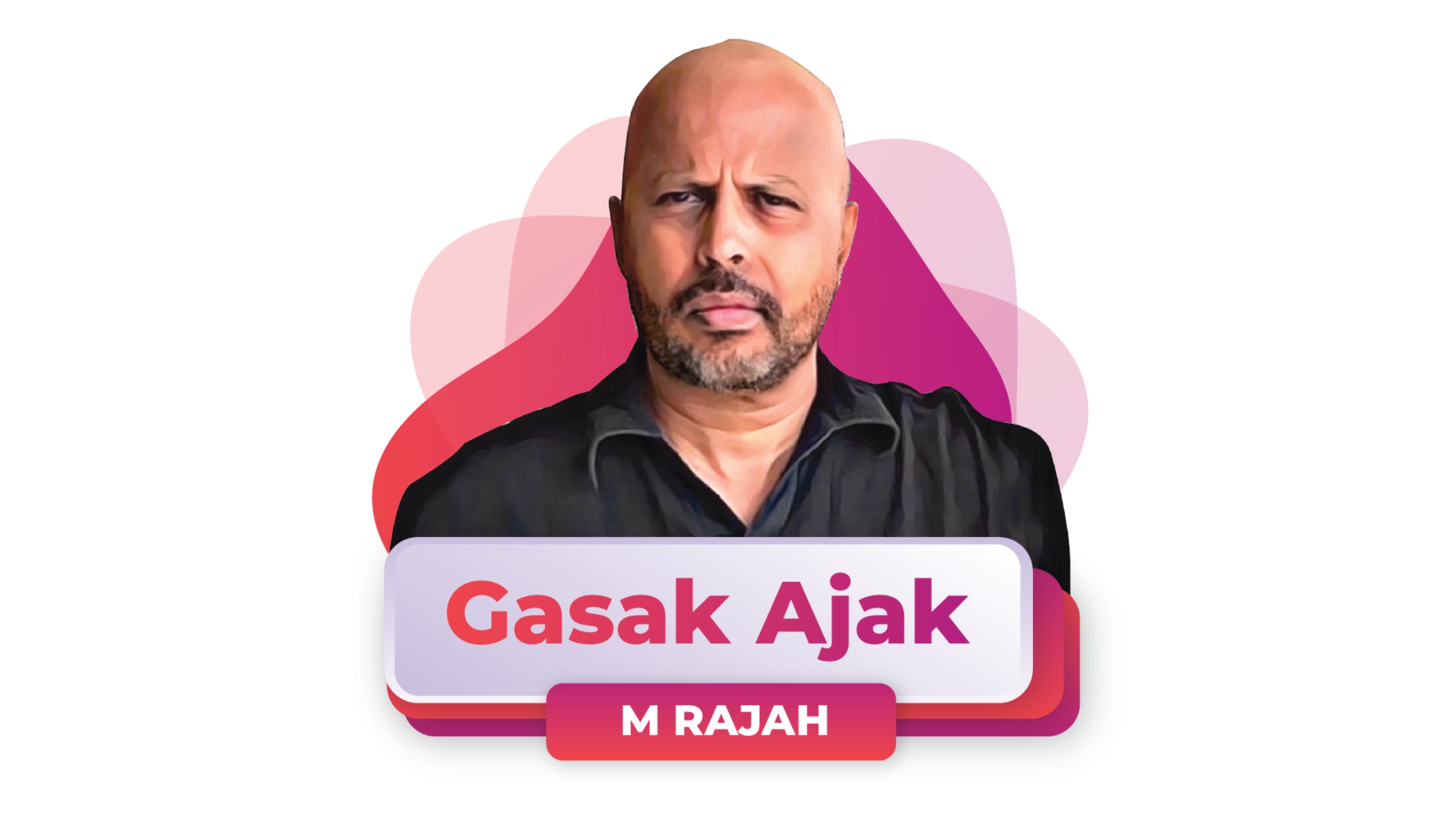
That was exactly how I felt after attending the Community Content Production course organised by the Malaysian Press Institute (MPI) in collaboration with Sarawak Tribune under the Media Innovation Fund, where our trainer was TV3 multimedia journalist and TV9 news presenter Mas Zharif Zhafri Aziz Desa.
Like many journalists, I walked into the training expecting to pick up a few new storytelling techniques and perhaps some practical ideas to improve audience engagement, but I left with something much more valuable — a renewed appreciation for the many different ways journalism can be practised and the different paths that eventually lead us into the same profession.
One of the first things that struck me was just how different life appears to be for journalists in West Malaysia compared to those of us working in Sarawak.
Listening to Mas Zharif recount his assignments almost felt like watching an action film unfold.
One moment he would be describing rushing from one breaking news scene to another, the next he was talking about going live on television, navigating unpredictable situations, chasing developments that changed by the minute and racing against deadlines where every second mattered.
There was an energy in his stories that reminded me just how demanding journalism can be in larger metropolitan newsrooms, where competition is fierce, news cycles move at lightning speed and reporters often have little time to pause before moving on to the next assignment.
As I sat there listening, I could not help but smile because journalism in Sarawak carries a rather different rhythm.
That is certainly not to say our work is easier, nor that one environment is better than the other, but our stories are often shaped by different priorities.
Instead of spending every day chasing the latest breaking crime or political drama, many of us find ourselves travelling hundreds of kilometres to rural communities, documenting development projects, listening to villagers share their hopes and concerns, highlighting local entrepreneurs, preserving indigenous culture and telling the stories of ordinary Sarawakians whose voices may otherwise go unheard.
Our pace may appear calmer from the outside, but the stories we tell often require patience, trust and time to unfold.
Perhaps that is why one of the biggest lessons I took away from the training had very little to do with cameras, editing software or social media algorithms.
Instead, Mas Zharif reminded us that every story can be approached from multiple angles, and that the difference between an ordinary report and one that truly resonates often lies in finding the human story hidden beneath the obvious headline.
Rather than simply reporting what happened, he encouraged us to ask who was affected, whose life changed because of it and why readers should care.
It sounds like a simple shift in perspective, but it is one that has the power to completely transform the way we approach journalism.
For someone like me, who has increasingly found myself drawn towards long-form features and human-interest reporting over the past year, his advice felt especially relevant.
Some of the stories that have stayed with me the longest were never the biggest headlines of the day.
They were conversations with parents caring for children with cancer, firefighters carrying emotional scars that few people ever see, or individuals quietly making a difference within their own communities without expecting recognition.
Those are the stories that remind me journalism is not merely about delivering information.
It is about helping people understand one another.
Interestingly, one of the conversations that stayed with me the most throughout the day had nothing to do with storytelling techniques at all.
Mas Zharif is often known as the eldest son of legendary TV3 and TV9 host and producer the late Aziz Desa.
During our conversation, I jokingly asked him a question that I suspect many people have wondered but never actually dared to ask — why is your name so long?
He explained that it was a tribute to his late father.
It was a simple explanation, but one that spoke volumes about the quiet ways we honour the people who shaped us.
His story immediately reminded me of my own, although mine comes with a much funnier twist.
Like Mas Zharif, journalism also runs in my family.
Both of my parents began their careers as journalists before eventually pursuing different career paths.
Although they no longer work in the media industry, journalism has always been part of my upbringing.
Even today, it is not uncommon for people to look at my byline and immediately ask, “You’re Edwin Chandra’s daughter, aren’t you?”
Somehow, the Chandra name continues to open conversations long before I even introduce myself.
However, the story behind my own byline was never planned.
When I first joined the newsroom as an intern, I submitted my articles simply under the name “Sarah Hafizah” and that was the name I expected readers to know me by.
Somewhere along the way, my editor decided to add “Chandra” to the end of my byline.
One day it simply appeared beneath my story, and from that moment onwards every article I wrote carried the name Sarah Hafizah Chandra.
Like many things that happen in a newsroom, everyone simply accepted it, and before long, so did I.
Over the years, that small editorial decision has somehow taken on a life of its own.
I have received countless invitation letters, certificates and official correspondence addressed to “Sarah Hafizah Chandra”, with many people genuinely believing that Chandra is my legal surname.
I have long since stopped correcting people because, in many ways, it has become part of my professional identity, even if it was never part of my birth certificate.
Looking back now, I cannot help but laugh at how something as simple as a byline evolved into the name by which so many people know me today.
Listening to Mas Zharif speak about carrying his father’s legacy through his name made me realise that every journalist’s byline carries a story that readers will probably never know.
For some, it represents a family legacy.
For others, it is the result of an editor’s spontaneous decision that somehow stuck.
Whatever the story may be, those names become more than just words printed beneath an article.
They become part of who we are.
I would like to extend my sincere appreciation to Mas Zharif for spending the day with us and for reminding us that good journalism is not defined by how dramatic an assignment may appear, but by how willing we are to look beyond the obvious and discover the stories that truly matter.
His experiences offered us a glimpse into the fast-paced world of journalism in West Malaysia, while his approach to storytelling challenged us to think differently about the communities we serve here in Sarawak.
At the end of the day, journalism may look very different depending on where we work.
Some reporters spend their days weaving through traffic to make it to a live broadcast, while others travel by four-wheel drive or longboat to reach remote villages.
Some chase breaking news that changes by the minute, while others spend weeks building trust with families before telling deeply personal stories.
Yet despite those differences, every journalist begins exactly the same way — with curiosity, a notebook, and a byline that, if you look closely enough, almost always has a story of its own.
The views expressed here are those of the writer and do not necessarily represent the views of Sarawak Tribune. The writer can be reached at sarahhafizahchandra@gmail.com.