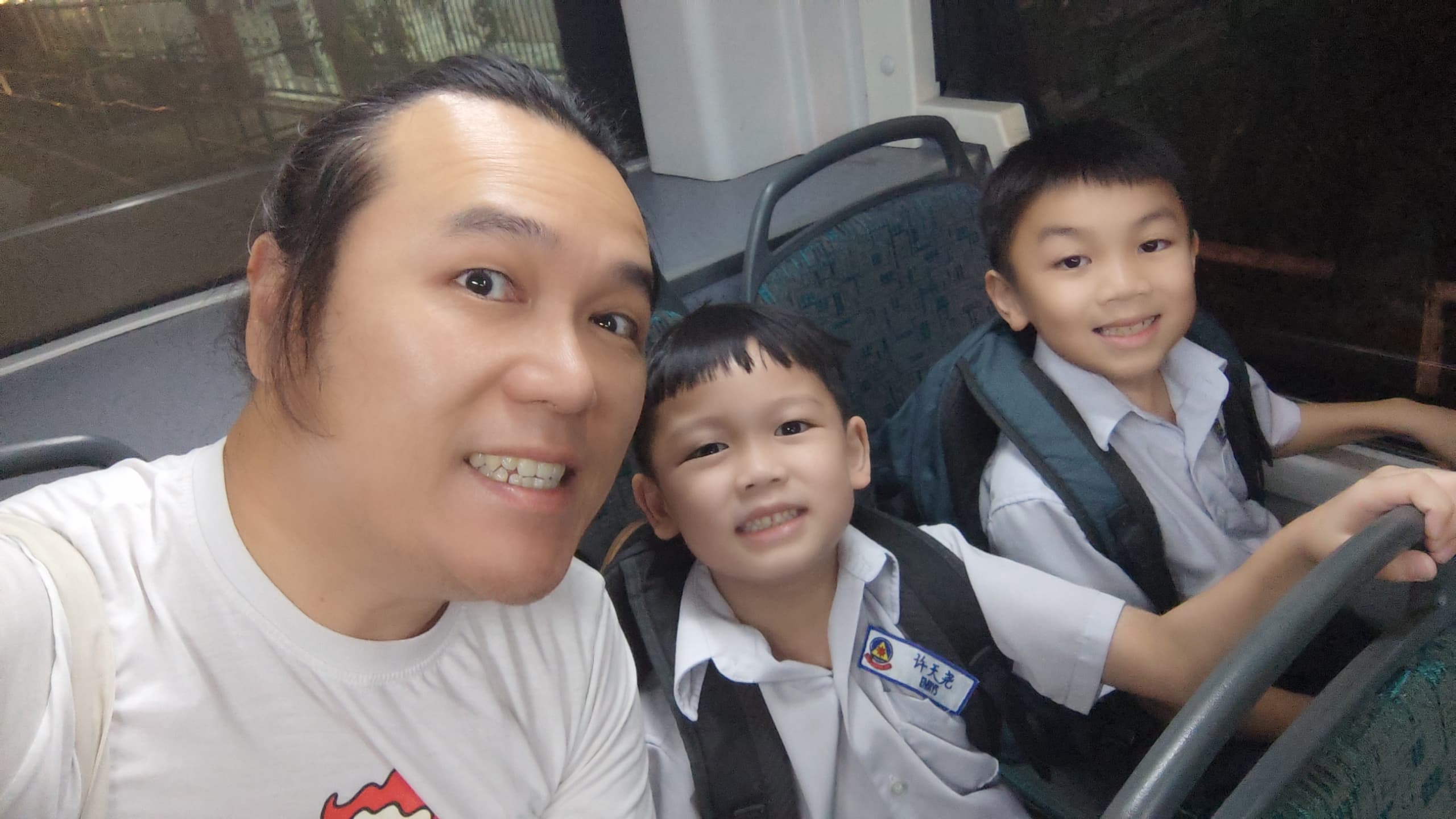
With BAS.MY’s modern bus system in Kuching, Fabian Hee sees both progress and gaps in public transport, drawing from his experience abroad and his work in software development.
A digital fix for bus problems
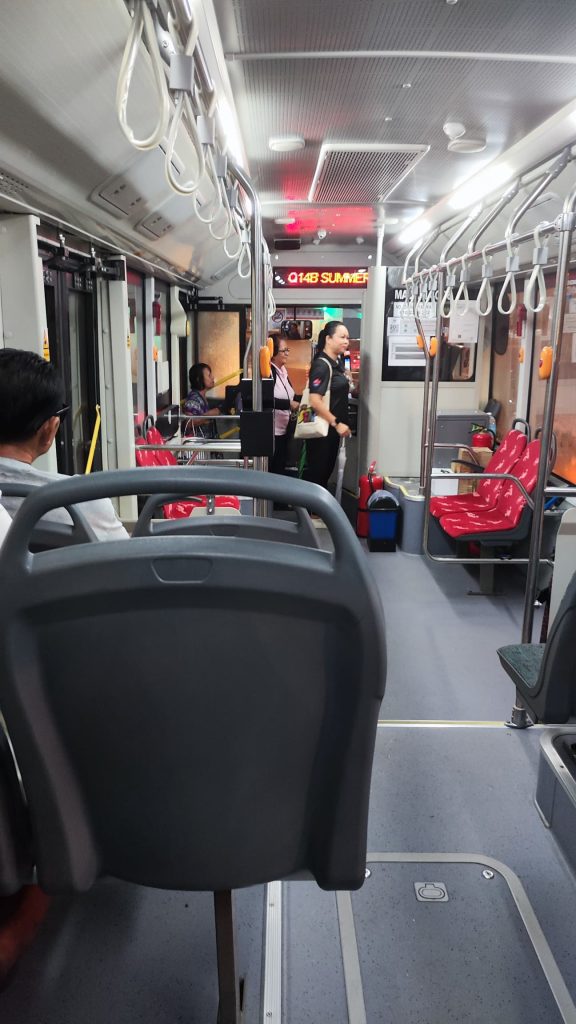
WITH the revival of buses in Kuching, Sarawak, a prominent sight has been the pink buses known as BAS.MY, brought in by the federal government. It provides a reliable, modern, and cashless public transportation service. For Fabian Hee, this modern fleet reminds him of his days as an English teacher in Prague, Czech Republic.
As a regular user of public transportation here, Hee recalled using buses in Prague.
“When I was working there, I had to travel a lot around the city, rushing to teach my students, using all types of public transport, including the bus. Back then, it was nice to observe and interact with people from all walks of life.”
To him, the first-hand experience is rare in today’s digital era, as personalisation gradually fades.
Furthermore, Hee noted that the convenience of public transport means he no longer needs to drive, which he finds mentally and physically taxing. Although he owns a car, he chooses not to drive, citing his dislike for it.
“I just can’t stand the selfish, ignorant and outright dangerous driving of people here at times. It takes too much of my energy and concentration, so I get tired after each drive.”
With that said, Hee revealed that he would only take the bus when it is not time-critical, such as when going to town or taking his children to school.
Though easing his daily trips, the 40-year-old father of three admitted that it does not come without challenges. Although buses now operate on modern systems and streamlined workflows, he has often witnessed their shortcomings firsthand as a regular public transport user.
“The bus drivers often skip stops if nobody pushes the buzzer, since they assume there isn’t going to be anyone stopping if they don’t see anyone at the designated bus stops. I’ve faced problems like the bus taking a completely different route, skipping already designated stops for unknown reasons, and buses being late for more than an hour even though there is no jam,” said Hee.
He also lamented that many drivers also opt not to accept cashless payments, as many prefer to receive cash instead. Despite the hurdles, Hee continues to take the bus as he believes there is hope in public transport.
“Overcoming the problem sometimes just involves overcoming your own anger and frustrations, and you have to just keep on trying to get that one ride right. It’s also about getting people to understand the ups and downs of it and how we can all make the experience better,” he added.
More than a bus ride
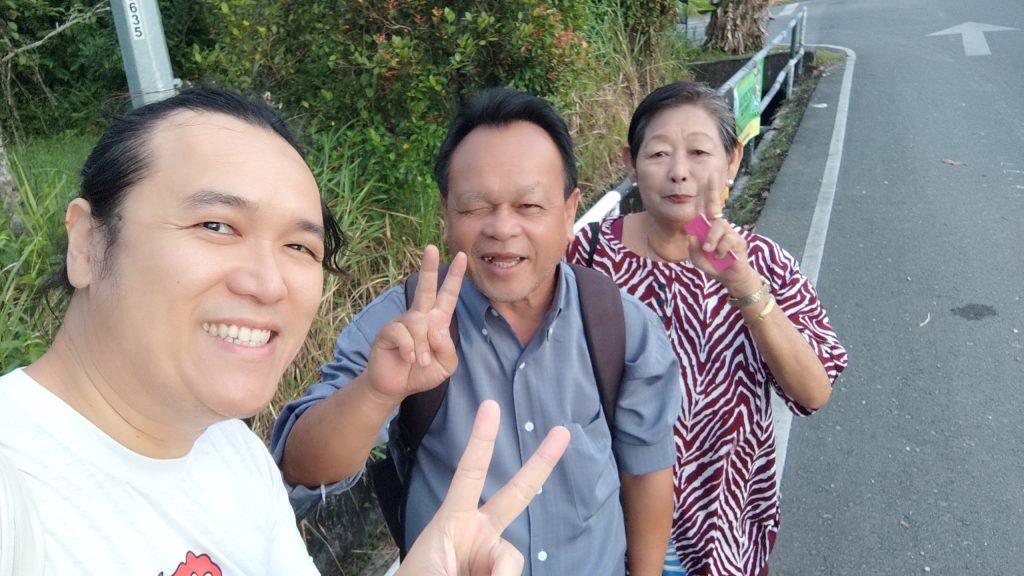
By now, Hee has become a permanent regular of BAS.MY and has seen countless individuals taking them too.
“It’s really interesting to see the different types of people who ride the bus. Senior citizens, specifically the old uncles who ride with their friends, probably living and reminiscing about their old school days of doing the exact same thing years prior.”
He also saw aunties with umbrellas and their bags either going to and from work or just going to town to buy stuff, and parents, who are mostly mothers bringing their toddlers or young children. At times, Hee would notice tourists from Indonesia taking the bus and live-streaming while on it.
Determined to keep public transport alive in Kuching, Hee has introduced it to his children, who have now begun using the bus to go to school too.
“I wanted them to experience new things and really get to know what riding public transport feels like. With the upcoming ART system, I want to prepare them for that as well so that they understand what to do and how these public transport systems work.”
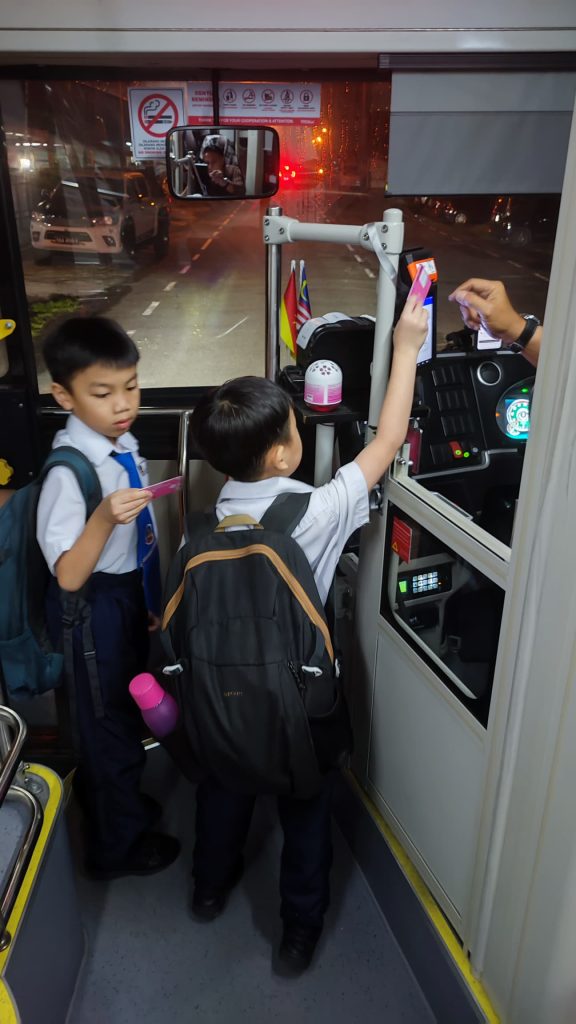
Furthermore, using the bus is also transferable knowledge for when his children go abroad in the future and need to rely on public transport. In terms of character building, Hee believes that using any public transport instils discipline by being timely, as it waits for no one, “and the repercussions of being late can be quite severe!”
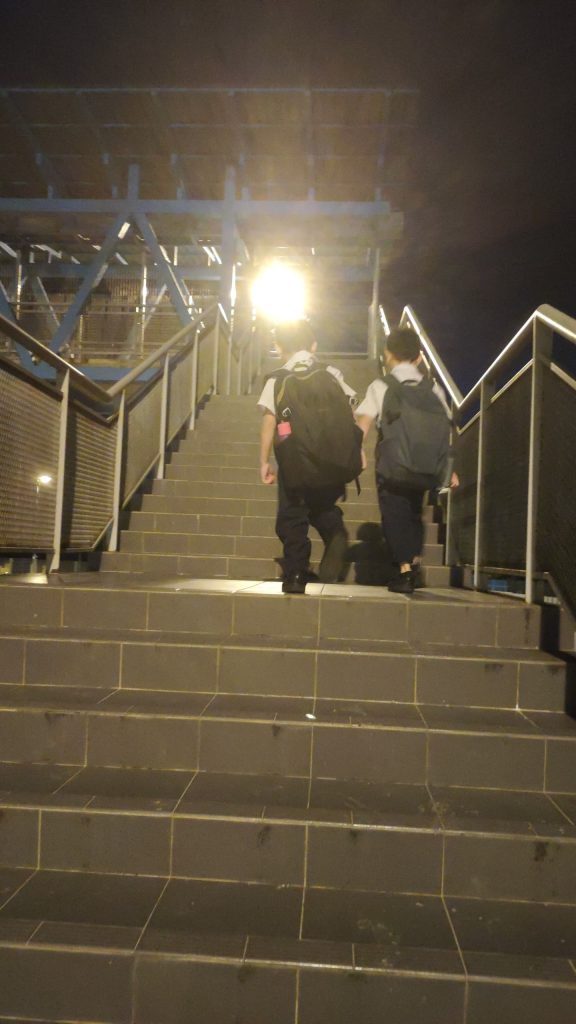
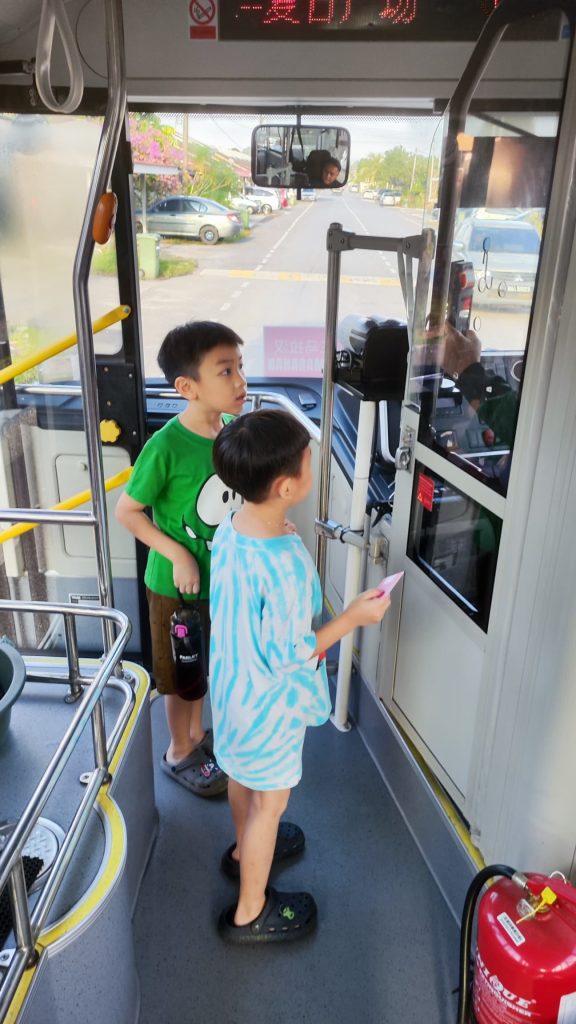
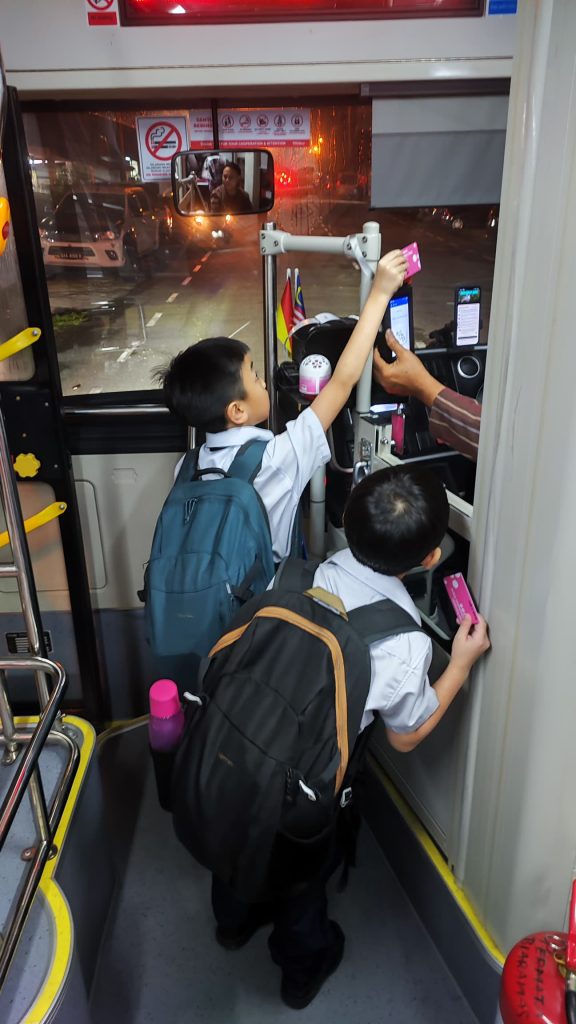
Knowing this, his children get up as early as 5 am to hop on the 5.45 am bus to school. As there are no bus stations near his house, they would need to walk to the nearest one, which is seven minutes away. Nevertheless, Hee’s children are always eager to take the bus, even more so after they receive their concession cards.
“But there are times when they can be disappointed by the system, as the bus arrives late. In this case, I have to drive them to school unfortunately. However, when we manage to get on the bus, they love it! There’s just something about tapping your own card, getting a seat at the back, and looking out the window that is just so exciting for them. And pressing the buzzer button too. They really get a kick from it!”
From frustration to innovation
As an experienced software engineer and web developer, Hee has developed an application that stems from his frustrations. The web application, which gathers all the information about the bus system (bus stops, routes, transit maps, and live location tracking), inputs it onto a simple map.
“The simple user interface and user experience ensures that you can check your current location and see which bus stops are available nearest to you. Tapping on the bus stops also shows you which routes are available so you can check what other stops you can travel to.”
With this system, users can track the specific bus approaching their stop, allowing them to plan their journeys more efficiently and reduce unnecessary waiting time. He added that he uses the official government API, which is also available for all Malaysian citizens.
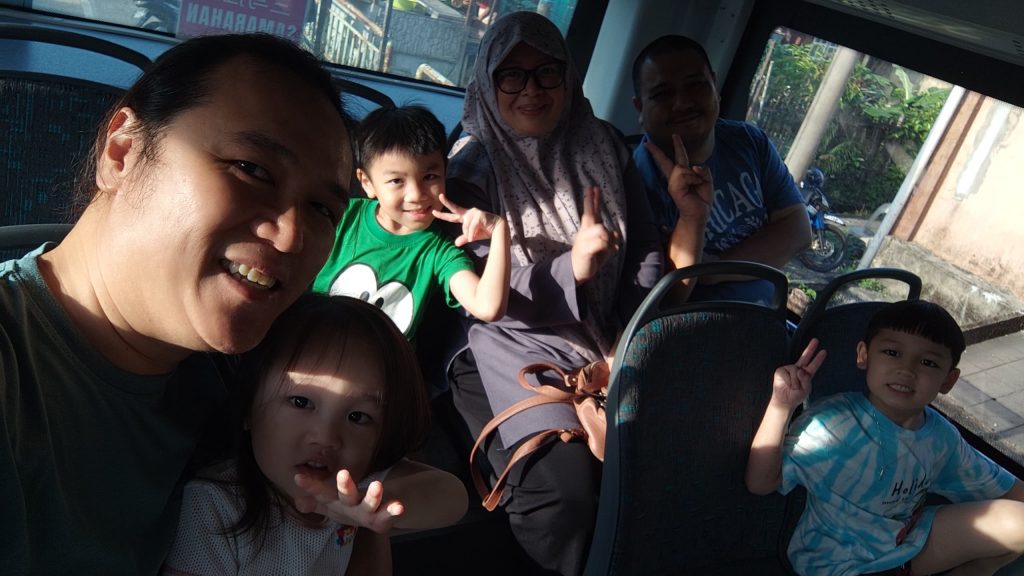
Though it is an unofficial application, Hee’s innovation has reached over 4,000 views. According to him, he updates the application weekly by fixing bugs and adding new features.
“At this moment, the application is available in three languages, namely English, Malay, and Simplified Chinese.”
For Hee, the application is more than just a tool – it is the starting point of a larger vision for public transport accessibility in Kuching.
“It’s something I believe people will truly benefit from. This is only the beginning. I’ve just started a startup around it, and I hope it grows into something much bigger that people can rely on.”
For those interested in using the web application, they can do so at https://kchbasmy.fabianhee.com.