From centuries-old streets and historic archways to vibrant night markets and modern boulevards, Kunming offers travellers a fascinating glimpse into the rich cultural heritage and evolving urban life of Yunnan’s capital.
The cultural heart of Yunnan
DURING my recent trip to Yunnan Province, China, our flight from Kuala Lumpur landed at Kunming Changshui International Airport, the gateway to one of China’s most fascinating cities.
Known as the ‘Spring City’ for its pleasant year-round climate, Kunming, the capital of Yunnan Province, is a delightful blend of ancient heritage, bustling commerce and modern urban life. While many travellers pass through Kunming on their way to Dali, Lijiang or Shangri-La, the city itself deserves far more than a brief stopover.
One of the city’s highlights is Kunming Old Street (also known as the Wenming Street Historical District), particularly the historic Qianwang Street, named after the late Qing Dynasty financier Wang Chi. During the Qing Dynasty, the street was an important trading centre along the famous Tea Horse Road.
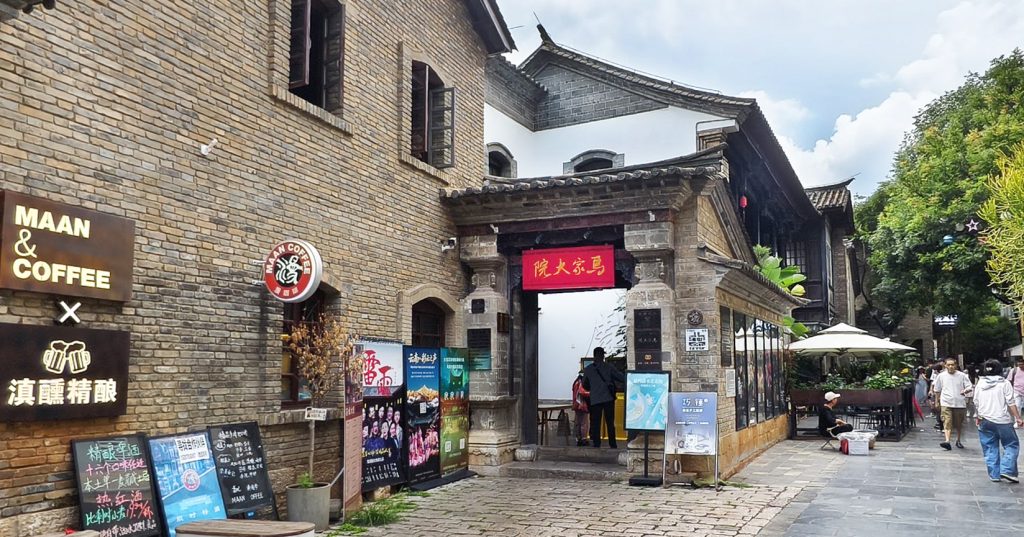
Today, beautifully restored heritage buildings from the Qing and Republican periods line the stone-paved street. Their traditional wooden façades, carved windows and tiled roofs preserve the charm of old Kunming while housing cafés, boutiques and restaurants.
Nearby stands the former residence of the wealthy Ma family (Ma Jia Da Yuan), reflecting the prosperity enjoyed by Kunming’s merchant class during the city’s trading heyday. History also lives on in former business premises such as Fu Chun Heng Trading Firm, founded in 1924. Once a prominent trading company, it has been restored and transformed into restaurants and cafés, allowing visitors to enjoy local Yunnan cuisine in a building steeped in history.
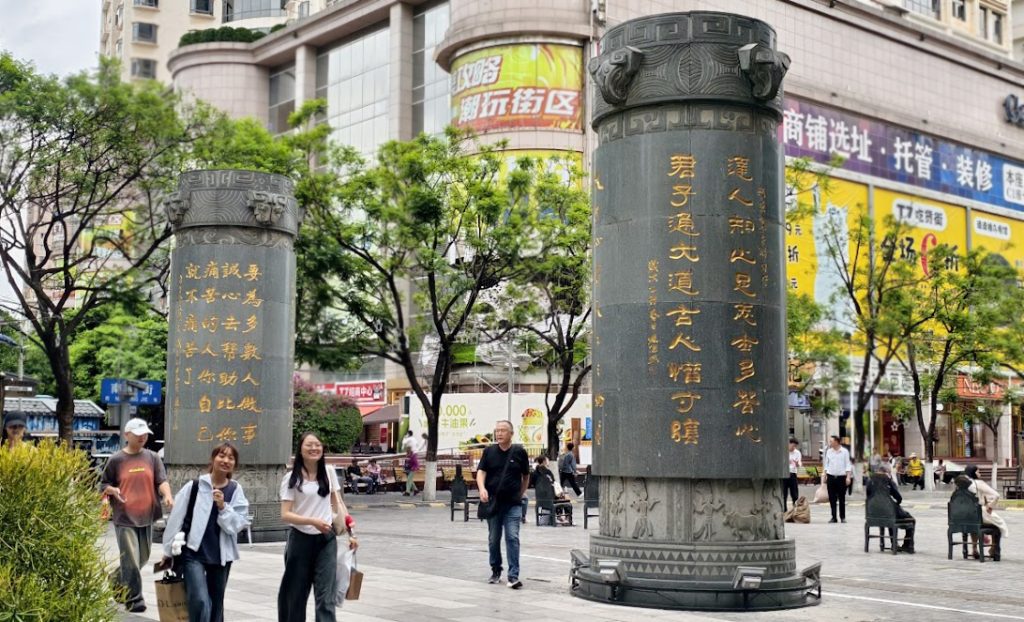
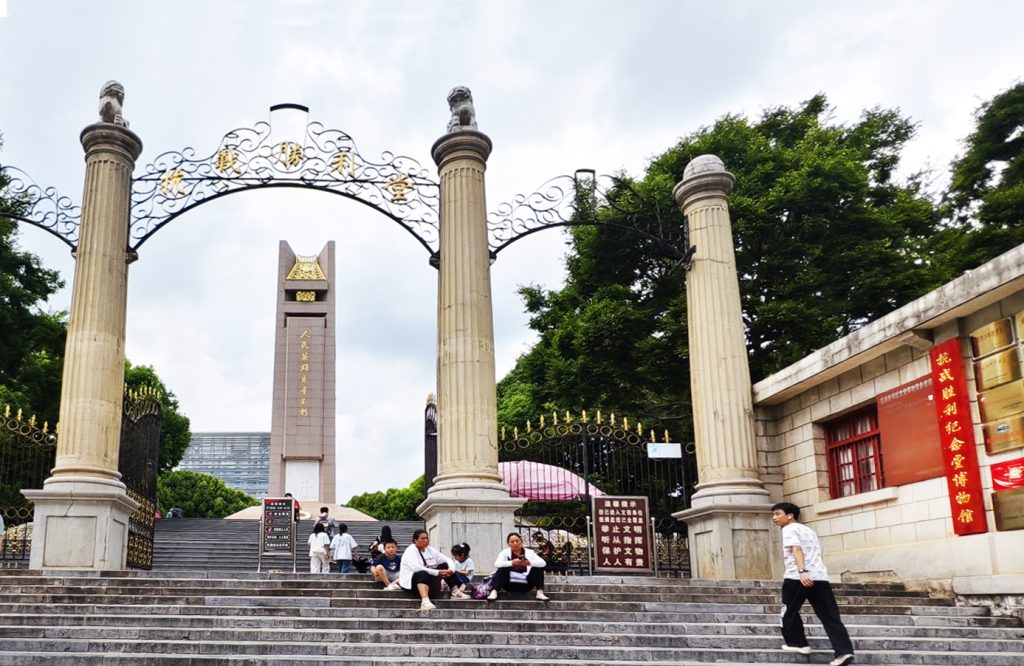
Among the area’s landmarks are the Monument to the People’s Heroes and Victory Hall, which honour those who sacrificed their lives for China’s revolutionary cause and national liberation. Together, they stand as symbols of patriotism, remembrance and national unity.
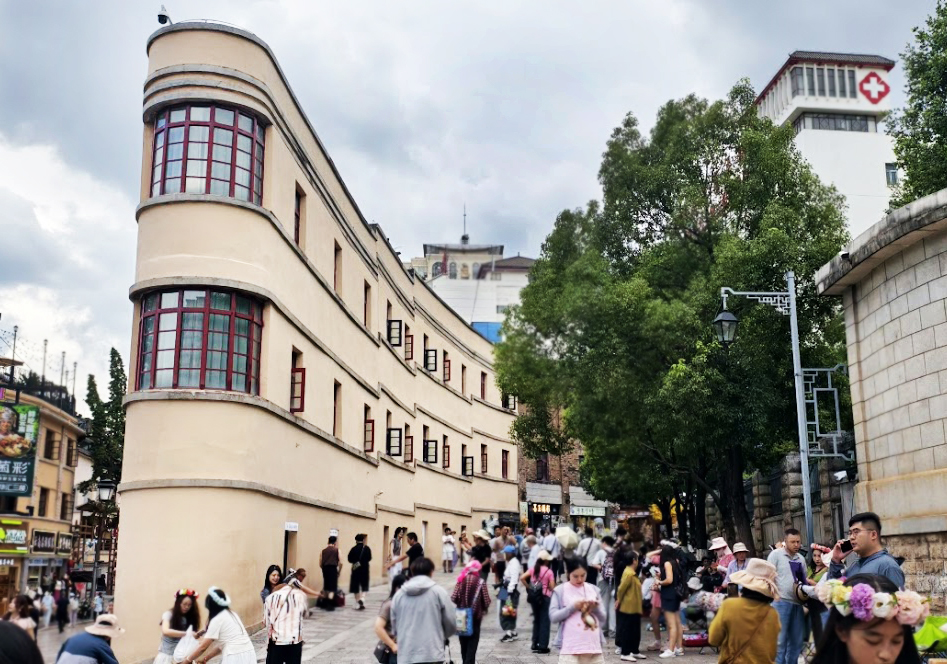
Another architectural gem is the Wine Cup Building (Jiubei Lou), one of Kunming Old Street’s best-known landmarks. Built after the Second Sino-Japanese War as part of the Victory Hall complex, its two slender curved wings resemble raised wine cups when viewed from above, symbolising a toast to China’s victory. The two wings flank the entrance to the Monument to the People’s Heroes. Combining French-inspired architecture with traditional Chinese elements, the building later served as offices and residences. Today, it has been carefully restored and now houses a boutique hotel, restaurants and cafés while retaining its historic character.
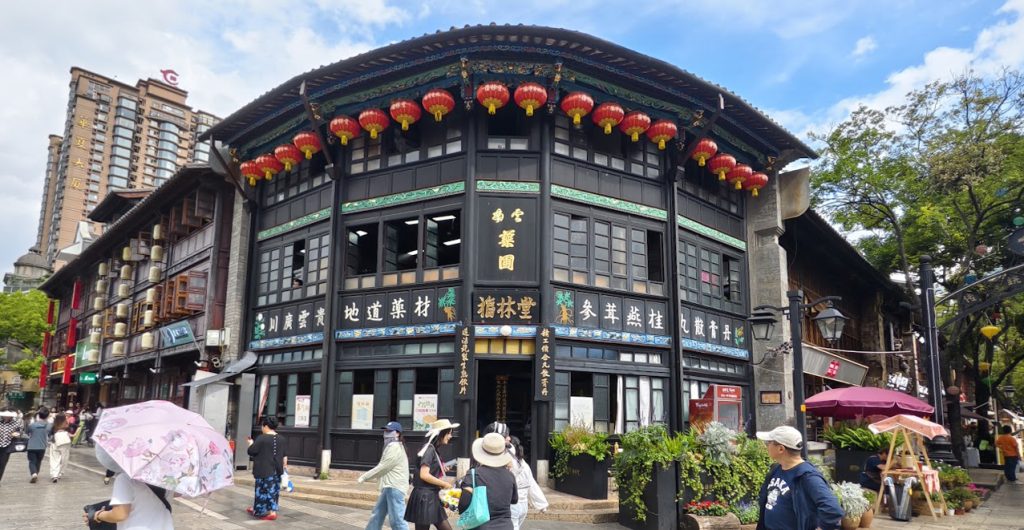
Many century-old shophouses have also been preserved. Traditional Chinese herbal medicine stores continue to serve customers much as they have for generations, keeping alive centuries-old healing traditions.
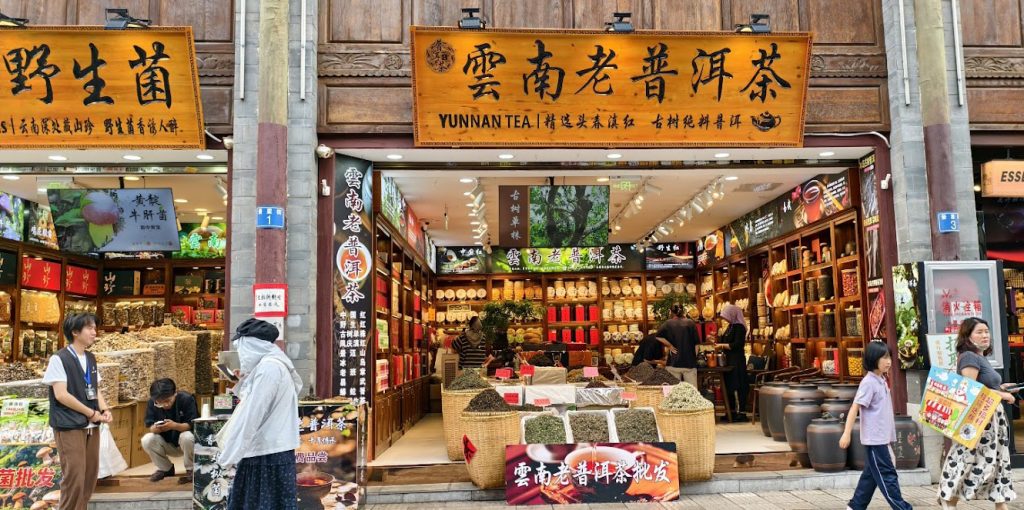
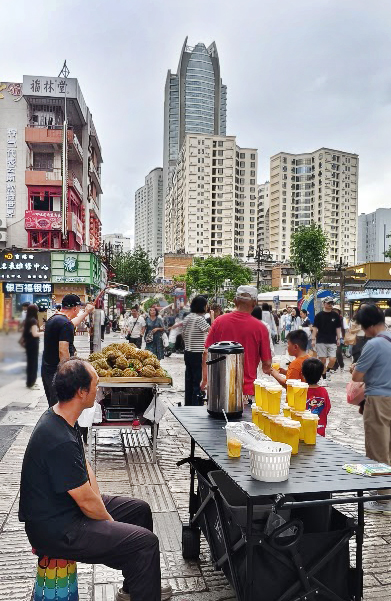
As evening falls, the old quarter comes alive with vibrant night markets. The aroma of grilled meats, steaming dumplings and Kunming’s famous flower cakes fills the air. Souvenir shops sell Yunnan tea, Yunnan coffee, ethnic handicrafts, silver jewellery and locally made delicacies. We also took the opportunity to sample one of Yunnan’s most famous dishes – Crossing-the-Bridge Rice Noodles – a local delicacy with a fascinating history.
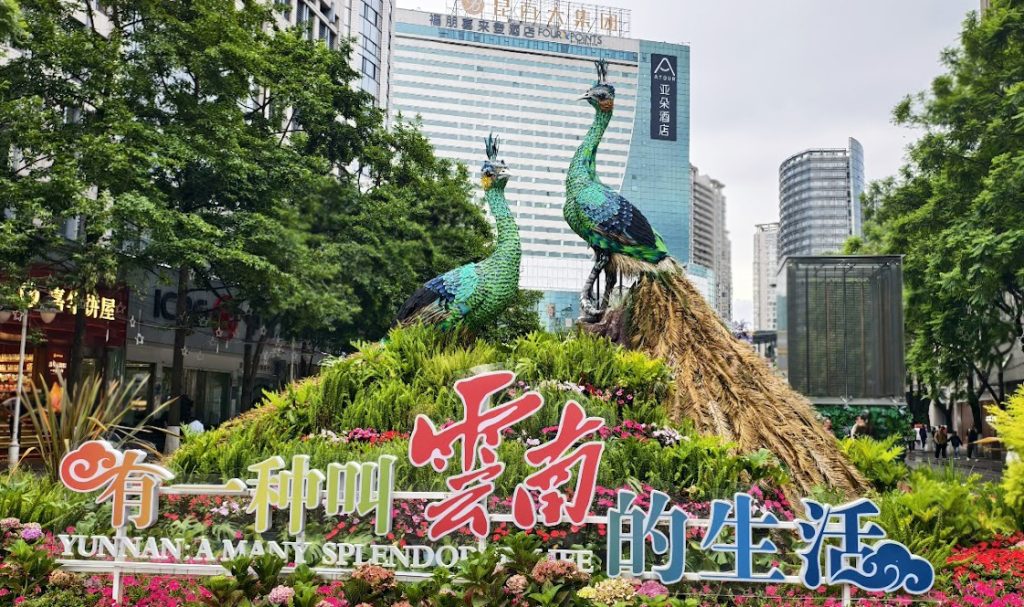
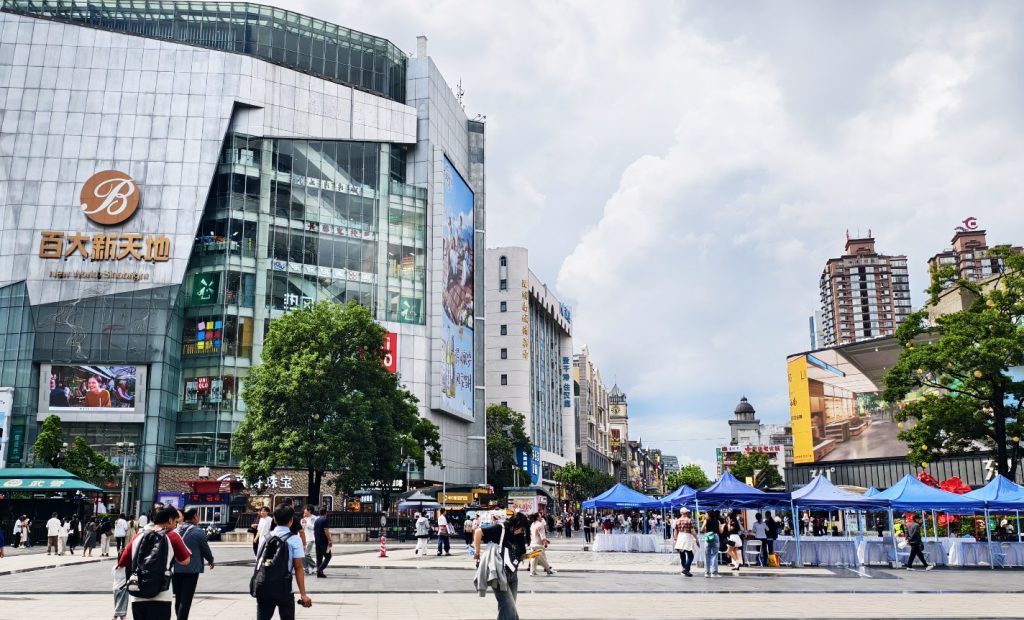
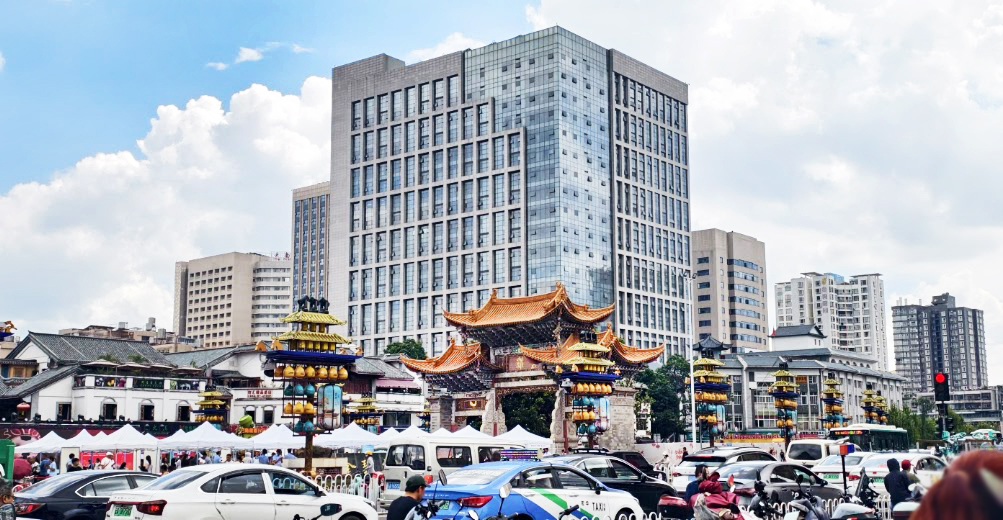
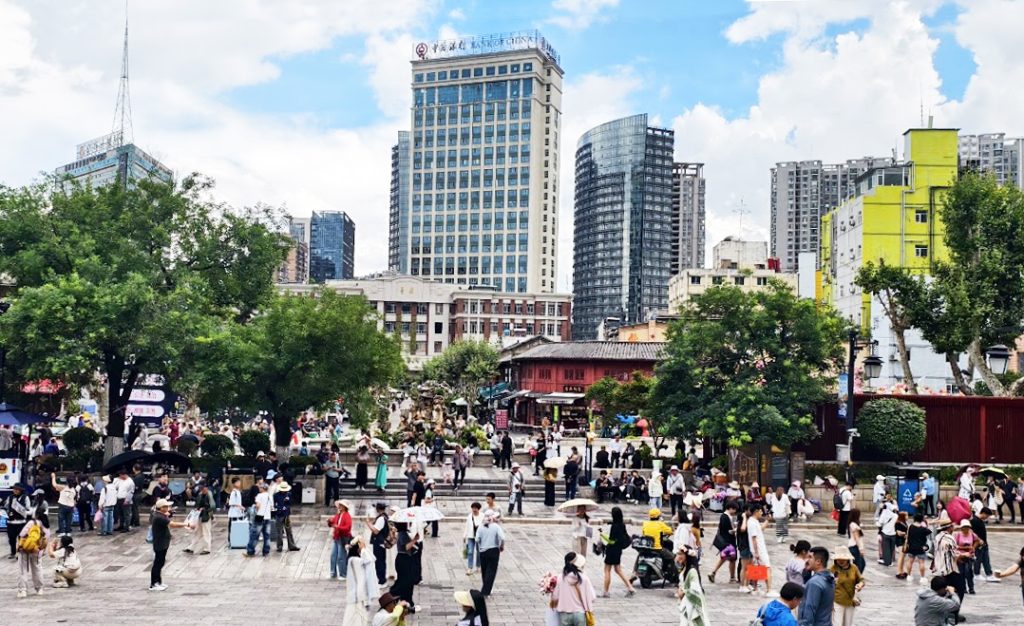
Beyond the old city, modern Kunming reveals another side of its character. Wide boulevards are decorated with colourful flower displays, artistic sculptures and attractive lighting. Traditional Chinese arches add elegance to the cityscape, blending historical charm with modern development.
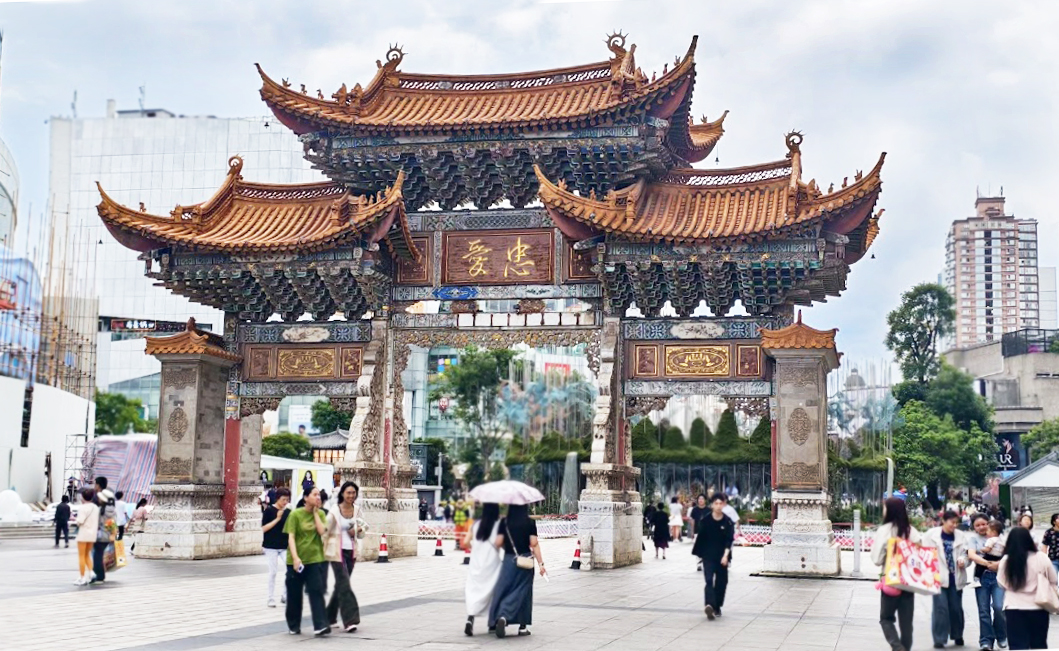
Three iconic archways with rich traditional architectural motifs stand proudly in the city centre. The Golden Horse Archway (Jinma Fang), Jade Rooster Archway (Biji Fang) and the Zhong Ai (Loyalty and Love) Archway were first built during the Ming Dynasty in the early 15th century. All three were faithfully reconstructed in 1998 and today symbolise the city’s rich cultural heritage.
The memorial arch at Kuching’s Malaysia-China (Ma Zhong) Friendship Park, built in 2005 to commemorate the 30th anniversary of diplomatic relations between China and Malaysia, was inspired by Kunming’s famous archways, symbolising the close friendship between the two cities. Since becoming sister cities in 2014, Kuching and Kunming have continued to strengthen their cultural and diplomatic ties.
Kunming is a city where the past and present exist side by side. Ancient streets, historic mansions and traditional businesses blend seamlessly with modern shopping districts and lively public spaces. For travellers seeking more than breathtaking scenery, Kunming offers an enriching cultural experience that reveals the enduring spirit of Yunnan.