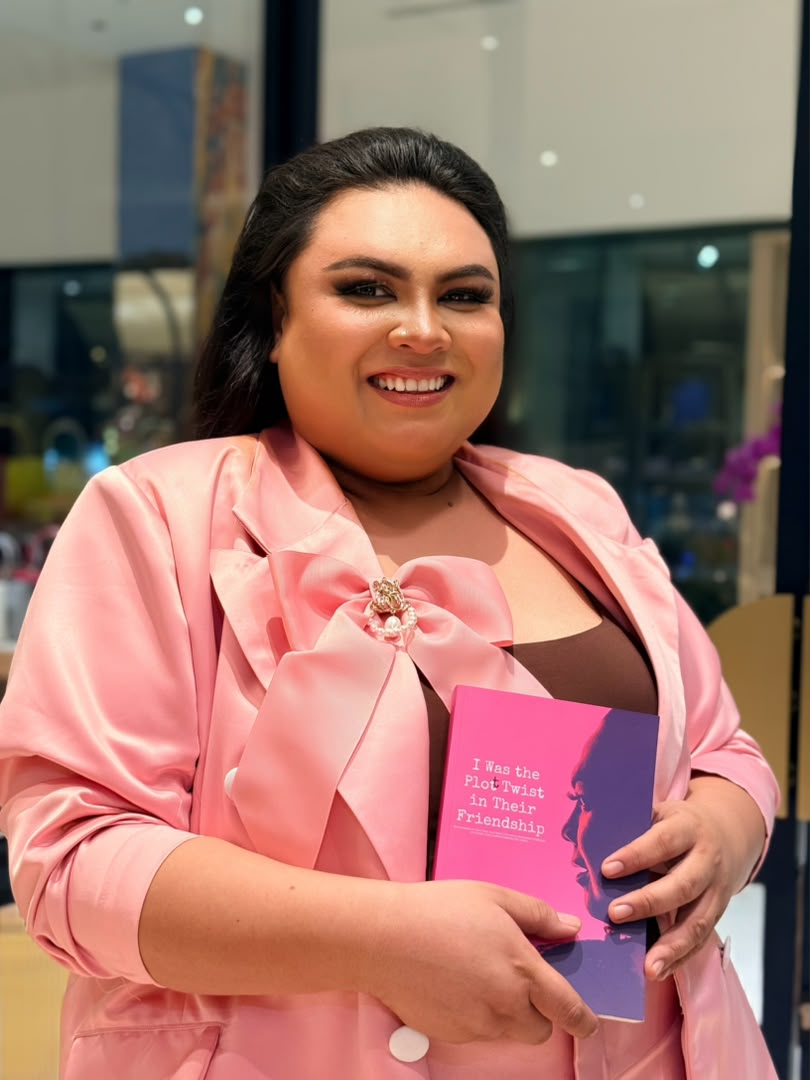
Apple Green Luna’s second book explores trust, loyalty, loss and the friendships that shape who we become
FOR author Apple Green Luna, friendship is more than a word casually thrown around to describe the people who come and go in our lives.
It is a support system, a source of strength, a space for difficult lessons and, sometimes, the very thing that forces us to confront uncomfortable truths about ourselves.
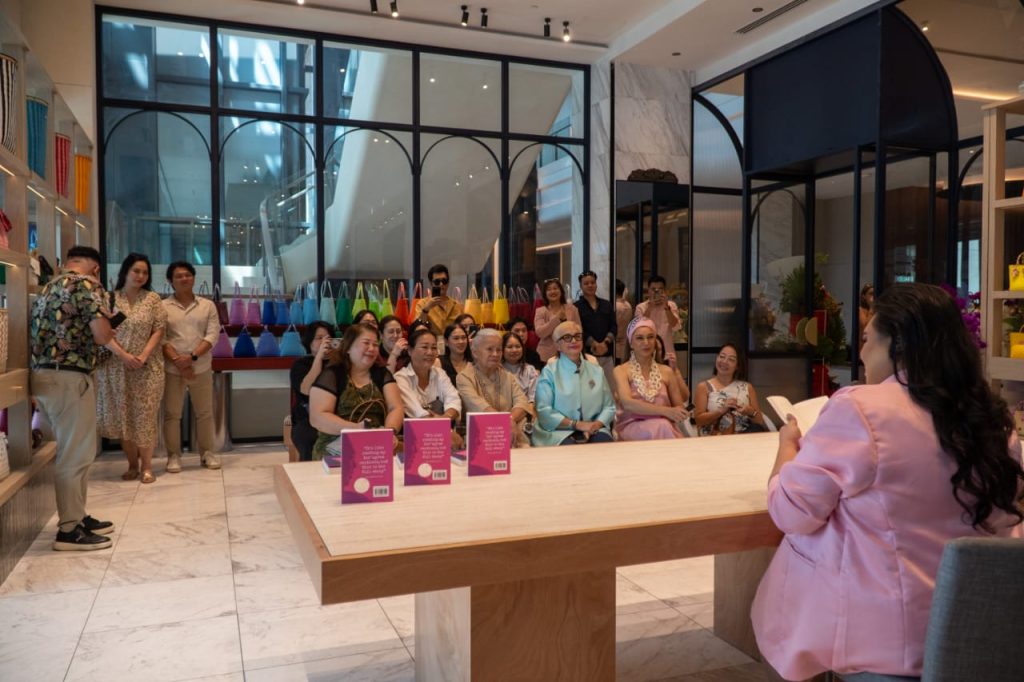
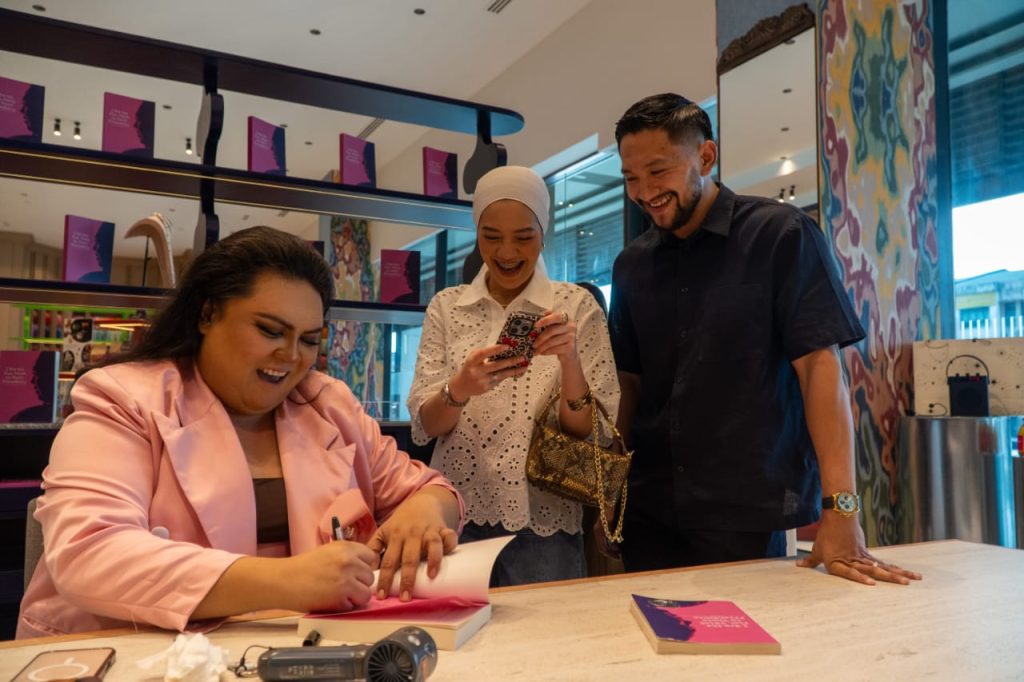
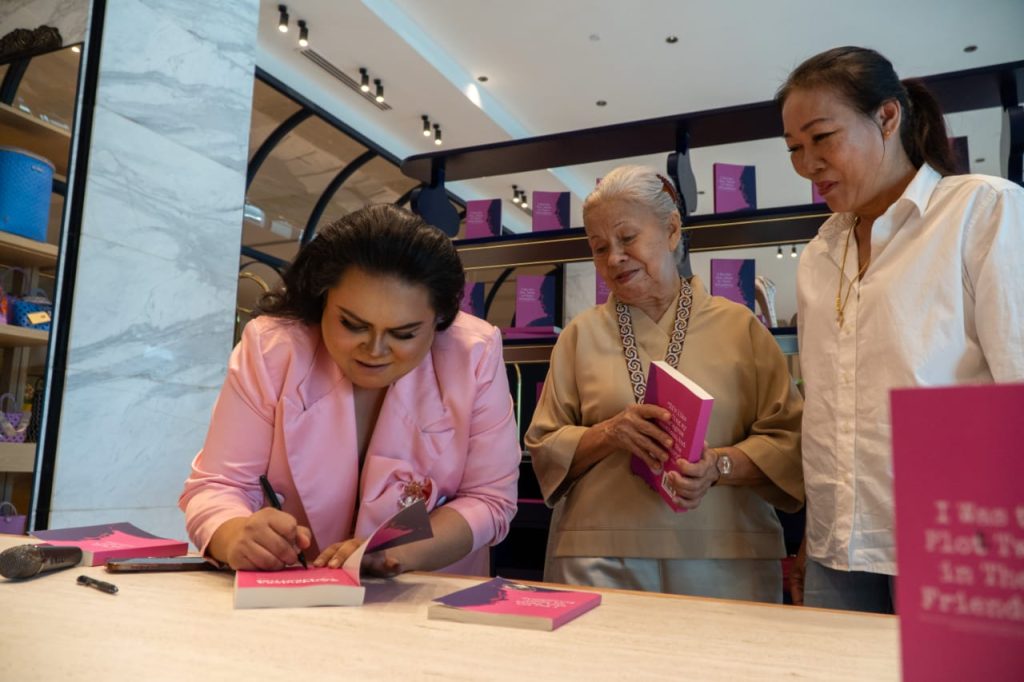
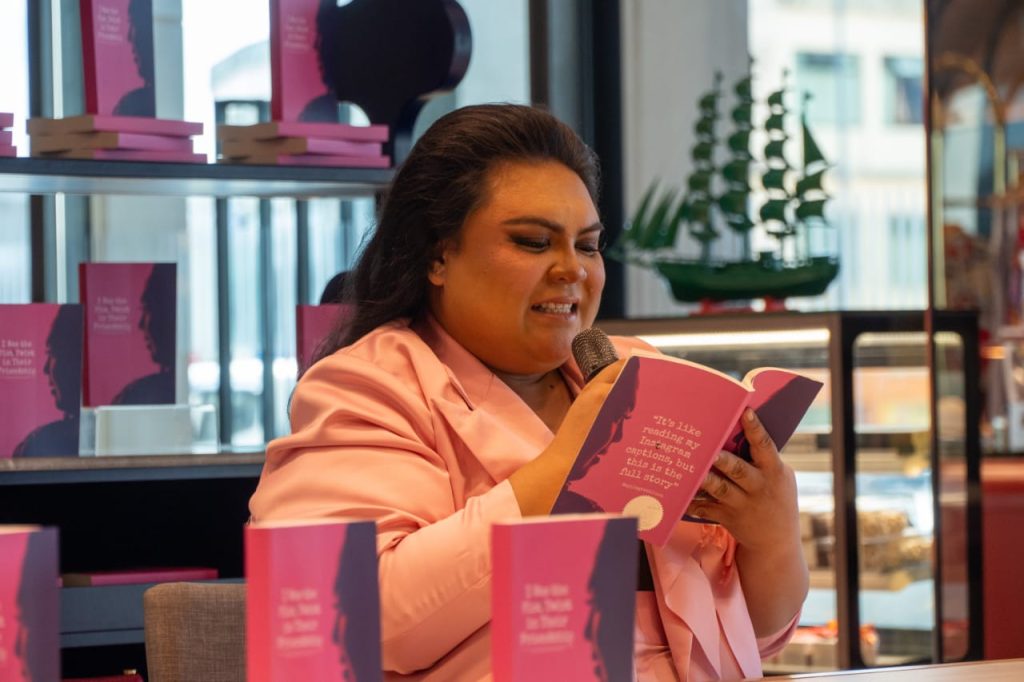
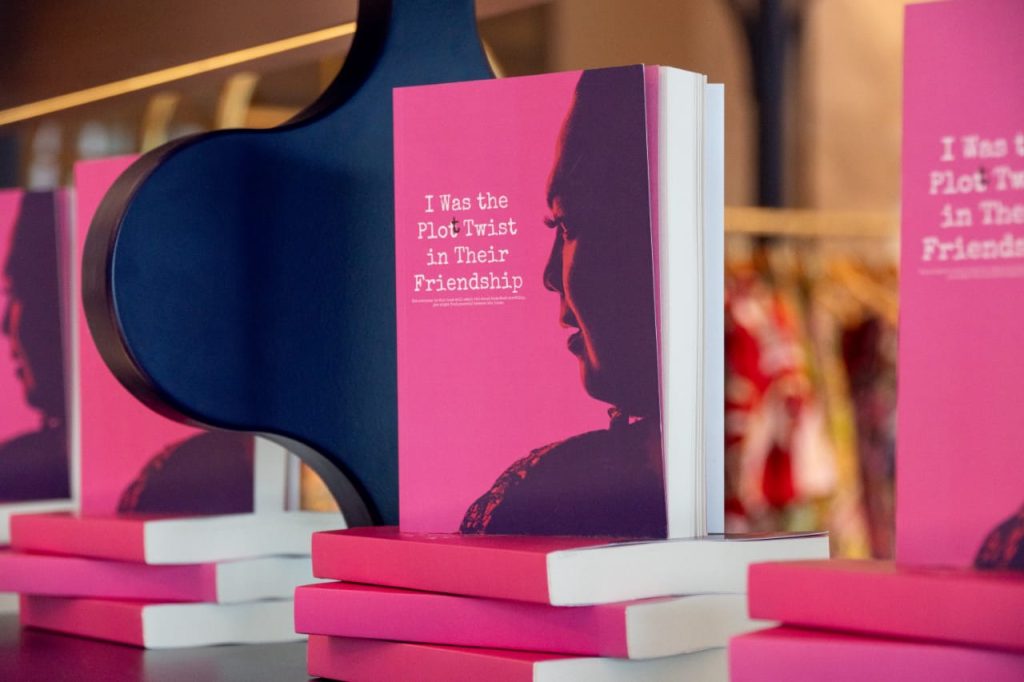
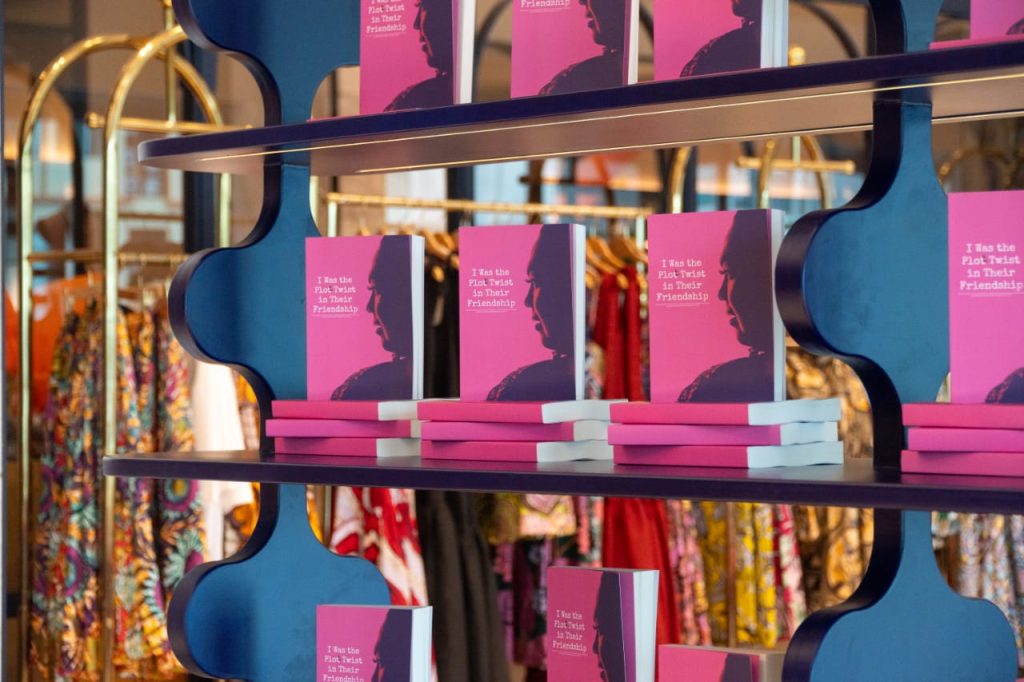
These ideas form the heart of her second book, I Was the Plot Twist in Their Friendship, which was recently launched at Voco Kuching.
Sarawak Tribune spoke to her after the launch of the book, which comprises 10 chapters and, based on 10 friendships from different stages of her life, explores the dramas, lessons and unexpected turns that can emerge from relationships we often take for granted.
From ‘everyone is my best friend’ to a smaller circle
For Apple, whose real name is Nicol Darel Luna, writing about friendship was a natural progression after years of experiencing its highs and lows.
“People always take their friends for granted. They always say, ‘She is my best friend’ or ‘He is my best friend’, but no one ever values what friendship is.
“That is why I came up with a book about friendship, about 10 friendships, about what you can do and don’t do, and the lessons that you can endure from these friendships,” she said.
At 39, and approaching 40 next year, Apple said her understanding of friendship has changed considerably since her 20s.
In her younger years, friendship was expansive and easily formed.
“In my early 20s, everyone was my best friend. The one I met in a club for one night was my best friend,” she recalled.
By her early 30s, she found herself becoming the “yes person” in many friendships.
Now, as she approaches a new decade, her circle has become smaller but more meaningful.
“Friendship is more about who you can trust and who can be a support system,” she said.
That evolution is reflected throughout the book, which draws from real experiences while creatively reshaping the details surrounding the people involved.
Twisting real-life stories into fiction
Apple acknowledged that writing about real friendships required her to walk a delicate line between honesty and protecting the privacy of the people involved.
Her solution was to embrace the very idea contained in the title — the plot twist.
“I twisted literally the situation to make even if that person doesn’t read it, it doesn’t align,” she said.
For Apple, the ability to transform real-life experiences creatively without creating legal or personal problems is part of what makes a good author.
She even tested some of the stories on selected friends, asking them to record their reactions after reading them.
The response, she said, was exactly what she hoped readers would experience.
“When they read it, it sounds familiar, but when I reveal the face, it is like, ‘Oh my God’,” she said.
That element of surprise is central to the book. While the stories are rooted in genuine experiences, Apple wants readers to look beyond the gossip and drama to consider what each friendship can teach them.
Trust, loyalty and the lessons behind the drama
Some of those lessons came from her experiences around public figures and celebrities.
As a social media influencer who has developed friendships with actresses and celebrities, Apple said she has witnessed how trust and loyalty can become particularly complicated when friendships exist in the public eye.
She has seen how private matters shared within a circle of friends can suddenly find their way into the media.
“That really taught me about trust and loyalty,” she said.
She also learned that friendship often depends on small gestures rather than grand declarations.
For Apple, loyalty can be as simple as asking a friend, “How are you?”, “Is everything fine?” or “Is there anything I can help with?”
“We cannot pay for loyalty. That gesture is very important in friendship. Start by replying to your friend’s WhatsApp. Start by asking them, ‘How are you? Are you okay? Do you need me?’ These are the things that are very important,” she said.
When the writer realises she was part of the problem
Yet perhaps the most difficult lesson in the book was not about what her friends had done to her, but about what she had done herself.
While revisiting one particular friendship for the book, Apple realised that she had also been part of the problem.
Writing the chapter forced her to relive moments she had long since moved past and examine her own behaviour.
“Why am I overly sensitive? Why am I very judgmental?” she recalled thinking while writing.
That self-reflection was painful enough to affect her ability to continue with the book.
There was another chapter that proved equally difficult, one concerning a friend who had passed away.
During the book launch, Apple became emotional when discussing the final part of the book, imagining what her late friend might have thought about the book had she still been alive.
“If only you can turn back the time, if only you can spend time with your friend who passed away,” she said.
She wondered whether her friend would have cheered for her, whether she would have approved of the book’s colours and what she might have said about the finished work.
For Apple, the loss remains intertwined with one particular memory — her friend telling her that she would be “brighter than a disco ball”.
“I’m sure she’s smiling from heaven seeing whatever I did here,” she said.
These emotional chapters also explain why, despite describing the writing process as taking only about two weeks, the book was not something she could simply rush through.
The challenge was not putting words on paper. It was reliving the memories behind them.
Living friendship in the age of social media
Apple’s professional life has also shaped her perspective on relationships. A full-time lecturer at a private university in Kuala Lumpur, she has spent almost 16 years teaching, specialising in marketing.
Her PhD is in social media marketing, while her involvement in the entertainment industry has also seen her recruit models and new talents.
Her experience as a social media influencer has added another layer to her friendships.
Apple openly shares many aspects of her life online, from photographs to videos and public appearances.
But not all her friends are equally comfortable being part of that public world.
“Some of my friends, they are comfortable with it. And some of them, they are very discreet,” she said.
That creates a difficult grey area. Apple believes her friends should be able to accept that social media is part of her life, but she also recognises that she cannot force others to participate in a public life they did not choose.
The issue is particularly complicated in Kuching, where social circles can overlap and everyone seems to know everyone else.
“I’m the one who chose to make my life belong to the public. But my other package came with me, and I cannot force them to be part of my life,” she said.
That experience has also taught Apple the importance of boundaries.
Choosing silence over speculation
When friendships change privately but remain visible publicly, she prefers not to fuel speculation. Her response is often silence.
“The more I say something, the more people speculate. The more people speculate, the more people talk about something that is not true,” she said.
For Apple, silence is not necessarily an admission of guilt or weakness.
Sometimes, it is simply a way of protecting her energy and moving forward.
“I prefer they assume that I’m weak, but actually I’m not. I control the energy that I want to have now. Because this energy is the one that makes me move on to the next day,” she said.
What 10 friendships taught her about herself
After revisiting 10 friendships through the book, Apple said she also discovered something about herself: she is often the person who holds her friendships together.
“I realise that I’m a person who always glues all the friends together,” she said.
It is a role she embraces because she places enormous value on friendship.
Apple does not currently plan to marry or have children, and therefore considers friends and family to be her primary support systems.
At this stage of her life, she said, she has come to understand that both are important in different ways.
“There are boundaries that we can share with our family but not with our friends. But there are boundaries that we can share with our friends but not with our family,” she said.
A plea to appreciate the people who stay
At the heart of her second book, however, is a simple plea.
“Appreciate your friends. I am begging. I don’t mind saying this out loud. I’m begging, please appreciate your friends,” Apple said.
For her, friendship should not be measured only by how frequently people meet.
Even after years apart, a simple message can be enough to reconnect.
“If you don’t meet your friends for more than 10 years, it’s okay. A message should be fine,” she said.
That philosophy captures what Apple ultimately hopes readers will take away from I Was the Plot Twist in Their Friendship.
Friendship should be appreciated, but it should not mean surrendering one’s independence or ability to make decisions.
Friends can provide support and a second opinion, but each person remains responsible for deciding what is right for them.
And perhaps that is the biggest plot twist of all, discovering that sometimes the person we need to understand most in a friendship is ourselves.
Turning the plot twist inward
For Apple, the story does not end with her second book. At the end of it, she hints at her next chapter: I Was the Plot Twist in My Own Story.
The proposed third book will turn the lens completely towards herself, revealing parts of her life she has not previously shared publicly.
She plans to explore the struggles, challenges and obstacles she has faced as Apple Green Luna and Darel Nicole Luna, including her experiences with family and her life between Sarawak and Kuala Lumpur.
It will also examine the gap between the person people see online and the person behind the social media persona.
“Everything on social media is not true. Not 100 per cent true. But definitely, the truth, you guys can read it from my latest book — I Was the Plot Twist in My Own Story,” she said.
If her second book is about understanding the complicated friendships that shape us, the next may be about confronting the complicated person at the centre of them all.
And for Apple, perhaps that is the most revealing plot twist yet.