KUCHING: The Sarawak government will always support efforts to elevate Islamic education and specialised training institutions that produce high-quality human capital.
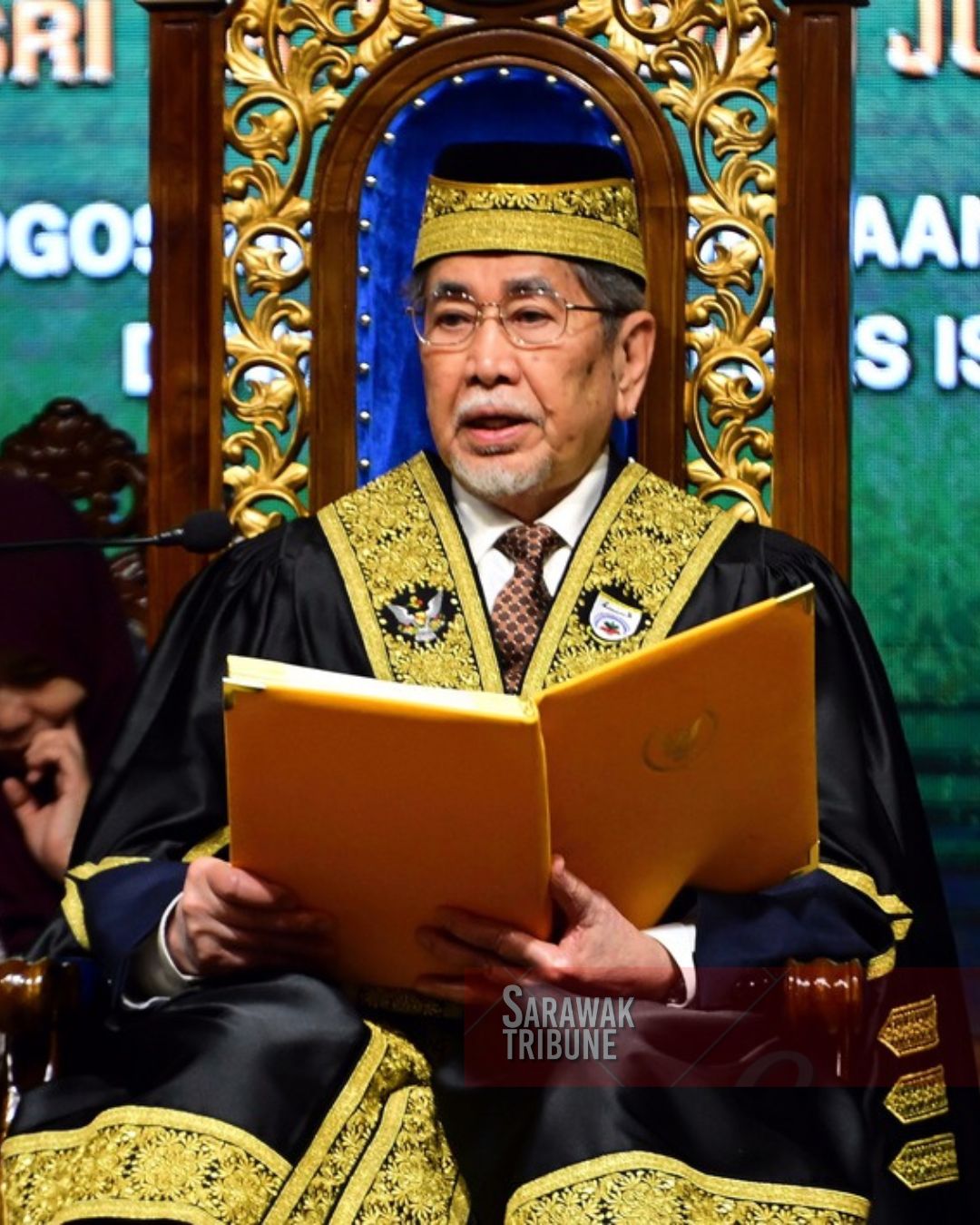
Head of State Tun Pehin Sri Dr Wan Junaidi Tuanku Jaafar hoped the Institut Kemahiran Islam Malaysia Sarawak (IKMAS) would therefore continue to drive excellence, strengthen its curriculum in line with global developments and establish more strategic collaborations locally and internationally.
“We want IKMAS not only to be a state-level training centre, but also to develop into a respected international reference hub for excellence in Islamic skills education in the Nusantara region.
“Some may ask, “What is the role of an IKMAS graduate in the mainstream development of technology and the economy?”, I would like to emphasise this clearly: your role is critical as material development without spiritual development will produce an imbalanced society,” he said.
He was delivering his address at the 22nd Convocation Ceremony of the Institut Kemahiran Islam Malaysia Sarawak (IKMAS) 2026 at the Sarawak Islamic Complex Hall here Tuesday (Aug 18).
He added that IKMAS and its graduates had a critical role in building “human infrastructure” grounded in noble values and first-class ethics as Sarawak pursued its development agenda towards becoming a developed region by 2030 through the Post Covid-19 Development Strategy 2030 (PCDS 2030).
He said the state’s focus was not only on conventional economic growth but also on the green economy, renewable energy such as hydrogen and solar technology, environmental sustainability, the digital economy and artificial intelligence (AI).
Wan Junaidi added that the role of IKMAS graduates would also extend to addressing modern issues such as climate change, sustainability and biotechnology through an understanding of Maqasid Syariah (Objectives of Islamic Law).
“In addressing modern issues such as climate change, sustainability and biotechnology, we need Islamic reference experts who understand the concept of Maqasid Syariah (Objectives of Islamic Law), particularly in the aspects of Hifz al-Mal (protection of wealth) and Hifz al-Biah (protection of the environment).
“You must be able to relate fardu ain (individual religious obligations) to the needs of fardu kifayah (collective religious obligations) in supporting Sarawak’s vision,” he added.