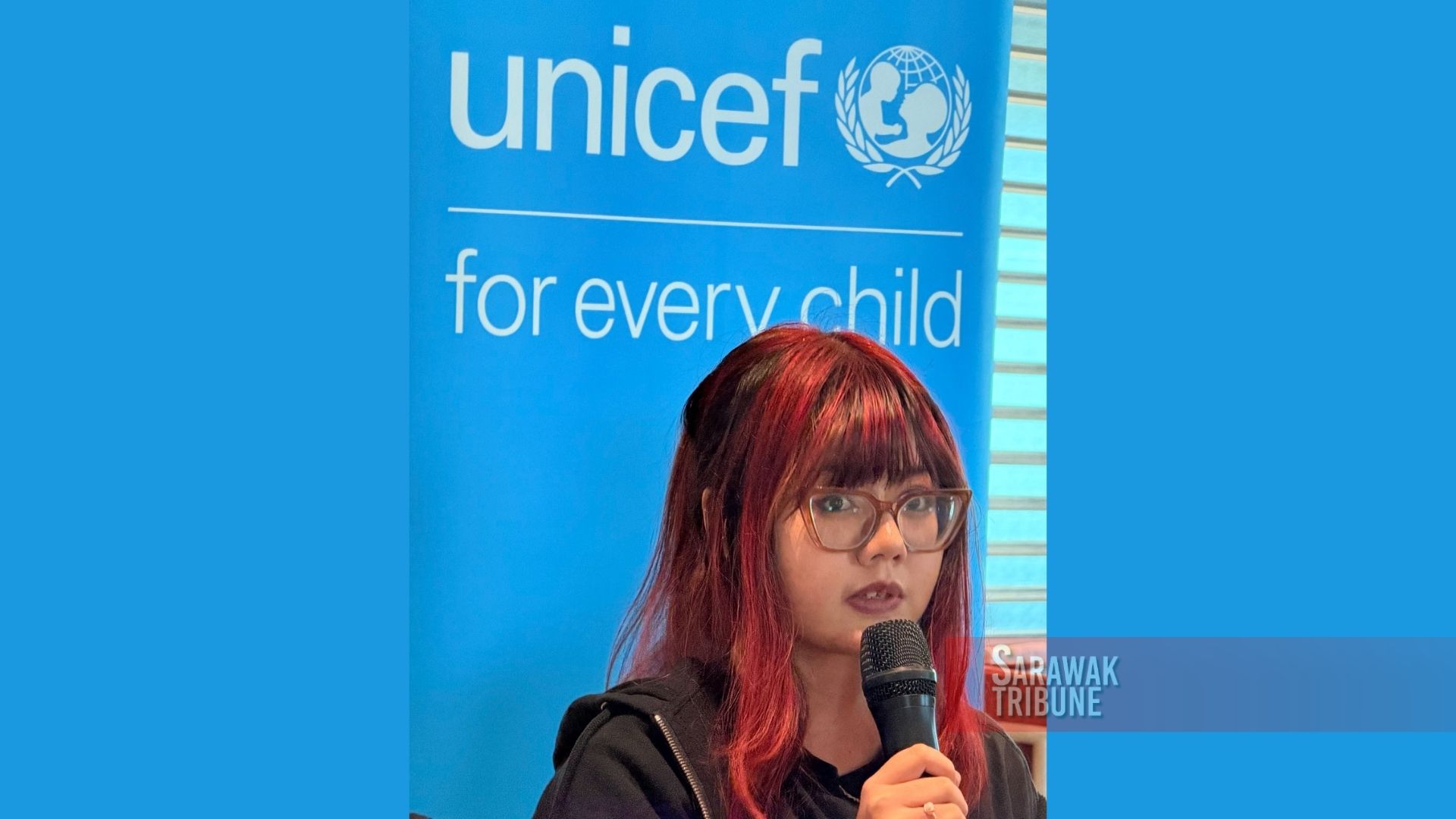
KUCHING: Children need to be educated and guided on digital safety so they can identify and take appropriate action when faced with unsafe situations online, said Universiti Wollongong Malaysia School of Computing and Creative Media lecturer, Sophie Azlan.
She said the use of devices and digital spaces are not inherently dangerous, as children use them to communicate, play, explore their interests and find communities.
However, she said children may not have sufficient knowledge to recognise situations that could expose them to risks.
“Children want to talk to others, do things that are normal for them and find communities, but they may not realise that they are in a situation that could be harmful,” she said during a media roundtable with UNICEF held here yesterday.
Sophie said this required an approach that focused on education rather than simply restricting children’s access to digital devices or platforms.
She explained that parents may also not necessarily have the knowledge and ability to fully understand all the digital spaces their children use.
She said the internet experienced by today’s generation of children was vastly different from what their parents experienced while growing up.
“Many parents may assume that when a space is labelled as being for children, it is automatically safe.
“They may also assume that their children know better, but they themselves may not necessarily know,” she said.
Sophie said among the areas that needed attention is children’s ability to respond when faced with scams, cyberbullying or other unsafe situations.
She said in discussions with children about scams and cybersecurity, some responded that they would “scam them back” when asked what they would do if they encountered a scammer.
According to her, such responses showed that some children are more inclined to think about handling the problem themselves rather than seeking help from trusted adults or using available reporting channels.
“None of them involved telling a trusted adult. None of them involved reporting the individual,” she said.
Sophie said parents should be aware that most games and digital spaces have mechanisms for reporting, although the procedures differ depending on the platform and service.
She said these differences could pose challenges when children use multiple devices, such as mobile phones and gaming consoles, as well as different platforms.
On game developers, she said they did not necessarily have negative intentions, with most parties involved in developing digital spaces not intending to create something that could harm children.
However, she said resource and educational constraints could mean that some developers lacked the capacity to develop certain safety features in their projects.
She said safety features could be considered from the early stages of development or added later in response to issues arising within a project.
Sophie said creating safer digital spaces required cooperation among parents, educators, developers and children themselves.
“We cannot necessarily control all the media our children will be exposed to, but at the very least, we can teach them the best things to do when they see something unsafe.
“Knowing what to do when in an unsafe situation is part of the process of growing up,” she said.