KUCHING: Sarawak’s hot and dry spell is raising the risk of forest, peatland and vegetation fires while thick smoke from blazes threatens to hamper firefighting operations.
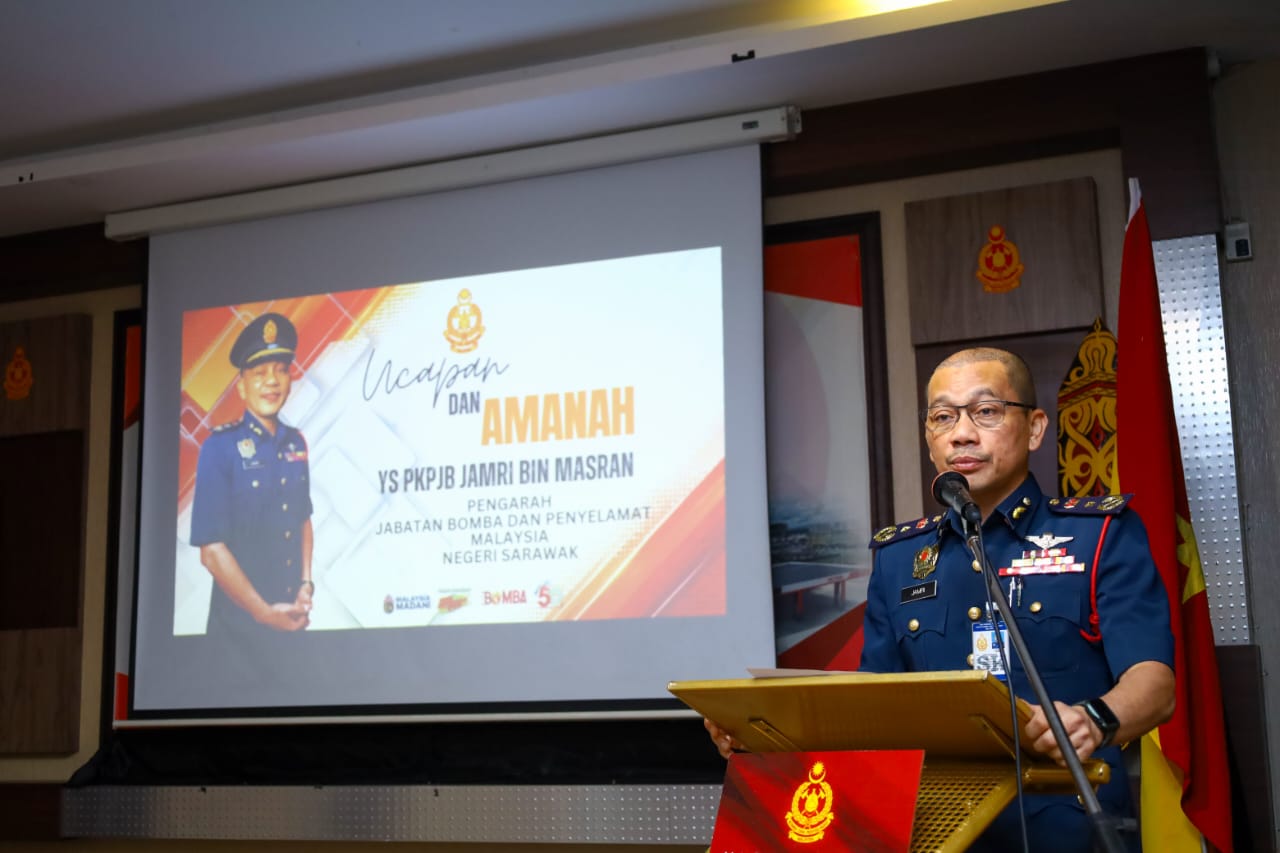
Sarawak Fire and Rescue Department (Bomba) director Jamri Masran said dry conditions could allow fires to spread rapidly while the resulting smoke could severely reduce visibility and make it harder for firefighters to reach and contain affected areas.
“For Sarawak, which has vast forest and peatland areas, hot and dry conditions can increase the risk of vegetation and peatland fires.
“The risk becomes more serious when fires produce thick smoke, which not only worsens haze conditions but also affects visibility and the movement of rescue teams,” he said during the department’s monthly assembly here on Thursday (Aug 20).
He stated that firefighters faced an added challenge when responding to fires amid thick haze, particularly when poor visibility affected movement and access to incident sites.
Swift intervention remained critical as fires could quickly spread under dry and windy conditions.
However, environmental factors such as thick smoke, wind and dry weather can make firefighting operations more challenging.
Jamri also linked the heightened risks to increasingly unpredictable weather patterns associated with climate change, which could bring extreme conditions ranging from heavy rain, floods and storms to prolonged heat and dryness.
“These circumstances require Bomba to enhance its level of preparedness to deal with various emergencies that may arise depending on weather conditions.”
He pointed out that authorities must intensify monitoring of high-risk areas during hot and dry periods to ensure fires are detected and contained before they grew into larger incidents.
Members of the public are urged to play their part by avoiding open burning and immediately reporting any fire.
“Immediately report any fire incidents to the authorities to enable swift action to be taken.
“Preventing fires and reducing haze require a collective effort rather than relying solely on the capabilities of firefighters.”
Jamri added that preparedness must begin before a disaster occurs through monitoring, prevention and early action.