The final series looks beyond large-scale transmission at the people, technologies and local energy solutions driving the wider transition. Skilled workers, battery storage, solar and decentralised systems can complement major grid development, support remote communities and businesses, and reduce reliance on diesel. For Sarawak, the challenge is not just connecting more power, but building the infrastructure, workforce and flexible energy systems needed to strengthen its role as a regional energy player.
A more connected regional grid can help move electricity between countries and improve the use of renewable energy. But large-scale transmission is only one part of the energy transition.
Energy also needs to reach communities, businesses and facilities that may be far from major grid infrastructure or require temporary and flexible power solutions, while a skilled workforce will be needed to build, operate and maintain increasingly interconnected energy systems.
Battery storage, solar systems and other decentralised solutions can complement large-scale grid development, while also helping businesses reduce their reliance on diesel.
For Sarawak, these smaller systems could become part of a wider energy strategy alongside its regional electricity ambitions, supported by workers with the skills and competence needed to deliver the region’s broader energy transition.
Building the workforce for APG delivery
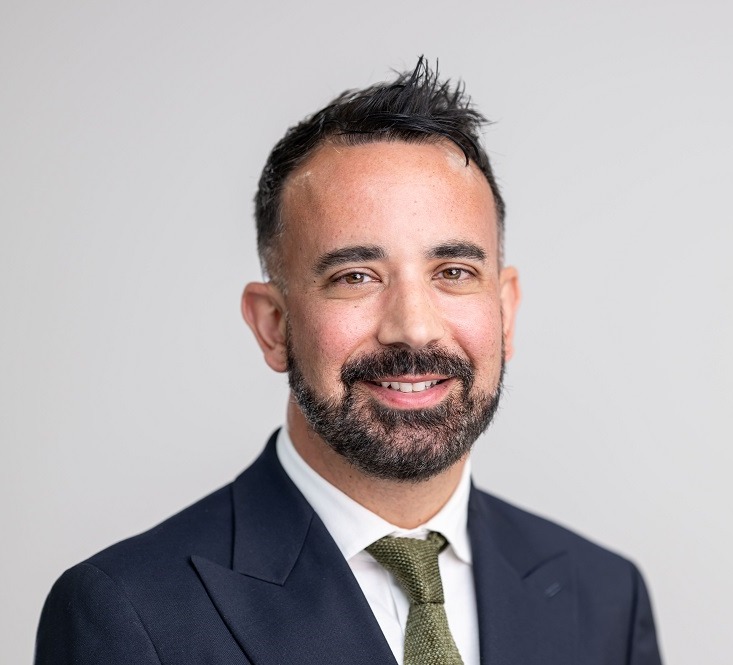
As the ASEAN Power Grid (APG) moves from planning into implementation, OPITO chief executive officer Stephen Marcos Jones said the challenge is no longer simply about developing the necessary infrastructure, but ensuring projects could be delivered at the scale and pace required to meet growing regional demand.
He said tangible progress, including the Sarawak-Sabah interconnection, demonstrated what could be achieved when governments, regulators and utilities worked together, but the next step would be turning that momentum into delivery across the region.
“While investment in infrastructure is critical, delivery capacity is equally important. As energy systems become more interconnected, projects will increasingly depend on skilled people being able to move efficiently between countries, employers and sectors,” he told Sarawak Tribune.
Jones said having the right competence available at the right place and time would be crucial to maintaining project momentum.
One way to address this, he said, is through greater recognition of transferable skills, particularly as many safety-critical behaviours, technical disciplines and electromechanical skills are applicable across different areas of the energy industry.
“Whether someone is maintaining equipment on an offshore oil and gas platform or supporting operations on an offshore wind installation, there can be significant overlap and synergy in the competence required to work safely and effectively,” he said.
He said industry, governments and training providers need to work together through robust standards, competency frameworks and quality assurance to build confidence in skills transferability.
Where competence genuinely transfers between sectors or projects, he said those capabilities should be recognised and verified rather than requiring workers to start again from scratch each time they moved into a new area.
“Ultimately, accelerating delivery across the ASEAN Power Grid will depend not only on building the infrastructure itself, but also on creating the frameworks, partnerships and assurance mechanisms that allow skilled workers to be deployed quickly, safely and consistently wherever they are needed,” he said.
Jones said Malaysia is well placed to meet this challenge, starting with a substantial and experienced workforce from the oil and gas, utilities, engineering and industrial sectors, supported by an established technical and vocational education and training (TVET) ecosystem.
He said the key opportunity is not necessarily a shortage of skilled workers, but ensuring existing capabilities continue to evolve alongside emerging technologies and new energy pathways.
Malaysia’s National Energy Transition Roadmap (NETR), he said, already recognised the need for workers to transition into areas such as hydrogen, carbon capture, utilisation and storage (CCUS) and other low-carbon energy solutions through targeted reskilling and upskilling.
He said strategic workforce planning, a common green-skills framework, stronger TVET provision and closer collaboration between industry, training providers and universities would help maximise Malaysia’s existing talent base while preparing workers for future energy roles.
Maintaining a strong talent pipeline would also require continued investment in STEM education, clearer career pathways into the energy sector, as well as more apprenticeship and employer-led training opportunities.
Jones said workforce development could be accelerated by combining targeted training for emerging energy technologies with structured reskilling and upskilling for experienced workers from adjacent safety-critical industries.
However, he stressed that accelerating capability should never mean lowering standards.
“For large-scale and cross-border energy infrastructure projects, safety, competence and quality must remain non-negotiable,” he said.
Robust competency frameworks, internationally recognised standards and consistent assurance processes would be important in giving employers confidence that workers could perform safely and effectively across different projects and jurisdictions.
He said industry could also play a convening role by bringing together employers, regulators, training providers and educational institutions to align the skills required for future energy projects.
This would support common skills standards, reliable competence verification and quality-assured training pathways, making it easier for workers to transition into new roles while maintaining safety and performance.
Jones said Malaysia’s energy workforce would also need capabilities beyond technical expertise as the country moved towards greater grid connectivity, renewable energy and decarbonisation.
“Adaptability will be one of the most important capabilities,” he said, noting that Malaysia is developing opportunities across renewables, hydrogen, carbon capture, utilisation and storage (CCUS), grid modernisation and other low-carbon technologies.
He said many of the skills required already existed within the workforce, but workers needed to be able to transfer and apply their expertise in new contexts while developing additional competencies for emerging technologies.
As Malaysia strengthens its position as a regional energy hub and energy systems become more interconnected, Jones said greater confidence would also be needed in recognising skills and competence across sectors, projects and borders.
A consistent safety culture, he said, must remain at the heart of the transition, with new technologies and ways of working not resulting in lower safety expectations.
Digital capability would also become increasingly important, including data-driven decision-making, digital asset management, remote operations, automation and the adoption of emerging technologies.
He said the priority is to future-proof Malaysia’s existing workforce by allowing established expertise to transfer into new areas while giving workers the skills, confidence and assurance needed to embrace the energy transition safely.
Jones said industry, government and training providers such as OPITO each had a role to play.
Industry needed to identify where skills genuinely overlapped across projects and sectors and provide clearer information on the capabilities employers required, while training providers could support competence assurance, internationally recognised frameworks and collaboration.
The government, meanwhile, could create the conditions for long-term workforce development through strategic workforce planning, strong TVET pathways and greater alignment on competency recognition where appropriate.
He said the most urgent priority is ensuring workforce development keeps pace with the scale and speed of project demand.
Rather than treating the energy transition as requiring an entirely new workforce, Malaysia could make better use of the skills, experience and competence already available by identifying where they could transfer, strengthening them where necessary and creating clear pathways into emerging areas.
Large grids and decentralised systems serve different needs
GoRental Global founder Colin Peh said large-scale grids and decentralised clean energy solutions should be developed together.
“Large-scale grids provide the backbone needed to move electricity across regions and support economic growth. Decentralised systems provide the flexibility and last-mile resilience needed closer to where electricity is actually consumed,” he said.
He said solar-powered battery systems could support communities, temporary sites and operations where grid access was limited, insufficient or costly to extend.
One example was Huay Nam Rin Village in Chiang Mai, where GoRental combined solar panels with portable battery storage to support household lighting and mobile charging.
The system reduced dependence on kerosene and diesel.
Peh said the project did not replace the wider grid, but addressed an immediate energy gap with a solution that could be deployed quickly and adapted to local needs.
For Sarawak, he identified potential applications including remote community facilities, temporary infrastructure, construction works, events and areas where permanent grid expansion was not immediately available.
Batteries can reduce diesel dependence
As renewable energy becomes more widely used, storage can also provide flexibility.
Peh said the barriers to wider battery adoption across ASEAN included regulatory clarity, safety standards, technical training, financing and responsible end-of-life management.
“Businesses need confidence that systems will be installed, operated and maintained safely,” he said.
He said leasing and energy-as-a-service models could also reduce the upfront cost of adoption.
GoRental’s experience at Outdoor Expo Malaysia 2026 provided one example.
The company deployed 82 portable battery systems across 48 booths, supplying an estimated 992.16 kWh over 36 operating hours.
The systems avoided approximately 803.65 kg of carbon dioxide equivalent compared with a diesel-generator baseline.
Peh said the deployment demonstrated that battery systems could support a live environment while reducing noise, exhaust emissions and fuel use.
For businesses, sites and communities, he said the transition could initially be hybrid.
“Batteries can support everyday and lower-load requirements, while generators remain available for heavier demand,” he said.
This would allow operators to reduce diesel consumption without compromising reliability.
Connecting energy transition with economic development
The development of these technologies also links back to Sarawak’s wider economic plans.
SJ Group senior executive director (Energy) Tan Wooi Leong said Sarawak has opportunities to strengthen downstream industries, value-added manufacturing and industries supporting the global energy transition.
He said the state would also need continued investment in infrastructure, skills development and innovation.
For investors, he said access to a strong workforce was not only about skills availability.
It also involved creating places where people wanted to live, work and build their careers.
This includes quality housing, mobility, education, healthcare and lifestyle amenities.
“Places that successfully create vibrant, liveable communities are often better positioned to attract the talent that high-value industries depend upon, which in turn strengthens their investment appeal,” he said.
This broader approach could be important as Sarawak develops industries that depend on reliable and lower-carbon electricity.
Preparing for more electricity demand
The state’s economic diversification will also affect its energy planning.
TransitionZero head of Market Development Ajita Mishra said demand from hydrogen production, data centres and other new industries could be incorporated into electricity models alongside renewable generation, transmission and export commitments.
This is important because regional electricity exports cannot be planned independently from Sarawak’s own development.
If electricity demand from new industries rises, the amount available for export could change.
Similarly, changes in neighbouring markets could affect Sarawak’s export opportunities.
Mishra said Scenario Builder could allow users to continue testing these changes rather than relying on one long-term forecast.
Managing the risks of a more connected system
The expansion of regional electricity trade will create opportunities, but it will also require Sarawak to prepare for changes in transmission capacity, market conditions and regional demand.
Mishra said these factors are interconnected.
“There are a lot of moving parts here — demand growth, transmission build-out, market structures, competing regional supply and they don’t move independently of each other,” she said.
For Sarawak, the ability to keep testing different scenarios could therefore help policymakers respond as conditions change.
Peh also stressed that regional electricity connectivity alone would not be enough.
ASEAN would need compatible technical standards, transparent pricing and clear commercial frameworks so utilities, businesses and investors could plan with confidence.
Making the transition work at different levels
The development of the ASEAN Power Grid is therefore taking place at several levels.
At the regional level, ASEAN is working on cross-border transmission, market mechanisms and greater electricity trade.
At the state level, Sarawak is developing renewable energy, industrial demand and connections with neighbouring markets.
At the local level, batteries, solar systems and decentralised solutions can help address specific energy needs.
The investment side also has to move together with these developments.
At the 7th International Sustainable Energy Summit, Cypark Resources Berhad chairman Tan Sri Abdul Wahid Omar said Malaysia would require between RM1.2 trillion and RM1.3 trillion in investment to support its energy transition under the National Energy Transition Roadmap.
He said around 60 per cent of NETR projects are commercially viable on their own, including large-scale solar, while another 25 per cent would require some form of carbon credit support and 15 per cent would require direct government funding.
He said carbon pricing mechanisms, including a carbon tax, emissions trading system and voluntary carbon market, would be important in helping bridge the investment gap.
For ASEAN and Sarawak, the lesson is similar: energy infrastructure, demand, financing, regulation, technology and workforce readiness cannot be treated as separate issues.
The ASEAN Power Grid may provide the regional connection, but its success will depend on how well these different parts work together.