SIBU: For most people, mooncakes are a cherished seasonal delicacy associated with family reunions, glowing lanterns and the Mid-Autumn Festival.
For Father Ivan Fang, 66, the humble mooncake carries a far more profound meaning.
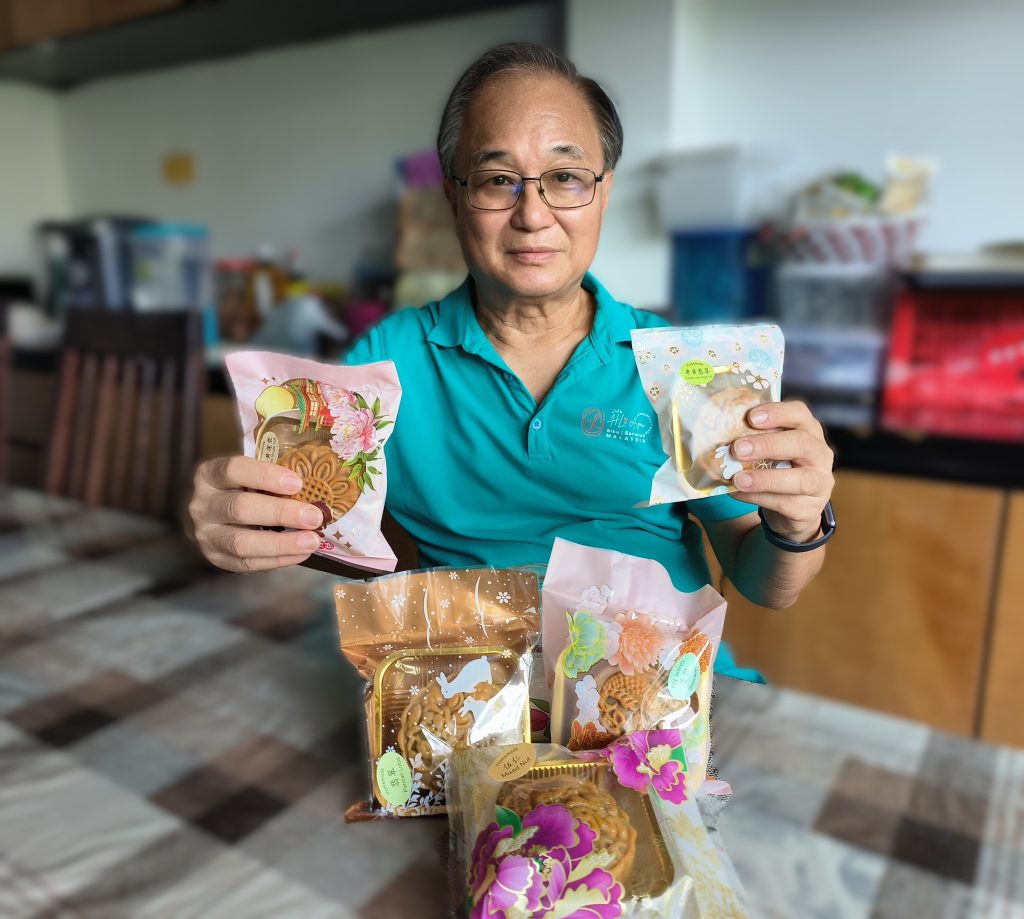
The Catholic priest, who hails from Brunei and has been serving in Sibu for the past 12 years, has taken on the unusual role of mooncake maker and fundraiser, turning his kitchen at the Missionary Community of Corpus Christi (MCCC) into a modest, home-based production space to raise money for missionary work.
His mooncakes may not boast the polished appearance or sophisticated flavours of those produced by commercial bakeries, but Fang believes their true value lies beyond taste and appearance.
“It’s not done for commercial purposes. When you buy a mooncake, you are supporting the mission. You are doing your part as a missionary because, even if you cannot go out there yourself, you are supporting someone who can do it on your behalf,” he said in an interview at MACC where he is director.
That simple philosophy has kept him kneading dough, preparing fillings and painstakingly moulding mooncakes year after year, despite his already demanding responsibilities as a priest.
What began almost by chance has gradually developed into a meaningful annual fundraising effort.
Fang said he first came across a recipe book and decided to experiment with making mooncakes himself.
After several attempts, the recipes began to work, and the response from those who sampled his homemade creations encouraged him to continue every year.
“It was not exactly my idea initially, but I saw the potential because commercially produced mooncakes can be quite expensive.
“I thought, if we could make homemade ones, perhaps people would be willing to pay a little more because they are homemade.”
Last year, the initiative raised about RM10,000, and the priest hopes to achieve a similar amount this year. This year, they expect to sell about 800 mooncakes, although production could reach as many as 1,000.
The operation, however, remains deliberately small and decidedly non-commercial.
There are no sophisticated production lines, spacious kitchens or teams of professional bakers.
Instead, Fang and his helpers work whenever they can find the time, often late at night after he has completed his priestly duties and other chores.
“I cannot do everything single-handedly because I have many other commitments,” he said.
Making mooncakes is also a painstaking process, with the traditional mooncake skin proving particularly challenging.
“Getting the skin onto the paste properly is quite difficult. Another challenge is getting an even shade of colour. That is probably the most difficult part,” he said.
Weather conditions, limited facilities and the perishable nature of mooncakes add to the difficulties.
Unlike commercial bakeries, Fang and his team cannot produce large quantities well in advance.
They have to carefully time their production, especially as demand usually peaks during the final two weeks before the Mid-Autumn Festival.
“Sometimes we also have quite a lot of leftovers, which becomes a waste of our resources because nobody wants them after the Mooncake Festival is over,” he said.
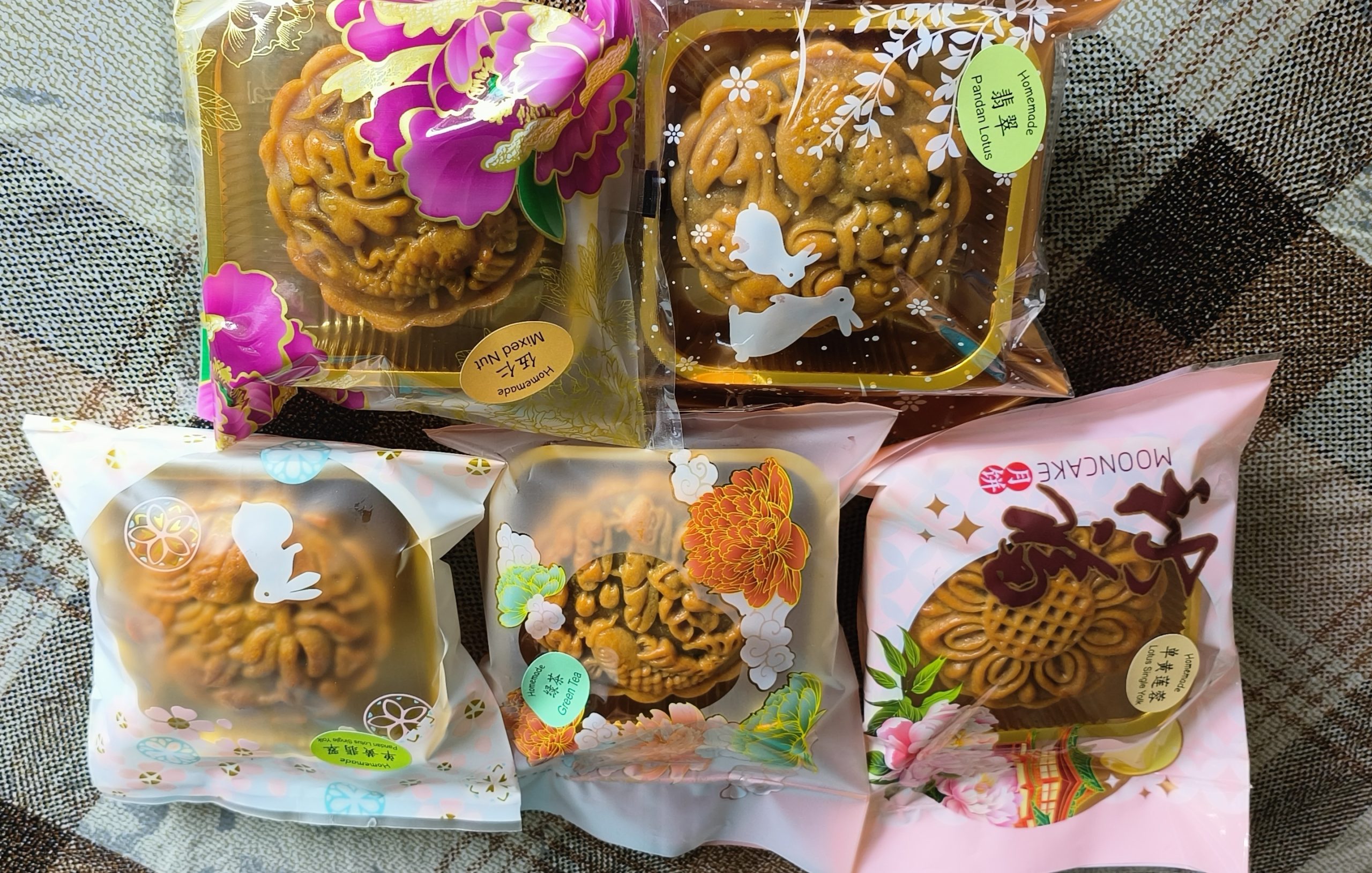
The range has also been streamlined to a few traditional favourites, including pure lotus, pure lotus with egg yolk, pandan lotus, green tea, mixed fruits and nuts, and red bean. They are priced between RM14 to RM24.
While commercial producers may tempt consumers with an increasingly dazzling array of innovative flavours, Fang said many people still prefer the familiar, traditional varieties.
For him, however, the real difference between his mooncakes and those found in shops is not the taste.
“You can probably buy better ones in the market than what we make. But that is not the reason we do this,” he said.
“We want people to be part of our mission.”
The proceeds go towards supporting missionaries and missionary training, including programmes that equip people for service in different communities.
Fang said the missionary effort has reached places including Cebu in the Philippines and Cambodia, while previous work in China has been reduced as some missionaries have grown older or fallen ill.
Importantly, he stressed that missionaries are not limited to priests and religious sisters.
Lay people with professional expertise — including teachers, nurses, doctors and others — can also play valuable roles in missionary work.
Yet finding people willing to dedicate themselves full-time to such work remains a formidable challenge.
The missionary centre in Sibu also provides training and programmes, which Fang said need to remain free so that financial constraints do not prevent people from participating.
Funds raised also provide missionaries with allowances and help cover food and other needs.
Some missionaries are also involved in a compassionate outreach to the poor, cooking and distributing food to needy people in the Bukit Assek area and around the cathedral.
For Fang, therefore, every mooncake sold represents something much larger than a simple transaction.
It is a small contribution towards a wider mission.
“I’m very happy when people understand the reason behind the initiative and choose to support it by buying the mooncakes.
“It gives me great joy to know that they are not simply going somewhere else to buy mooncakes, but are choosing to support this cause, ”he said.
He admits, however, that fundraising does not always come naturally to him.
At times, he feels embarrassed having to repeatedly ask people for financial support.
“I sometimes ask myself, why do I have to spend so much of my time, energy and resources trying to raise money to support the mission?” he said.
He believes supporting missionary work should ultimately be embraced more fully by the Church rather than depending heavily on the efforts of individuals.
Yet, as the main fundraiser for his group, he continues to shoulder the responsibility.
His concern is particularly evident as he prepares for a mission fair on Mission Sunday, Oct 18, involving priests and parishes, with activities including a lucky draw and other fundraising efforts.
Despite his reservations, Fang remains hopeful that people will understand that the initiative is not a personal undertaking but part of the broader mission of the Church.
For all the challenges, there is also genuine satisfaction in the craft itself.
A self-taught mooncake maker, Fang describes himself as a creative person who enjoys the rewarding feeling of creating something from scratch.
“I can say to myself, ‘Hey, I’ve achieved something,’” he said.
He takes particular pride in having taught himself the craft and producing mooncakes he believes can stand alongside commercially made ones.
But he is careful not to allow that accomplishment to become a source of personal glory.
“My focus is on the mission. I do not want to turn this venture into something for self-glorification,” he said.
“Instead, I want it to be part of my work as a missionary priest.”
Ultimately, Fang describes the entire endeavour in two seemingly contradictory words: a worthwhile challenge.
It is worthwhile because every sale creates an avenue to support missionary work.
It is challenging because every mooncake requires time, effort, resources and patience from a priest whose primary calling remains serving his community.
Yet perhaps that is precisely what makes the initiative meaningful.
A mooncake made in a modest home kitchen may look ordinary, but behind each one is a quiet act of service — connecting those who buy, those who bake and those who venture far beyond home to serve others.
For Fang, the sweetest reward is not the money raised or the number of mooncakes sold.
It is knowing that each purchase helps someone become part of a mission they may never personally be able to undertake.
“It creates an opportunity to bring awareness to mission work,” he said.