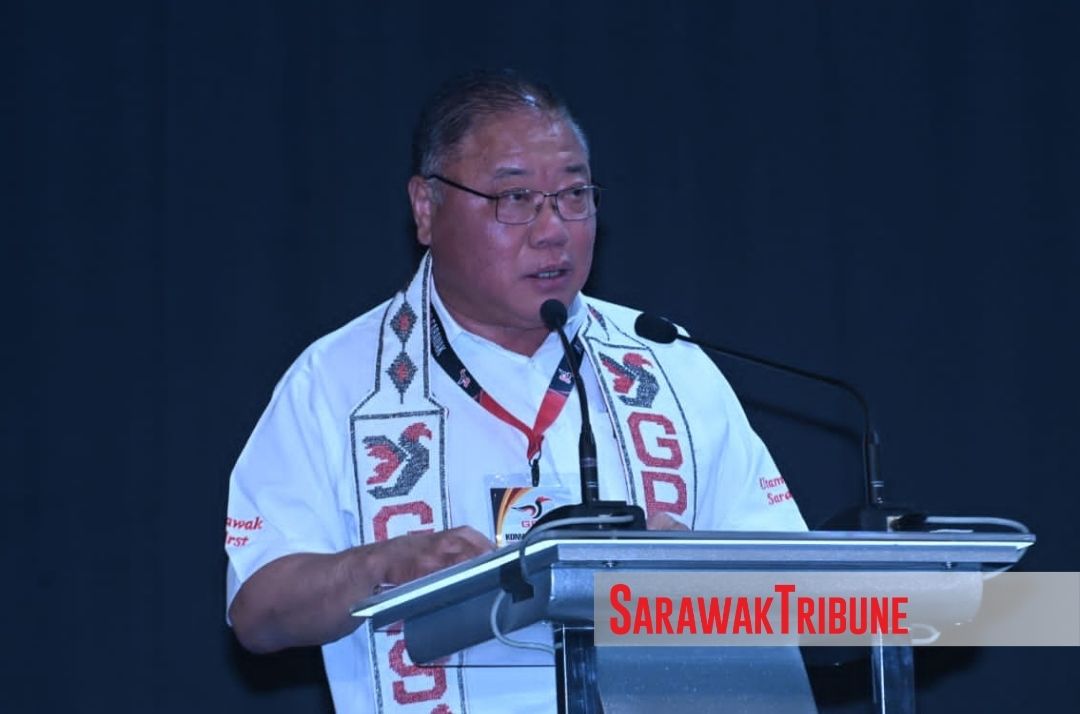
SIBU: Tourism, Arts and Culture Minister and Dudong assemblyman, Datuk Seri Tiong King Sing has urged the Domestic Trade and Cost of Living Ministry (KPDN) to temporarily suspend fines issued to rice wholesalers in Sibu, pending a full investigation into the source of the problem.
More than 17 members of the Sibu Rice Wholesalers Association have reportedly received penalty notices from KPDN enforcement officers.
Tiong said he had raised the matter with Domestic Trade and Cost of Living Minister, Datuk Armizan Mohd Ali, urged the ministry to look into the complaints and examine every stage of the rice supply chain before deciding on further action.
According to the association, the 5 per cent broken white rice involved was supplied to wholesalers by upstream suppliers.
Some consignments, it claimed, had arrived with insect infestation and impurities such as stones and sand, forcing wholesalers to clean and reprocess the rice to meet food hygiene standards.
Tiong said the investigation should not stop at the wholesaler level.
“Do not keep focusing on the wholesalers. They obtain their stock from suppliers, so the authorities must establish who the suppliers are and where the problem started,” he said in a statement today.
He said if the rice had already been compromised before it was delivered to wholesalers, KPDN should investigate the suppliers and other upstream parties instead of immediately imposing fines on downstream businesses.
The association also said that the cleaning and reprocessing work could increase the amount of broken rice, resulting in a product that differs from the specifications stated on the original label.
Tiong said the ministry should determine whether traders were facing genuine difficulties in meeting both food safety requirements and rice labelling rules.
“Those who break the law should be dealt with. I am not asking for anyone to be protected. But the authorities must first investigate the suppliers, the supply of rice and the subsequent handling process. It should not be limited to action against wholesalers,” he said.
“If wholesalers are found to have committed an offence, then action should be taken according to the law. But if the issue began upstream, the investigation must continue until the real cause is identified.”
Tiong also called on KPDN to address the association’s concerns over the sampling process.
The association claimed that enforcement officers took only one sample and did not retain a sample for an independent retest, as it understood should have been done.
He said the ministry should verify the claim to ensure the investigation is conducted fairly and transparently, and that affected traders are given a reasonable explanation and an avenue to appeal.
KPDN had previously said that enforcement on rice content, type and labelling is carried out under the Trade Descriptions Act 2011.
The ministry also said it had strengthened its standard operating procedures for managing rice samples and exhibits to ensure the evidence can be used in court.
Tiong said enforcement should ultimately address the problem, protect consumers and ensure that legitimate businesses are treated fairly.
“Only by tracing the source can we properly resolve issues involving rice quality and the supply chain. Otherwise, people may be fined while the real problem remains,” he said.