A NEWSPAPER deadline met did not always mean the day was over for Dr Fasiha Khushiri.

There were children to attend to, family responsibilities to fulfil and, once those demands allowed, a dissertation waiting for her attention.
For several years, the Sarawak Tribune journalist moved between these responsibilities, pursuing a doctorate alongside a career that rarely fits neatly into conventional working hours.
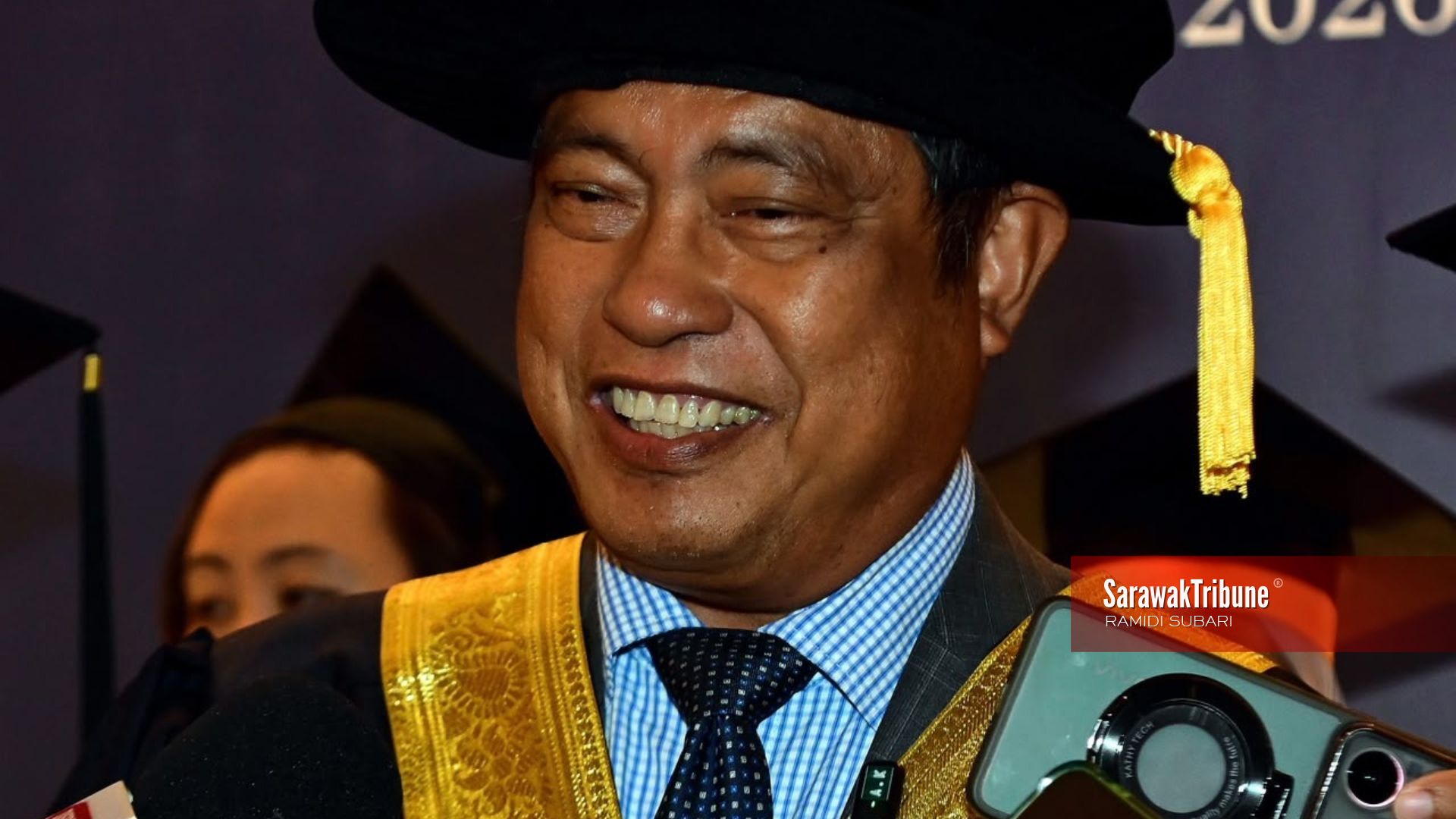
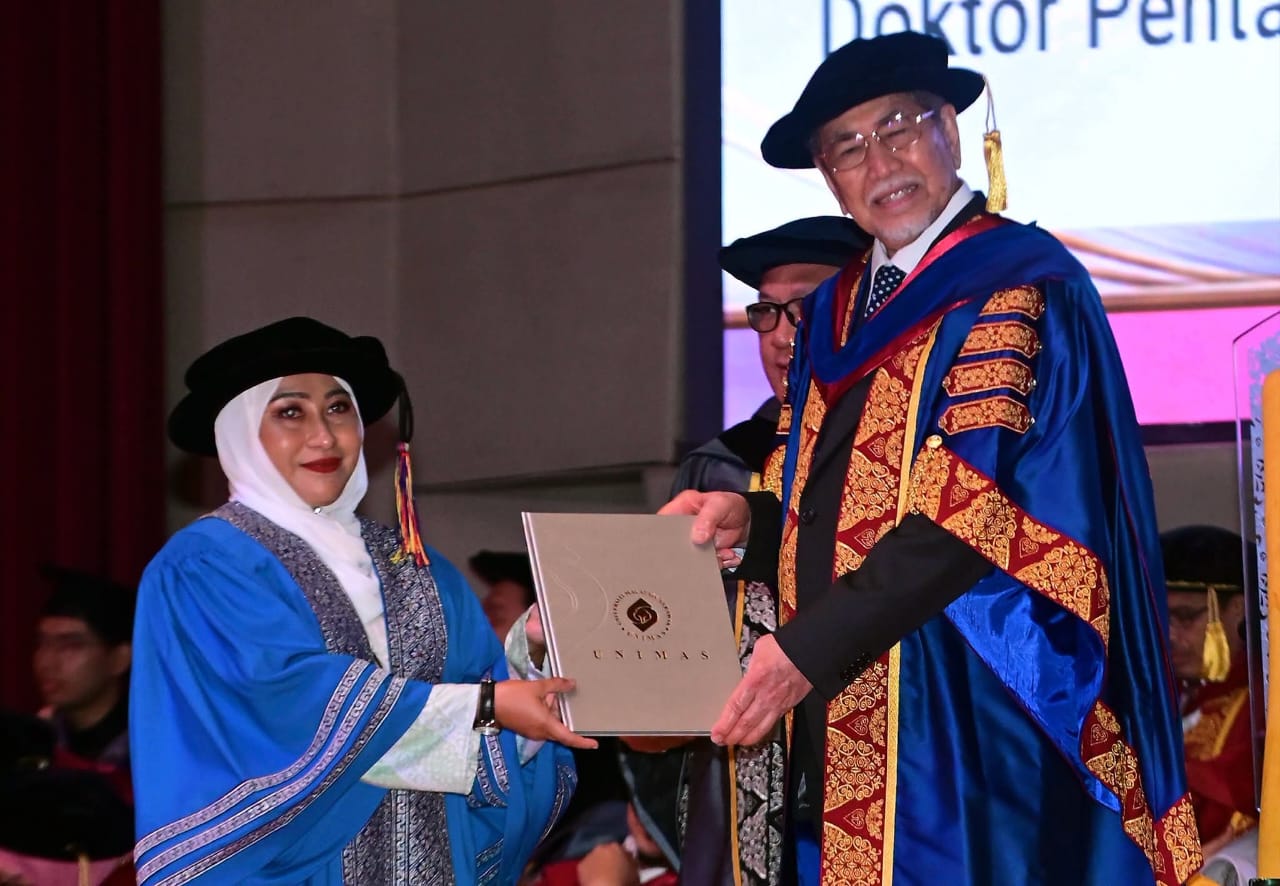
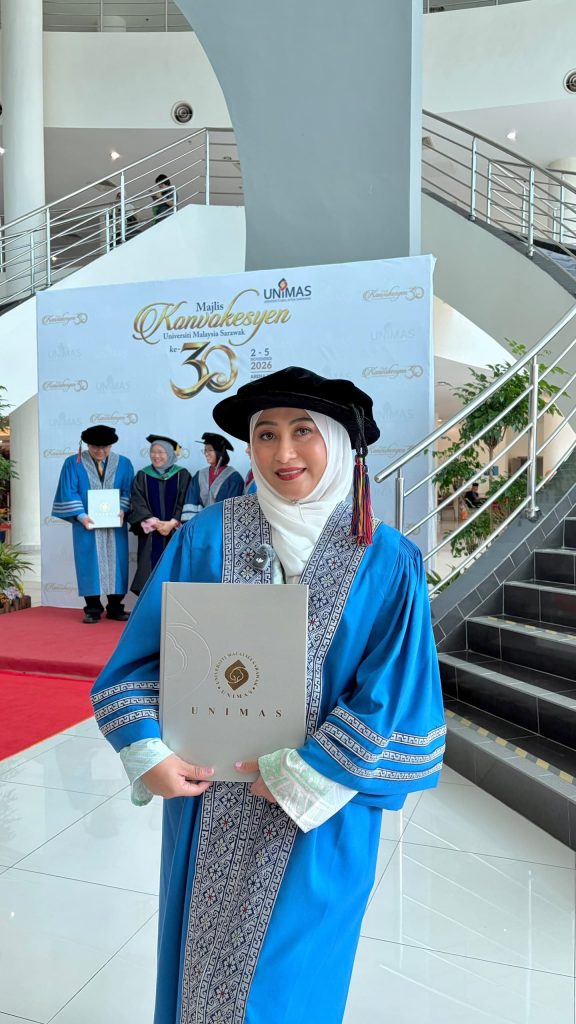
On Nov 2, those years of effort culminated in a moment she had worked towards through late nights, weekends and periods of uncertainty: receiving her Doctor of Business Administration (DBA) scroll at Universiti Malaysia Sarawak’s (UNIMAS) convocation.
For Fasiha, 36, the achievement carried the weight of everything it had taken to get there, and everyone who had helped her along the way.
“Receiving my doctorate scroll was an incredibly emotional and meaningful moment.
“More than anything, I felt grateful because I knew how much sacrifice, determination and perseverance had gone into reaching that day,” she said.
Her thoughts immediately turned to her husband and three children, who had shared the journey through the family time she sometimes had to sacrifice and the hours she spent completing assignments and research.
She thought, too, of her parents and those whose encouragement had helped her continue.
“This achievement is not mine alone; it is a reflection of the love, patience and support I received from the people around me,” she said.
The scroll marked an academic accomplishment, but the work behind it was rooted in a question close to her own life: how do working mothers find room for the responsibilities that compete for their time?
As a journalist, Fasiha understood the demands of unpredictable schedules, assignments and deadlines that could extend beyond normal office hours.
As a mother, she knew that responsibilities at home required attention regardless of what the working day had brought.
That experience became the starting point for her research, entitled “The Effects of Flexible Working Arrangements on Work Life Balance Among Working Mothers in Kuching”.
“I often reflected on how working mothers manage these competing responsibilities, particularly when their jobs do not always follow conventional working hours.
“I realised that flexible working arrangements could potentially provide a solution, but I also wanted to understand whether flexibility genuinely improves work-life balance,” she said.
Her interest went beyond whether employees could adjust their hours or work from home.
She wanted to understand whether those arrangements made a meaningful difference to mothers managing professional and family responsibilities.
To investigate, she collected questionnaire responses from 498 working mothers across Kuching’s public and private sectors.
The quantitative study used quota sampling and examined two forms of flexibility: flexible working hours and working from home.
It also drew on Self-Determination Theory, which considers the psychological needs of autonomy, competence and relatedness, which are, whether employees feel they have control over their work, are capable of carrying out their duties and remain connected to others.
One of the clearest findings challenged a familiar assumption about flexible work.
Among the respondents, the study did not establish a statistically significant direct relationship between flexible working arrangements and work-life balance.
For Fasiha, that finding came down to the need to look beyond simply making flexibility available.
“Although flexibility is generally considered beneficial, my research did not establish a statistically significant direct relationship between flexible working arrangements and work-life balance among the respondents.
“This suggests that simply allowing employees to work flexible hours or from home may not be sufficient to address the challenges faced by working mothers,” she said.
Her interpretation is that workload management, organisational support, workplace culture and the realities of employees’ responsibilities also deserve attention.
The availability of a flexible arrangement, in other words, is only part of the picture and how it operates in practice matters.
Working from home may remove a journey to the office, while flexible hours may help a mother coordinate work with family commitments. Neither necessarily removes the work that must be completed or the responsibilities waiting at home.
Fasiha cautioned that, without clear boundaries, flexibility could leave employees responding to messages, completing assignments or joining virtual meetings beyond normal working hours.
Her study did not directly measure after-hours work or breaches of work-family boundaries, and she distinguished those concerns from what her questionnaires had established.
Nevertheless, she believes they are important considerations for employers deciding how flexible arrangements should function.
“Employers must recognise that flexibility should support employees’ wellbeing rather than create additional expectations for them to remain constantly available,” she said.
She also resisted reducing the experiences of the mothers in her study to an individual anecdote.
Because her research used quantitative questionnaires rather than personal interviews, she would not attribute a particular story to a respondent.
What stayed with her was the importance of recognising the many responsibilities a working mother may carry: meeting workplace expectations, caring for children and coordinating household matters, often within the same day.
Her own experience offered a close understanding of how difficult it could be to make space for another commitment.
“There were times when I had to attend work assignments, meet newspaper deadlines and subsequently return home to attend to my children before continuing with my research.
“Unlike studying full-time, I could not put my professional or family responsibilities aside,” she said.
Time management became essential. Dissertation work often had to fit into late nights or weekends, around responsibilities that could not simply be postponed.
There were periods of exhaustion, and moments when professional commitments and family needs coincided with important academic deadlines.
The research itself brought further hurdles, from collecting and analysing data to responding to examiners’ comments and making corrections.
At times, she questioned whether she could complete it all.
What helped was the determination to finish what she had started, alongside a reminder that difficulty was part of the learning process.
Her husband and children were among her strongest sources of motivation. She wanted them to see that education had no age limit and that ambitions could still be pursued when the journey became demanding.
“I believe perseverance is not about never feeling tired or discouraged; it is about finding the strength to continue despite those feelings,” she said.
That persistence is one part of her story. Support is another.
While Fasiha speaks of discipline and determination, her recommendations for working mothers place responsibility on organisations as well as individuals.
She believes employers should move towards more comprehensive, family-friendly workplace policies, pairing flexibility with clear expectations, reasonable workloads and supportive supervisors.
Where operational requirements allow, this could include flexible starting and finishing times, with employees assessed on their performance and deliverables rather than their physical presence in the office.
She acknowledged that flexibility could not take the same form in every occupation, particularly where physical attendance or direct service was required.
Differences between organisations, the nature of individual jobs, digital infrastructure and readiness to introduce flexible arrangements all needed consideration.
Mutual trust and effective communication were also important, she said, as was ensuring employees felt capable of doing their work and connected to colleagues.
For her, supporting working mothers should be understood as an investment in employee wellbeing, retention and long-term productivity.
She hopes her research will contribute to discussions among employers, organisations and policymakers about how to make that support practical.
The doctoral journey has also influenced how she sees her own profession.
Journalism already required her to gather information, speak to people and communicate issues affecting society. Academic research deepened her appreciation of critical thinking and evidence-based decision-making.
She hopes to continue sharing her findings through professional discussions, academic platforms and future research.
On a personal level, the qualification brought greater confidence and a clearer understanding of her own resilience.
“Personally, this achievement has taught me that being a working mother should never mean giving up on personal ambitions,” she said.
It is a message she hopes will reach other mothers who may be wondering whether there is still room in their lives for further study or a long-held goal.
Her achievement did not come without sacrifices, and she is quick to acknowledge the patience and encouragement of the people who helped make it possible.
The doctorate bears her name, but her gratitude extends to her parents, husband and children.
For them, and for herself, completing it became proof that a difficult journey could still lead somewhere worth reaching.
“Most importantly, I want my children and other working mothers to understand that it is never too late to pursue their dreams.
“The journey may be difficult, but with determination, discipline and support, we can achieve things we once thought were beyond our reach,” she said.