From the intricate craftsmanship of traditional shadow puppets to captivating live performances, Yogyakarta offers a fascinating glimpse into the rich cultural heritage of ‘wayang kulit’.
The timeless art of Javanese puppetry
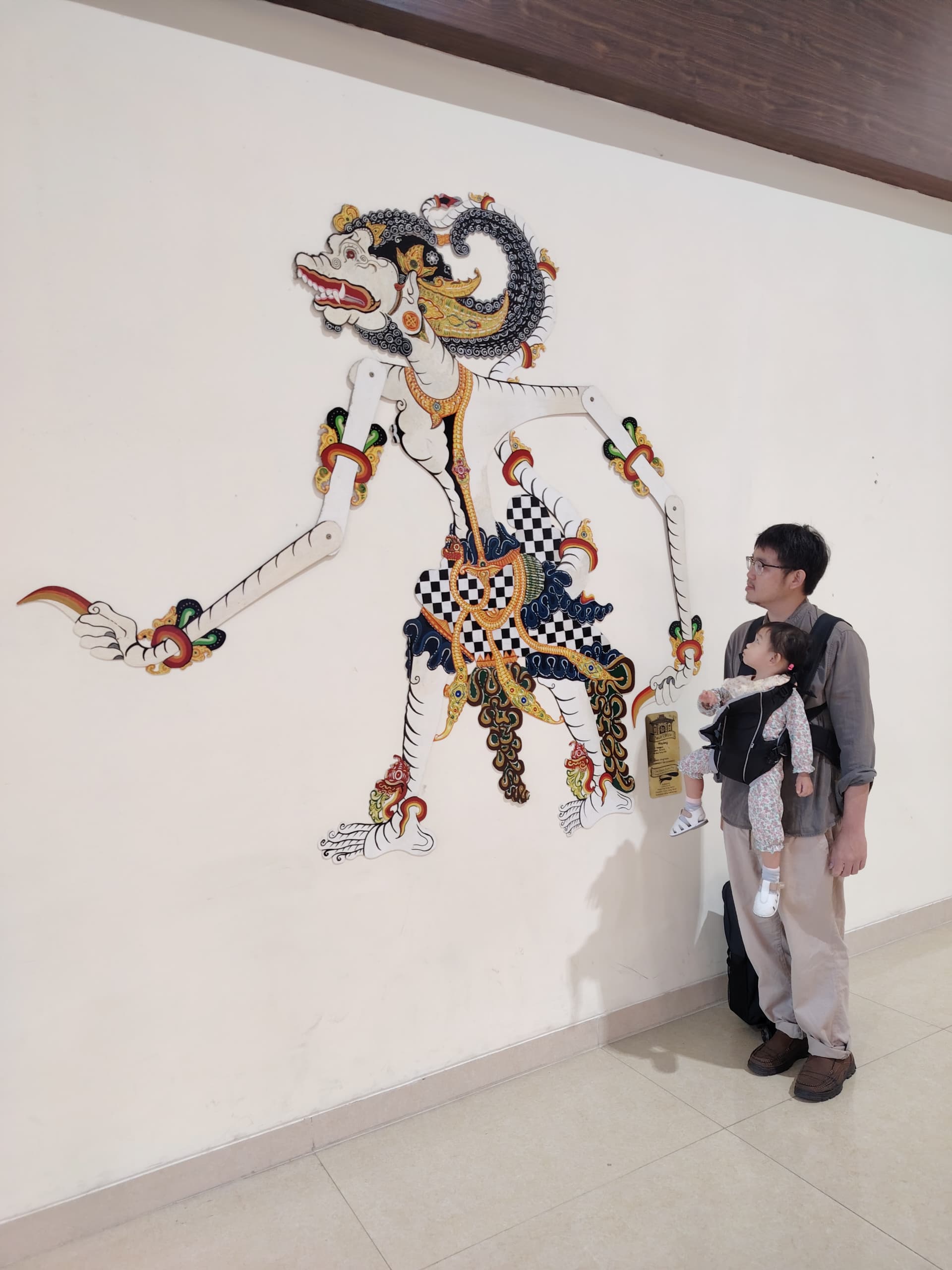
LANKY bodies adorned with ornaments. Arms stretching from shoulder to ankle.
Gravity-defying hair in wavy curls. Bold, dramatic facial features.
At Yogyakarta International Airport, imposing characters wind their way along the walls. A white monkey with outstretched claws appears around a corner, followed by another striking red figure crowned with flaming hair.
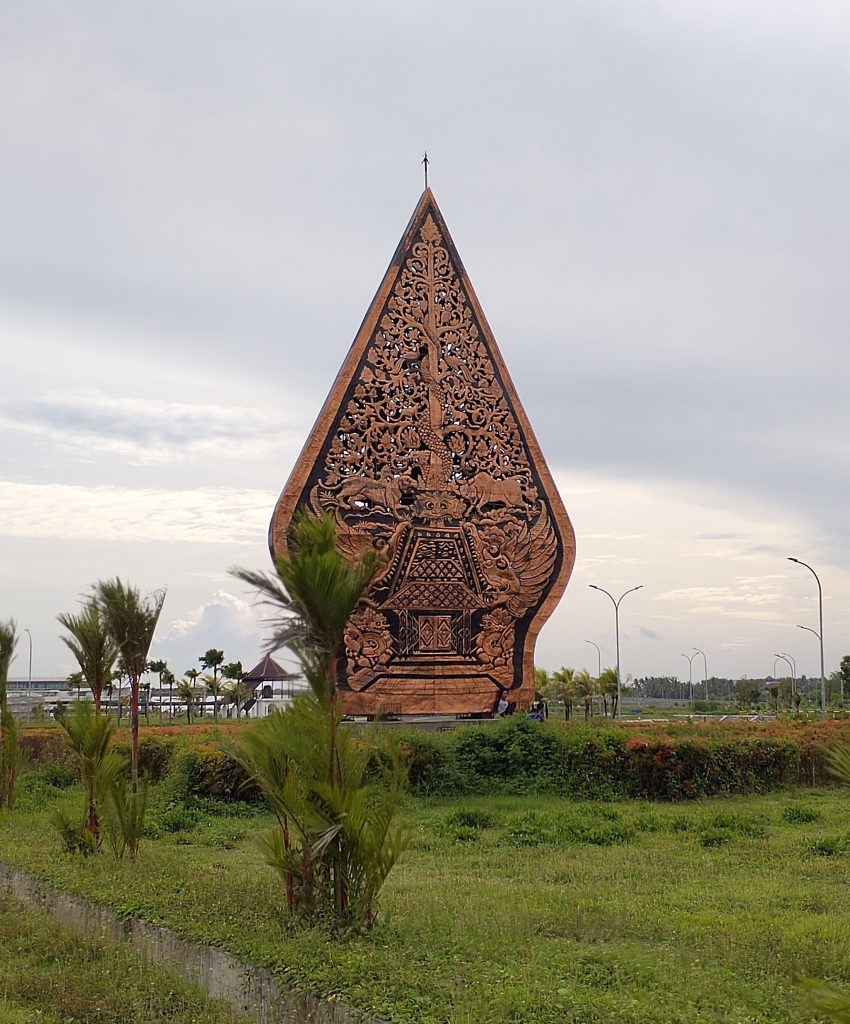
Beyond the terminal, a grand bronze sculpture stands guard over the access roads. The Gunungan, a symbol of the universe and life, has a triangular silhouette that mirrors the surrounding mountains.
Being married to a foreigner means frequent family trips overseas.
A three-hour flight away lies our second home, Yogyakarta, in Java, Indonesia.
Affectionately known as ‘Jogja’, the province has been governed by the Sultanate of Ngayogyakarta Hadiningrat since 1755. A haven for classical Javanese art and culture, it proudly displays its iconic heritage of wayang kulit (shadow puppetry) to visitors upon arrival.
The word ‘wayang’ itself is Javanese.
In ‘Sejarah Wayang’ (1986), Amir Mertosedono explored its various interpretations, ranging from ‘puppet’ and ‘moving shadow’ to ‘spirit’ and ‘departed ancestor’. Its roots lie in communicating with the deceased for protection, as spirits were believed to appear as shadows on the kelir (screen). According to the author, this explains the otherworldly appearance of Javanese puppets.
A more widely accepted explanation is that following the spread of Islam in Java, the art form continued but underwent religious adaptations. Puppet designs were altered to reduce their resemblance to human beings and living creatures.
During my first trip to Jogja, I browsed a large souvenir shop and was tempted by its piles of puppets. However, their finishing and quality fell short of my expectations.
“Those are just souvenirs. If you want authentic craftsmanship, we will take you to the right person,” my sister-in-law said.
A few days later, we entered an unassuming house in Bantul Regency, about half an hour away.
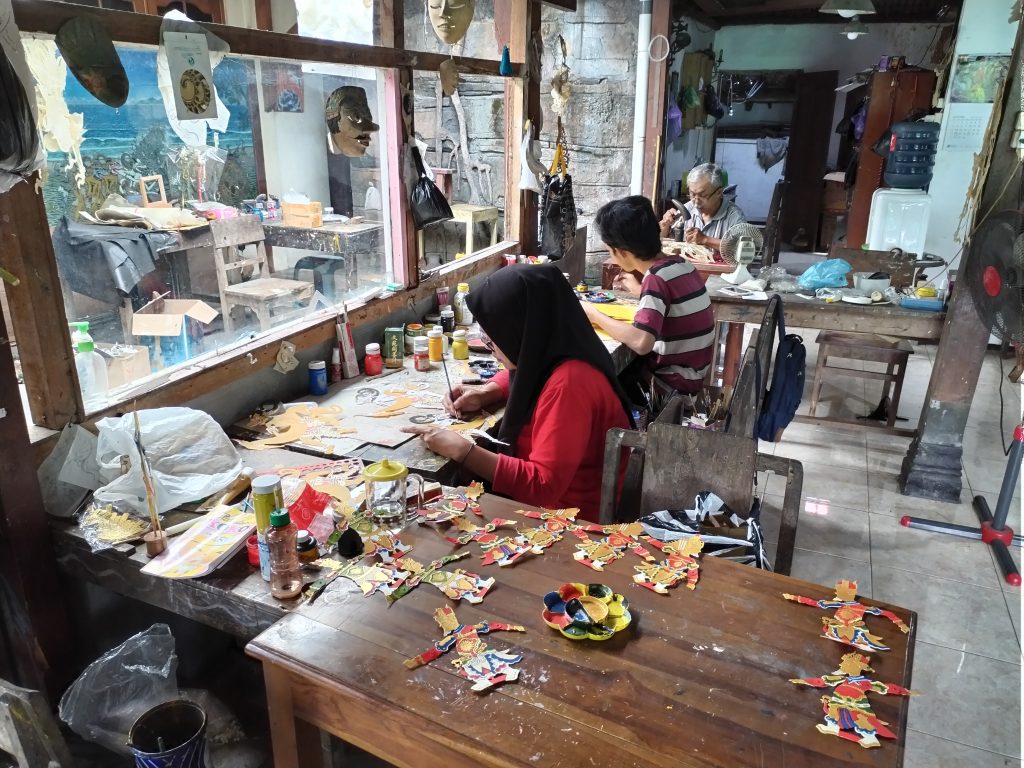
Leather figures hung from pillars.
Hands applied delicate strokes of paint at wooden desks.
In one corner, a chisel hammered intricate motifs into leather.
Javanese dance masks looked on silently.
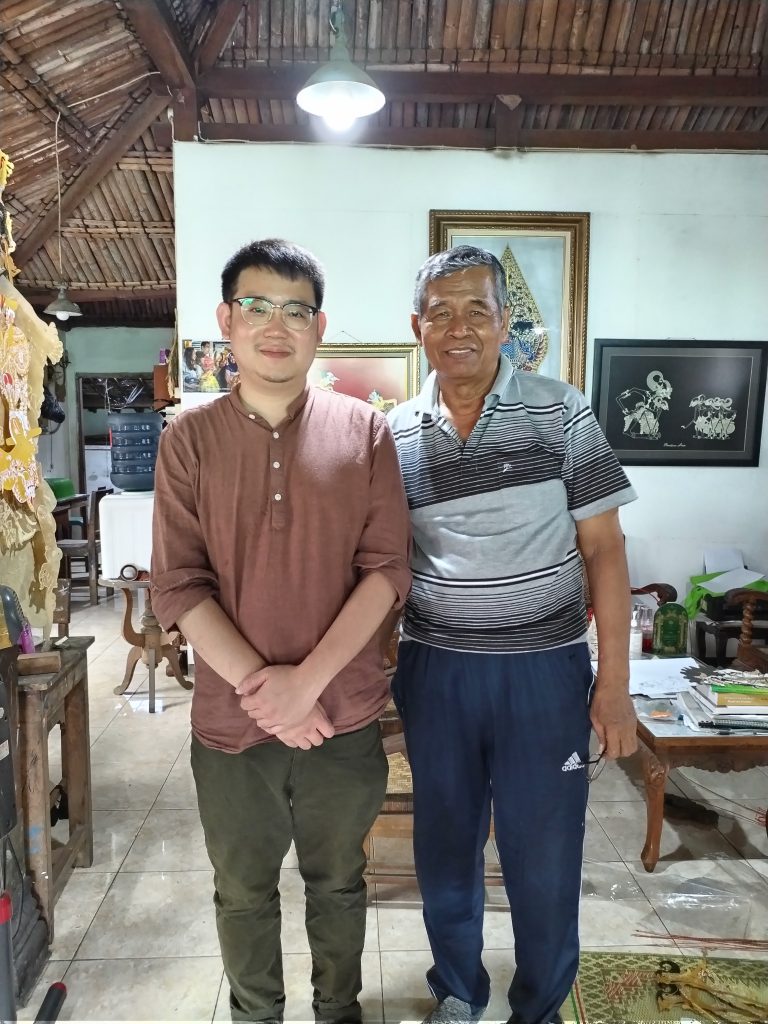
Little did I know that this was Griya Ukir Kulit Sagio, the workshop of one of Indonesia’s most celebrated wayang kulit craftsmen, known simply as Pak Sagio.
Tall, grey-haired and smiling, the elderly master has been practising tatah sungging – the intricate art of carving and painting puppets by hand – since 1963.
Presidents, ministers, hotels and museums have all been among his clients and collectors. His works have also served as official gifts to foreign dignitaries.
In 1990, Pak Sagio received the Penghargaan Upakarti from President Soeharto, one of Indonesia’s highest national honours awarded by the Ministry of Industry.
For more than four decades, he has also been responsible for overseeing and maintaining the puppet collection at Keraton Ngayogyakarta, the Sultanate’s palace.
More recently, international fashion designer, Didit Hediprasetyo, son of current President Prabowo Subianto, commissioned 1,000 pieces from him.
Despite these accolades, Pak Sagio remains remarkably humble.
The living legend sits cross-legged on a mat surrounded by puppets, inspecting their finishing and attaching handles made of horn. Noticing where I am from, he asks pleasantly, “Malaysia has wayang kulit too, right? What is it like?”
Our brief exchange remains a cherished memory, particularly as people from our two countries sometimes find themselves debating cultural authenticity and ownership. Here was a master craftsman asking about another country’s tradition with neither pride nor pretension, but genuine curiosity and respect.
Depending on demand, orders may need to be placed well in advance. I waited several months for a full-sized Jatayu puppet, which remains one of my most treasured possessions.
Beyond collecting wayang kulit masterpieces, visitors can also enjoy live performances in Jogja. Traditionally staged for hours throughout the night, these performances may be a little daunting for newcomers. Those seeking a more accessible introduction can head to Museum Sonobudoyo, right in the city centre.
Inaugurated in 1935, the museum’s name means ‘place of culture’. It houses an extensive collection of artefacts from Java, as well as Bali, Madura and Lombok. Evening programmes include traditional dance-dramas and wayang kulit performances.
Although the show was scheduled for 8:00 pm, I arrived an hour early to find several people already queuing for tickets. By the time the dalang (puppeteer) took his place, the hall was full.
Over one and a half hours, a condensed version of the Ramayana epic unfolds, from the plot to capture Sinta to Rama’s eventual victory over Rahwana. Everything is performed in Javanese, but visitors need not worry as an English synopsis explaining each scene is provided.
Unlike the usual arrangement in Malaysia, visitors can choose to sit either in front of the kelir, where the shadows appear, or behind it, where the dalang and the entire troupe perform. Each offers a distinct experience.
Personally, I found the latter more fascinating.
The puppets are displayed in full view, revealing brilliant colours and intricate details that are less apparent when seen as shadows.
The dalang is a captivating sight in action, manipulating the characters while switching between voices and producing tapping sound effects at selected moments.
There is also the impressive gamelan Jawa ensemble, featuring more than 10 musicians, accompanied by several sinden (vocalists) who provide musical interludes between scenes.
Finally, the kelir itself sits within an ornate golden frame, flanked by an array of puppets arranged on either side.
The overall experience feels more formal than casual, almost like attending a scaled-down orchestral performance. With comfortable seating and an unobstructed view, one could easily imagine being a noble at a royal Javanese court.
To enjoy the experience as I did, visitors should consider purchasing VIP tickets and arriving early. It is advisable to check with Museum Sonobudoyo for the latest performance schedules.
Philosopher Franz Magnis-Suseno once described the experience of wayang kulit as being “as if we are reading the concrete meaning and purpose of human life”.
Where better to do so than Jogja, the cultural heartland of Java?