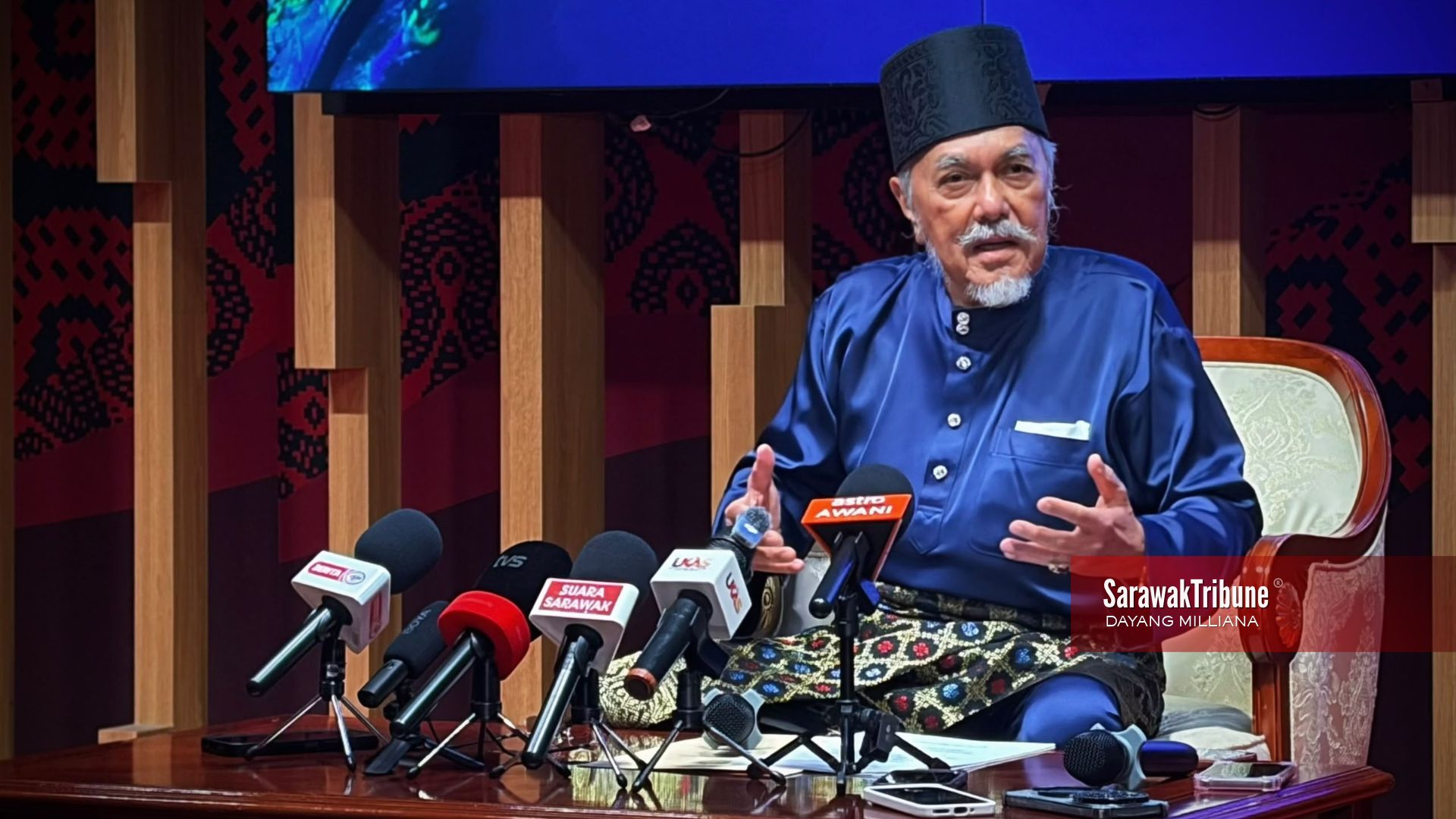
KUCHING: The separation of powers between the executive, legislative and judicial branches is the basis of checks and balances in Malaysia’s system of government.
Sarawak Legislative Assembly Speaker, Tan Sri Datuk Amar Mohamad Asfia Awang Nassar said the principle is distinct from political efforts to prevent a party from winning all seats in an election, which he described as a partisan check rather than checks and balances.
“When DAP speaks of checks and balances, what it actually means is a partisan check, which is not wanting Gabungan Parti Sarawak (GPS) to win all the seats,” he said when met with reporters at a press conference today (Nov 20).
Asfia said checks and balances served to prevent any one branch of government from exercising excessive power, with the three branches having their respective functions and authority under the Federal Constitution.
Articles 39, 44 and 121 provide for the executive, legislative and judicial powers respectively, forming the constitutional basis for the separation of powers.
The principle also applies in Sarawak, in accordance with the Federal Constitution.
He explained that partisan checks, on the other hand, referred to the role of opposition members in scrutinising the government, whether within or outside the legislature.
Under Sarawak’s Westminster-style system, the executive and legislative branches have overlapping functions, as members of the executive are also part of the legislature.
This allows other assembly members to question and scrutinise the government through the proceedings of the House.
Asfia said the distinction between the two concepts is important to avoid misunderstanding their respective roles in the political and constitutional system.
He also argued that elections are not a mechanism for checks and balances, as the outcome was determined by voters in a contest between political parties.
“Whatever happens at the ballot box does not require any checks and balances, because elections are a win-or-lose contest, with the winning party securing seats based on the decisions of eligible voters,” he added.
He pointed to the Sabah election as an example of how voters ultimately determine political representation through their choices at the ballot box.